When I was planning my wedding last summer, I stared at a floral quote that made my eyes water. The centerpieces made sense. The bridal bouquet made sense. But the boutonnieres? Forty dollars a piece for a tiny cluster of flowers pinned to a lapel felt like a math error.

Sandals Will Throw Your Wedding for Free
Stay 7 nights in a Club or Butler suite and Sandals covers the wedding: a personal planner, the ceremony, a private cocktail reception, a two-tier cake, your bouquet and boutonniere, plus $200 toward photos and $200 toward video. No venue hunt, no vendor juggling.
I dug into the numbers, talked to three different florists during my vendor research phase, and uncovered a secret about wedding flowers. The expensive boutonnieres are actually the worst ones you can buy. If you want a lapel flower that survives the ceremony, the photos, and the endless hugs from extended family members, you need the cheap one.
Let me show you exactly why a $12 boutonniere outlasts a $40 one.
The Anatomy of a $40 Boutonniere
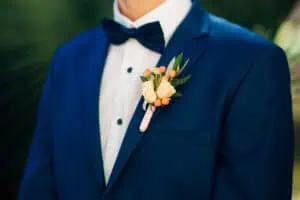
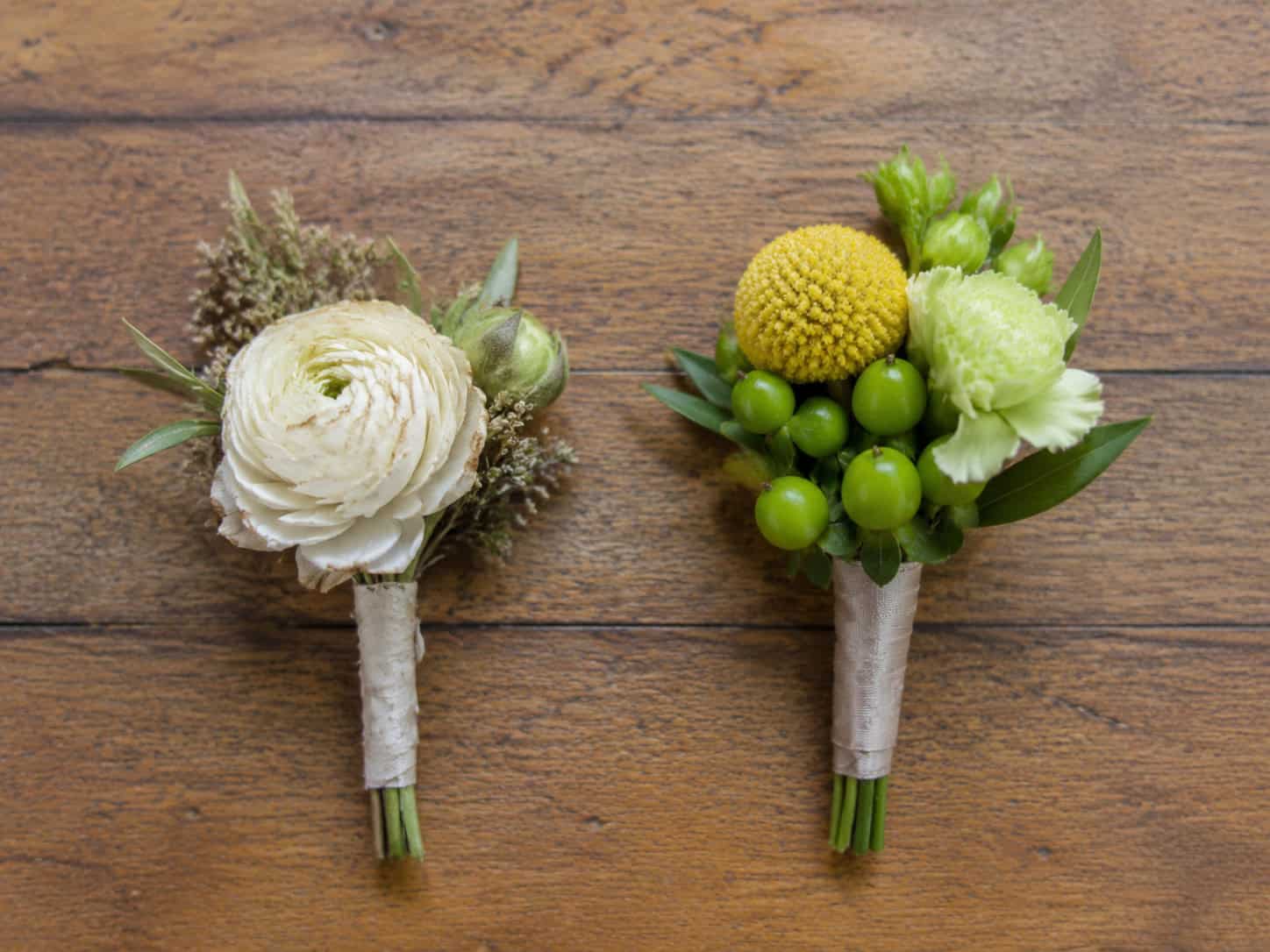
Let us look at the premium option first. A $40 boutonniere usually features a delicate, high-end focal flower. Think white anemones, ranunculus, or a tightly closed peony. These flowers are stunning in a vase. Pinned to a human body, they are a disaster waiting to happen.
Florists charge a premium for these because they require intense labor. The stems of delicate flowers are often too thick or too fragile to pin directly to a suit. A florist has to cut the stem off completely, run a wire through the base of the bloom, and wrap the whole thing in floral tape. Once that flower is wired, it has no water source.
Add the 98-degree body heat radiating from a groomsman and the friction of fifty congratulatory hugs. By the time cocktail hour starts, that $40 ranunculus looks like a crushed tissue.
Free Wedding Planning Checklist
Stay organized from engagement to "I do" — get our comprehensive checklist covering every task, deadline, and detail.
The Secret Strength of the $12 Boutonniere
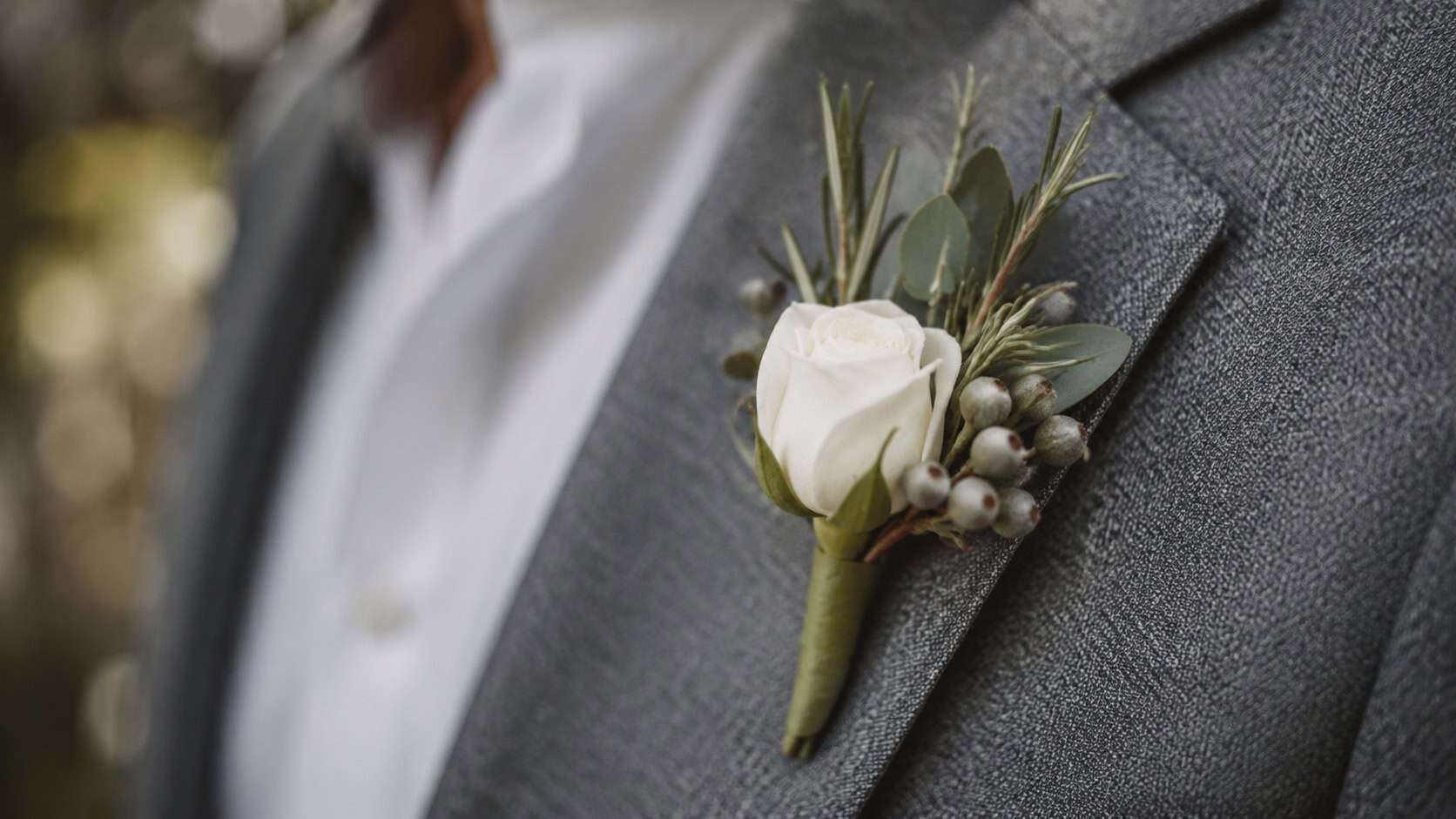
Now look at the budget option. A $12 boutonniere relies on the workhorses of the floral world. We are talking about spray roses, carnations, craspedia (billy balls), berries, and hardy greenery like seeded eucalyptus or rosemary.
Florists can charge less for these because the materials cost pennies and the labor is minimal. They do not need complex wiring. The florist just gathers the natural stems, wraps them in a bit of tape or ribbon, and calls it a day.
But the real magic is in their cellular structure. Carnations and woody herbs do not care about body heat. They do not bruise when your great-aunt goes in for a bear hug. They look exactly the same at midnight as they did at noon.
By the Numbers: The Cost and Survival Breakdown
I am a spreadsheet person. I need to see the breakdown. Here is exactly what you are paying for and what you actually get on the wedding day.
| Feature | The $40 Boutonniere | The $12 Boutonniere |
|---|---|---|
| Typical Flowers | Ranunculus, Anemone, Peony, Orchid | Carnation, Spray Rose, Berries, Herbs |
| Labor Required | High (Stem removal, custom wiring, taping) | Low (Natural stem gathering, simple wrap) |
| Heat Tolerance | Very Poor | Excellent |
| Hug Survival Rate | Low (Bruises and crushes easily) | High (Bounces back from friction) |
| Lifespan on Lapel | 2 to 4 hours | 12+ hours |
How to Talk to Your Florist
Florists are artists. They naturally want to create miniature masterpieces for your wedding party. If you want the durable, budget-friendly option, you have to ask for it specifically. Do not just say you want cheap flowers. Use these exact phrases to get the $12 price tag without sounding like a cheapskate.
- “We want highly textured, greenery-forward boutonnieres.” This tells the florist to focus on cheap, durable foliage instead of expensive focal blooms.
- “Please use hardy, long-lasting elements like berries, herbs, or spray roses.” This signals that longevity is your priority over luxury flower varieties.
- “We prefer natural stems wrapped in simple tape, no complex wiring needed.” This cuts out the expensive manual labor of wiring fragile heads.
- “We are aiming for a price point around $10 to $15 per boutonniere. What durable materials fit that budget?” This gives them a firm numerical boundary and asks for their expertise in hitting it.
The Bottom Line
Wedding budgets are an exercise in trade-offs. You have to decide where your money makes the biggest impact. Spending $400 on ten fragile boutonnieres that die before dinner is simply bad math. Save that money for the open bar, the late-night pizza delivery, or literally anything else. Ask for the hardy greenery, pay your $12, and enjoy a lapel that actually survives the party.