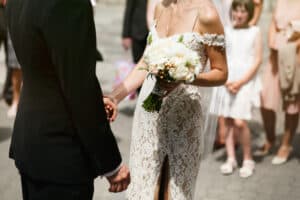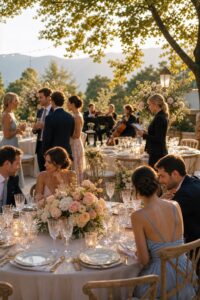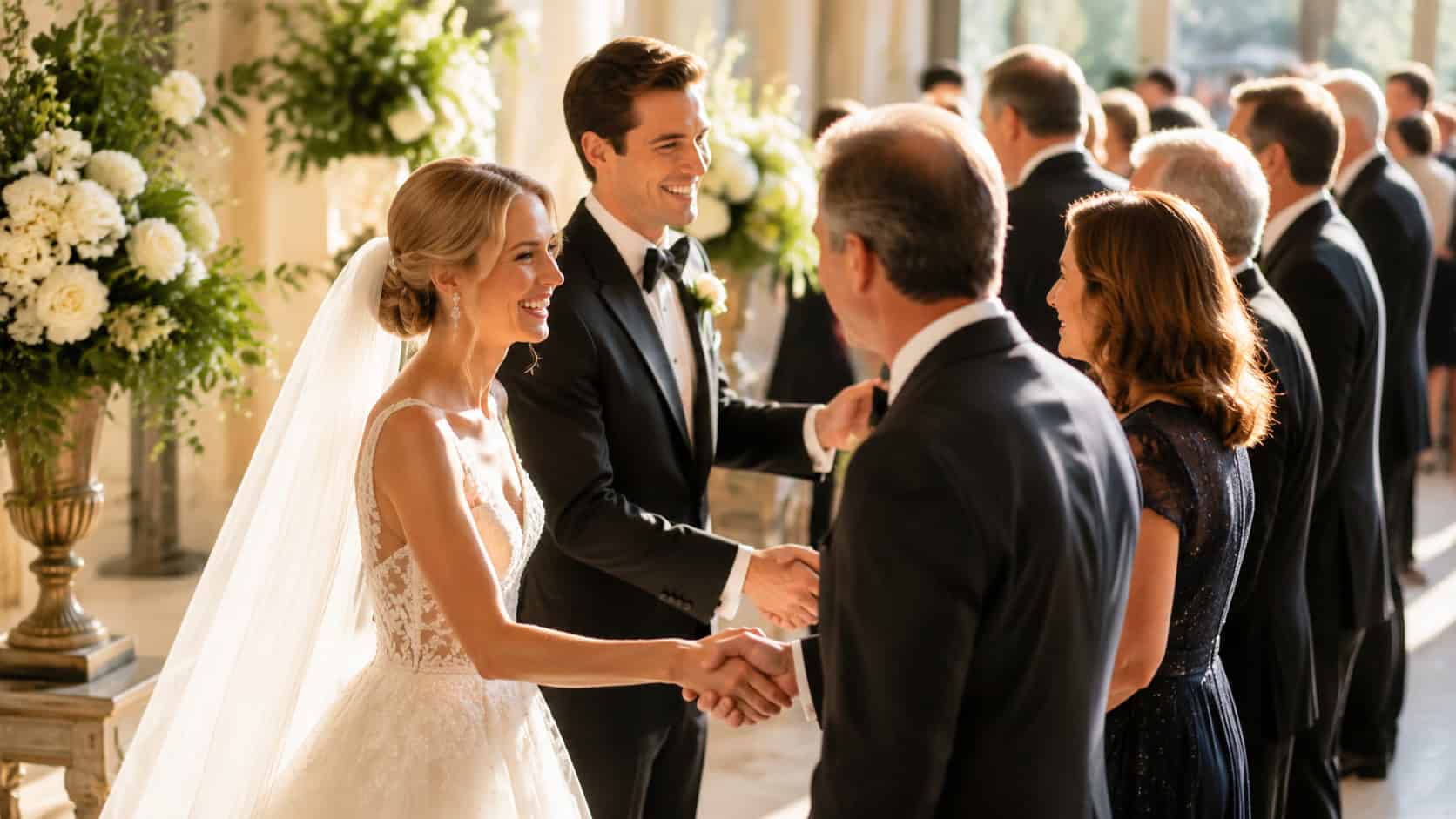
I look at the venue exit, tap my watch, and I see the line start to form. For many years, couples did not appreciate receiving lines. They feel stiff and old-fashioned, and to be honest, most couples I spoke to preferred running to the garden for golden hour portraits over greeting people in a hallway. I totally understand. But I have noticed something that seems to be changing this year, especially compared to last year, and that is the return of the receiving line. The couples bringing it back this time seem to have a very practical reason for it.

Sandals Will Throw Your Wedding for Free
Stay 7 nights in a Club or Butler suite and Sandals covers the wedding: a personal planner, the ceremony, a private cocktail reception, a two-tier cake, your bouquet and boutonniere, plus $200 toward photos and $200 toward video. No venue hunt, no vendor juggling.
It saves time. Real, actual, measurable time. I’ve literally time-tracked wedding receptions, and when a receiving line is appropriately located and well-managed, it returns 22 minutes to cocktail hour that would otherwise vanish into table-hopping, searching for the grandmother who has wandered to the coat check, and the couple trying to have a meaningful moment with 140 people in a room full of competing noise. When you create a time slot for the greetings, set them on the way to cocktails, and have a plan for it, the rest of the evening takes care of itself.
In a 150-guest wedding, unstructured table-hopping by the couple typically burns 35 to 45 minutes of cocktail hour. A well-run receiving line covers the same ground in 18 to 22 minutes, leaving the remaining cocktail hour intact for actual mingling, portraits, and passed bites.
This is how I run the formats that actually work.
1) Vintage in form, surgical in function
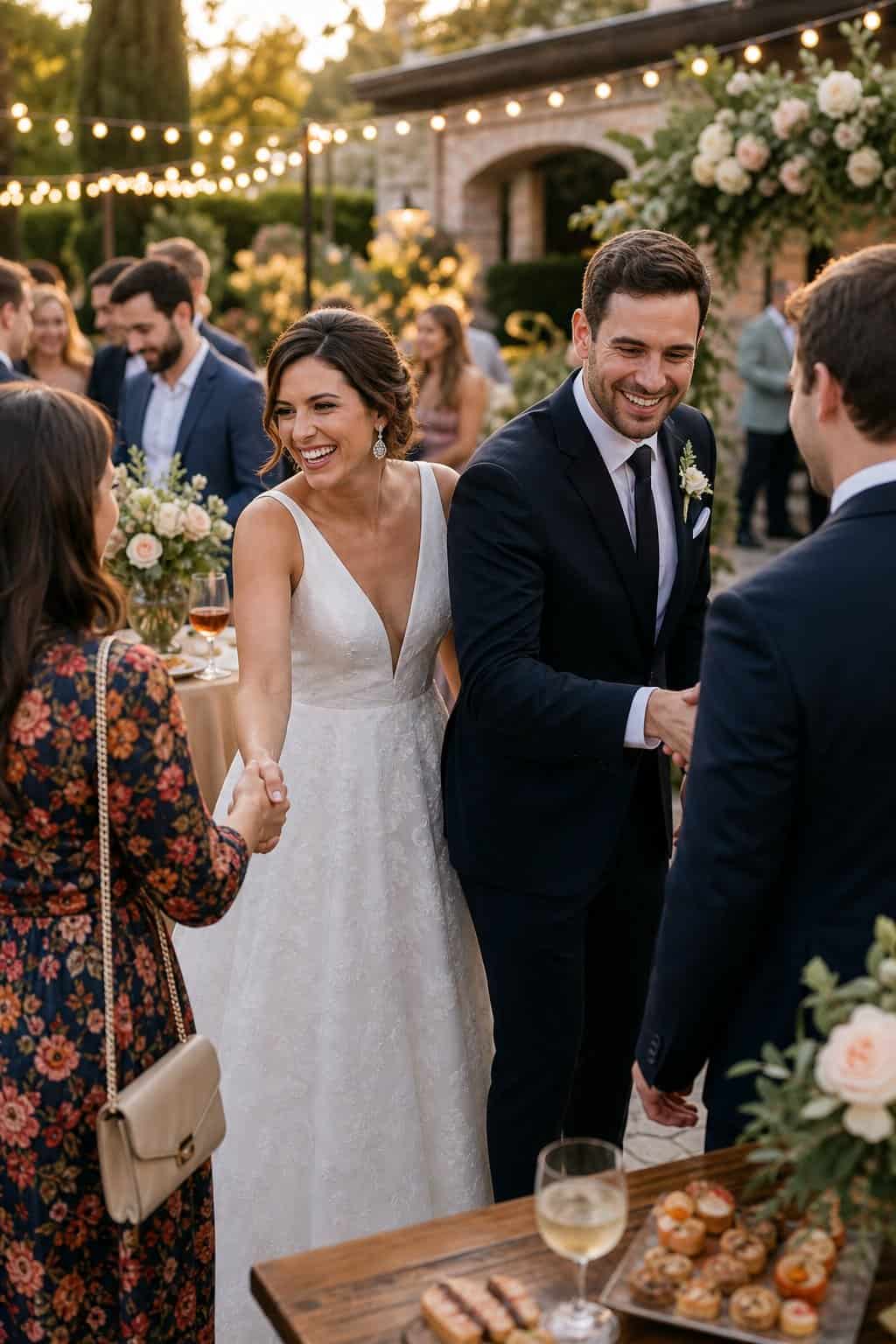
It may seem that the receiving line is a formality that some grandparents may have done at their wedding, but these lines actually serve a more functional purpose. In order to manage the flow of guests to the bar, the receiving line divides people by proximity and priority. Closest family members, and people who may have traveled the furthest to attend, get a “genuine” greeting before the noise of cocktail hour drowns everything out. It’s not sentimental service; it’s essentially a triage.
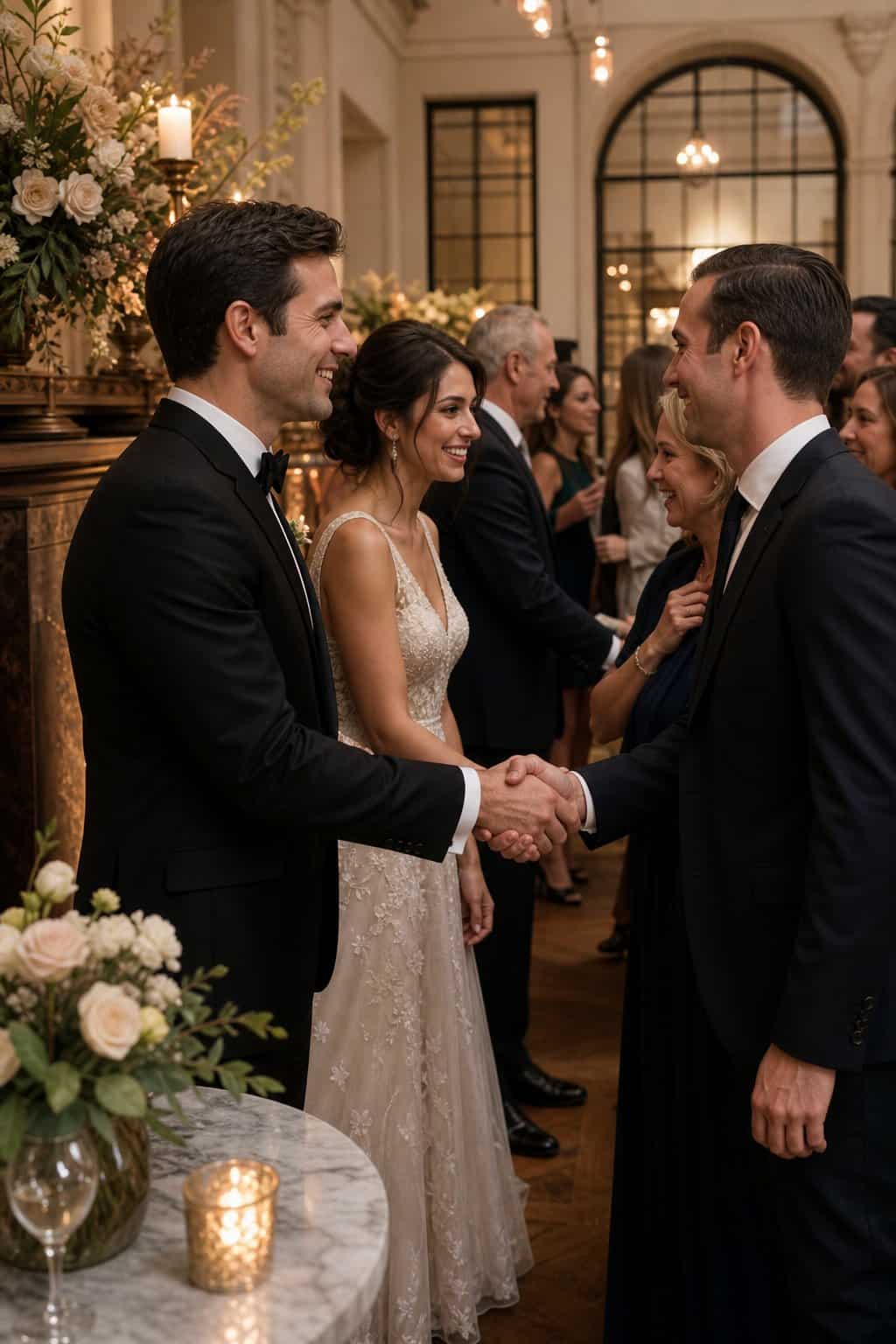
While coordinating a June wedding, the couple stood at the exit of the ceremony to greet guests. They shook hands and made small talk with dozens of guests. The guest list became cleared with the start of cocktail hour, and neither partner got stuck chatting for 45 mins with people they didn’t even know.
2) Position it on the route to cocktails
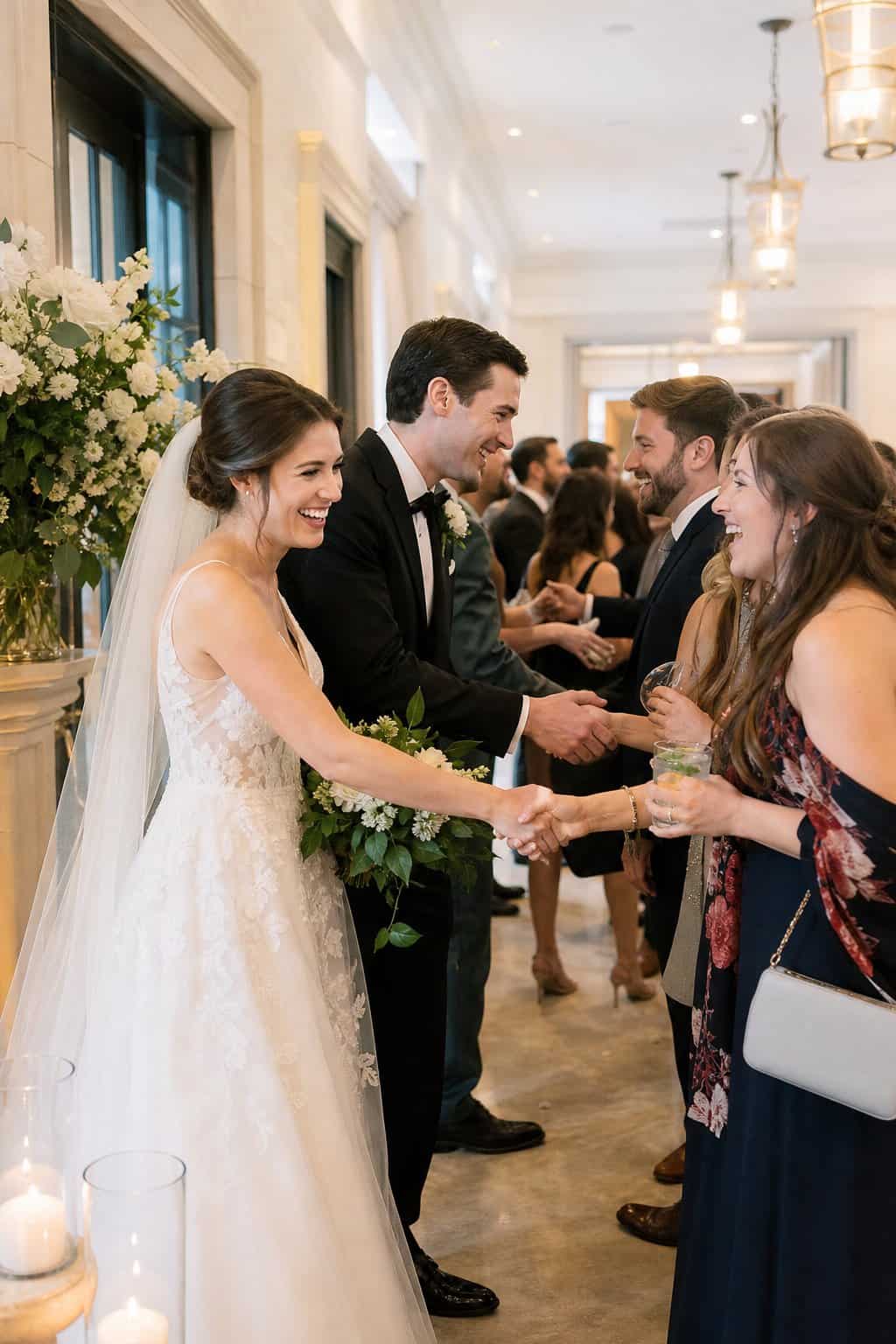
This is the detail that makes the entire receiving line work. If the receiving line is placed off to the side, or requires people to backtrack, people will skip it. However, when the receiving line is placed directly on the route from the ceremony to the cocktails, people will attend, as it feels like they have no other choice.
At a venue with a long covered walkway connecting the ceremony chapel to its outdoor garden, I saw a couple greet every single guest without guests feeling rushed. By the time the guests got to the cocktail hour, they had already said their hellos and felt acknowledged. Instead of playing catch-up, the couple walked into the party.
To ensure the smoothest flow, let your coordinator and venue point of contact know as early as possible that you want the guest procession directed past the receiving line. Walk that path during rehearsal to get the timing down for how long it takes 10 people to clear that path. A walkthrough is where you’ll identify any pinch points that could become problems on the big day.
3) The short line: four people, under ten minutes
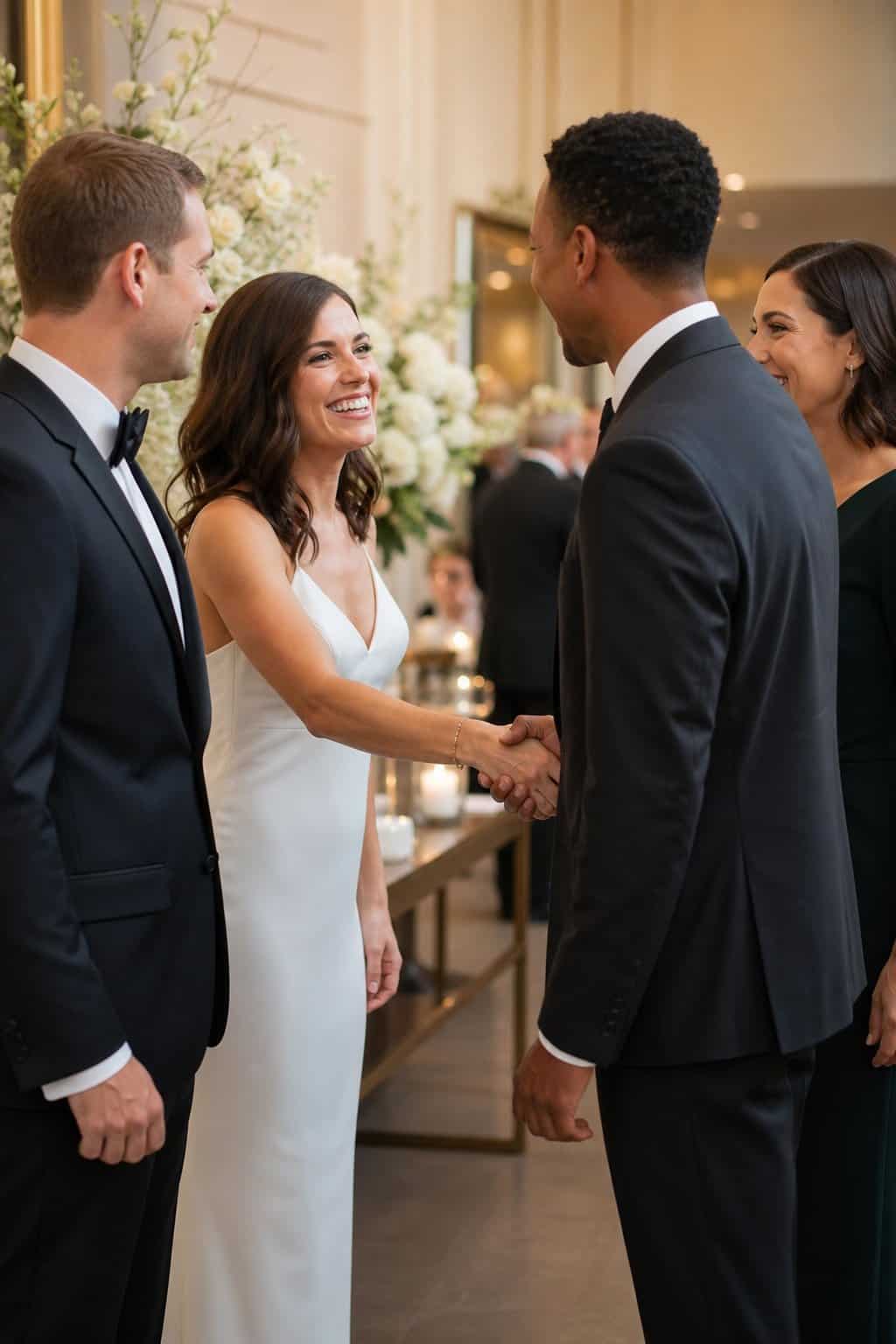
One time, I observed a four-person receiving line take 9 minutes during a backyard wedding in July. Guests were able to get drinks in hand before the first song. The band was on schedule, and the couple told me it was the first wedding moment that felt relaxed.
Try to limit the couple to one or both sets of parents, or swap in a grandparent if parents would like to take their seats. Each person adds around 2-3 minutes to the line, so it is pretty simple to calculate. Position the line right before the bar entrance so guests get funneled toward a drink as soon as the greeting is over. Practice the order at the rehearsal dinner and put a small handwritten sign to show guests where to line up.
4) Couple-only line so parents can work the room
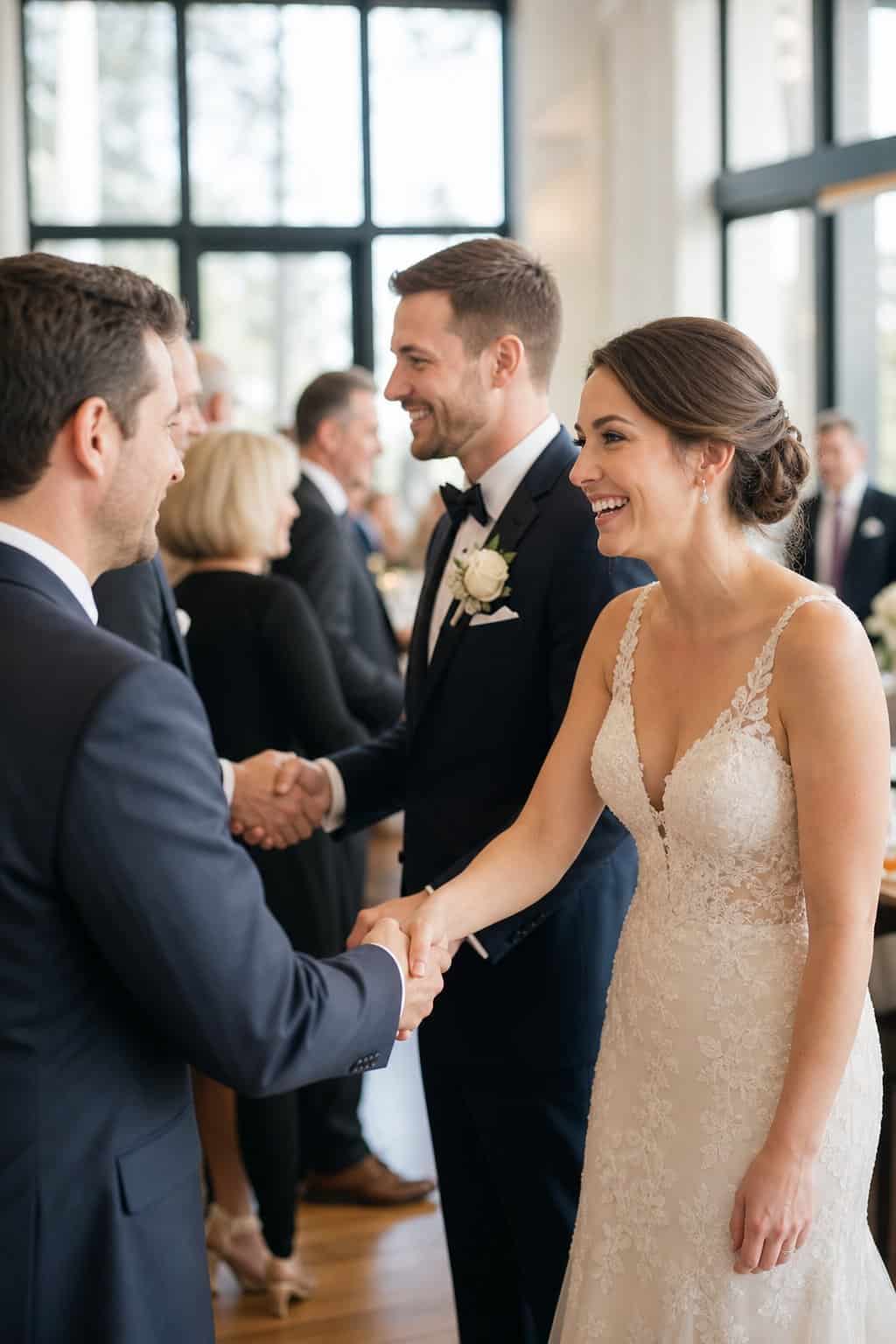
I genuinely like this plan for families where one or both parents are natural connectors, but for the backyard wedding I organized last summer, it was different. The couple was able to hold the exit while both moms (who happened to be sitting at the same table) started to work the room, and it was very organic, not at all obligatory. Any older guests in need of a break were provided company, and the couple was able to move rapidly through the greetings without the line stretching to accommodate those who wanted to linger with a parent.
Keeping the line to only two people also spares parents from standing who have already been standing since the processional. After 20 minutes in dress shoes at a summer ceremony, the option to sit and have a glass of water is not nothing.
To avoid confusion, have them mention it in the printed program or let the MC know so guests won’t wonder about the parents missing from the line. That one sentence sets expectations for everybody – the vendors, the family, and the guests.
5) Staggered stations to prevent bottlenecks
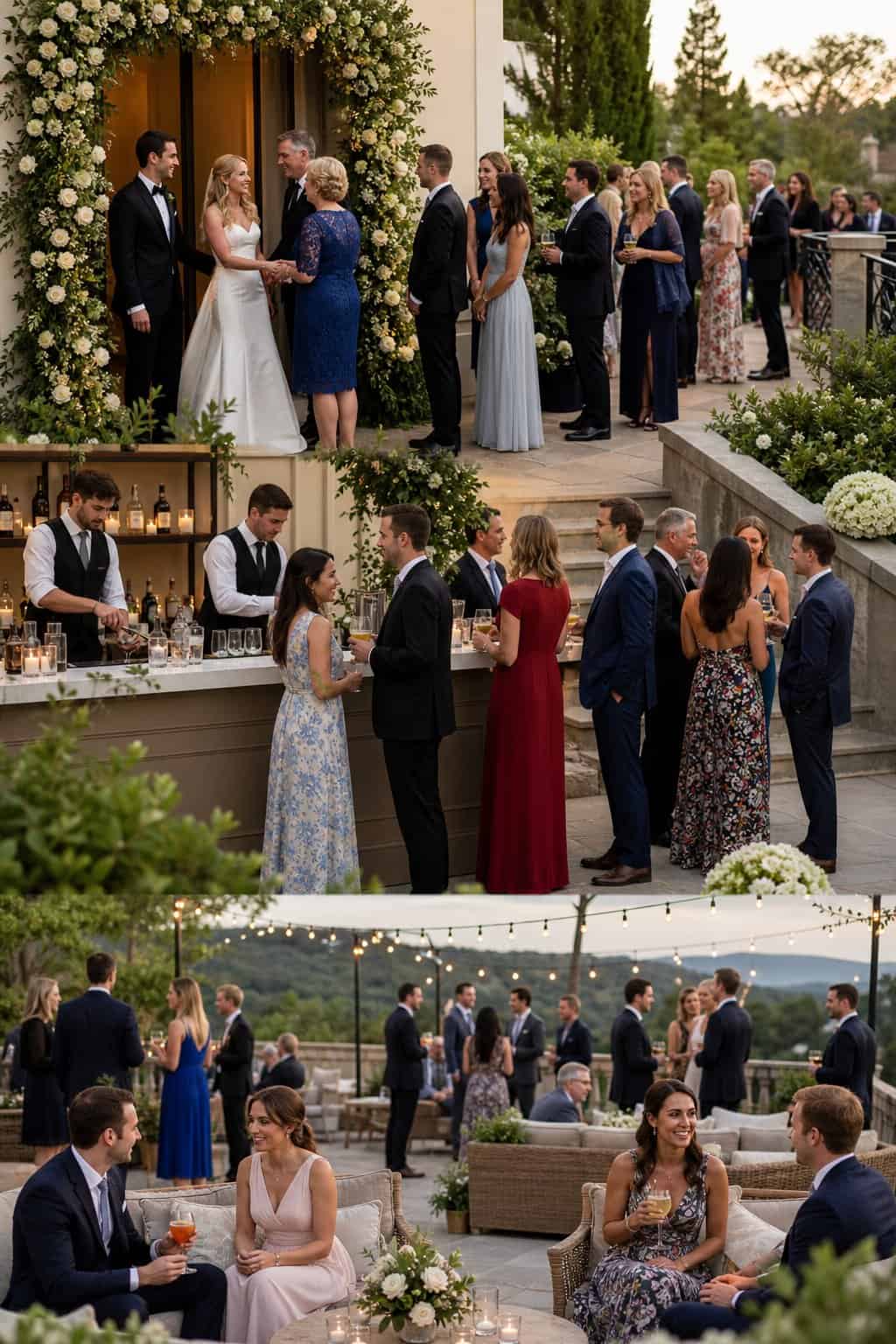
At venues where the guest flow splits naturally, a single line at a single point creates a bottleneck. While working a garden wedding last year, we set up a little greeting station at the ceremony exit, one just inside the cocktail area near the bar, and another on the terrace where the late arrivals were always going to gather. The traffic never stacked. Three short encounters replaced a single long one.
This method distributes greetings throughout the venue and allows guests from different groups to find the couple more easily. Family often stays close to the exit, friends usually go to the bar, and late arrivals gather on the terrace.
Plan your station hosts in advance and consider placing a small sign or one designated attendant at each location to make it clear to guests. Open stations in waves that align with your anticipated arrival flow, and communicate with your coordinator about the order of station openings.
“The receiving line doesn’t slow the night down. A receiving line without a plan does.”
6) Give the emcee a job during the line
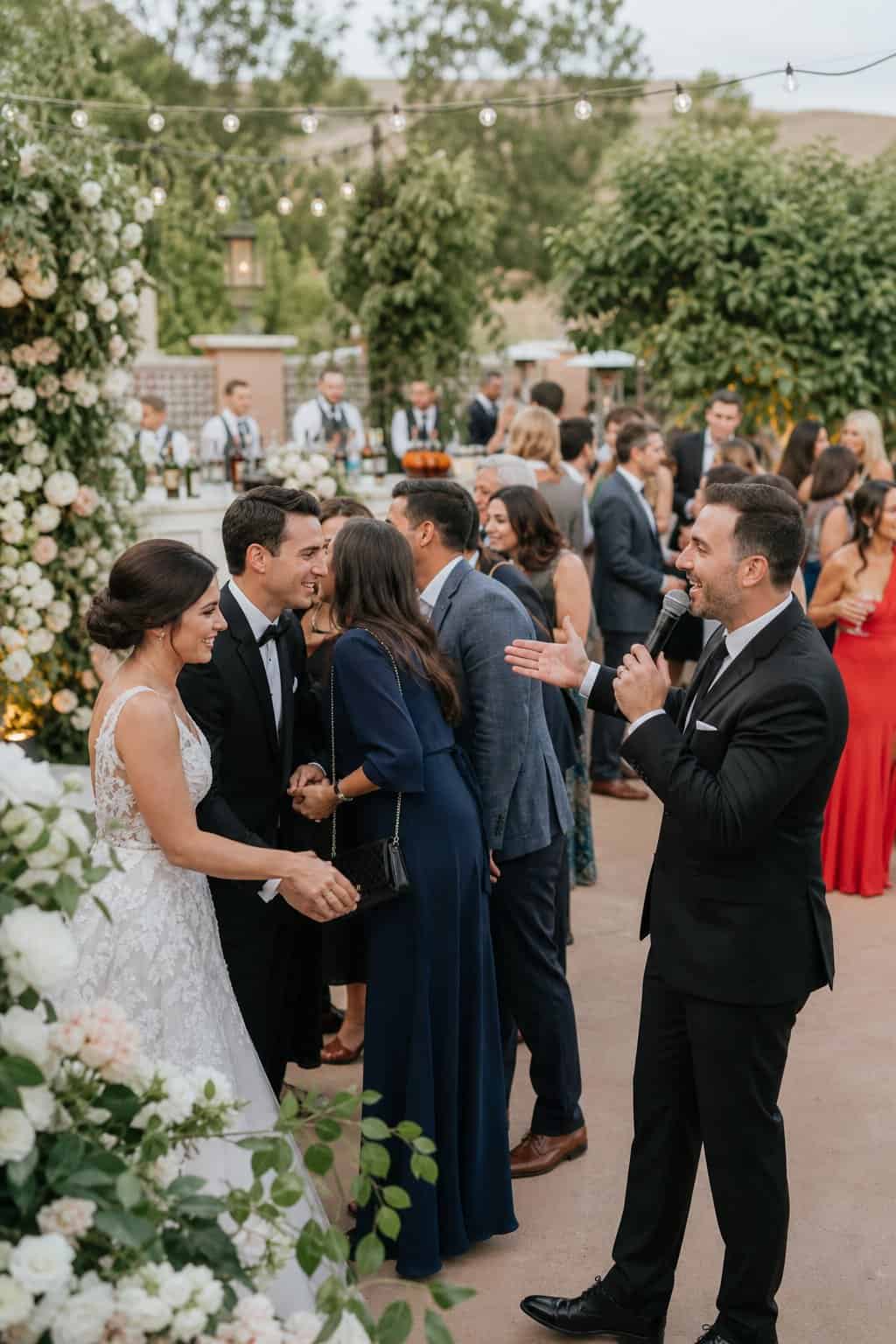
The DJ managed to divide the groups so that guests would eat their meal, dance, and return to the bar, and the staff had to manage their own clusters. [recipient’s name] is aware of how the DJ and catering staff orchestrated the guests, as this was the original reception. That event had so many unexpected factors that it proved to be a great success. Most of these elements can be controlled by a good planner
Choose the most confident voice for this task — it could be your DJ, planner, or a friend who can project their voice and stick to the script. All they need to do is assign a number to each table, wait for the couple’s cue to start the next group, and tell the caterers to have the food ready so they can serve. While this may seem like a small job, it will determine whether people are waiting in line, or whether the line keeps moving.
7) Cue cards for ushers keep volunteers from guessing
At a rehearsal held in the rain, I gave ushers small laminated cards, and they stood there and guided a constant stream of guests without stopping to ask a single question. The cards clearly specified who stood where, the sequence of greetings, and even a simple minute-by-minute goal for each group. Two minutes per table of eight. Next. No need to ask.
I print them double-sided: the front shows the lineup and positions, the back shows timing goals, and a one-line script for awkward pauses. Each usher gets one card, and we do a two-minute walkthrough before the doors open. Laminate them if there’s any chance of rain or a server with a full tray nearby.

Mr. Pen Reusable Dry Erase Index Cards
Check Price8) A micro-line for out-of-town VIPs right after the processional
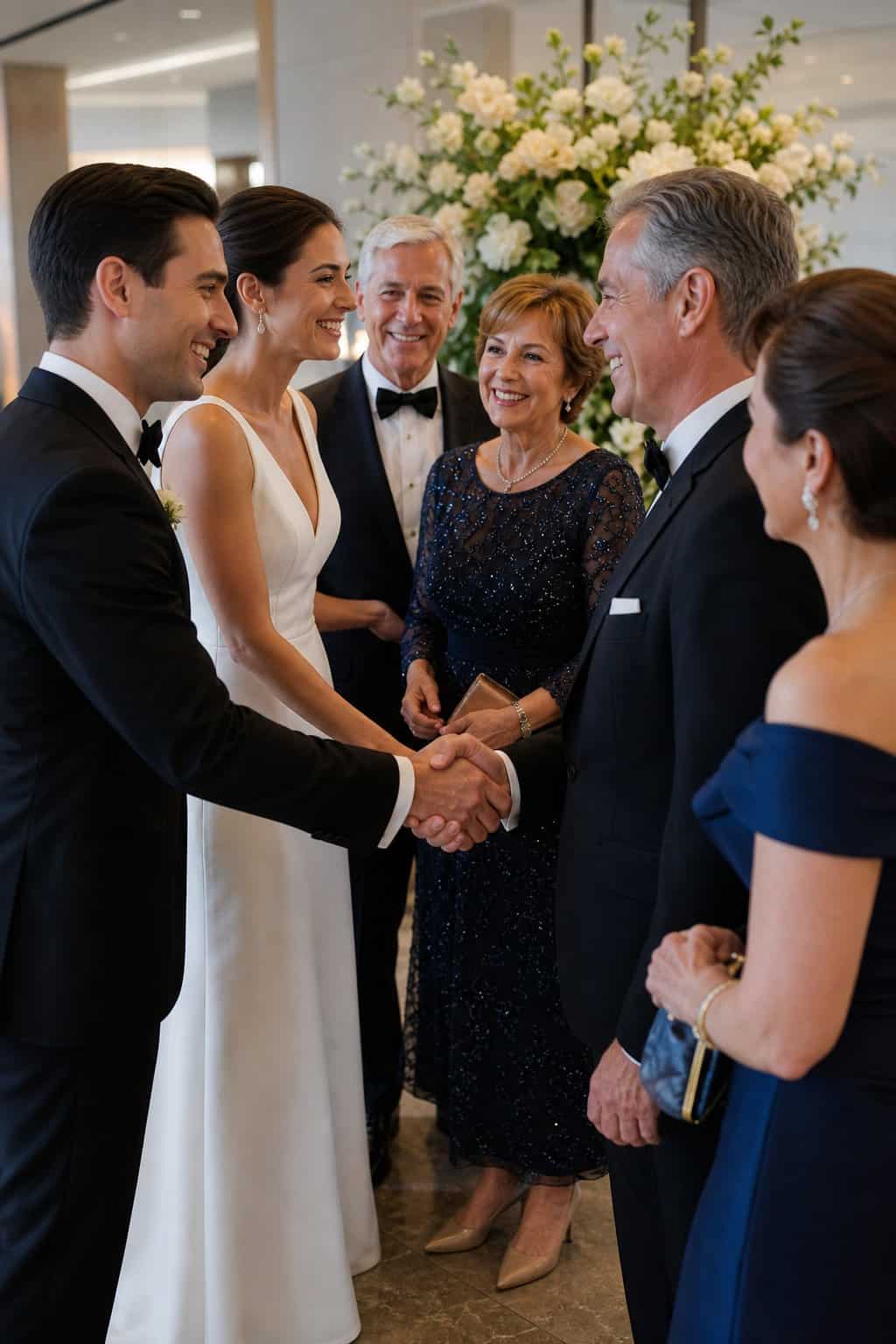
At a Portland wedding in June, I saw three grandparents, two aunts who traveled from the East Coast, and a couple of childhood friends get a real hug before the ceremony guests were even at their seats. They spent five to seven minutes focused only on the people who put the most effort into attending. Those are the people who should not have to wait until the second hour of a reception to feel appreciated.
A micro-line fits nicely at the processional pause or just after the couple arrives at the front of the ceremony space. Just do it for immediate family and out-of-towners. Also inform your officiant and musician so they hold for just a beat before the recessional kicks in. One attendant cues VIPs into place. Another keeps the flow orderly. A small sign or a quick usher announcement makes it seem intentional rather than improvised.
9) Pair the line with a welcome drink station
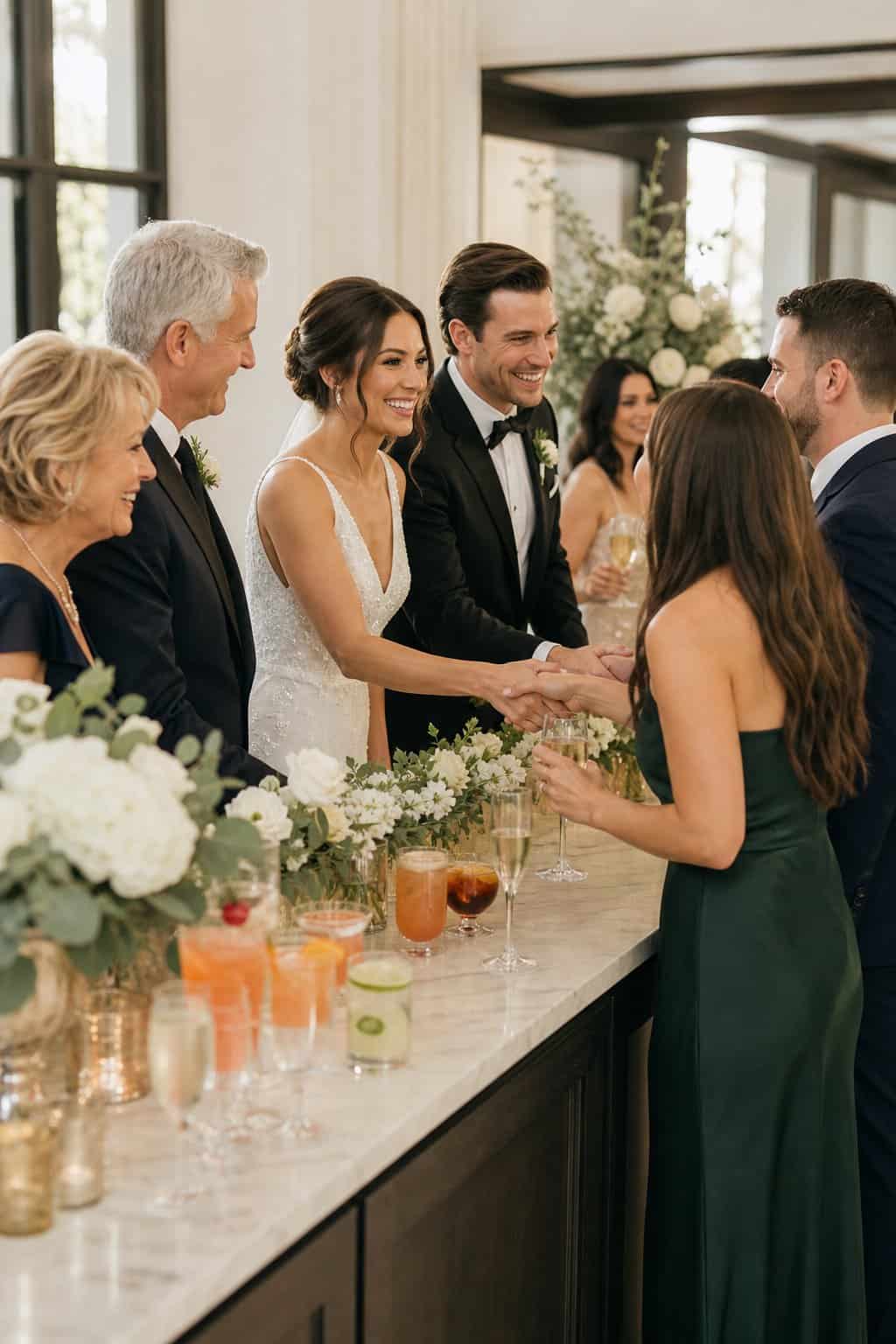
People tend to be more patient when they are holding something. At a seaside barn wedding I worked, guests grabbed a shortbread cookie and a cup of mulled cider as they entered the line. The fidgeting stopped. Conversations opened more easily. The wait felt shorter because it genuinely was doing double duty.
Position one drink station at the entry point of the line, so one of the servers or bartenders can hand drinks as guests arrive. It will just be one batched drink and one non-alcoholic option. Too many options will slow them down. Make sure the station is clearly labeled, have one person dedicated to refills, and place a small napkin tray and a discreet waste bowl there so the flow stays clear and the line keeps moving.

Lifewit 1 Gallon Drink Dispenser Set with Stand
Check Price10) A tablet at the line for quiet record-keeping
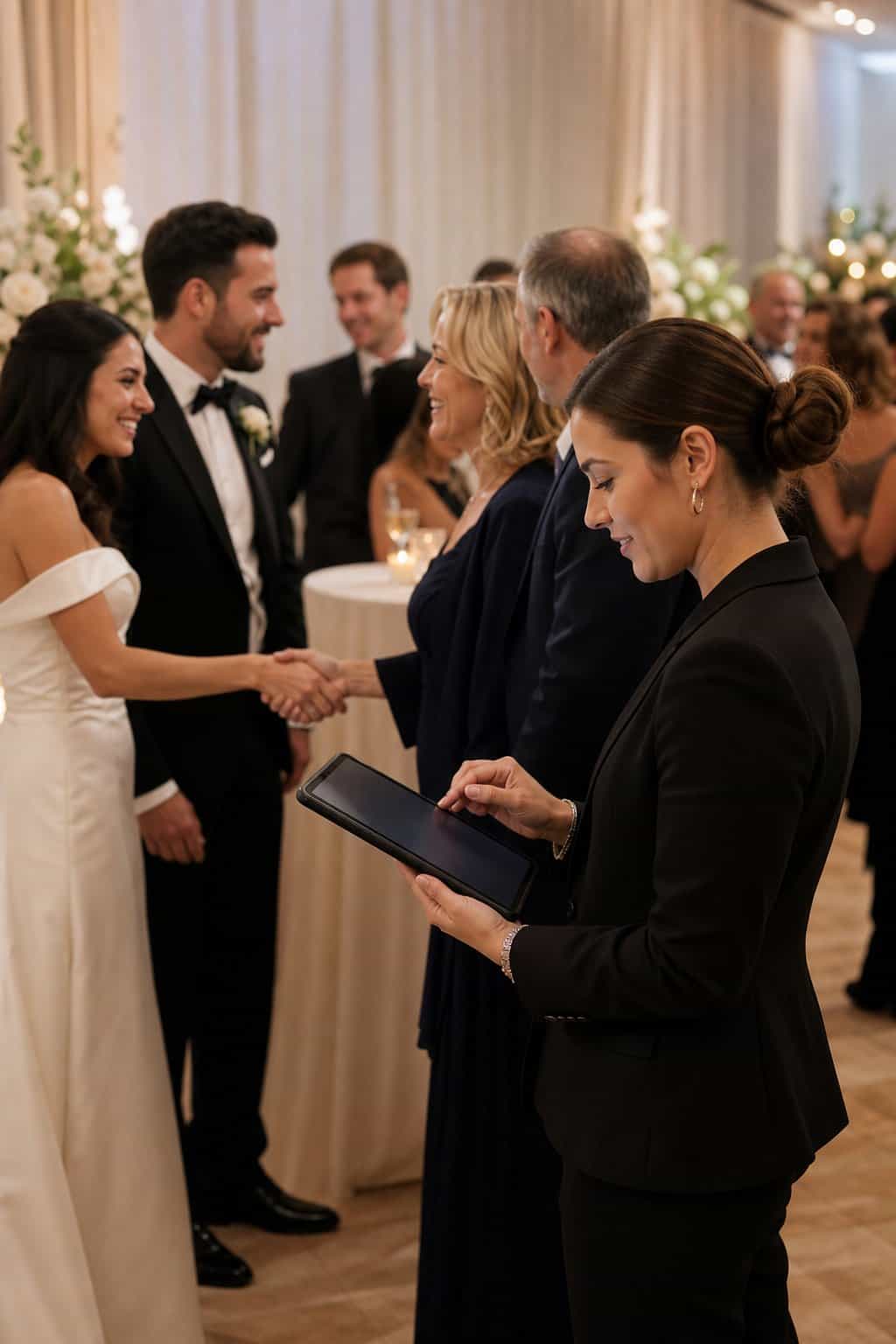
At one wedding I worked, a simple tablet on the receiving line helped us not skip half the guest list during the reception. My coordinator tapped a name as each person passed and added a one-line note: traveling with kids, mentioned a future visit, wants a photo with the couple later. Small details. Useful details.
Free Wedding Planning Checklist
Stay organized from engagement to "I do" — get our comprehensive checklist covering every task, deadline, and detail.
Live records are much easier to read than the handwriting on crumpled escort cards. They could be used to flag thank-you calls, keep track of guests who still need to be photographed, and record diet preferences that didn’t come through the RSVP system. Assign one person to manage the tablet. Make sure guests only write their name, table number, and one note so you can export the list before leaving the venue to send a more personalized thank-you message instead of a generic form letter.
11) Follow the line with an immediate seating sprint
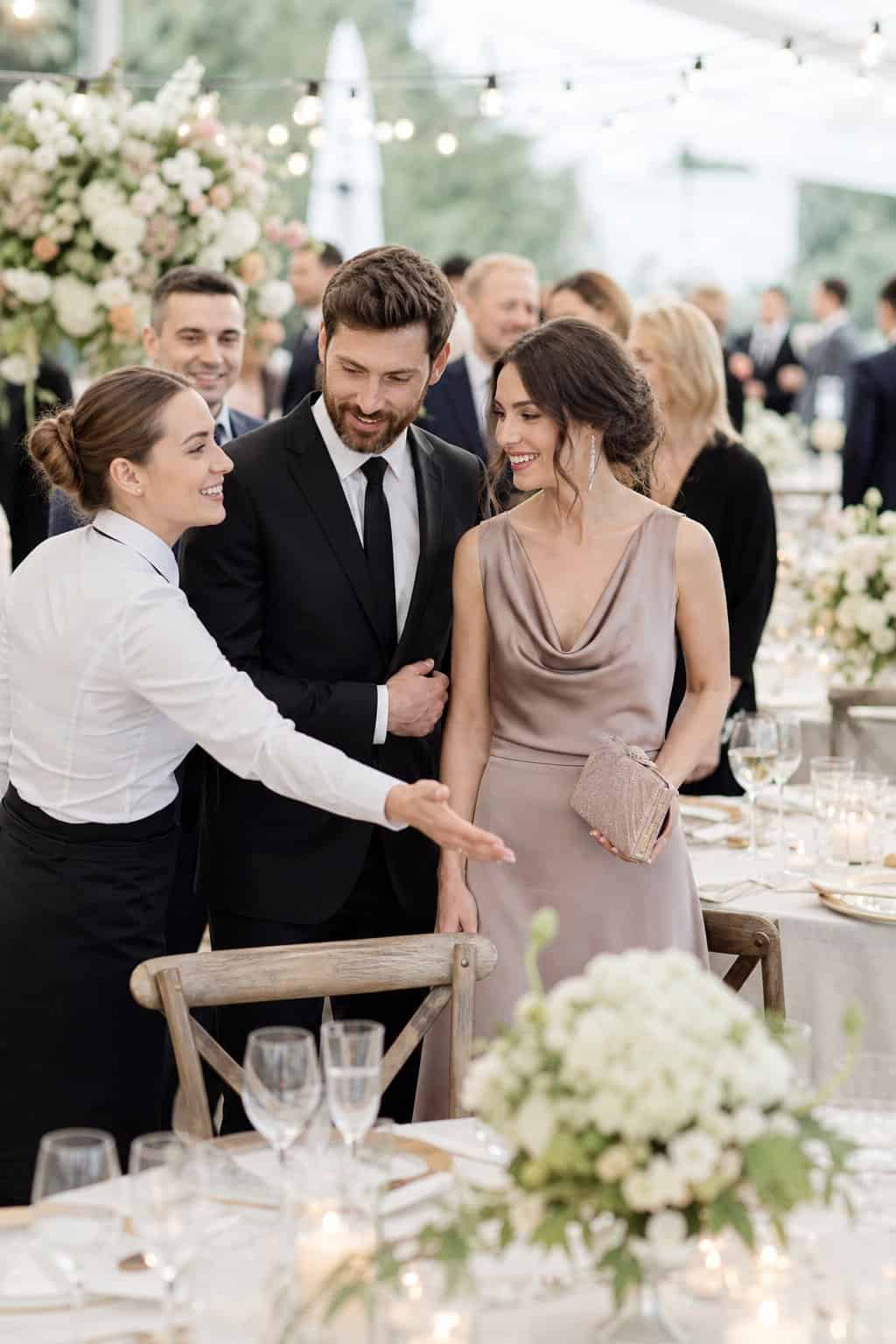
As soon as the receiving line ends, there’ll be a natural break in the action where guests will flow and group toward the exit. That flow will kill 5 to 10 minutes of cocktail hour without anyone realizing it. Combining the end of the line with a staffed, obstacle-free path leading directly to the cocktail tables will eliminate that dead time.
All you need are two ushers, clear signs on the tables, and a one-page diagram for the staff. Place cards should be grouped by table number at the entrance so ushers can quickly hand out assignments. I coordinate with catering so I know which tables will fill up first and then passed service starts in the correct section before guests even sit down.
12) Keepsakes distributed in the line to keep things moving
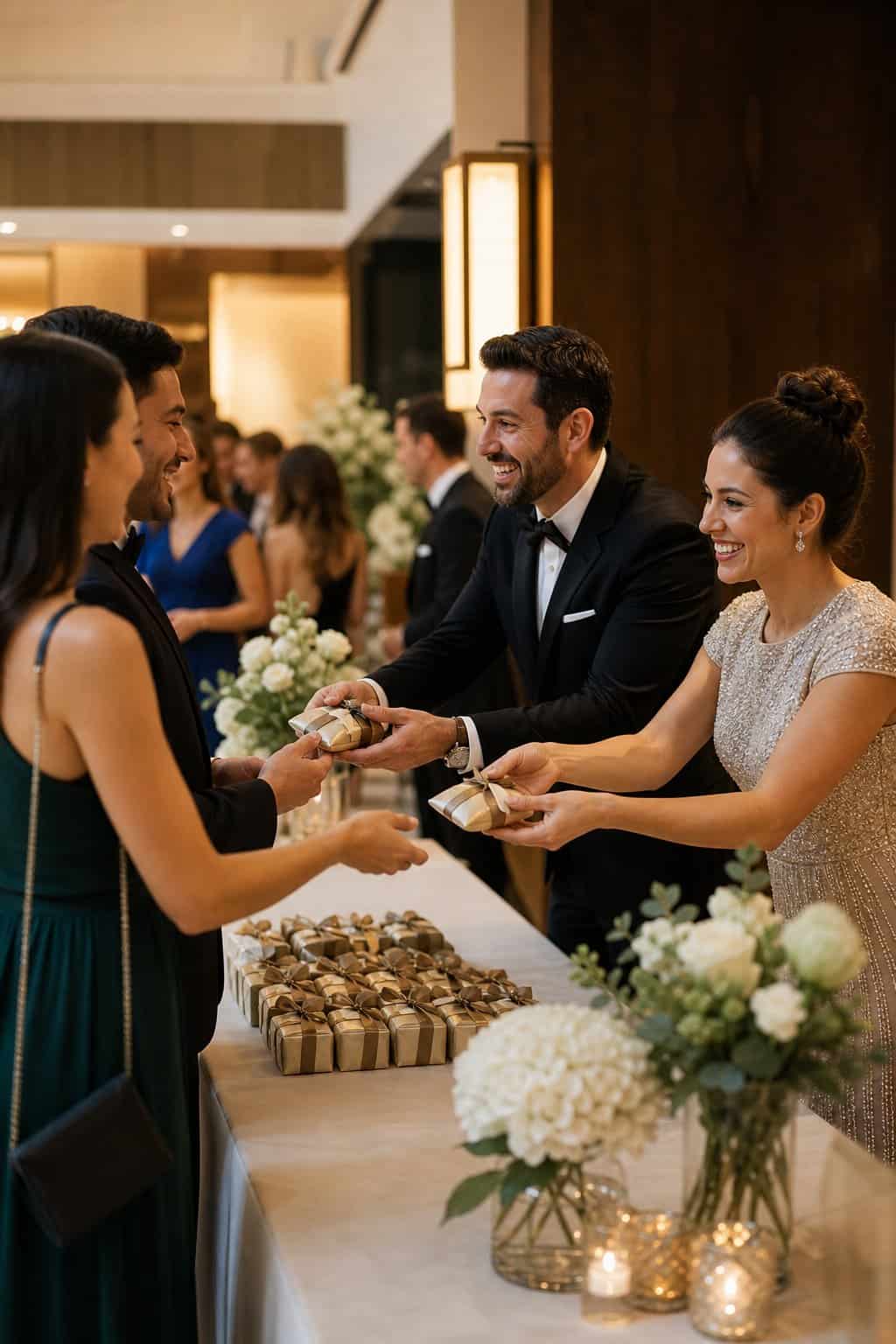
When I worked at a backyard wedding last fall, the bridesmaids stood beside the couple and passed a small jar of locally sourced honey to each guest as they came through the line. This was a very quick interaction. Guests were able to say a quick hello to the couple and receive a thank you, and get a little something for the ride home all within about 15 seconds.
The keepsake creates a purpose for guests to move through the line quickly by giving them something to hold in their hands, and allows attendants to keep the line moving. Choose something that can be easily transported, like a small bundled cookie, seed paper, or a mini candle. Rehearse the handoff once so that the attendants have the timing down in case the line stops because someone wants to read the label on their jam jar.
13) Keep introductions short, save the real talk for table visits
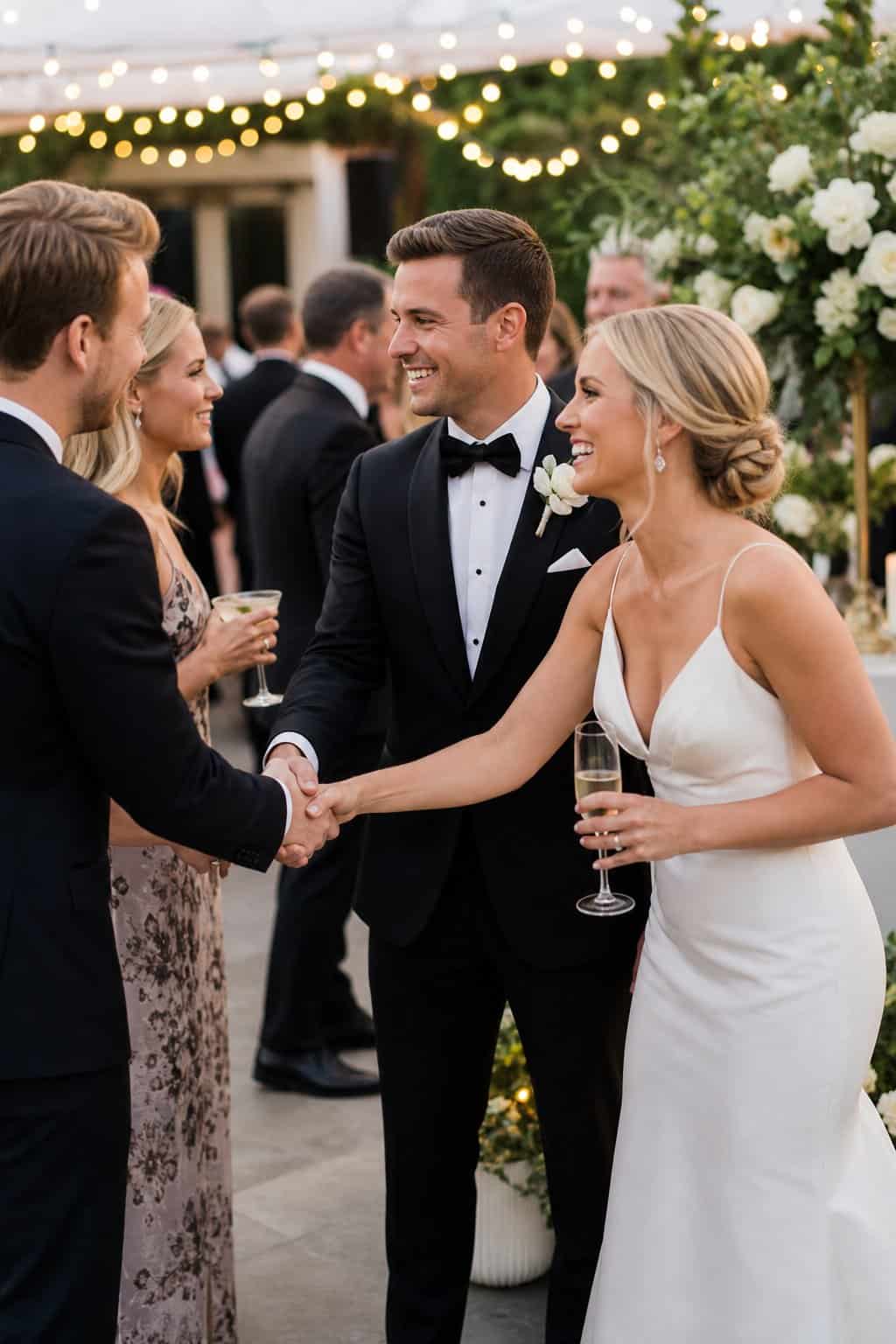
At a recent reception, I saw a guest standing in the middle of the receiving line launch into a five-minute story. Lots of people behind her were shifting their weight to and from their feet. The receiving line is not the place to hear the full story. It’s meant to be the place for the handshake, an unspoken promise to keep things moving.
Receiving lines are meant to be efficient. Guests should keep their comments short and polite. Think of it as a brief exchange to mark the start of something significant. A quick name, brief connection to the couple, suggest a compliment, and keep moving. This includes coaching your wedding party and immediate family on this before the ceremony. Longer conversations should happen at the tables during cocktail hour, and don’t hesitate to give each of them a two-sentence prompt card if they tend to linger. The line protects everyone’s time, including theirs.
14) Schedule it to front-load energy for the cocktail hour
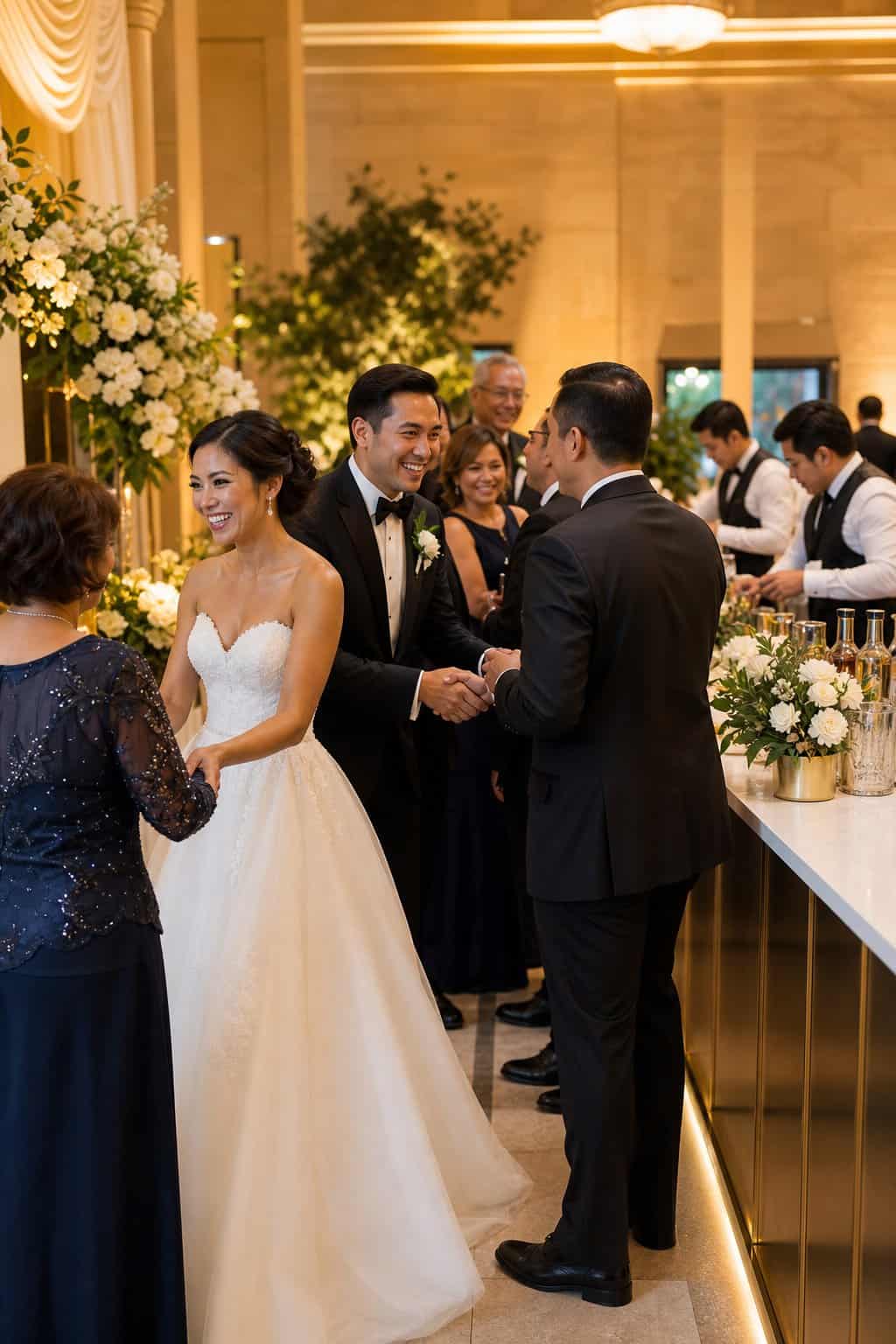
I remember a June backyard wedding when guests moved through a focused 18-minute line right after the ceremony and then stormed into the garden. Because the formal greeting was completed, the couple immediately walked into cocktail hour as hosts rather than as two people with a list of people they still needed to find. That mental shift matters more than it sounds.
Keeping the line before cocktails helps stave off the newlywed fatigue that sets in around hour two when it’s more of an obligation than a celebration. Guests catch you when you are the most energetic. You catch them after you’ve been running on ceremony adrenaline for a while. Stick 15 to 25 minutes on the timeline right after you do the ceremony exit, put the line at the door of the ceremony, and let your caterer and bar team know that drink service starts the moment the last guest walks through the line.
15) Partner with catering to time passed bites during the line
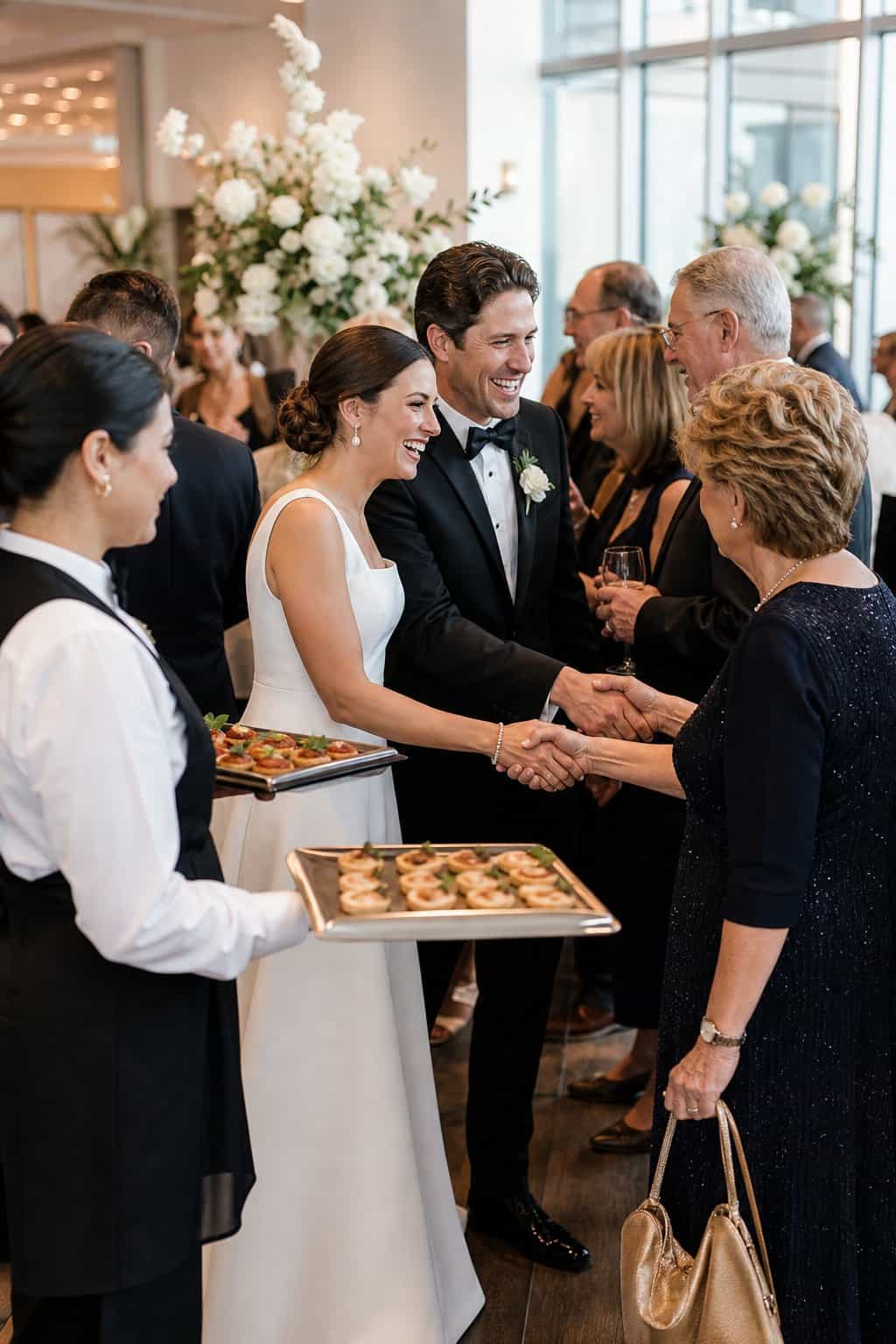
At a recent wedding I managed, the servers had aligned the timing of passed bites so that they began the moment guests entered the receiving line. Nobody was left starving. And nobody had to rush to the buffet station and miss their turn to say hello. The line, and the food service, worked together instead of in opposition.
Work out the receiving line flow with your caterer as early as possible. Estimate how many trays to prepare for every 10 minutes for the expected number of guests and choose hors d’oeuvres that are sturdy, bite-sized, and don’t need utensils. Avoid anything with a dipping sauce, or that requires two hands. Then, in writing, drop your kitchen staff on the planned start time and maximum line length, and provide an extra server for every 30 guests to keep the flow up.
16) A family liaison for guests who can’t stand in the line
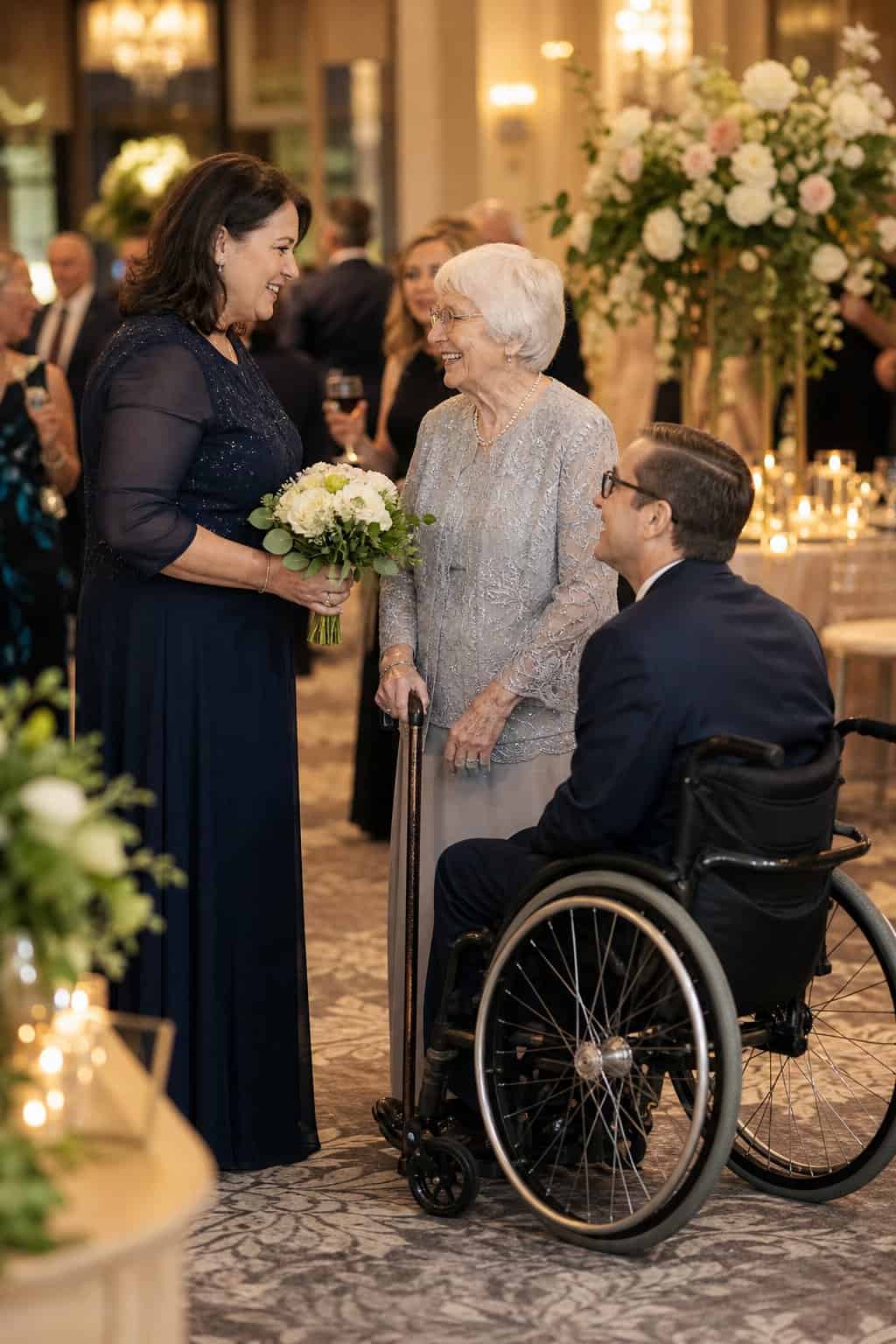
At a recent reception, Grandma June waited at a seat near the entrance while her nephew stood in her spot and greeted guests on her behalf. It worked. Guests stopped to chat with him, asked him to pass along their love, and found her at her table for a proper hug when the line cleared. She was comfortable. The line kept moving. Nothing stalled.
A liaison reduces standing and walking for older or mobility-limited relatives while making sure those family names are still represented. Pick someone who knows the family stories and can say “She’s right over there at table two, she’d love to see you” with genuine warmth. Add the role to the day-of timeline, give the liaison a cue card with names and a brief description of each relative they’re representing, and confirm everything at rehearsal so nobody is improvising on the day.
17) Rehearsed greetings keep each hello to 10 to 20 seconds
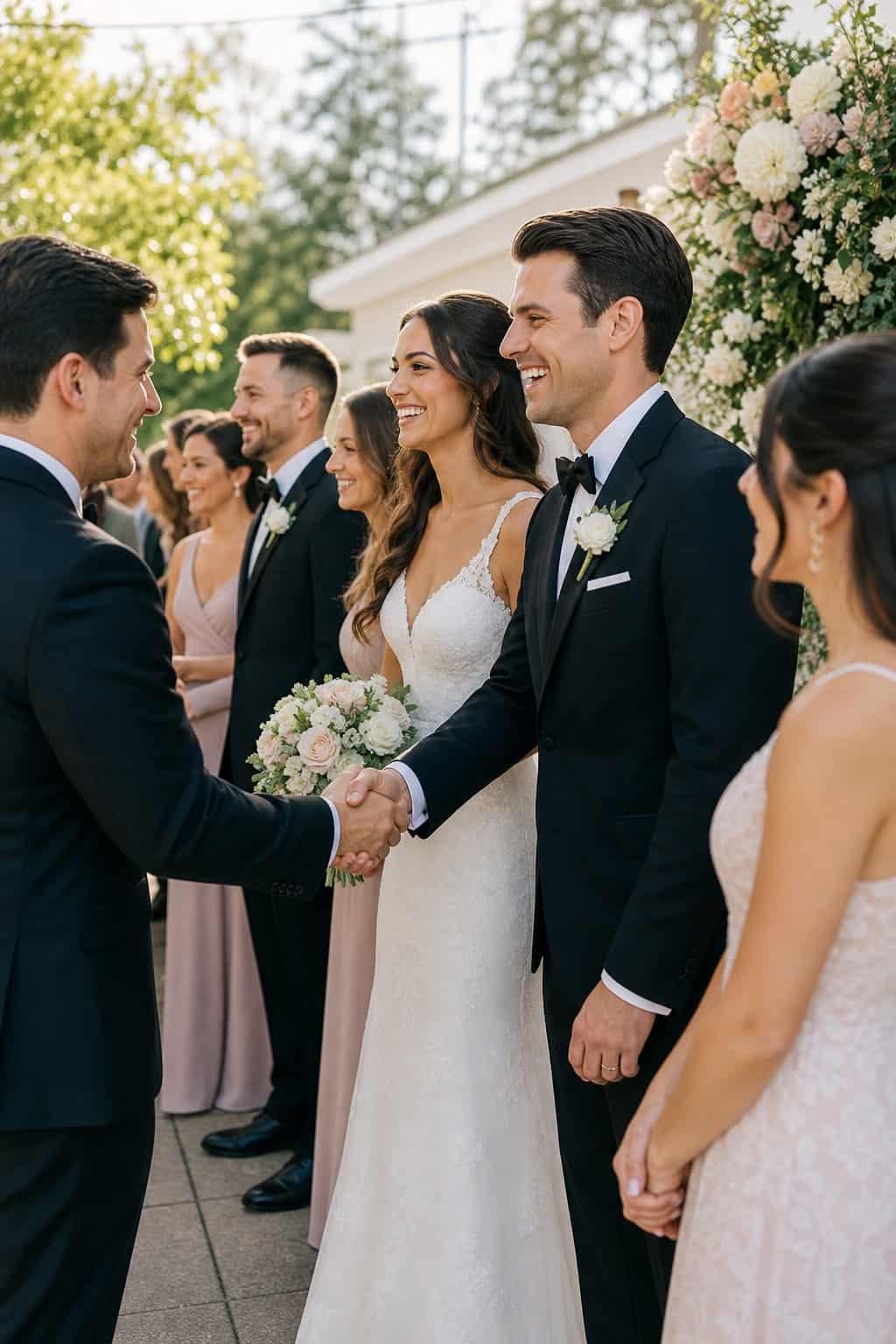
A receiving line moves fast when everyone in it has said their lines before. At a backyard wedding I ran recently, the couple and their wedding party practiced the greeting sequence once during setup and then again at the rehearsal. The line ran clean. No awkward pauses, no one over-talking, no guests standing there waiting for someone to figure out what to say.
Scripts should be simple and friendly. “Happy you made it” and “thanks for traveling for us” are both specific enough to feel real, and short enough to keep the line moving. A quick handshake (squeeze), smile, and hand-off to the next person. That’s the sequence.
Print a small card with each person’s one or two lines and hand it out at check-in. Walk through once at the ceremony exit. That one single rehearsal will save more time during cocktail hour than almost anything else on this list.
The moment that makes all 22 minutes worth it
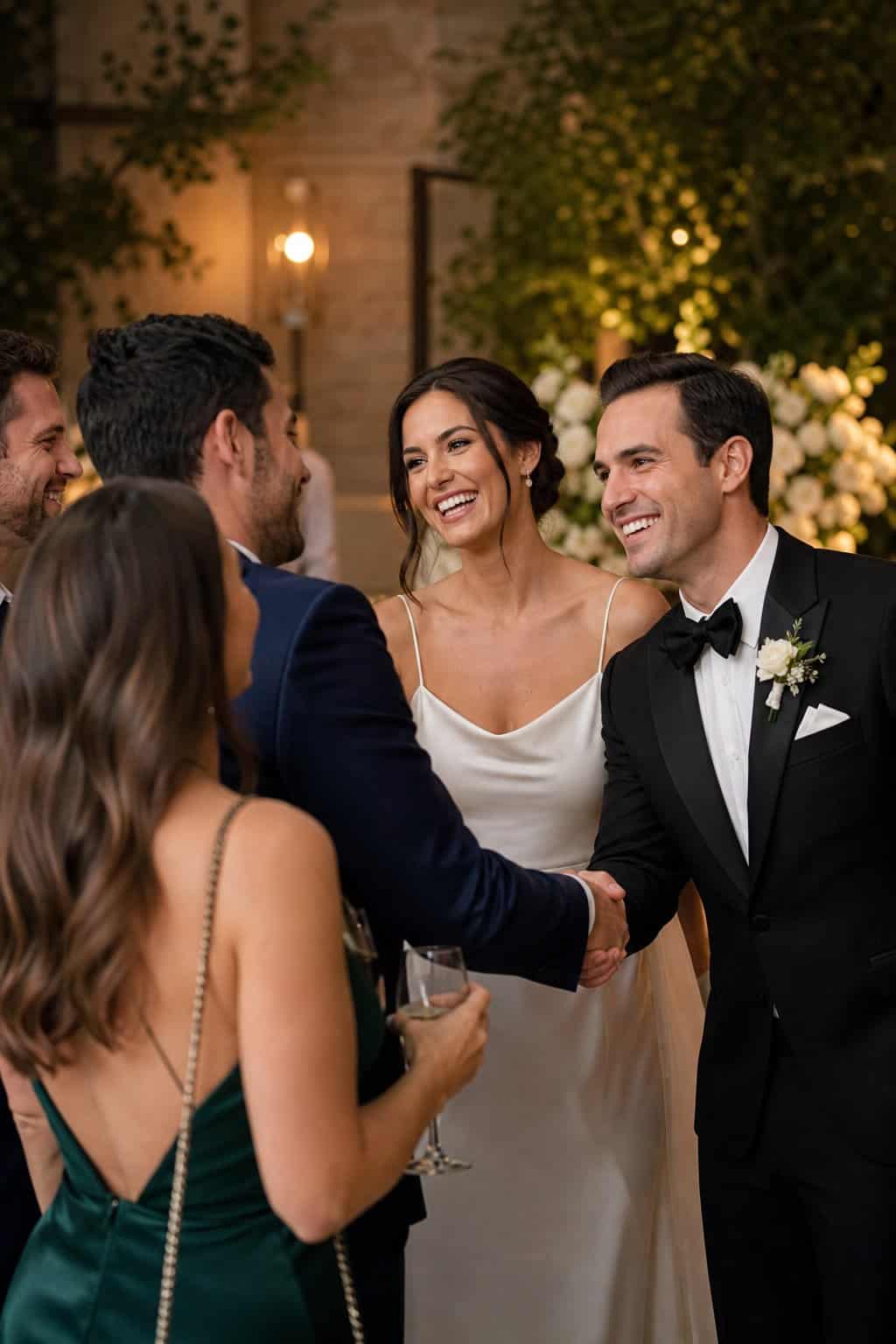
At one wedding I worked, I observed the couple have a real interaction with a guest in the middle of the receiving line. Instead of the usual “hello” or a rehearsed line, the groom said a name and referred to something. The guest’s face changed completely. I remember that a receiving line sort of gives you the gift of space to have that moment, especially for the people who came to celebrate you.
Making each greeting feel personal, not procedural
At a recent reception, I saw the couple greet each guest and then mention one specific thing about the guest, like a job, a mutual friend, or a baby. Each person looked like they hit the jackpot. It took about 15 seconds for the couple to remember something about each person. All guests appreciate when their presence is acknowledged. When you have a line of people waiting to greet you, jot down a quick note about how you can add something to the conversation so that it feels meaningful.
Planning for the pause
Since people can stop a receiving line for all sorts of reasons, I recommend placing a trusted person at the end of the line with a plan for closing conversations in a polite way at the end of the line. People say, “I’m sorry to keep the line moving, but the couple would love to catch up more at the tables.” It’s pretty effective. Assign a timeline captain to watch the clock and cue the couple gently, but firmly, when a greeting has run past 25 seconds. This is meant to be a guideline, not a barrier.
What changes on the vendor timeline when you add the line back
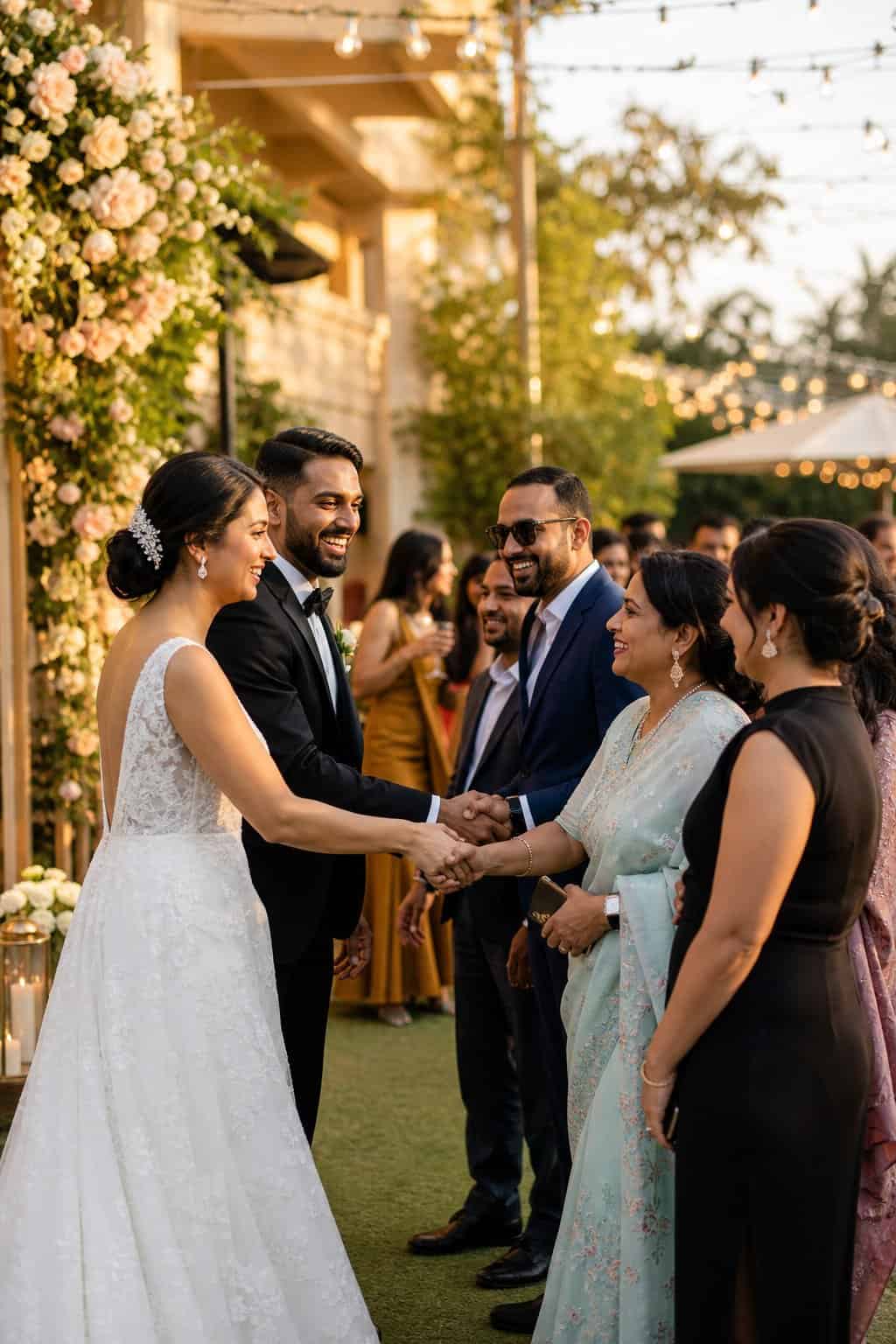
A receiving line is somewhat of a logistical dance, and without instruction, your vendors will be left guessing. Someone’s food will go cold, or your first dance will have a 20-minute delay.
Coordinating with catering and bar service
I recall an event I coordinated this spring where the caterer had to delay sending out passed appetizers because the couple was stuck at the receiving line and the guests were arriving. It was obvious we had an issue because I had flagged the line in the brief. If the kitchen hadn’t had a backup hold station set up, it would have been a big problem.
When you communicate with the caterer, make sure to include the start time of the receiving line and its maximum length. Also include your concerns about how they will keep things hot. Ask for a new pass schedule and confirm if there will be a cocktail bar service before or after the line clears. If the main course is plated, adjust the main course time to account for the expected line length to prevent the kitchen from having to rush or over-hold food.
Photographer and DJ adjustments
Line photographers need to be given a shot list with specific guidelines before the event, not a vague mention of it as guests are forming a line. This includes grandparent moments, family names, exit poses, etc. I’ve seen photographers miss the best shots of the receiving line because they were occupied shooting detail shots of the ceremony when the line started to move.
DJs and band leaders should be informed of when the couple’s first song is, as well as when the cocktail hour is starting/ending. Also be mindful of the line greeting volume. During the line, the couple will be greeting the guests, so having the volume too high can inhibit greeting plans. Share a timeline with each vendor and confirm with them how they plan on getting extra time, whether it be more cocktail hour photos or delaying dinner.
The formal receiving line is a modern invention. The first documented receiving line is from the 18th century European courts. The court hosts had to acknowledge each guest before the fun stuff could start. Today’s version took the practice that didn’t work – the guaranteed greeting.
The receiving line never went away. It just became unorganized chaos, with the couple trapped at the door for 40 minutes, catering staff holding trays, guests debating whether they should go get a drink or just wait. With a bit of planning, you can take control of those 22 minutes.