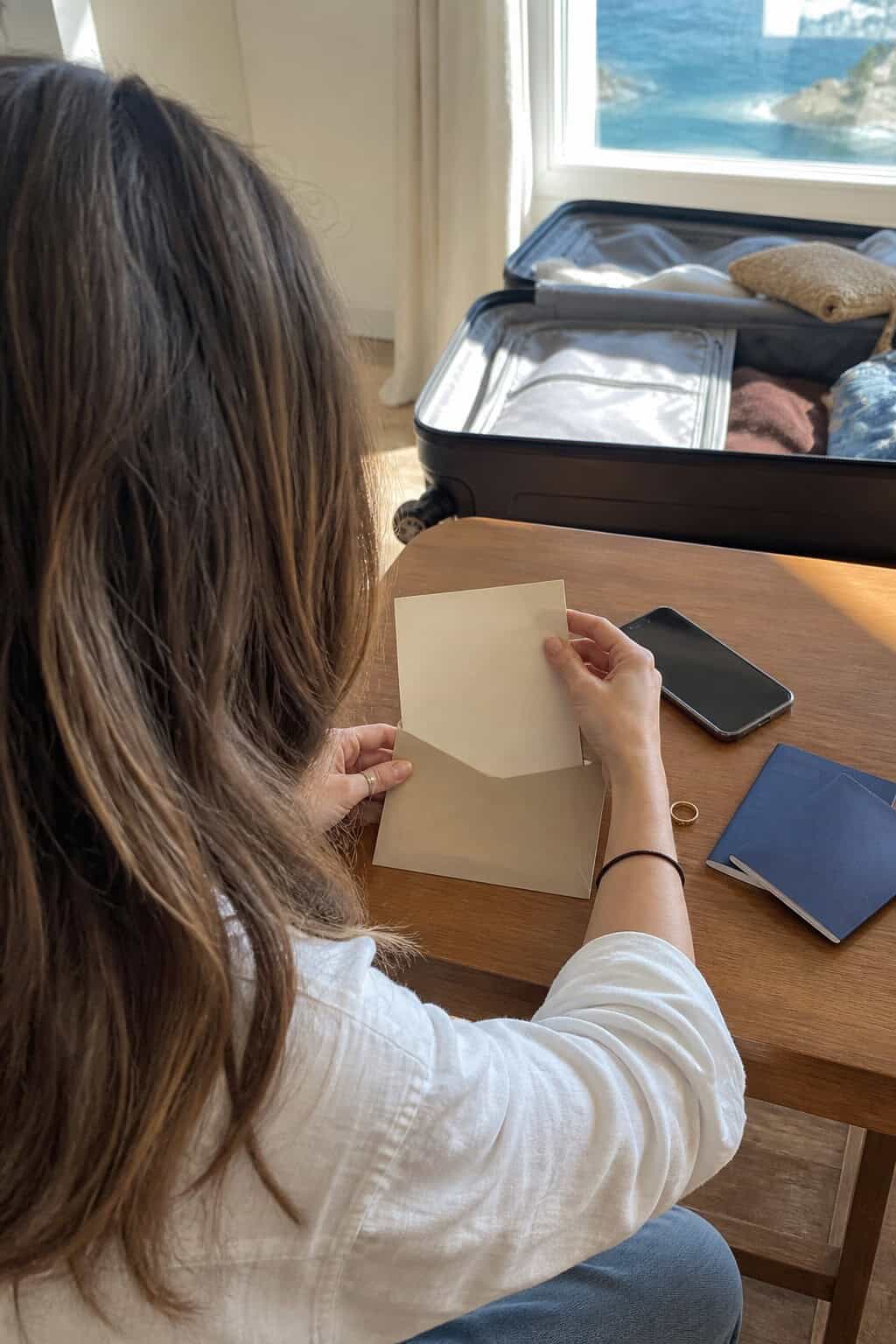
The order matters more than the words. Parents and the wedding party hear it from your mouth. Everyone else hears it from a save-the-date that points to a website with actual prices on it. Nobody hears it from Instagram first. Do those three things in that order and you can be clumsy with the wording. Do them out of order and the most graceful sentence in the world won’t fix it.

Sandals Will Throw Your Wedding for Free
Stay 7 nights in a Club or Butler suite and Sandals covers the wedding: a personal planner, the ceremony, a private cocktail reception, a two-tier cake, your bouquet and boutonniere, plus $200 toward photos and $200 toward video. No venue hunt, no vendor juggling.
The announcement also doesn’t need to defend the choice. You aren’t asking permission. You’re handing people the information they need to make a decision without pressure. If you’re leaning toward a resort, one place to book makes the message shorter: Sandals’ free wedding package puts every guest at the same property. See the current Sandals offer and our breakdown of the fine print.
Step one: the phone call
Before anything is mailed or posted, call the people whose presence is non-negotiable. Parents, siblings, the wedding party, the grandparent. Not a text. A call, or in person.
Lead with the decision, then the ask, then the exit:
“We’ve booked our wedding in Antigua for May 14. We’d love for you to be there, and we know it means flights, several hotel nights, and time off. We wanted you to hear it from us before the save-the-dates go out.”
Don’t end with “You’ll come, right?” It turns information into a loyalty test, and the answer you get in that moment isn’t real anyway.
If the date isn’t signed yet, ask only these people about immovable conflicts: due dates, surgeries, a kid’s graduation, an expired passport. Do not run a group vote. There is no date that works for 40 people across three school calendars, and trying to find one is how couples lose a year.
Step two: save-the-dates, 9 to 12 months out
Send them the week the contract is signed. For a destination wedding a save-the-date is a travel notice, and 9 to 12 months is the normal window. Go longer for international travel, a holiday week, or an island with 40 hotel rooms. Never send one before the venue is contracted; a moved date after people have booked flights is the single fastest way to make a guest list resentful.
Have these facts ready before it goes out:
- City or island, and country
- The wedding date
- Recommended arrival day
- The wedding website address
- The airport to fly into
- Hotel name and a rate range, even if provisional
- Whether children are invited
- A line saying a formal invitation will follow
Don’t ask for an RSVP on the save-the-date unless you’re prepared to treat the answer as real. An enthusiastic “wouldn’t miss it” 11 months out is a mood, not a headcount. The destination wedding checklist organizes the travel details that belong behind the announcement.
Save-the-date wording you can copy
Keep the card simple. Anything that might change goes on the website.
Plain
“Save the date for the wedding of Maya Chen and Jordan Reed. May 14, 2027. Antigua. Travel details at ourweddingsite.com. Formal invitation to follow.”
Warm, and honest about the trip
“We’re getting married in Antigua on May 14, 2027. We’d love to celebrate with you, and we know this trip is a real commitment. Details at ourweddingsite.com. Formal invitation to follow.”
Small wedding
“Please save the date for our small destination wedding. May 14, 2027, Antigua. Invitation and travel information to follow at ourweddingsite.com.”
Group text for the wider circle, after the calls
“Hi all. We booked it: May 14 in Antigua, four-ish nights, flying into ANU. Hotel info and rough prices are up at ourweddingsite.com. Save-the-dates are in the mail. We know it’s a big trip and there’s zero pressure either way. Just wanted you to hear it from us and not from Facebook.”
Skip “Pack your bags!” as the whole message. It assumes everyone has the money, the time, the passport, and the desire. For paper, postage, and beach-appropriate design, see the beach wedding invitations guide.
Step three: a website that answers the money questions
Guests want to know what attending costs before they decide. Give them facts, not a pitch.
Where to stay
Hotel, room categories or a rate range, minimum stay, taxes and service charges, how to book, the deposit and cancellation terms as the property quoted them, and the room-block deadline. Update the page when rates change. If guests can stay elsewhere, say so. If the resort charges a day pass for off-property guests to attend the wedding, say that too, with the number.
How to get there
The one practical airport, not every airport on the map. Transfer time and options with prices. Say if you’re arranging transport, and on which days.
What you’re hosting
The ceremony, the reception, the welcome drinks if there are any. Label optional, guest-paid excursions clearly. “Join us for a catamaran day” reads as hosted. “Optional catamaran trip, Saturday, about $95 a person, book directly with the operator” does not.
Free Wedding Planning Checklist
Stay organized from engagement to "I do" — get our comprehensive checklist covering every task, deadline, and detail.
What guests handle
Link to official sources for passports, visas, entry forms, and health requirements. Don’t paraphrase rules that change, and don’t promise anyone they’ll be admitted.
The out
One direct line: “We know travel won’t work for everyone, and we completely understand if you can’t join us.” Put it on the home page, not buried under FAQ.
Step four: the invitation, four months out
The invitation turns early notice into a real response. Mail it around four months before the wedding, roughly twice as early as a local wedding, because guests are making final travel purchases on the back of it.
On the card: date, location, time, dress code, RSVP deadline, website. Everything else lives on the website or a details card.
Set the RSVP deadline eight weeks out, a month ahead of the venue’s final-count date, so you have time to chase the people who never answer. Check that timing against the hotel and transport commitments too, not just catering.
For online RSVPs, collect each person’s name, attendance, meal or allergy notes, where they’re staying, and arrival details if you’re running transfers. Don’t collect passport numbers through a wedding form.
Saying who pays without sounding like an invoice
Guests pay their own travel and lodging. You never need a line that says “flights and rooms are your responsibility.” The website says it for you through the booking instructions and the hosted-events list:
“Guests can reserve rooms through the link below. The ceremony, reception, and Friday welcome drinks are hosted. Saturday’s boat outing is optional, and tickets are purchased directly from the operator.”
Clear beats delicate. The venue contract controls the actual financial details, so mirror its language rather than improvising.
The relative who’s upset
Usually it’s cost, fear of flying, feeling shut out of the planning, or a quiet belief that you chose a wedding they can’t attend. You can acknowledge the impact without reopening the decision.
- Name the feeling.
- State the decision without arguing the case.
- Take the pressure off attending.
- Offer something separate, only if you want to.
Put together, it sounds like this:
“I understand why you’re disappointed, and I’m sorry the travel makes this hard. We’ve decided on Antigua and the plan is final. We’d love to have you there, and we don’t want you taking on a trip that isn’t comfortable or affordable. If you can’t come, we’d still love to have dinner with you when we’re home.”
Don’t list what they spent on a cousin’s wedding, tell them they need a vacation, or suggest a payment plan. Their budget isn’t yours to audit.
When they ask for a hometown reception too
A second reception is a second event with its own cost and workload. Don’t promise one in the middle of an emotional conversation. If you want a casual gathering later, describe it precisely: a backyard lunch, a restaurant dinner, an open house. If you don’t, say the destination wedding is the only formal celebration. Sharing photos, streaming the ceremony, or visiting relatives afterward are all fine and none of them is owed.
Adults only
Tell parents first and early. Childcare for four days decides whether they come at all. Address invitations to the invited adults only, state the policy on the website, and keep exceptions few and explainable.
“Our ceremony and reception are for adults. We know this affects travel plans, and we completely understand if you can’t attend.”
If the resort itself is adults only (Sandals is), say so. If immediate-family kids or the flower girl are exceptions, don’t pretend there are none. And skip the line about parents “deserving a night off.” A destination wedding is four days of childcare, not one babysitter.
A very small list
People who aren’t invited will hear about the wedding. You don’t owe a mass announcement, but a direct word helps with the relatives and close friends who might reasonably have expected one:
“We’re having a very small destination wedding, immediate family and a few close friends. We had to hold the list firm, and I wanted you to hear that from me.”
Don’t blame the venue if you chose the size. Don’t say “we wish we could invite everyone” and then post about adding a coworker. The micro wedding guide is about making that smaller format feel complete rather than apologetic.
The eight ways this goes wrong
- Posting publicly before telling parents or siblings
- Sending a save-the-date before the venue is contracted
- Hiding likely room prices until people express interest
- Calling the trip affordable on someone else’s behalf
- Treating an early verbal yes as a binding RSVP
- Adding required, expensive events after guests have booked
- Complaining about people who decline
- Expecting a gift from someone already paying $2,000 to attend
Every message you send should carry the same three things: you’re genuinely invited, here’s what the trip involves, and the relationship is safe if you can’t come. State the destination. State the date. Share the real numbers. Then let people decide without having to defend the answer. That’s what makes it feel like an invitation instead of an invoice.