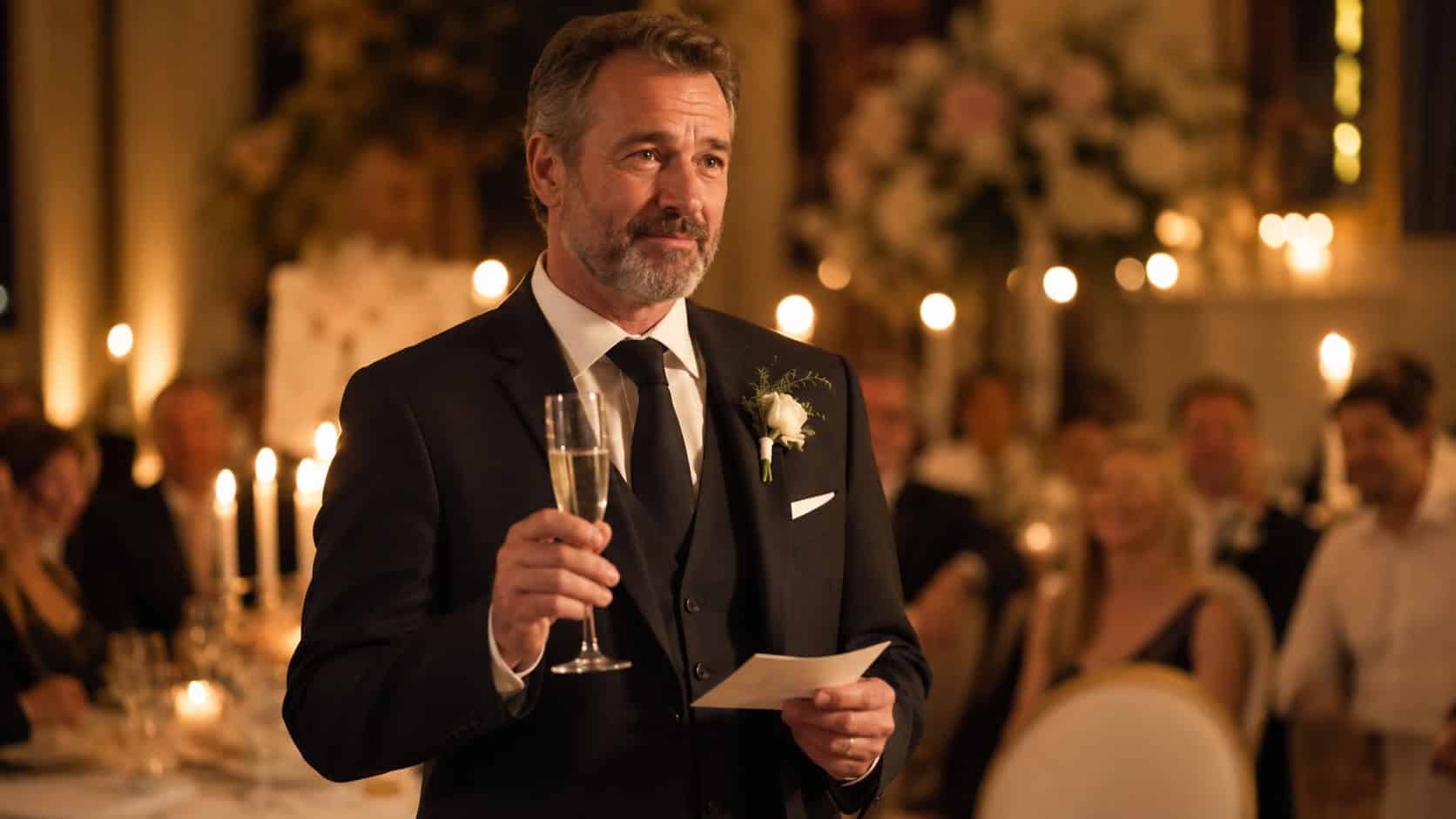
There's something deeply emotional about that moment when the father-of-the-bride takes the mic, clears his throat as his hand is almost trembling holding the mic, and prepares to give what's arguably the most important speech of the evening. It's safe to say the stakes couldn't be any higher.

Sandals Will Throw Your Wedding for Free
Stay 7 nights in a Club or Butler suite and Sandals covers the wedding: a personal planner, the ceremony, a private cocktail reception, a two-tier cake, your bouquet and boutonniere, plus $200 toward photos and $200 toward video. No venue hunt, no vendor juggling.
But some dads really struggle with the idea of having a "scripted" speech for the moment; they want the words to come "from the heart." Which is obviously perfectly understandable, but, at the same time, a little bit of structure is also needed. Here's how to resolve the tension.
The Turning Point
Some people might worry that having a structured speech might lead to them sounding robotic and lacking the emotion needed for such an important moment. However, in many ways, the opposite is true.
A lack of certainty about what comes next can cause you to either freeze on the spot or, even worse, start to ramble. That's why having a speech framework can act like an emotional safety net, allowing you to stay present and focus on your daughter without letting nerves get the better of you.
The Four-Part Speech Structure
The speech structure I'm recommending is far from being a full word-for-word script. Ideally, each speech should last between 3 and 5 minutes; that's what I found is the sweet spot. Any shorter and it feels thin. Any longer and you risk boring your guests.
The first part is the welcome, where you thank the guests for attending and acknowledge your new in-laws. After all, the wedding is also about the merging of two families. I would avoid opening with an inside joke, however funny, as it excludes a large portion of the audience.
Free Wedding Planning Checklist
Stay organized from engagement to "I do" — get our comprehensive checklist covering every task, deadline, and detail.
Then move on to part 2, the core memory. Think about one specific and heartwarming story about your daughter. I would recommend avoiding a "highlight reel" of the bride's entire life from birth to the day of the wedding. The more specific you get, the more likely you are to pull at your audience's heartstrings.
Part 3 should include some nice words about your new son-in-law. The goal is to make him feel welcomed in your family. You can talk about the first time you met him (unless it's cringeworthy; I would highly recommend against embarrassing your new son-in-law on his wedding day) or the moment when you realized he was committed to spending his life making your daughter happy.
And finally, end on a celebratory note with the final blessings and a toast. Include some final words of wisdom about marriage and invite the guests to raise their glasses to the happy couple. You don't want to end the speech too suddenly.
The Father-of-the-Bride Speech Template
Try to keep your speech to around 3 – 5 minutes. Any longer, and you risk losing the room.
Part 1: The Welcome (30 to 45 seconds)
- The Goal: Ground yourself, welcome the guests, and acknowledge the hosts.
- What to Include: A friendly opening, a thank you to everyone who traveled to be there, and a quick mention of the new in-laws.
- What to Leave Out: Inside jokes about the wedding planning process or complaints about the budget.
Part 2: The Core Memory (1 to 2 minutes)
- The Goal: Shine a light on one beautiful, specific character trait of your daughter.
- What to Include: Pick one of her childhood stories that best exemplifies who she is today. For instance, if her trait is loyalty, you could mention how she stood up for a friend in the 3rd grade. Link that attribute to the stunning woman sitting in front of you.
- What to Leave Out: A laundry list of her academic or professional achievements. This is a romance, not a resume.
Part 3: The Partner Pivot (1 minute)
- The Goal: Help the new son-in-law feel like a part of the family and show how they complement your daughter.
- What to Include: The first moment you realized this person was “the one” for your daughter. Some of the best speeches include the parent directly addressing their new son-in-law. Speak to your new son-in-law, explain your trust, and give him compliments on his character.
- What to Leave Out: Cringeworthy stories about the first meeting, and mean jokes. Avoid long-winded and bring over-the-top stories.
Part 4: The Final Blessing and Toast (30 seconds)
- The Goal: End on a happy, celebratory note.
- What to Include: A piece of advice on marriage or a warm sentiment about their life together. Ask the guests to lift their glasses and, clearly naming the couple, lead them in a toast.
- What to Leave Out: Sudden closings. The audience should have a clear cue for when it is time to drink.
The Practice Plan
I cannot overstate how important it is to practice your speech several times before the big day. When we're nervous, we tend to speak too fast; that's a public speaking quirk that can only be reduced with lots of practice. Make sure you plan for short 1-2 second pauses, like right after the punchline of a joke or to emphasize an emotional beat.
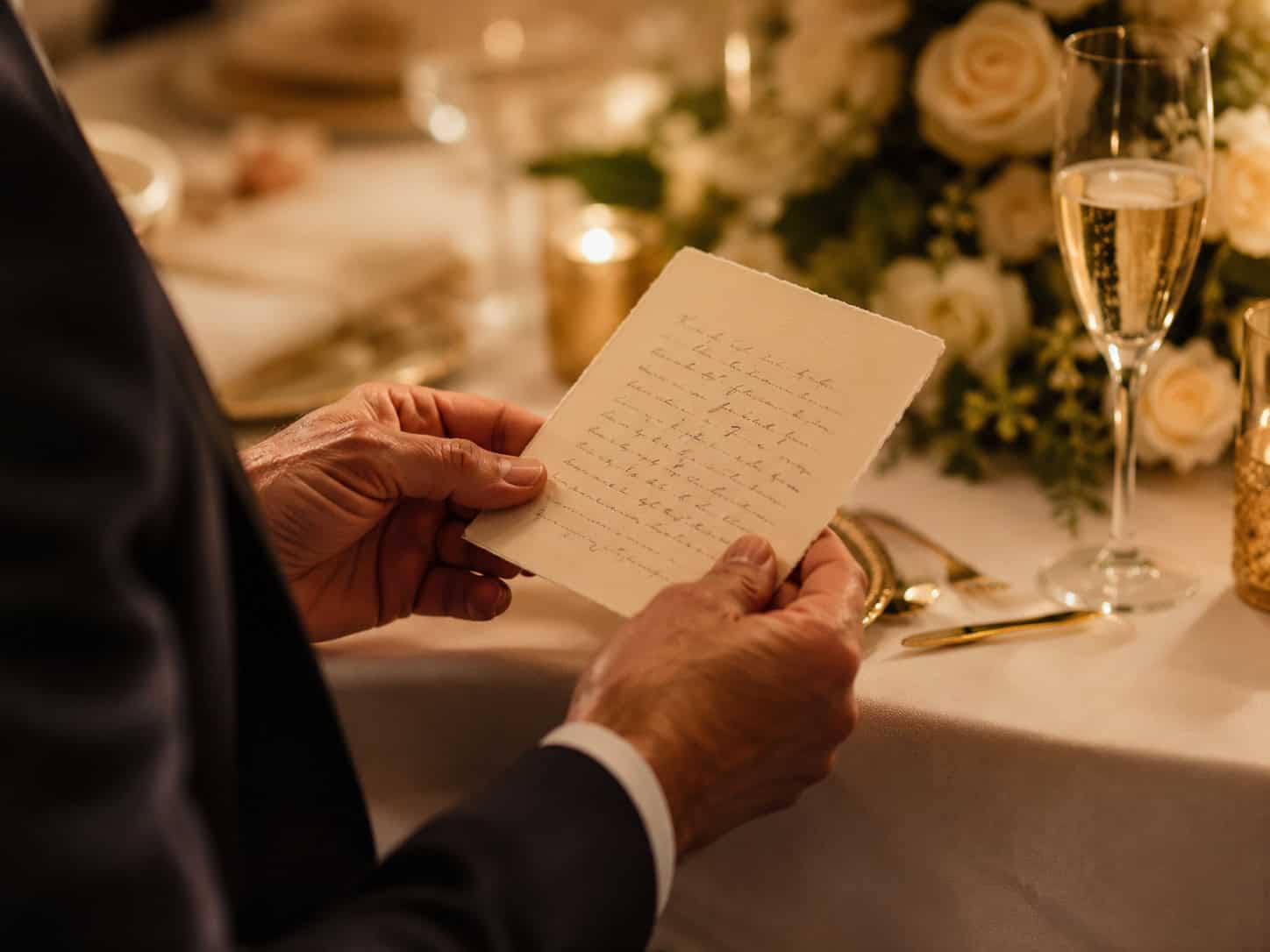
Whatever you do, do not read your speech off a phone; it will look awful in photos. I recommend printing it out on cardstock, which looks elegant, and it's less likely to visibly shake when you're up on the stage pouring your heart out.

WritePads 110 lb Heavyweight Cardstock
Check PriceA Vessel for the Emotion
When you use a simple structure, people are more likely to trust what you say. Your words become something guests enjoy listening to, not an excruciatingly boring part of the day they're forced to sit through. Structure does not take away emotion. Instead, it gives your message a steady, comforting foundation.