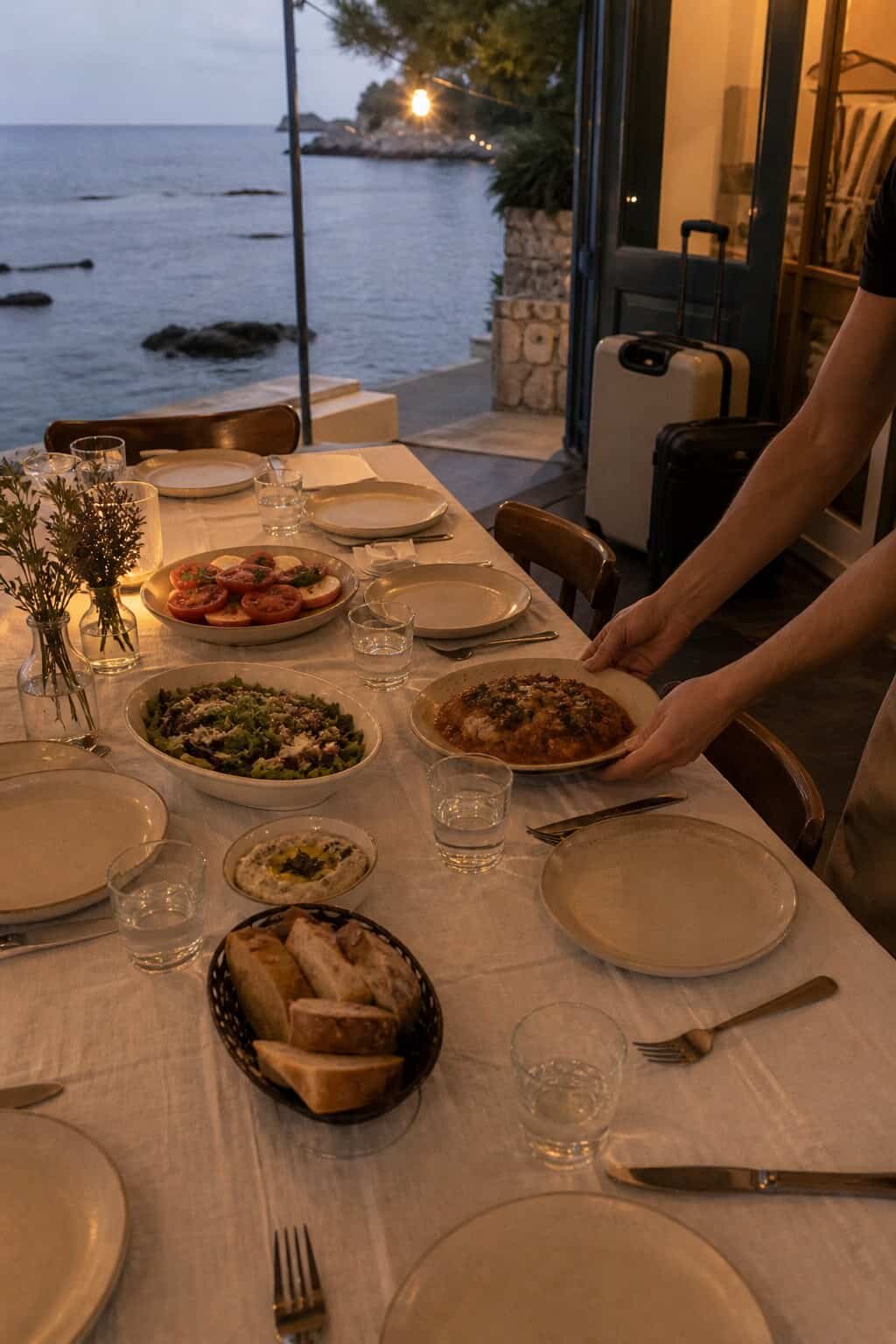
Guests pay to get there and stay there. You pay for everything that happens once they arrive and you call it a wedding event. That is the whole rule, and almost every destination wedding fight comes from a couple who never said out loud which was which.

Sandals Will Throw Your Wedding for Free
Stay 7 nights in a Club or Butler suite and Sandals covers the wedding: a personal planner, the ceremony, a private cocktail reception, a two-tier cake, your bouquet and boutonniere, plus $200 toward photos and $200 toward video. No venue hunt, no vendor juggling.
Everything below is the detail: the split, the awkward questions people are too polite to ask you directly, and the wording that keeps a $2,000 trip from feeling like a bill.
One case where the who-pays question gets easier: Sandals’ free wedding package covers the ceremony basics when the couple books a qualifying stay. See the current Sandals offer or read our breakdown of the fine print.
The who-pays-for-what split
| Expense | Couple usually pays | Guest usually pays |
|---|---|---|
| Ceremony venue, officiant, decor, and music | Yes | No |
| Reception food and drinks | Yes | No |
| Couple’s travel and lodging | Yes | No |
| Guest’s flights and lodging | No | Yes |
| Guest passport, visa, and insurance | No | Yes |
| Travel between official hotel and wedding venue | Usually | Only if clearly disclosed |
| Welcome event advertised as hosted | Yes | No |
| Optional excursions | Sometimes | Often |
| Wedding-party attire | Varies | Often |
| Hair and makeup for attendants | Varies | Often |
“Usually” is doing real work in that table. Families and cultures split things differently, and none of that is wrong. What goes wrong is deciding after the invitations go out. Agree on the split first, put it on the wedding website in plain sentences, and nobody has to guess.
For scale: a guest flying from the U.S. to Mexico or the Caribbean for three nights typically spends $1,500 to $3,000 once flights, room, transfers, and meals are in.
What you cover
The ceremony, completely
Site, permit, officiant, chairs, sound, flowers, setup. Nobody buys a day pass to watch you get married. All-inclusives often charge off-property guests $100 to $200 to come on site, so if some guests will stay at the cheaper hotel down the beach, settle that pass with the venue before you recommend the cheaper hotel.
The reception, including the bar
You host the meal and the drinks, same as you would at home. A cash bar is bad form at any wedding. At a destination wedding, after people have paid for flights and a hotel to be there, it is worse. If a full open bar is out of reach, host beer, wine, and soft drinks and end the party an hour earlier. Shorten the event before you hand guests the bill for it.
Getting from the official hotel to the wedding
If every event is at the hotel where guests sleep, you are done. If the ceremony is a 25-minute drive away, that is your venue choice, so the shuttle is your cost. Airport transfers are different: you do not owe everyone a private car from the airport, but you do owe them accurate options with prices, and a clear note about any group shuttle you are running and when it leaves.
One hosted welcome event
People flew in. A drink and something to eat the night they arrive is the graceful thing, and it doesn’t need to be a second reception. Tacos and margaritas by the pool for two hours does the job, introduces the two families, and gives you a natural place to say “shuttle leaves the lobby at 3:30 tomorrow.”
If you can only afford one extra event, make it this one and skip the farewell brunch. Everyone is packing and hungover on the last morning anyway.
Can you skip the welcome party?
Yes. It’s customary, not mandatory, and a couple on a tight budget should skip it before cutting the reception bar. Two things make it work.
First, say so on the website: “We’re not hosting a welcome event, so Friday is yours. We’ll be at the swim-up bar around 6 if you want to find us.” That is not hosting, and nobody will read it as hosting. Second, don’t quietly replace it with a “welcome dinner” at a restaurant where separate checks show up at the table. That is the one version that leaves people annoyed, because they assumed they were guests until the check arrived.
What guests cover, and how to ask them
Their flights, room, passport and travel insurance, the meals nobody hosted, and any excursion unless you say you’re paying. Also childcare and pet care at home, and the vacation days. None of that is in your budget; all of it is in theirs.
So give people a real way to say no. Never suggest the wedding can double as their vacation, and never describe a room rate as “only” anything. “Only $290 a night” is $1,160 after the four-night minimum, before the 19 percent tax and service line the resort adds at checkout.
Send the destination wedding checklist details early enough that people can see the whole commitment before they commit.
If parents are contributing
The old at-home split (bride’s family pays for the wedding, groom’s family pays for the rehearsal dinner) translates cleanly: one side hosts the reception, the other hosts the welcome party. What to head off is a paying parent who then wants to set the guest list. Every extra name on a destination list is someone you are asking to spend $2,000.
Room blocks: show the real number
A block makes booking easier and creates pressure at the same time. Tell guests:
- Whether booking inside the block is required
- Which room categories are available
- Minimum and maximum stay rules
- Taxes and service charges
- Deposit and cancellation terms
- Booking deadline
- Whether airport transfers are included
- What happens if they stay elsewhere
Then put an all-in example on the website: “A garden-view room for two, four nights, with taxes and transfers, is about $1,640.” One honest number beats a starting-at rate that nobody can actually book.
If your contract has an attrition clause and you are on the hook for unfilled rooms, that is your risk, not theirs. Remind people of the deadline once. Do not guilt anyone into booking to protect your free upgrade.
Optional events have to feel optional
Catamaran trip, golf, spa morning, tequila tasting: price it before anyone signs up, and say who they pay.
“Saturday’s snorkeling trip is optional and costs $95 per person, paid directly to the operator. You are equally welcome to enjoy a free afternoon.”
What burns people is an unpriced activity sitting in the main itinerary. They assume it’s hosted and find out at the dock. And leave gaps in the schedule: if declining the boat means sitting alone while 60 people are out on the water, it wasn’t optional.
The wedding party needs the numbers before they say yes
A bridesmaid at a destination wedding can easily be into it for $3,000 once the trip, the dress, and the extras land. Tell people what you’ll ask of them before they accept, not after they’ve told their mother. They are traveling guests, not unpaid staff.
Free Wedding Planning Checklist
Stay organized from engagement to "I do" — get our comprehensive checklist covering every task, deadline, and detail.
Common U.S. practice: attendants buy the outfit you specify. If yours is unusually expensive, pay for it or give a color-and-formality brief and let them shop. If hair and makeup are mandatory, you pay, full stop; if optional, share the price (resort spas commonly run $150 to $250 a person) and let each decide. If you want them there two days early, that’s two extra hotel nights and two vacation days. Discuss it, or cover it.
Are gifts expected when guests already spent $2,000?
No. An invitation never creates a debt, and a plane ticket certainly doesn’t. Most experienced planners will tell you the same thing: the trip is the gift, and a couple who expects more is going to be disappointed.
Say it on the website, plainly: “Your being there is the gift. We mean that.” Skip the “your presence is our present” rhyme; people don’t quite believe it. Keep a small registry anyway, things in the $30 to $75 range, for people who can’t come and the aunt who won’t be talked out of it. Put the link on the website once. Don’t mention it again.
Guests who decline owe you nothing either. If they send something, thank them the same week and leave their absence out of the note.
Our gifts for destination weddings guide has ideas that travel well, but no object is the price of admission.
Plus-ones, partners, and children
Invite spouses, fiancés, and live-in partners by name, every time. Asking someone to leave their partner home for four days is a much bigger ask than one evening across town.
For single guests, one consistent plus-one policy. My own lean: give a plus-one to anyone who will not know a soul, even at a 30-person wedding. Four days is a long time to be the stranger at the pool.
Decide on children before the save-the-dates. If the resort is adults-only, say so in the first announcement. If kids aren’t invited, accept that some parents will decline, because arranging four days of childcare is hard, and don’t suggest they “make a vacation of it” without their children. That line has ended friendships.
Invitations, RSVPs, and the timeline that makes it fair
Save-the-dates go out 9 to 12 months ahead, once the date and venue are locked, with the destination and website on the card. The website should already show flights, the room block, and the all-in cost example. Formal invitations follow about four months out, with an RSVP deadline a week or two before the resort’s final headcount is due, usually 30 to 60 days before the wedding.
Don’t demand a firm yes a year out. People’s jobs and circumstances change. A soft “are you thinking about it?” at the save-the-date stage is fine; a hard commitment can wait for the invitation.
When someone declines, that’s the end of the conversation. No asking why, no asking about money.
“We’ll miss you, but we completely understand. Thank you for letting us know.”
When someone goes silent, call them once. Silence is not a no when flights are involved; it’s usually someone waiting on a vacation request.
See our beach wedding invitations guide for the stationery timeline and formats.
No-shows and late cancellations
Someone RSVPs yes, books the room, and three weeks out a parent gets sick or the job says no. Here is how that splits.
The guest owes you a prompt heads-up and nothing else. Their flight and room are their loss, which is what travel insurance is for; nudge people toward it when you post the room block. You eat the plated dinner the resort already counted, typically $80 to $150 a head, and you do not ask them to reimburse it. Ever. If their cancellation leaves your room block short, that is your contract, not their problem.
Someone who just doesn’t show up and never says a word is different, and you’re allowed to be hurt. Handle it after the wedding, privately, once.
Rehearsal dinner: who has to be there, and who pays
If you call it a rehearsal dinner, a welcome dinner, or a cocktail reception, you host what’s served. You can keep the rehearsal dinner small, just the people rehearsing and their partners, and host a wider welcome drink afterward.
What you can’t do is invite 40 travelers to a restaurant and let separate checks arrive. A “we’ll be at this bar, drinks are on you” evening is fine. Just say exactly that, and never call it hosted.
Vendors, staff, and tipping abroad
Read the contracts for meals, transport, rooms, and tips. A photographer working eight hours needs a real meal and water. A vendor you’re flying in will have flights, room, baggage, and local transport written into the agreement, and you owe every line.
Tipping customs vary by country, and a “service charge” on a resort invoice is not always distributed as gratuity. Ask the venue who actually receives it rather than adding a universal 20 percent and hoping.
The failures that get talked about on the flight home
- Requiring a specific hotel without revealing the full stay cost
- Scheduling the ceremony on the day most guests arrive
- Charging guests to enter the ceremony or reception
- Calling paid excursions “wedding events” without prices
- Expecting daily attendance at a packed itinerary
- Pressuring people who decline
- Requiring expensive wedding-party services without paying
- Complaining that guests did not bring gifts
- Asking guests to transport your decor through customs
Hospitality does not mean paying for everyone’s trip. It means nobody gets surprised.
The simplest fair rule
Guests pay to get there and stay there. You pay to marry and host them once they arrive.
Add a welcome drink if you can. Run the shuttle if your venue choice made one necessary. Put a price on every guest-paid activity. Tell people the gift is showing up, and mean it. Most of the anxiety disappears the moment nobody has to guess what your invitation will cost them.