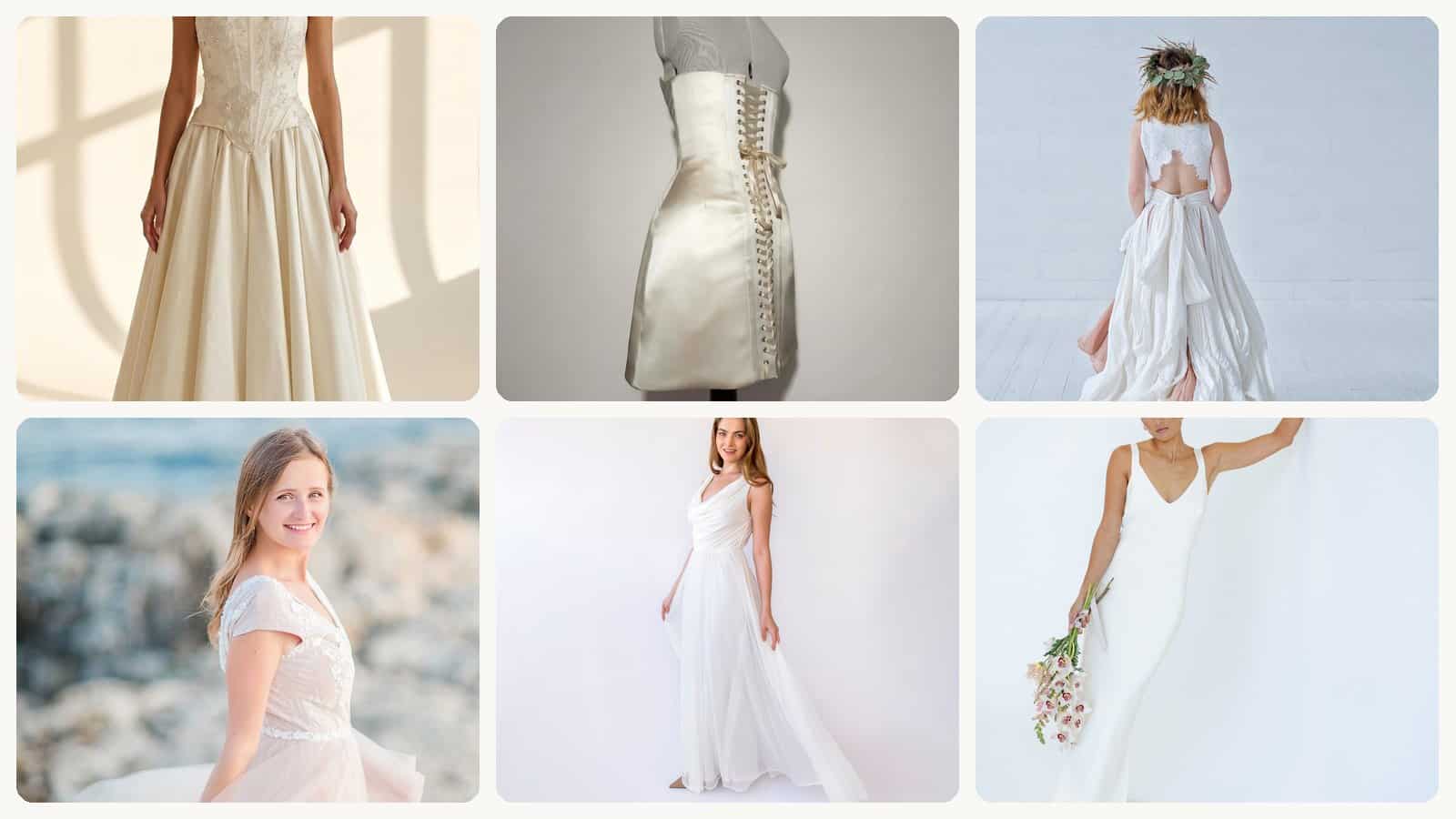
A wedding dress can spend more hours in transit than it spends on your body. So choose it for heat and sand first, then make a transport plan before the final fitting. The most beautiful gown in the shop is the wrong one if you can’t get it on the plane or breathe in it at 3 p.m. in July.

Sandals Will Throw Your Wedding for Free
Stay 7 nights in a Club or Butler suite and Sandals covers the wedding: a personal planner, the ceremony, a private cocktail reception, a two-tier cake, your bouquet and boutonniere, plus $200 toward photos and $200 toward video. No venue hunt, no vendor juggling.
That does not limit you to a slip. Satin, lace, a full skirt, a short dress, all of them can work on a beach. It just means judging the dress by how it performs and travels, not by the front view in an air-conditioned salon. This guide covers fabric and weight, the hem, the airline, steaming on arrival, and, at the end, 22 made-to-order dresses from Etsy makers sorted by how they travel.
If the ceremony is at a resort, check what is included before you buy. Sandals’ free wedding package, for example, covers the ceremony setup but not the dress. See the current Sandals offer or read our breakdown of the fine print.
Shop for the ceremony you are actually having
“Beach” is not a brief. A breezy 75°F terrace at sunset and a humid noon ceremony on deep sand are different problems. Bring the facts to every appointment:
- Destination and month
- Ceremony time
- Sand, grass, stone, deck, or indoor floor
- Expected walking distance
- Stairs or boat transfers
- Indoor or outdoor reception
- Airline and luggage plan
- Whether steaming is available
Our broader beach wedding dress guide covers silhouettes and style. This one is about whether the dress survives the trip.
Fabric, by weight and what it does in heat
Fabric names only tell you half of it. Two chiffon dresses can feel completely different depending on layers, lining, and beading. Still, weight is the number that predicts most of the rest. A crepe sheath or a silk slip weighs under 2 pounds. A layered chiffon A-line runs 2 to 4. A tulle ball gown is 5 to 8, and a heavily beaded satin gown with a built-in corset can pass 12. Every pound is heat against your ribs and bulk in the garment bag.
Chiffon and georgette
Light, breezy, and they photograph beautifully in motion. The catch is that motion: a very loose skirt whips between your legs in wind and goes translucent in backlight. Ask how many layers the sample has and whether the lining can be shortened without showing through. Chiffon barely creases and steams out in minutes, which makes it the easiest of the “pretty” fabrics to fly with.
Crepe
Clean lines, light, packs flat. Stretch crepe recovers from a fold better than woven crepe, and both show sweat and undergarment lines more than a textured fabric. Sit, bend, and walk in it near a window. My pick for a hot, long day when you want to look polished and forget about the dress.
Organza
Volume without satin’s visual heaviness, and crisp enough to hold a shape in wind. Layered organza is still warm, and a stiff skirt is awkward in a shuttle van or a water taxi. It creases at the folds and needs a professional steam on arrival.
Lace and tulle
Open lace gives you texture without beading weight. Tulle gives you softness and collects everything: sand, twigs, decking splinters. Fine layers hold damp sand at the hem for the rest of the night. Check how appliqués are attached and whether the hem is finished sturdily enough for the surface.
Satin and mikado
You can absolutely wear satin at a destination wedding. A clean mikado gown against a raw beach is a striking photo. Just go in knowing the weight, the structure, and that satin shows every water drop and sweat mark. Save it for a shaded or evening ceremony, and put it in the “must be pressed professionally” column.
Linen and cotton gauze
The most breathable fabrics on this page and the worst at holding a press. Linen creases the moment you sit down. That can look intentional at a barefoot ceremony and sloppy at a formal one. If you go this way, plan on steaming after you arrive and accept the wrinkles that come after.
Don’t shop from a banned-fabric list. Put the dress on, wear it for at least 20 minutes, and notice where the heat builds: waist, ribs, underarms, lower back. That test tells you more than the label.
Look under the skirt
The outer fabric gets the attention. The lining, boning, cups, and petticoat decide whether you can stand the dress at hour five. A polyester lining under a silk chiffon skirt is a plastic bag with a nice coat on.
Ask the seamstress whether a heavy lining can be swapped for a lighter one, whether a layer can come out, and whether the bodice supports you without industrial shapewear. Every change affects opacity and drape, so use someone who does bridal alterations all day. Wear the real undergarments to every fitting, and if adhesive cups or body tape are part of the plan, test them on a sweaty afternoon at home. Sunscreen and humidity both ruin adhesion.
Pick a silhouette you can move in
A-line, sheath, slip, tea-length, and restrained fit-and-flare shapes move and pack more easily than a full ball gown. Easier isn’t a rule. If a dramatic skirt is the thing you’ve always wanted, wear it and plan for it.
In the salon, test these:
- Walk on a soft rug without looking down.
- Step up and down one stair.
- Sit for 10 minutes.
- Raise both arms for a hug.
- Bend to adjust a shoe.
- Turn quickly as if the wind caught the skirt.
If the gown needs two hands to walk, you have no hand for a bouquet or a railing. Ask for a simple, repairable bustle (French bustles with three or four points hold up on sand better than a single hook) and carry a few matching safety pins for when a loop gives out.
Hem length for sand
This is the decision most brides get wrong, and it’s a half-inch problem. A hem that touches the ground indoors drags on sand, gets wet at the tide line, and picks up a pound of grit. Decide your ceremony shoes first, then hem to them:
- Barefoot or flat sandals: hem to a half inch off the floor in bare feet. It will float just above the sand and still read as floor-length in photos.
- Low block heel or wedge: hem to a quarter inch off the floor in those shoes, and walk to the site in something else so the heels don’t sink.
- Wet sand or a shoreline ceremony: tea-length or a midi. Nothing long stays dry at the water’s edge, and saltwater will stain silk permanently.
- Any train longer than a sweep (about 6 inches past floor): plan for it to be carried, bustled right after portraits, or removed.
Bring both pairs of shoes to alterations. If you switch heel heights mid-day, the hem will either drag or look chopped. Thin heels are out on sand and grass; bare feet burn on hot sand and find every shell, so walk to the site in sandals and change on a mat if you want the barefoot photo.
Decide what the train does before you reach the beach
A long train is gorgeous in a still photo and behaves like a collection net on sand. Seaweed, shells, damp, all of it, within minutes. Your options:
- A short sweep train
- A removable overskirt or train
- A wrist loop for brief walking
- A bustle secured immediately after portraits
- A full train with a designated person to carry it
The photographer is not managing your train; their hands are full. Pick one attendant and practice lifting and arranging it. And if the ceremony is near the water, ask about the tide for your exact time. High tide at 4 p.m. changes where the aisle can be.
Wind at the neckline and the slit
Wind pulls a strapless neckline off the body, flips a slit open, and turns a light skirt see-through against your legs. Have the fitter check the dress from the side while you walk into a fan.
Fashion tape helps with small gaps; it is not structural. Secure plunges, wrap fronts, loose sleeves, and detachable pieces through tailoring first. For a high slit, add a hidden modesty panel or wear skin-tone shorts. For a featherweight skirt, a slightly heavier lining photographs better even if it adds a little warmth.
Getting the dress on the plane
Never check the dress. Bags go missing, and a gown that arrives two days after you is a gown you can’t wear. The problem is that airlines have quietly made the alternative harder.
Here’s the reality. On American, Delta, United, and most carriers, a garment bag is your carry-on, not an extra. Standard carry-on limits are around 22 x 14 x 9 inches, and a bulky garment bag that won’t fit the sizer can be gate-checked over your objections. There is no guaranteed closet: many narrow-body planes have a small one at the front reserved for first class, and crew may or may not have room. Ask politely at boarding and you’ll often get lucky, but never build the plan on it. Southwest lets you bring a garment bag as your carry-on too, and its flight attendants are famously accommodating, which is not the same as a policy.
The method that works:
- Have the salon pack the actual gown while you watch. Film it.
- Use a breathable tri-fold garment bag (WallyBags makes a 45-inch one that folds to carry-on size) or fold the dress into a hard-sided cabin case with acid-free tissue at every fold. Most chiffon, crepe, and lace gowns fold fine. Most satin and organza gowns don’t.
- Pad beading, buttons, and cups with tissue so nothing presses into the fabric.
- Put shoes, undergarments, the veil, and the emergency kit in your personal item.
- Keep the dress with you through every connection.
- Board early. Overhead space is first come, and a garment bag laid flat on top of the bags is fine if it’s there first.
Skip plastic for anything longer than the flight; it traps moisture. A clear outer layer over the garment bag for the airport itself is fine. And practice the pack a week out, not the night before.
Arrange steaming before you fly
Email the venue: who steams gowns, have they done bridal before, where does it happen, when does the dress come back, what does it cost. Resort pressing runs roughly $50 to $150 and can take a day, so send the fabric and embellishment details ahead and book it for the day after you land.
Shower steam is a myth. It leaves water spots and doesn’t touch a real crease. A handheld steamer (the Conair Turbo ExtremeSteam is the one that travels well) works on chiffon, crepe, and tulle if you keep the head 2 inches off the fabric, steam from the inside, and never let it spit on silk or satin. Test a hidden seam first, then let the dress hang and dry completely before it goes back in the bag.
Land with enough time for a professional press and one backup plan. The destination wedding checklist puts garment care in the arrival schedule.
Time alterations around the flight, not the wedding
Tell the seamstress your departure date. The final fitting and pickup have to happen before you leave, ideally a week before so there’s time to fix a surprise.
Bring the ceremony shoes, backup shoes, undergarments, veil, and any removable train to that fitting. Practice the bustle and film every loop and button. Pack a small repair kit (matching thread, needle, safety pins, fashion tape, a stain pen, tiny scissors) in checked luggage, since the scissors won’t clear security.
Don’t build a weight-change plan into the fitting schedule. A dress that fits the body you have and lets you breathe will serve you far better in heat than a last-minute take-in.
Sweat, without fighting your body
Moisture-wicking undergarments that don’t show through. An anti-chafe balm you’ve tested (Body Glide or Megababe both work). Blotting papers and a cloth nearby. Sunscreen and deodorant applied before the dress goes on and given 15 minutes to dry, because aerosol anything near the gown ends up on the gown.
If you know you sweat heavily, show the seamstress where. Dress shields, a lining change, or a different bodice fabric are all normal requests. A front-opening robe protects hair and makeup while you wait; check that a dark, new one won’t transfer dye.
A second look can solve a real problem
A reception dress earns its place if the ceremony gown is structured, has a long train, or can’t dance. It’s also easier to clean and pack home. It doesn’t need to be another bridal purchase: a short white dress, a silk set, a jumpsuit, or something colorful you’ll wear again. Keep it in the cabin with the main gown.
Don’t change so early that you barely wear the dress you spent months choosing. After sunset portraits, dinner, or the first dance is the natural moment.
The dress you can stop thinking about
The right destination gown isn’t the lightest dress in the store. It’s the one that fits your priorities and survives the plan around it. Test the movement, inspect the lining, hem to the sand, confirm the airline, book the steamer, and schedule fittings around the flight. Do that and you can wear satin, lace, chiffon, a full skirt, or a mini on the beach without managing it all day.
Review our beach wedding checklist for the comfort details beyond the outfit.
22 destination-ready dresses from independent Etsy makers
Everything below is made to order by an independent seller on Etsy, and I’ve grouped the picks by the same fabric logic as above, so if you already know you want a crepe slip or a tea-length hem you can jump straight there. Under each one is a note on what it means for packing and the sand, drawn from the seller’s own listing. Click through for full sizing, and confirm the lead time before you order; made-to-measure pieces need weeks, not days, plus shipping.
Slips, crepe, and silk: the ones that pack flat
1. Silk Crepe Slip Wedding Dress

Handmade seller
Bias-cut silk crepe slip, standard length 115 to 120 cm, made to your measurements. The flattest-packing shape on this page: it folds into a carry-on tote. Custom pieces are final sale, so measure twice.
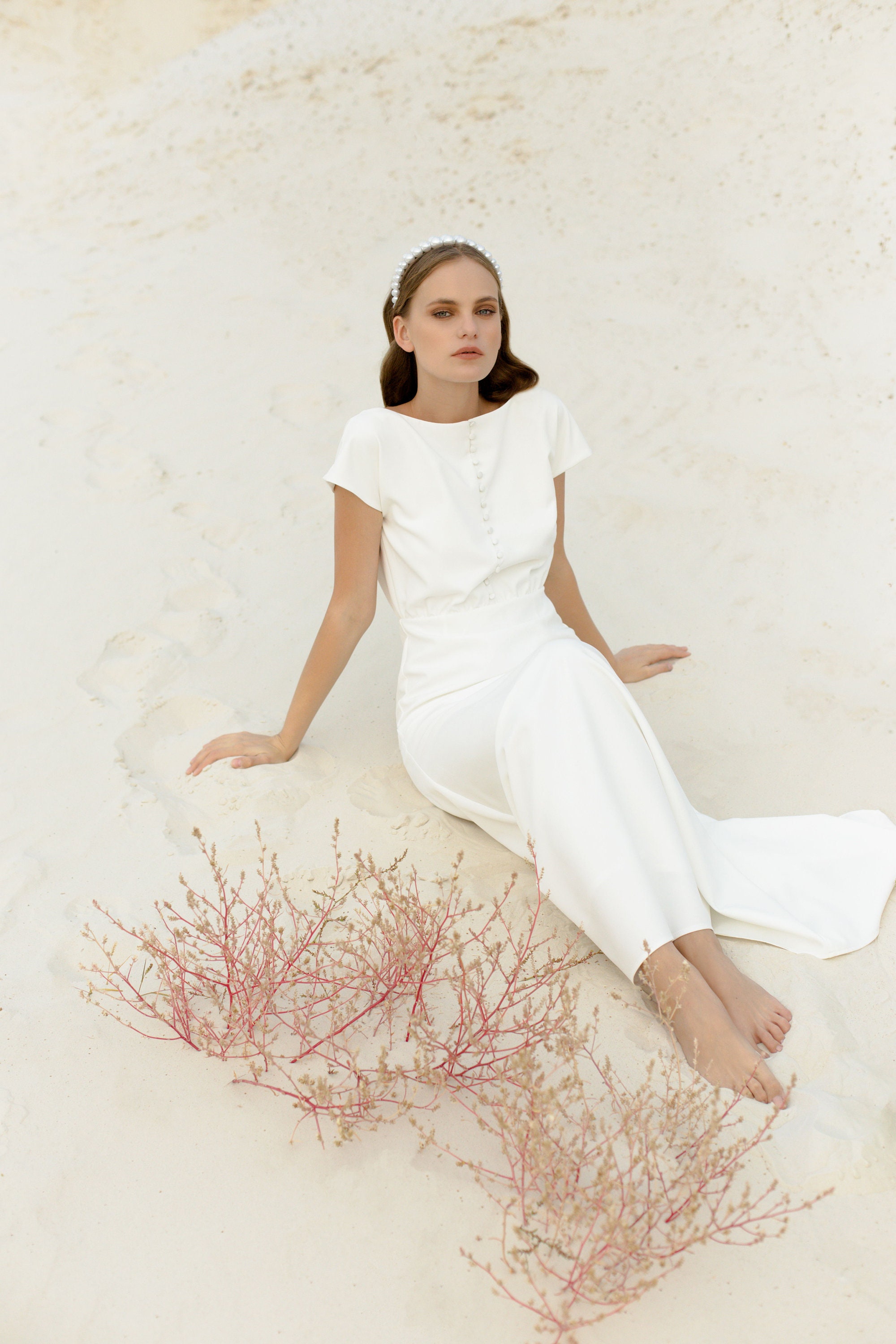
2. Minimalist Crepe Sheath Wedding Dress
Handmade seller
Stretch crepe trumpet with a boat neck, cap sleeves, and vintage-style buttons down the back. Stretch crepe recovers from a garment-bag fold far better than woven crepe, and the eggshell shade photographs warm against sand.
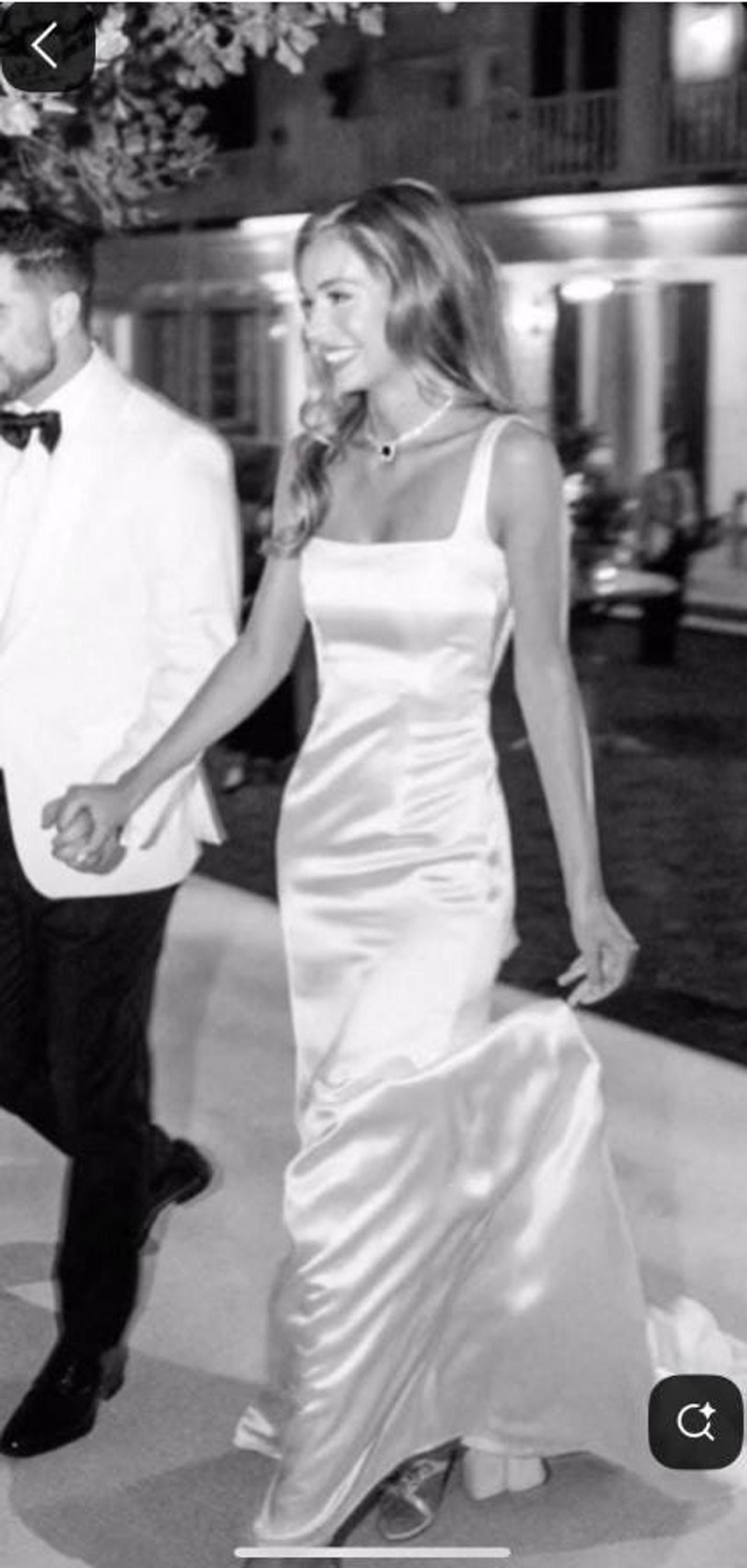
3. Silk Wedding Dress
Handmade seller
Made individually to your measurements, with the maker reviewing them before production starts. Silk shows water, so this one stays back from the tide line and away from the champagne pour.
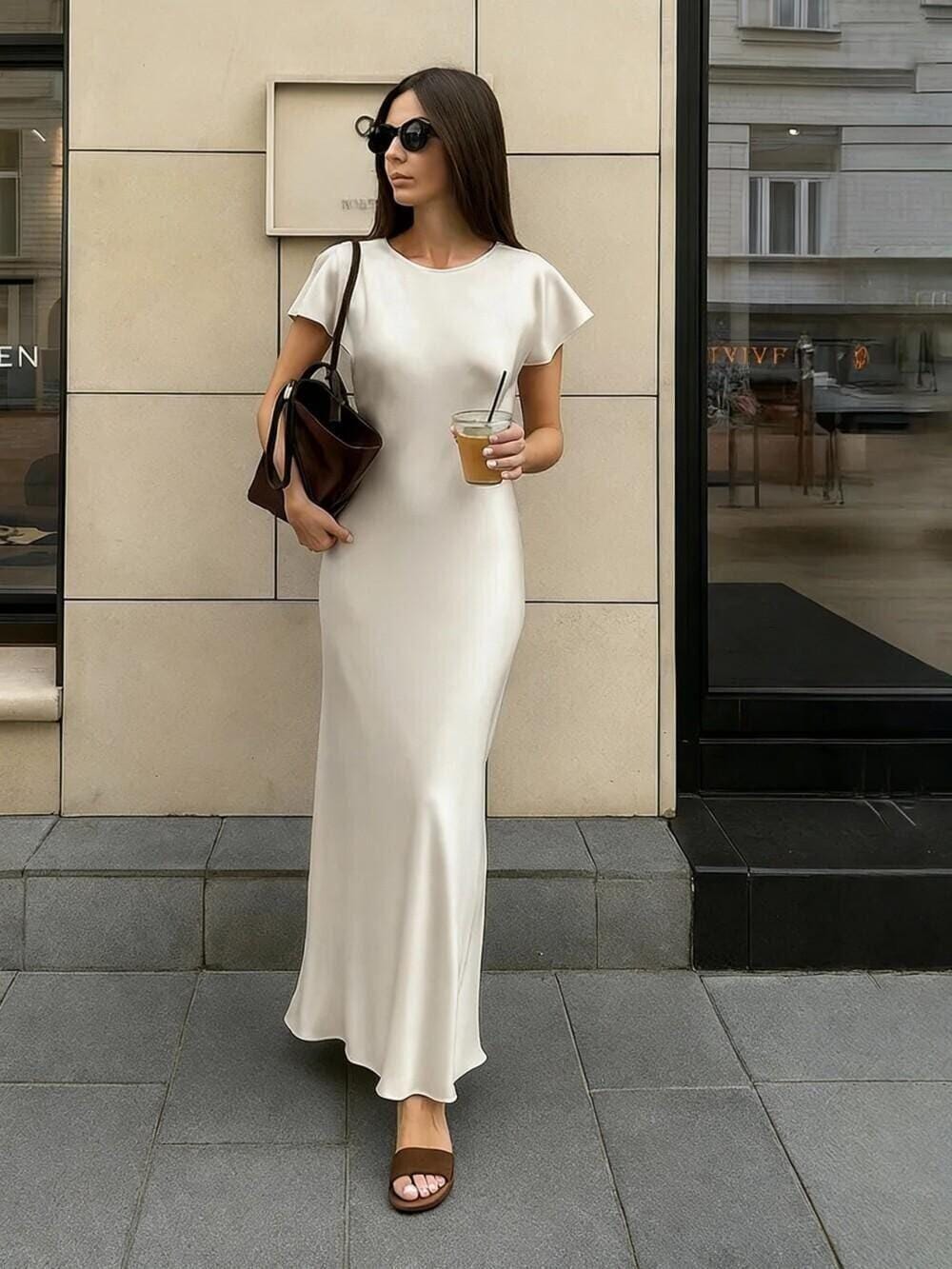
4. White Satin Maxi Dress
Handmade seller
Titled satin, described as silk; ask the seller which before ordering. Standard sizing is cut for 5’5″, so send your height if you’re not close to it. Light, fluid, and one of the easiest here to steam.
Free Wedding Planning Checklist
Stay organized from engagement to "I do" — get our comprehensive checklist covering every task, deadline, and detail.
Chiffon, gauze, and tulle: light and airy
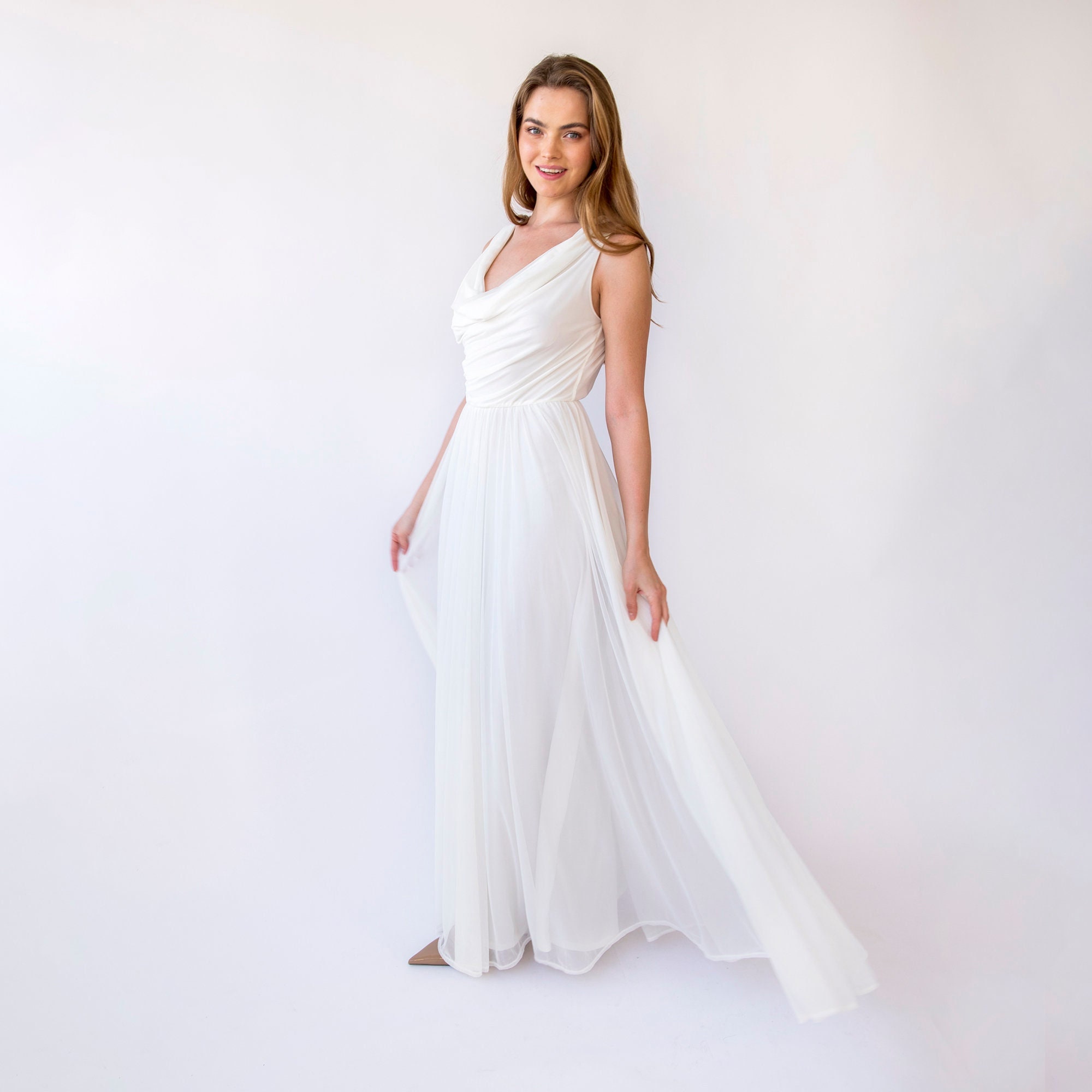
5. Ivory Chiffon Wedding Dress
Handmade seller
Chiffon, with custom sizing offered for anyone under 5’2″ or over 5’9″. That matters more than it sounds: a chiffon hem you can’t shorten at home is a chiffon hem on the sand.
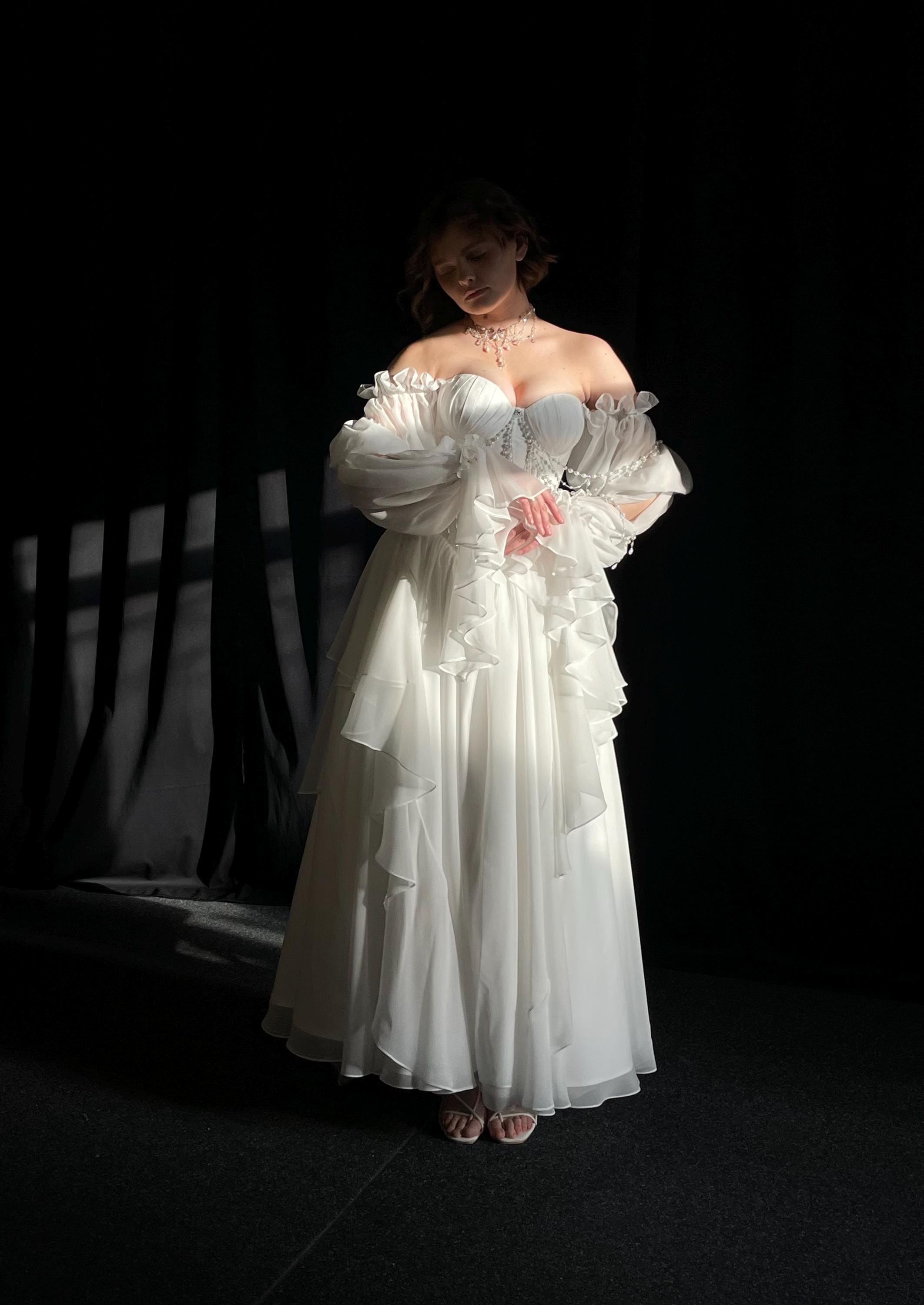
6. Chiffon Corset Dress
Handmade seller
Chiffon over a satin base with a corset bodice; a train is an add-on and any color is available.
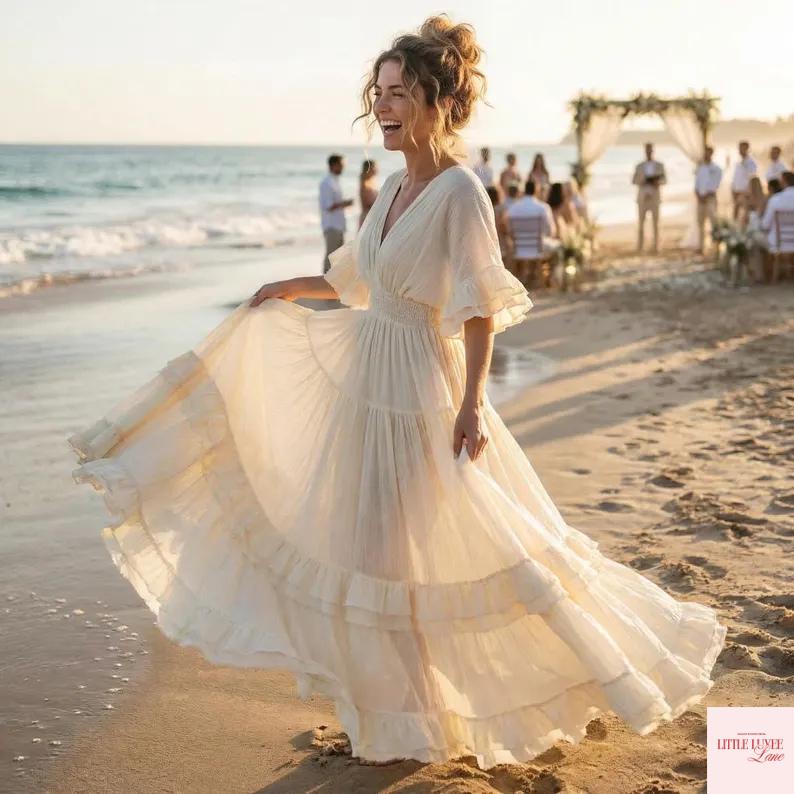
7. Boho Wedding Dress
Handmade seller
Tiered cotton gauze. The most breathable dress on this list and one of the lightest. It also drinks humidity and creases in the bag, so book the steamer for the morning after you land.
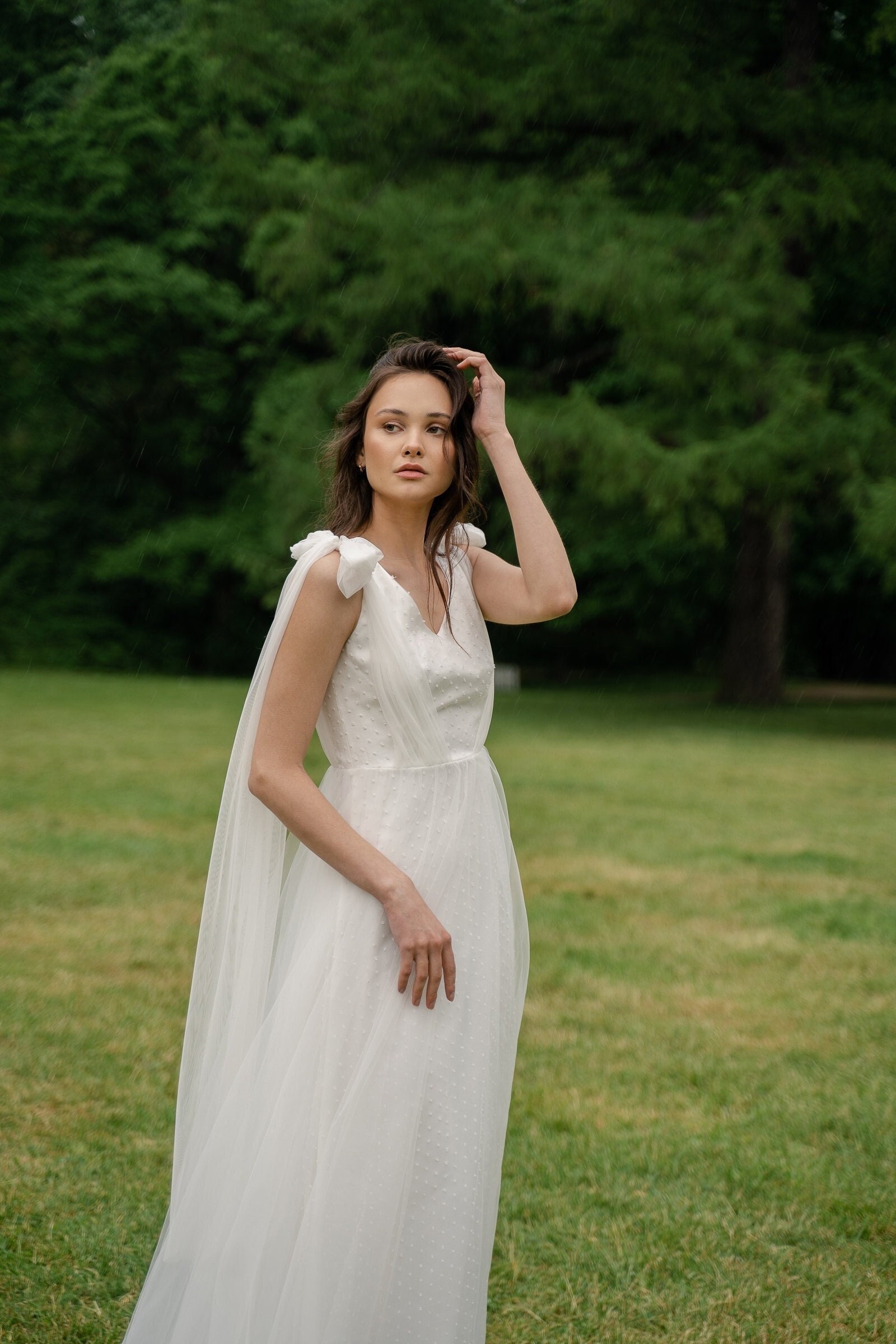
8. A Line Tulle Wedding Dress
Handmade seller
Tulle A-line, sewn to your measurements at no extra cost with photo instructions for measuring at home. Tulle is the fabric here that collects sand; wear it for a deck or terrace ceremony rather than the shoreline.
Lace: texture without beading weight
9. Hand Embroidered Lace Wedding Dress
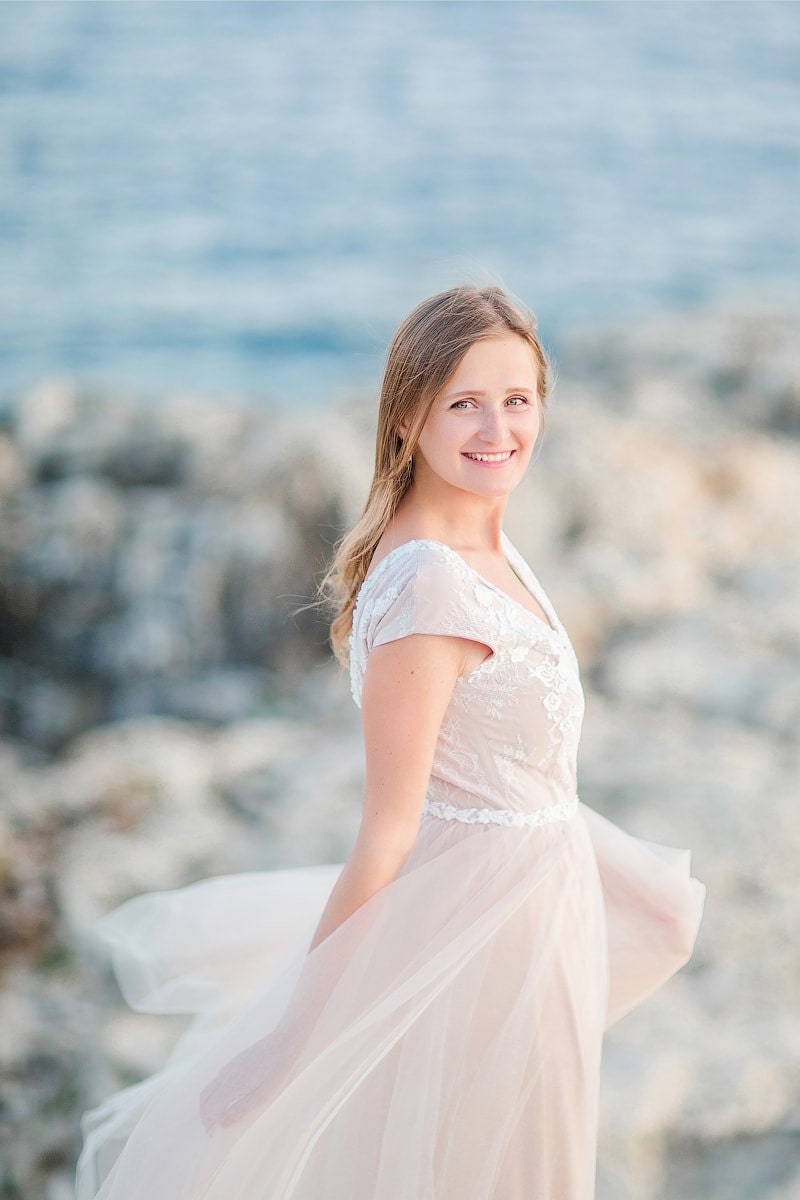
Handmade seller
Hand-embroidered lace with a 117 to 120 cm skirt; sizes above EU 42 carry a materials surcharge. Embroidery instead of beading means it folds without anything pressing marks into the fabric.
10. Boho Lace Wedding Dress
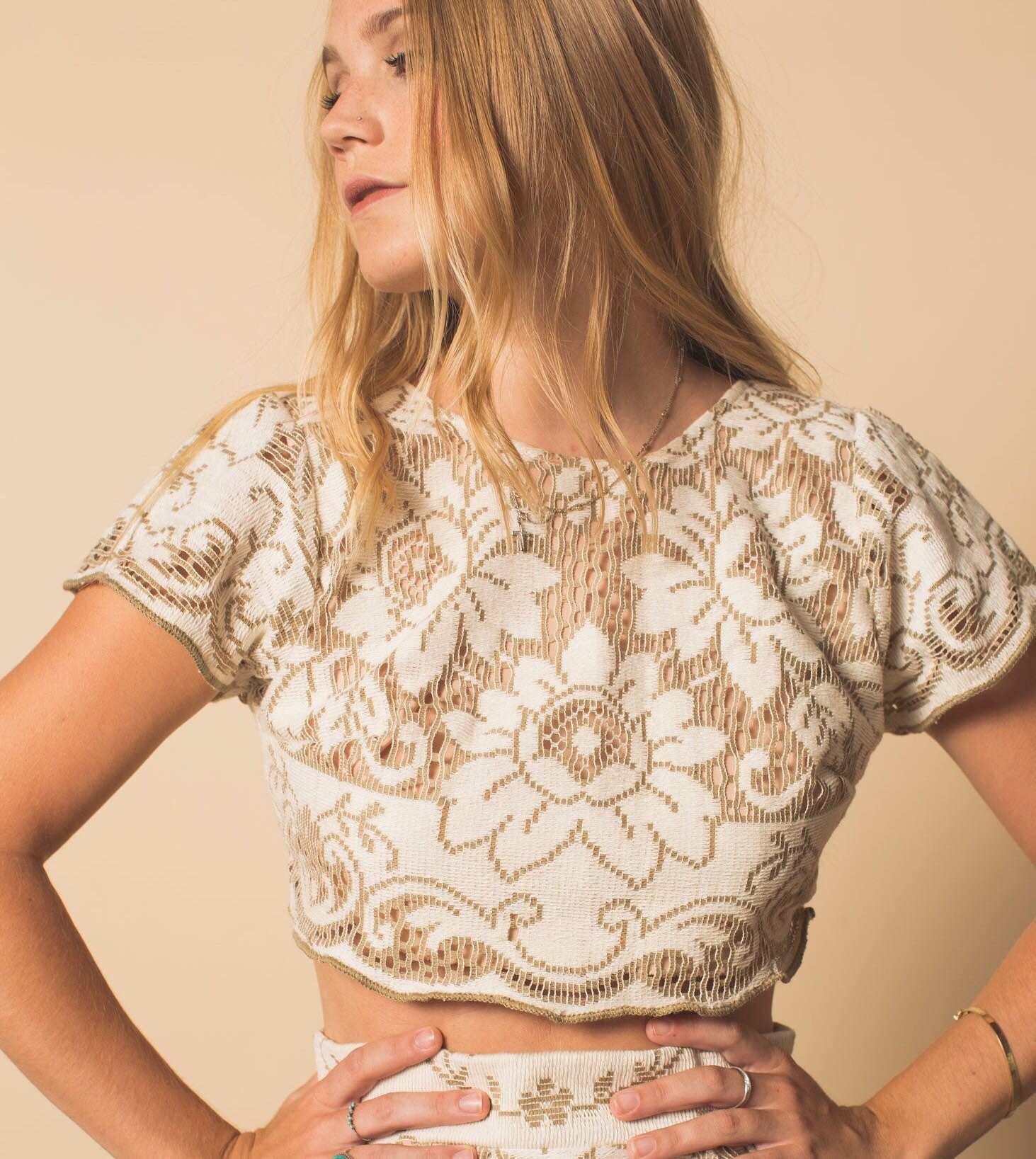
Handmade seller
Crop top and maxi skirt in vintage lace, any sleeve length, made to your measurements so alterations are usually unnecessary. Each one varies slightly because the vintage lace does. Two pieces pack flatter than one gown.
11. Lace Corset Bridal Gown
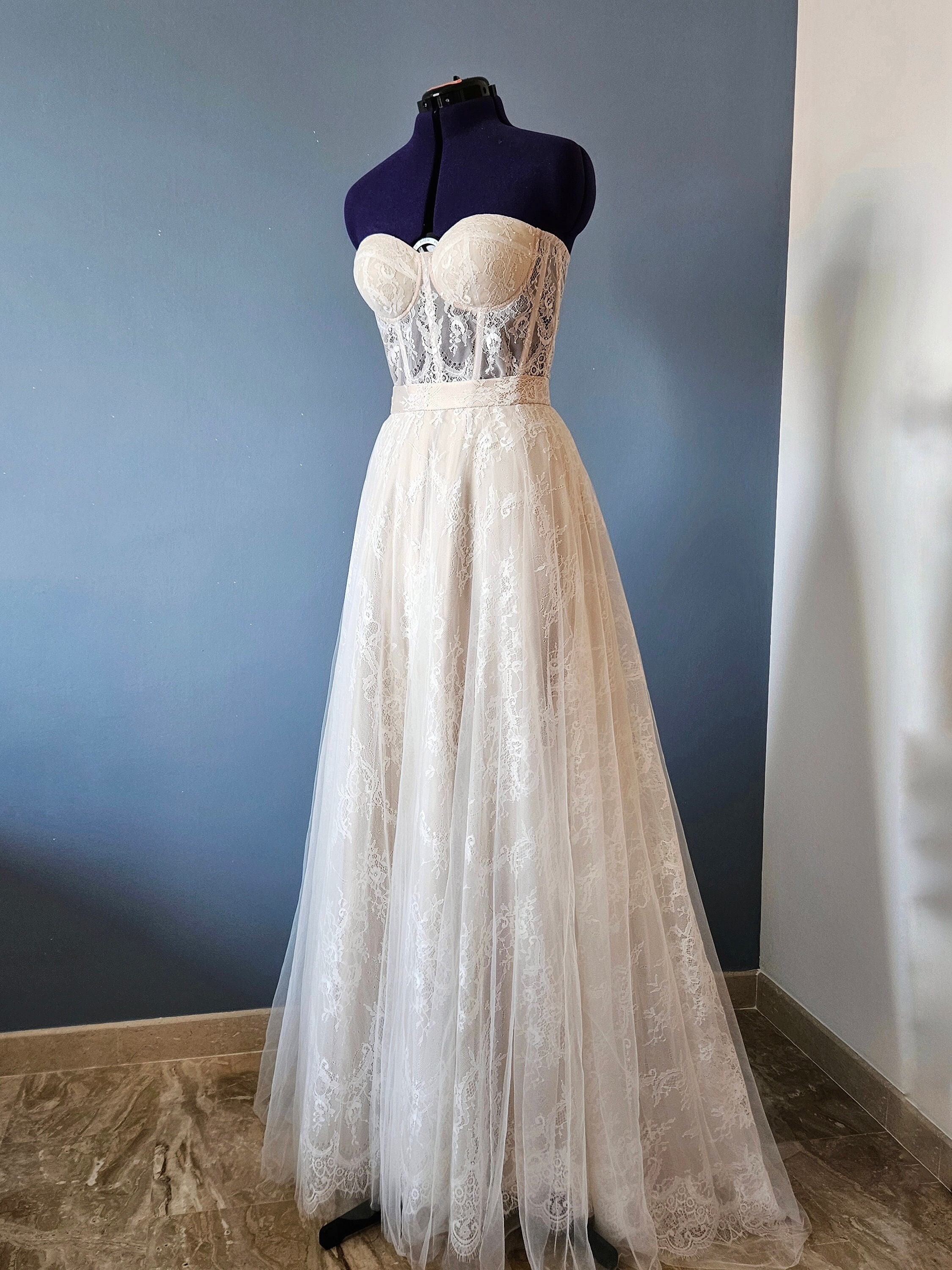
Handmade seller
Two-piece: a cupped corset with hook-and-eye closure (lacing on request) and a thin lace A-line skirt with a 15 cm train. That train is short enough to sweep sand without dragging through it.
12. Bohemian Open Back Wedding Dress
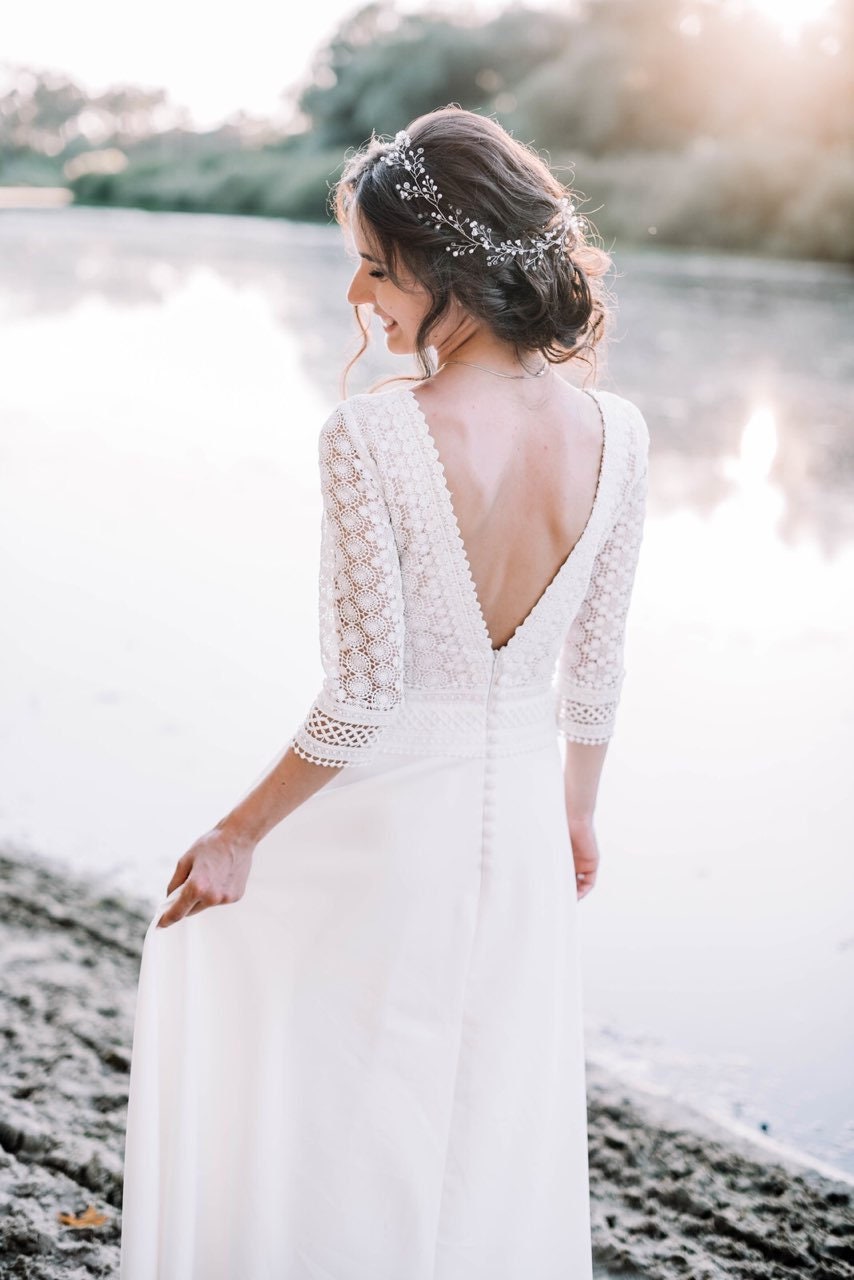
Handmade seller
Same maker as the embroidered lace above, in an open-back cut with the same 117 to 120 cm skirt and size surcharge. Open back plus sunscreen equals a transfer test at the trial.
Linen: for a deliberately relaxed ceremony
13. Bohemian Linen Bridal Gown
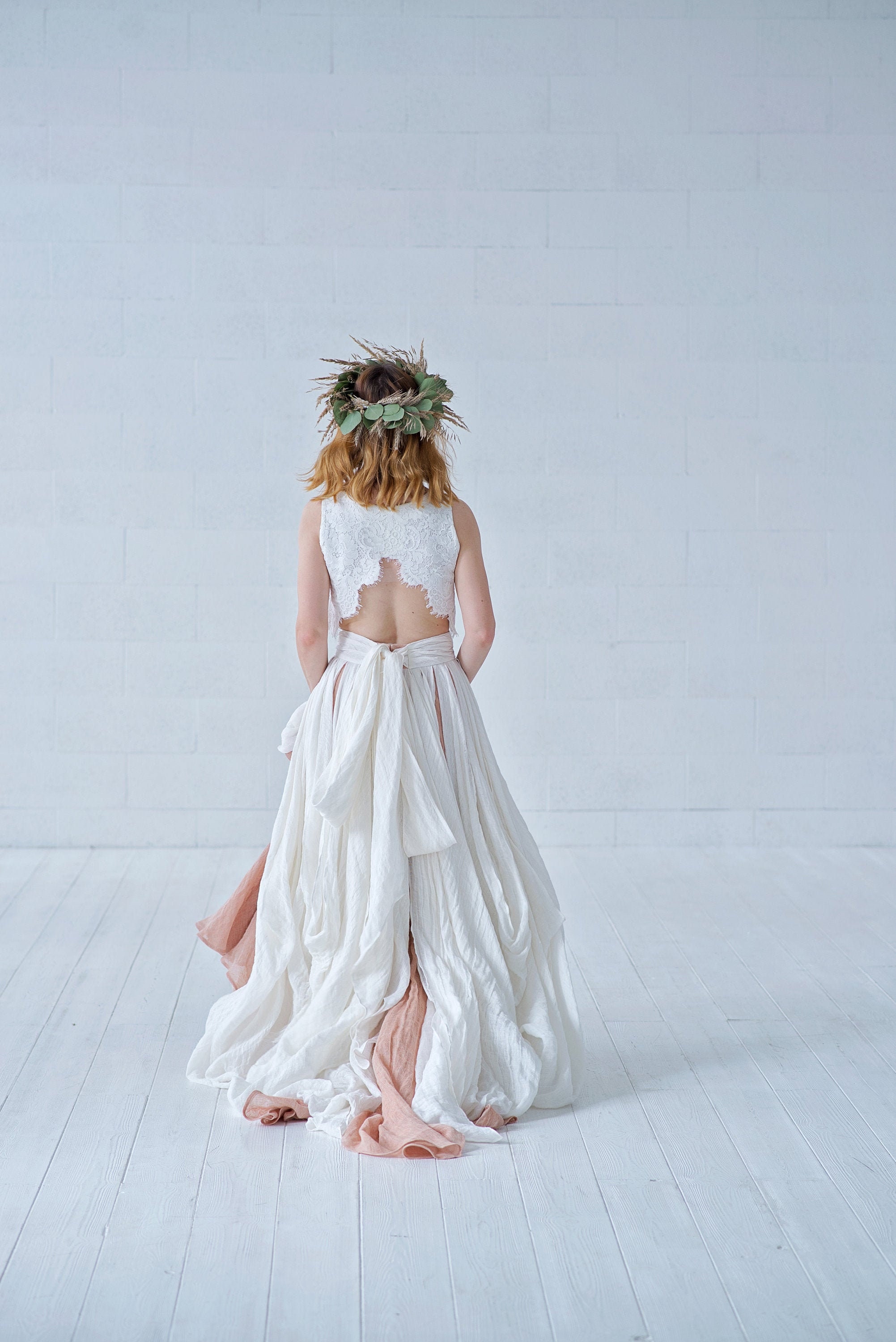
Handmade seller
Two-piece linen with a tie-able bow at the back and a 30 cm train the maker will shorten or drop entirely. Linen breathes better than anything else here and wrinkles more than anything else here.
14. Linen Boho Maxi Dress
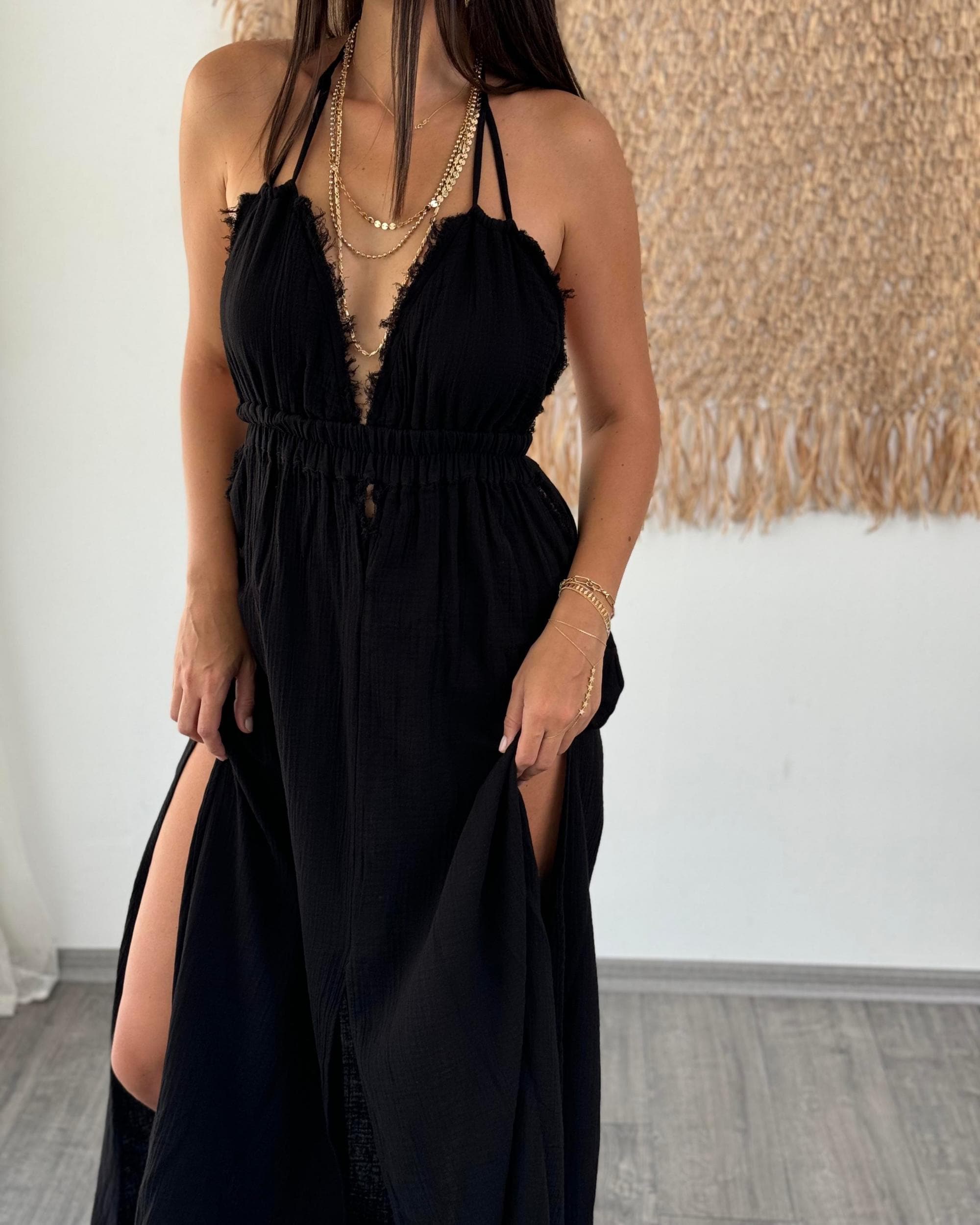
Handmade seller
Linen maxi; the model is 175 cm in a size S, so check the length against yours. Relaxed, cool, and a wrinkle magnet, same as the one above.
Two-piece sets and a jumpsuit
15. Dark Ivory Corset Skirt Set
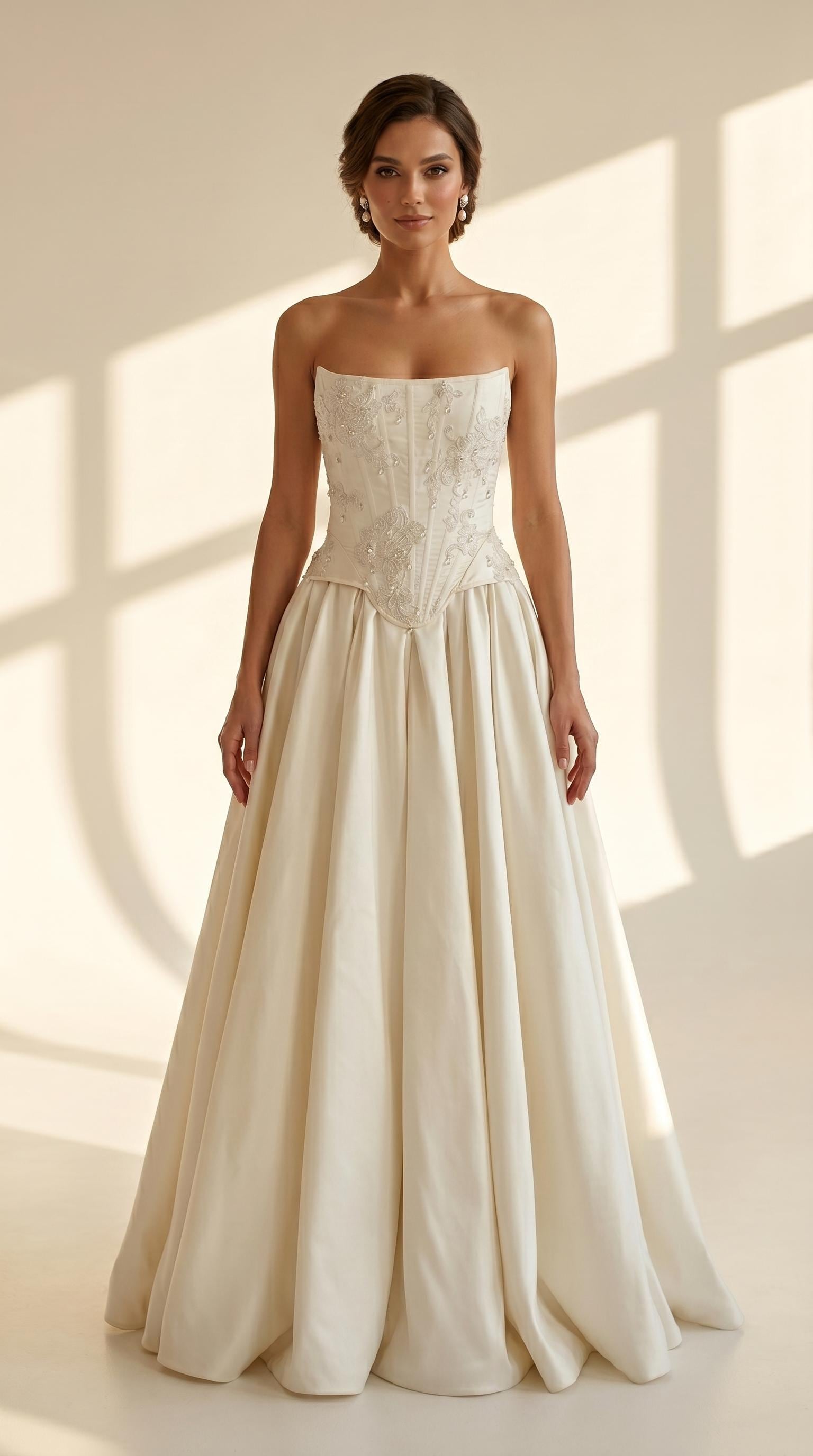
Handmade seller
Corset with a boat neckline and a separate skirt at a standard 115 cm, with custom lengths on request. A corset top gives you structure without a heavy lined bodice, and two pieces fit in a carry-on more easily than one long gown.
16. Bridal Separates Top Pants
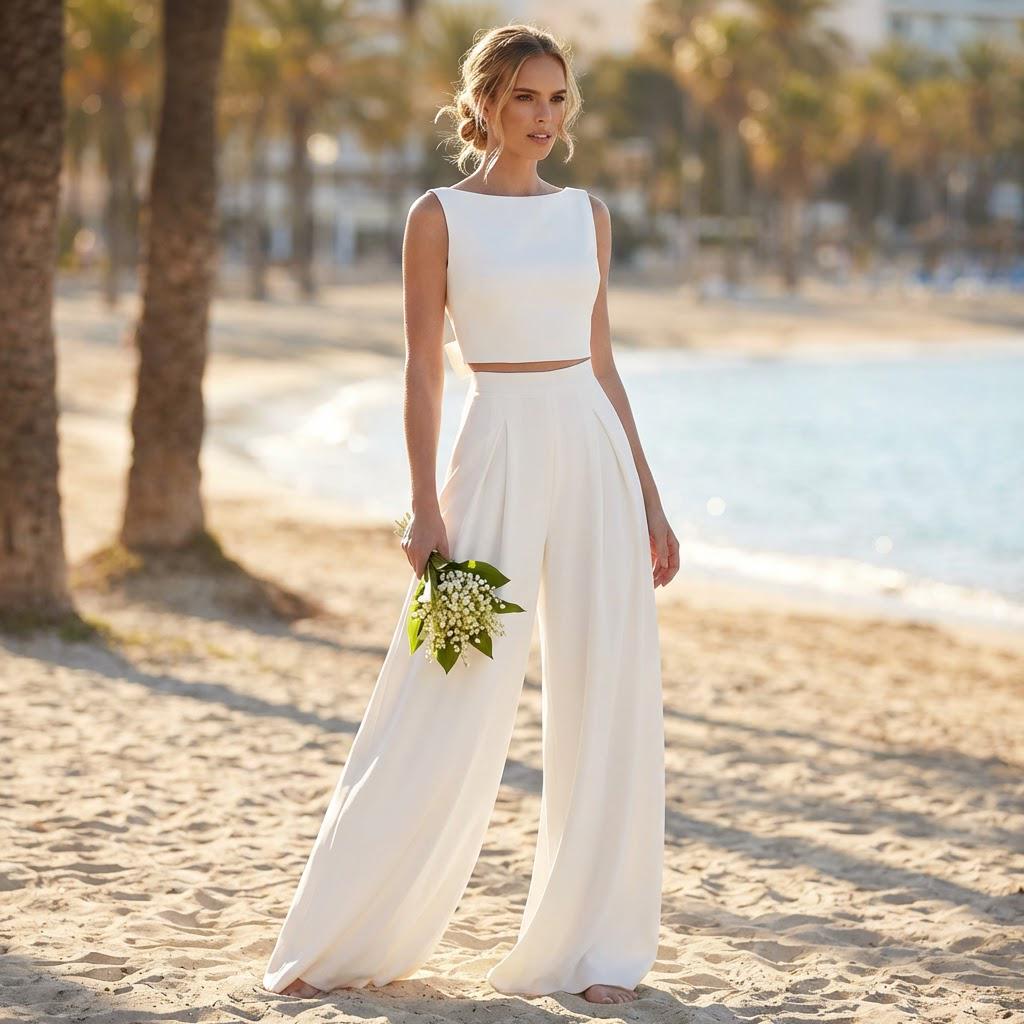
Handmade seller
Backless crepe top and flowing trousers, made to the measurements you send. Trousers on sand: hem them to the ankle bone so they don’t drag wet, and you have no hem-length decision at all.
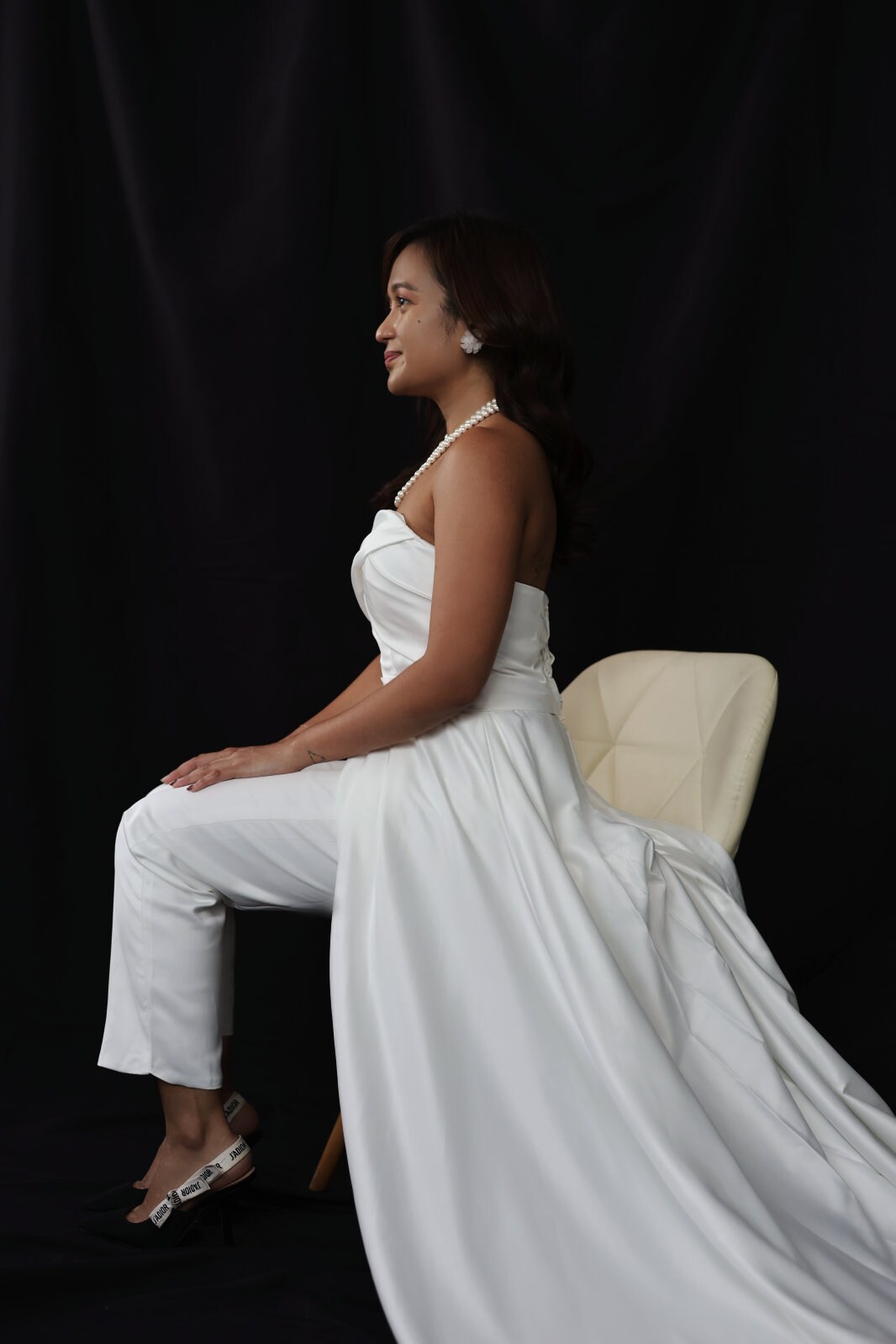
17. Bridal Jumpsuit With Pants
Handmade seller
Satin jumpsuit. The listing gives the model’s measurements (83.5/72/95 cm at 151 cm tall), which tells you the proportions the sample was cut for; send your own. No bustle, no hem, no train.
Short and tea-length: the sand-proof hemlines
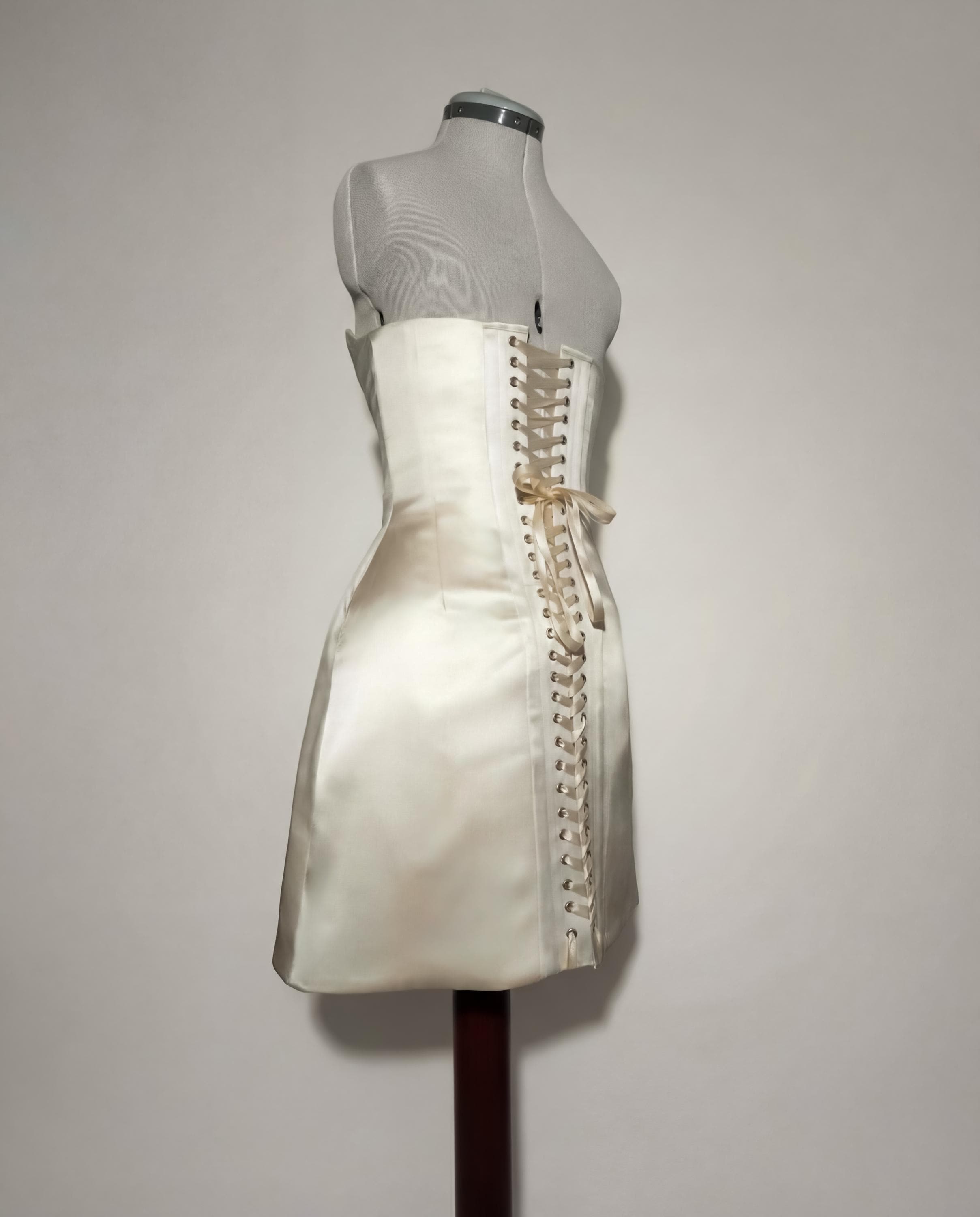
18. Silk Mini Corset Dress
Handmade seller
Silk mini with a 45 cm skirt and an optional matching silk shawl for the ceremony. It clears the sand by a foot, so the hem section above doesn’t apply. Silk still shows water.
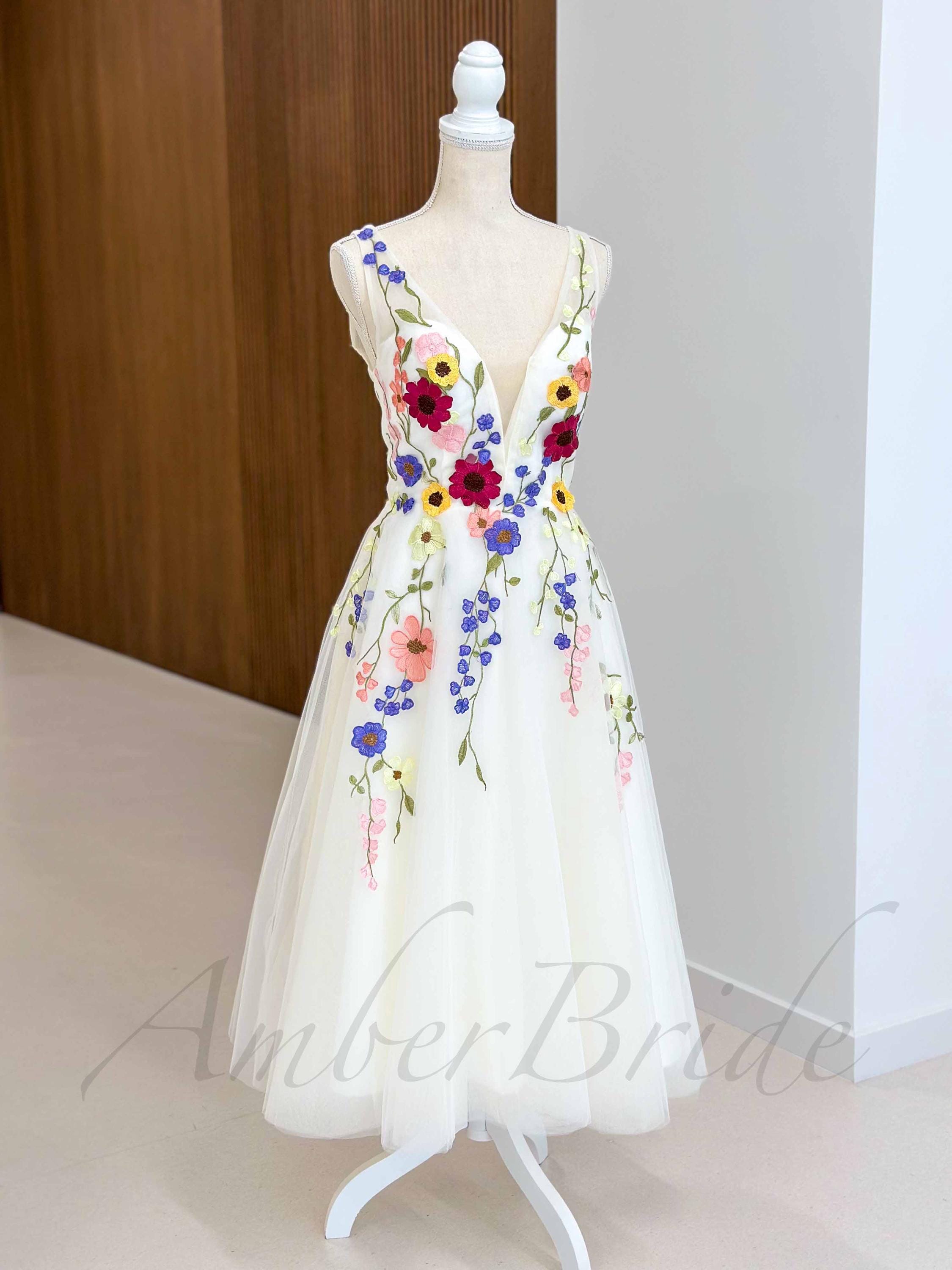
19. Floral Tea Length Wedding Dress
Handmade seller
Tea length with floral detail. The seller says plainly that made-to-measure can still need alterations and to keep some budget for it. That’s honest, and true of every dress on this page.
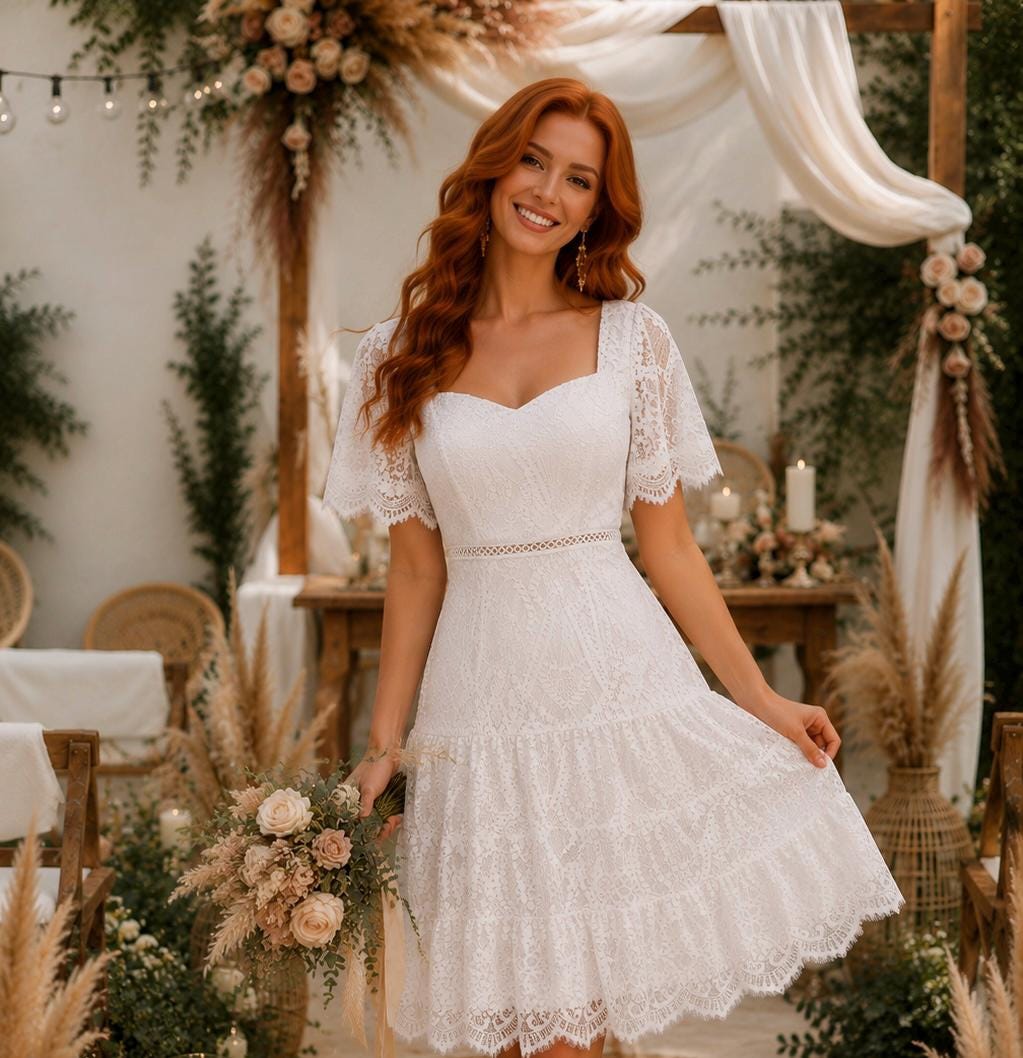
20. Short Lace Wedding Dress
Handmade seller
Short lace in a boho cut, pitched for civil ceremonies, intimate weddings, and beach. Pack it folded in your personal item; no garment bag required.
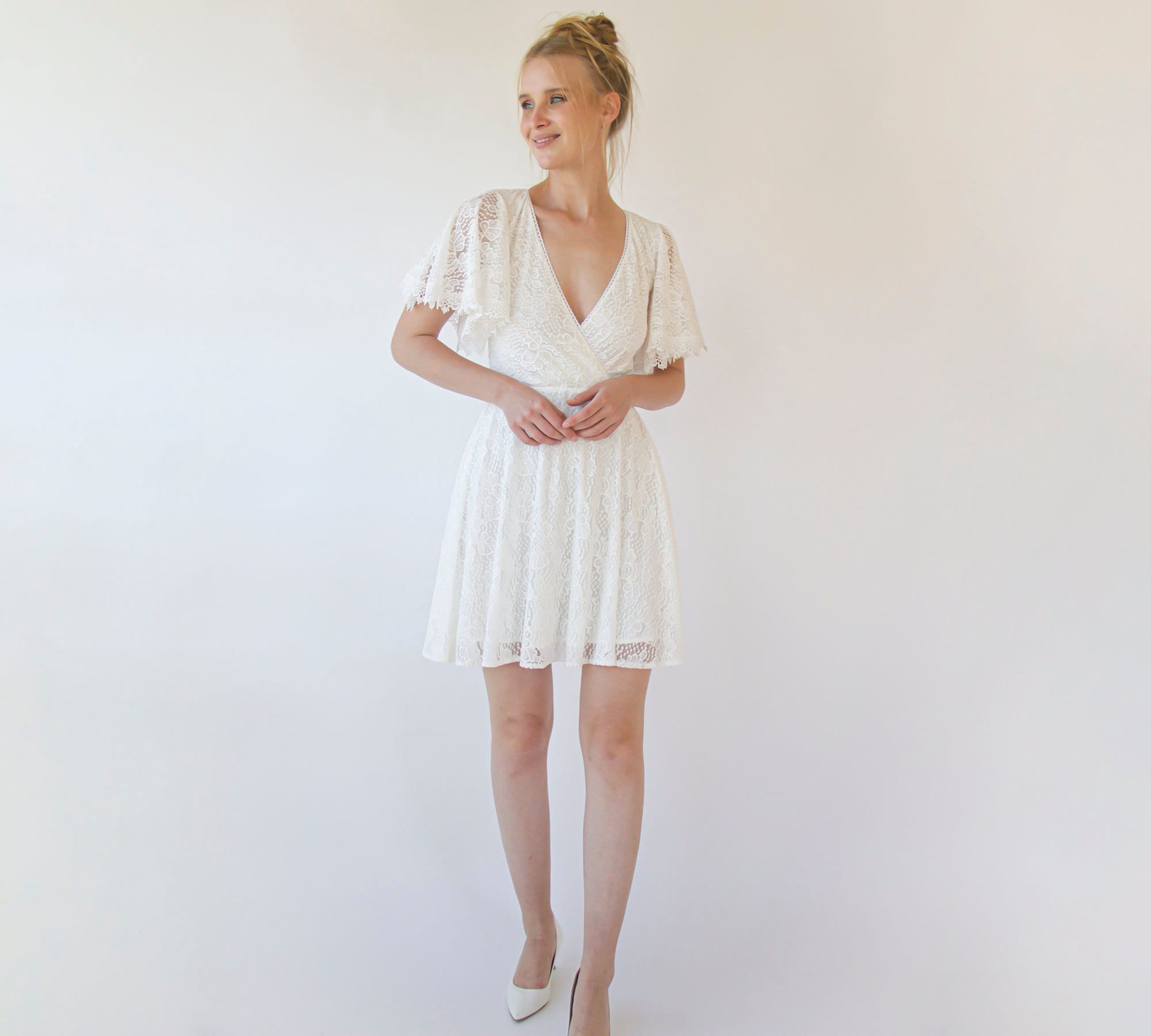
21. Ivory Lace Mini Wedding Dress
Handmade seller
Short lace mini with a V-neck; the seller suggests sizing down if you want it fitted. Lace at this length doesn’t collect sand, which is the whole appeal.
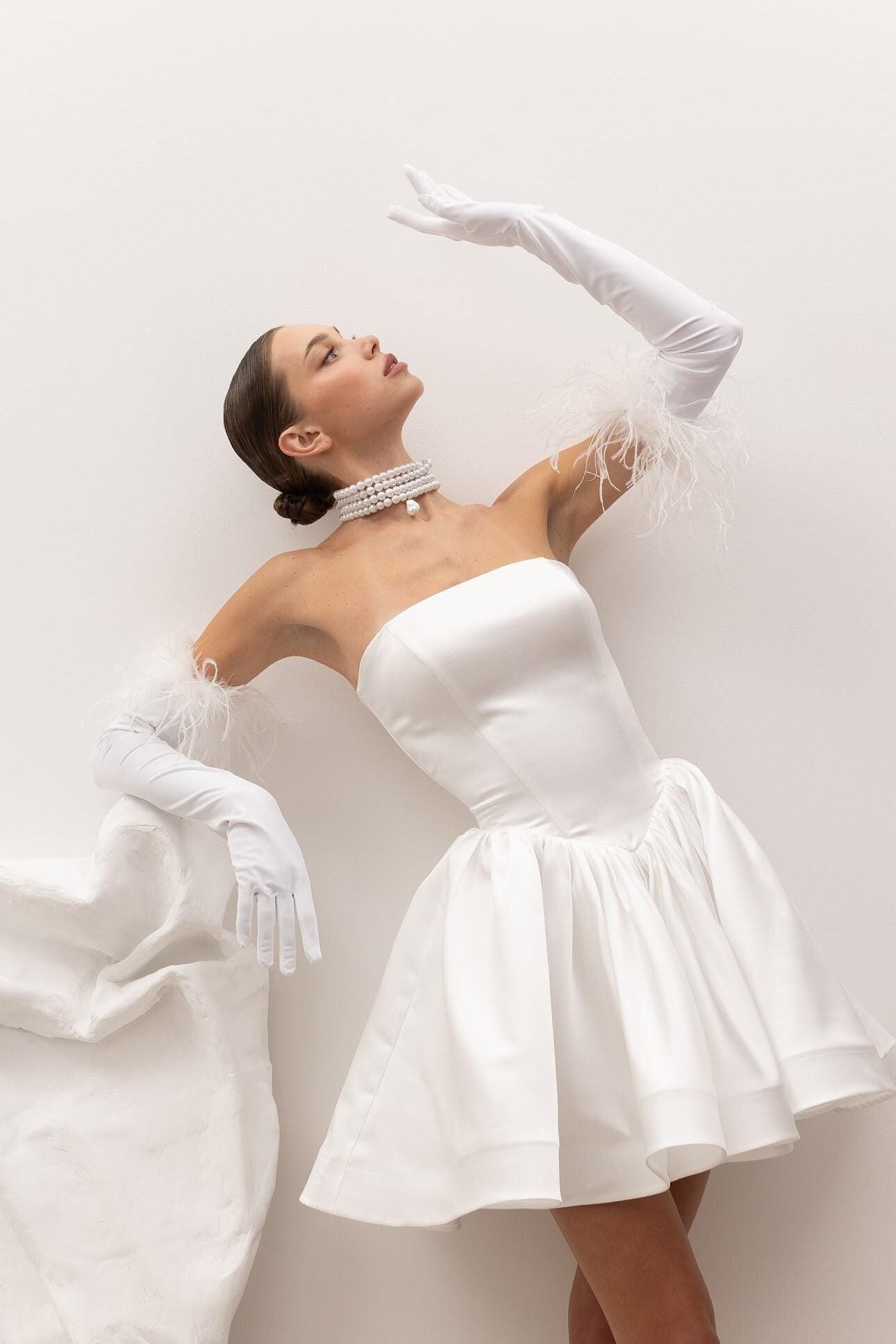
22. Mini Corset Satin Wedding Dress
Handmade seller
Structured strapless corset bodice with a flared mini skirt. Two beach notes: a strapless top in wind wants real tailoring, not tape, and a flared mini in wind wants shorts underneath.