
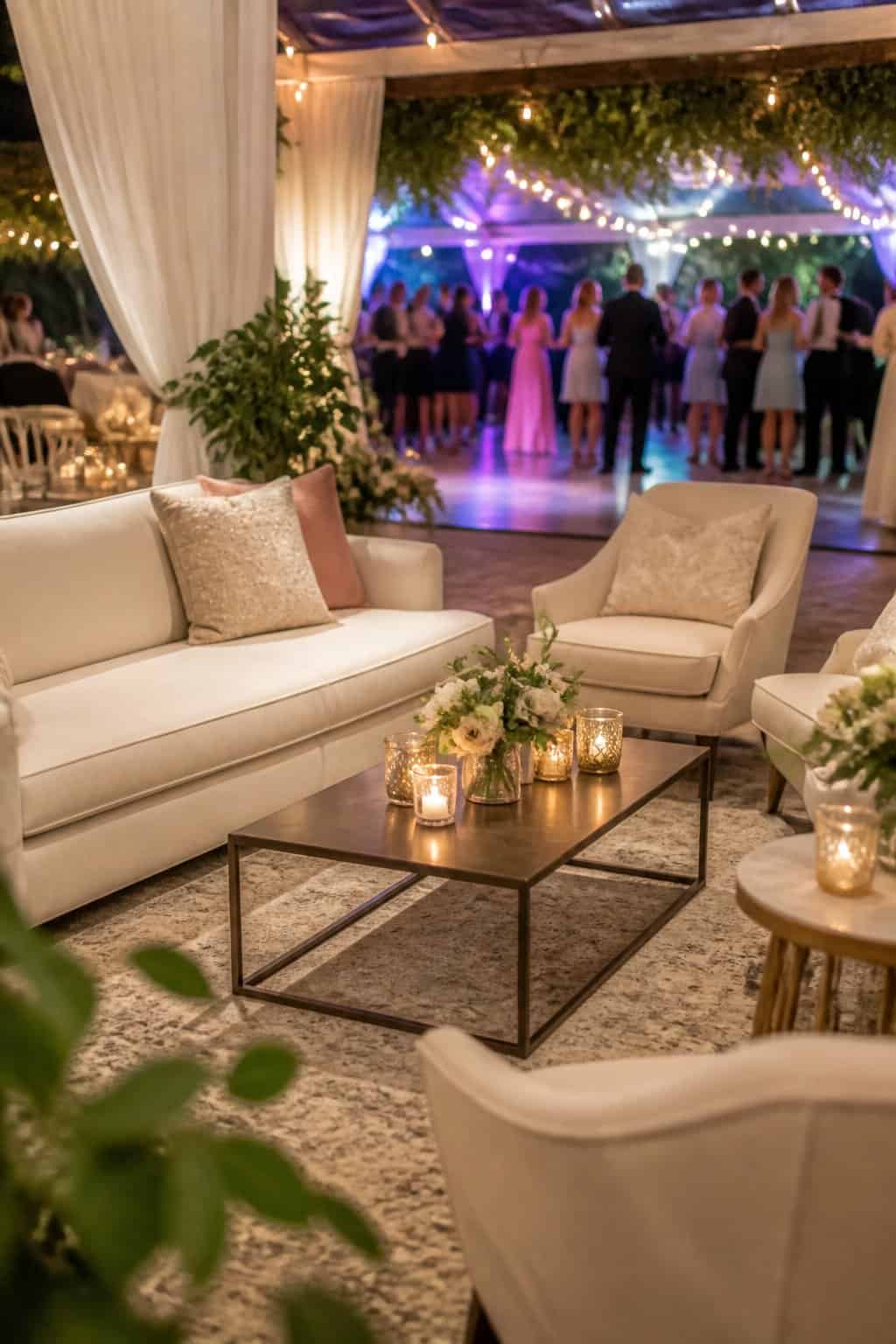
A bridesmaid slips away from the crowded dance floor, rounds a hallway curtain, and finds a softly lit room where a pair of armchairs and a low linen-draped table wait. That’s the Quiet Room concept in a single image: a second off-dance-floor space guests can step into without missing the wedding’s flow.
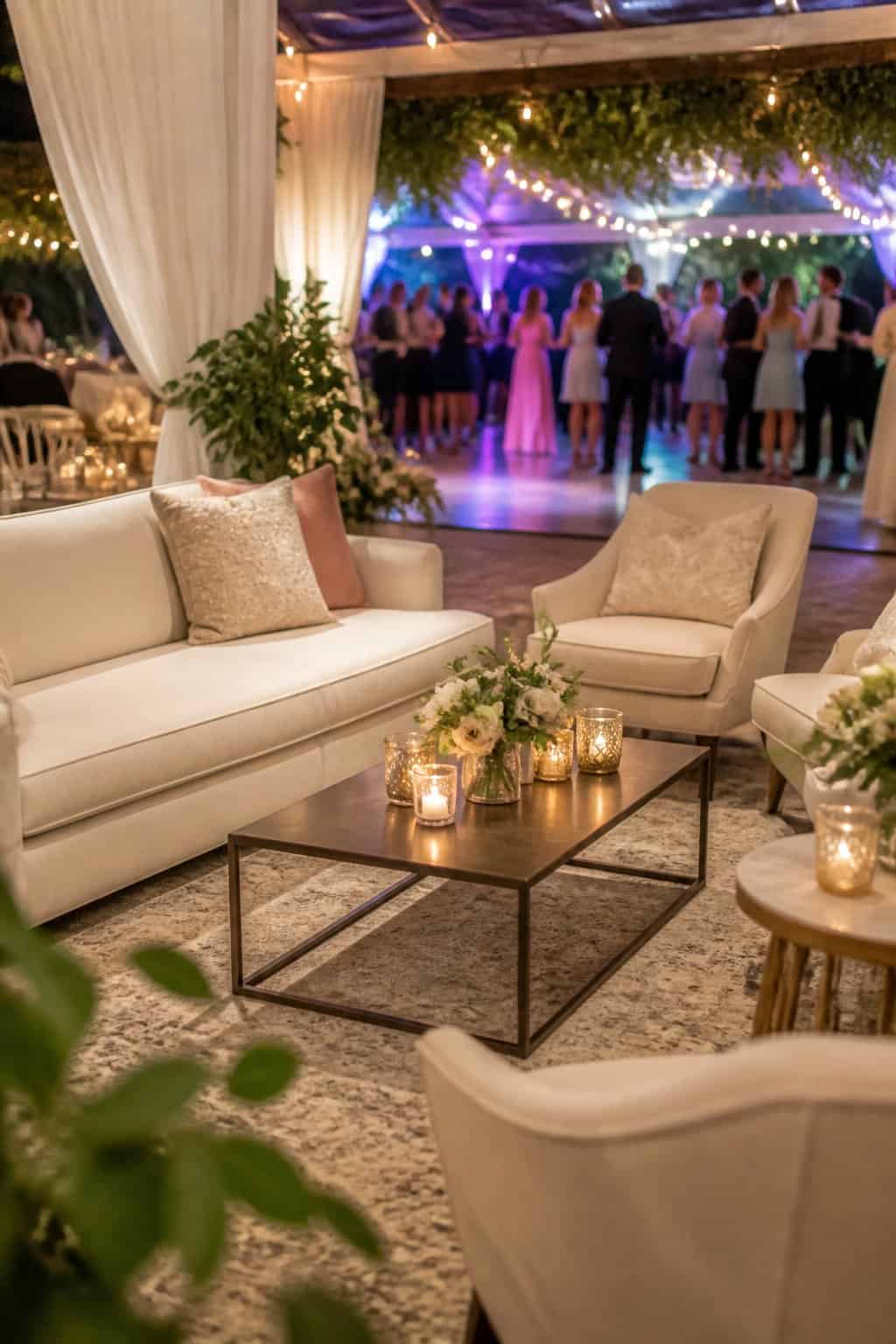
Couples in 2026 are budgeting for a Quiet Room not as a luxury, but as plain hospitality — a small, practical space that keeps older guests comfortable, new parents supported, and conversations calm while the main floor stays lively.
1) An Intimate Micro-Ceremony Space Away from the Main Floor

Win a Free All-Inclusive Honeymoon
Imagine starting your marriage with a free getaway to the Caribbean. Enter this Sandals sweepstakes for your shot at 4 days of all-inclusive luxury—fine dining, turquoise water, and zero stress. Takes 2 minutes to enter.
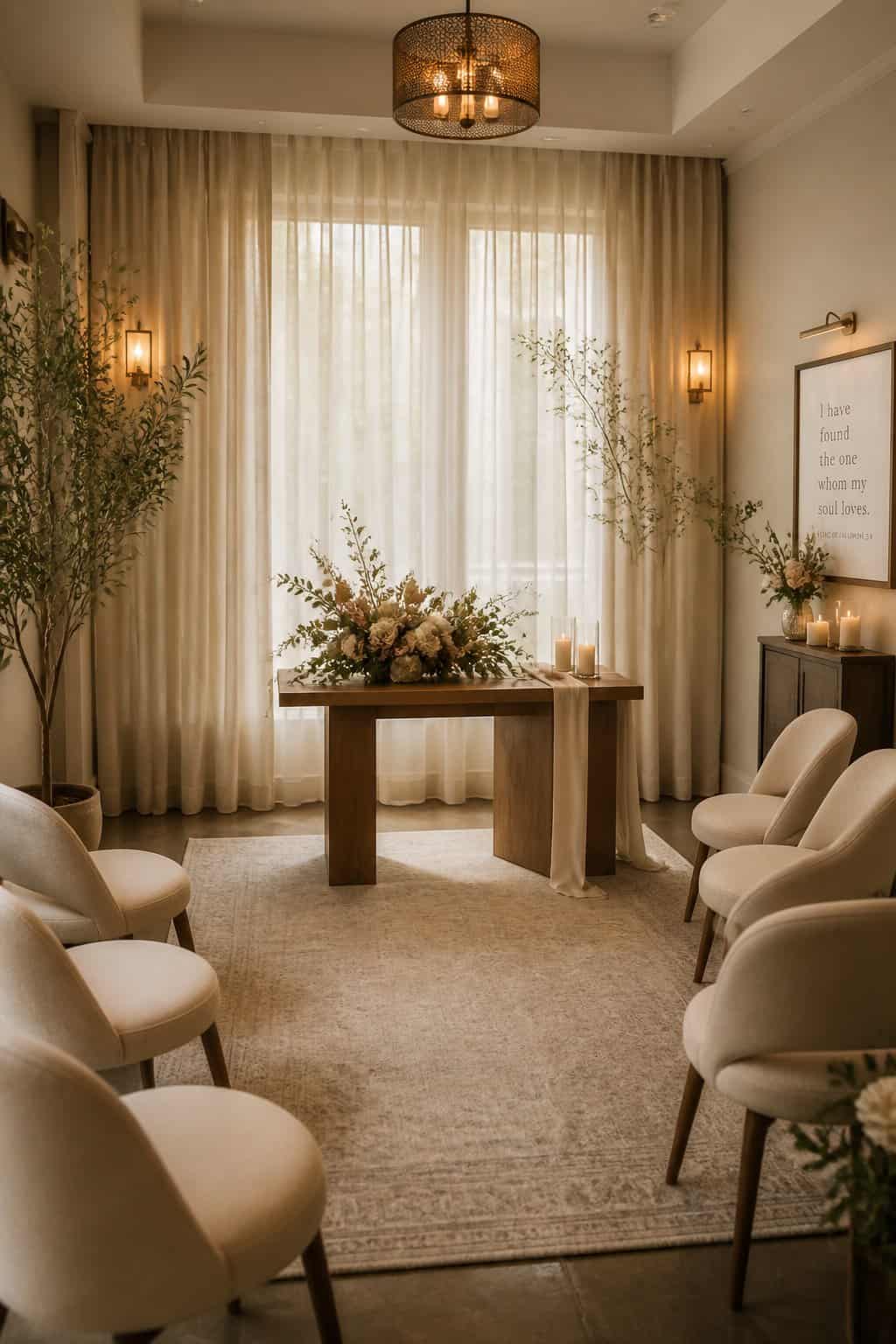
Picture a small parlor with a couple of upholstered chairs, a low table, soft side lighting, and a single aisle runner or rug to mark the spot. A few candles or a dimmable lamp and a draped linen make it feel private without fuss.
Guests step in for vows or readings and actually hear each other. Sound from the main dance floor stays out. Couples ask for this because they want a true intimate moment that doesn’t compete with the main event.
Budget-wise, this sits in the low-to-mid tier if you repurpose an existing room or rent a lounge set. Plan $200 to $800 for rental plus styling. Call a furniture rental house or your florist for soft furnishings, and wire a small mic to the officiant if your venue runs loud.
In a survey of 2025 wedding vendors conducted by The Wedding Report, nearly 38% of planners reported at least one couple per season requesting a dedicated off-floor lounge or retreat space — up from under 15% just three years earlier. The Quiet Room isn’t a niche request anymore.
2) A Covered Lounge Retreat for Older Guests
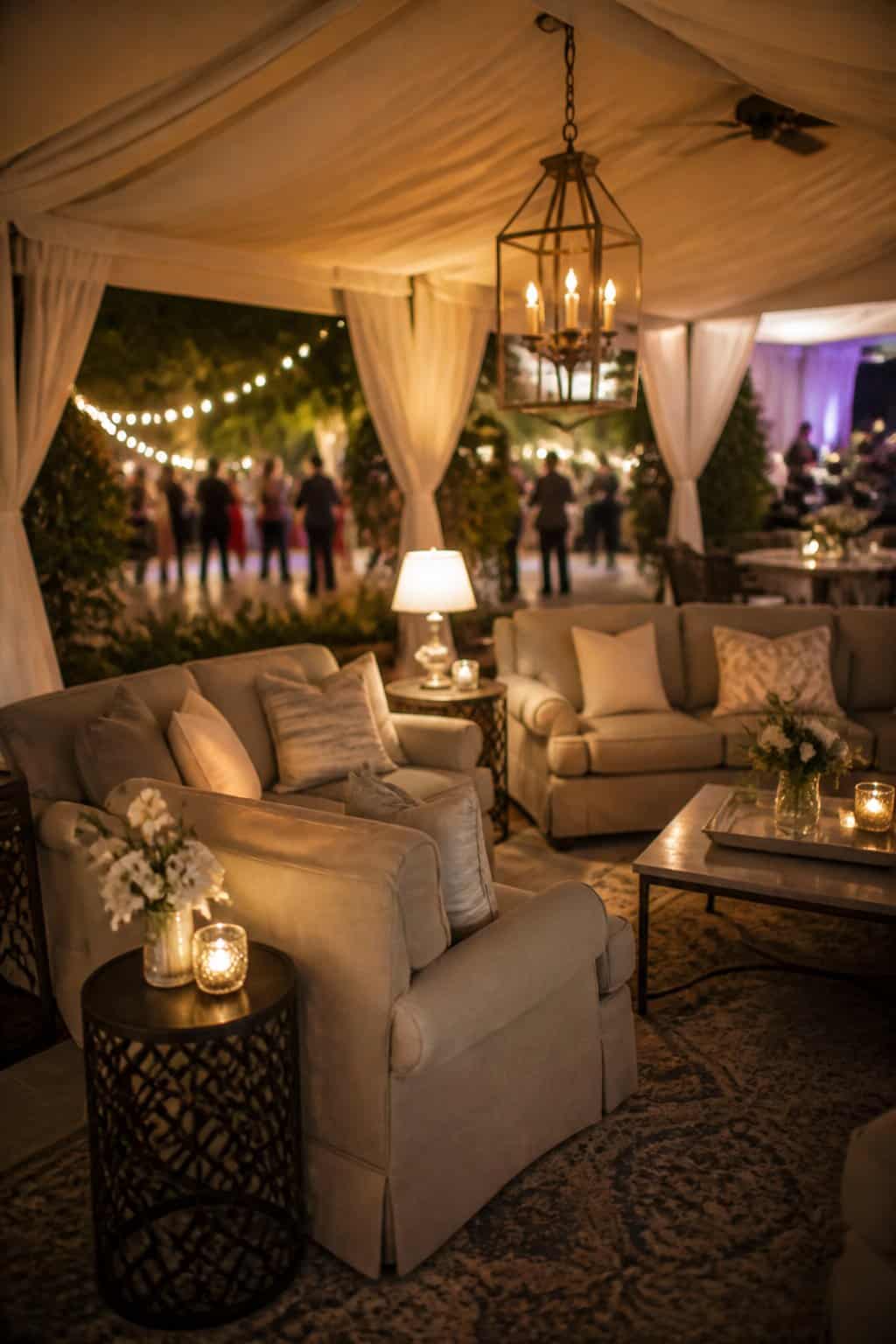
This one is tucked just off the reception tent: deep sofas, a few armchairs, soft throw blankets, and warm, dim lamps. A swag of fabric or a small pop-up canopy overhead softens the sound that bleeds in from the dance floor edge.
Older guests get a calm spot to chat without shouting over the music. It keeps grandparents and less-mobile relatives close to the party but out of the bustle, which matters more than most couples realize until they’re watching their grandmother grip the edge of a folding chair for three hours.
Rent two to three lounge sofas and a couple of side tables from a furniture rental company. Expect mid-tier pricing for a half-day setup. I usually advise booking the rental company already listed with your planner and bringing battery-operated lamps so you’re not dependent on venue power drops.
3) A Crescent Seating Nook for Parents and Grandparents
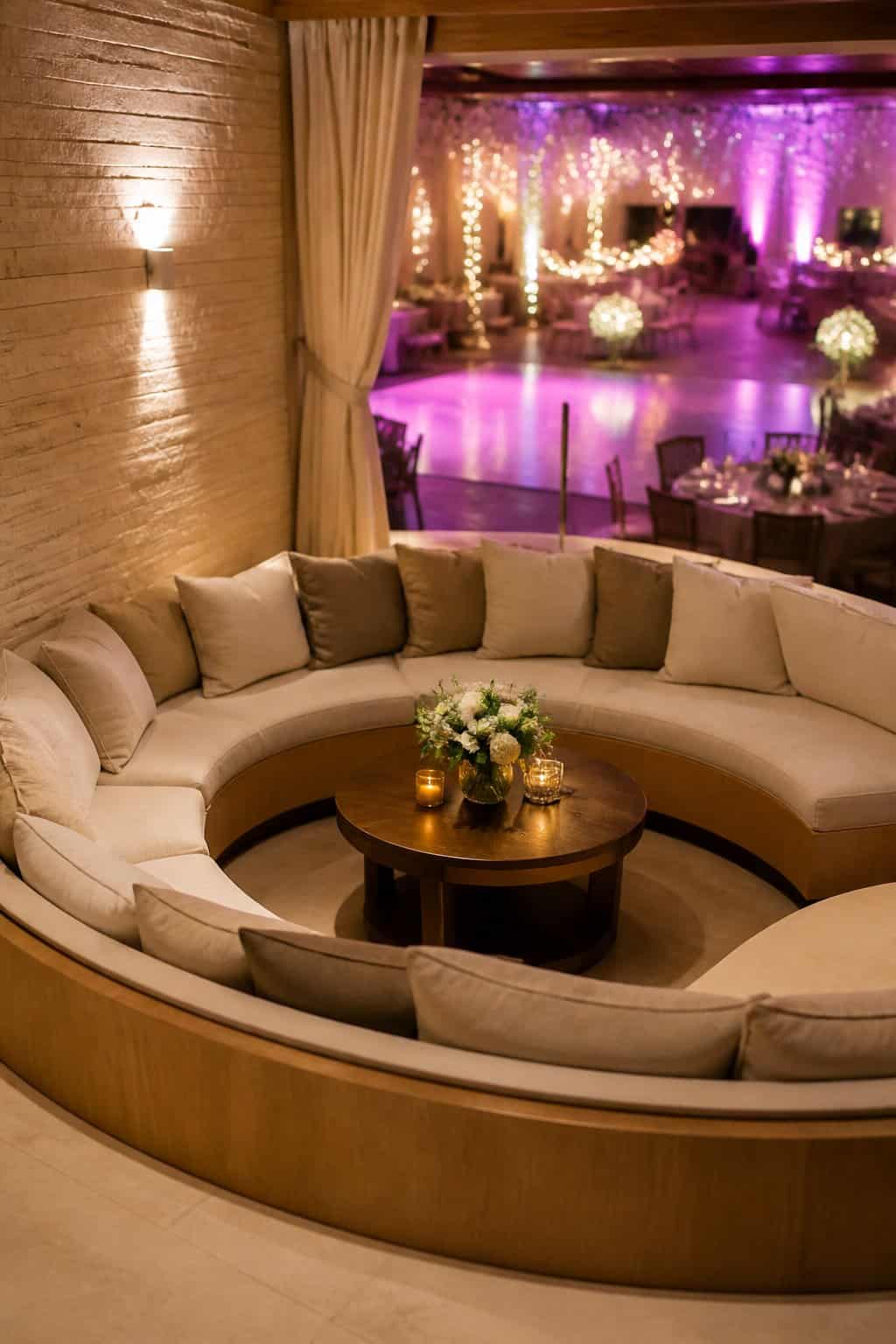
The shape is the whole point here. A curved banquette or a half-moon of upholstered sofas with low side tables faces the action without being in it. Older guests can see the dance floor and follow the toasts without being in the traffic path.
It gives visibility and dignity at the same time. People are included but not jostled, and that distinction matters enormously to families where mobility or hearing is a factor. Couples ask for this when they want elders nearby for toasts but away from the loudest zones.
Budget sits in the mid-tier. Renting modular banquette pieces or a custom-built curved bench runs about $400 to $1,200, depending on fabric. Call a specialty rental house or a furniture upholsterer, and place a small rug to define the crescent so it reads as a room-within-a-room rather than leftover seating.
4) A Linen-Draped Tea and Coffee Corner
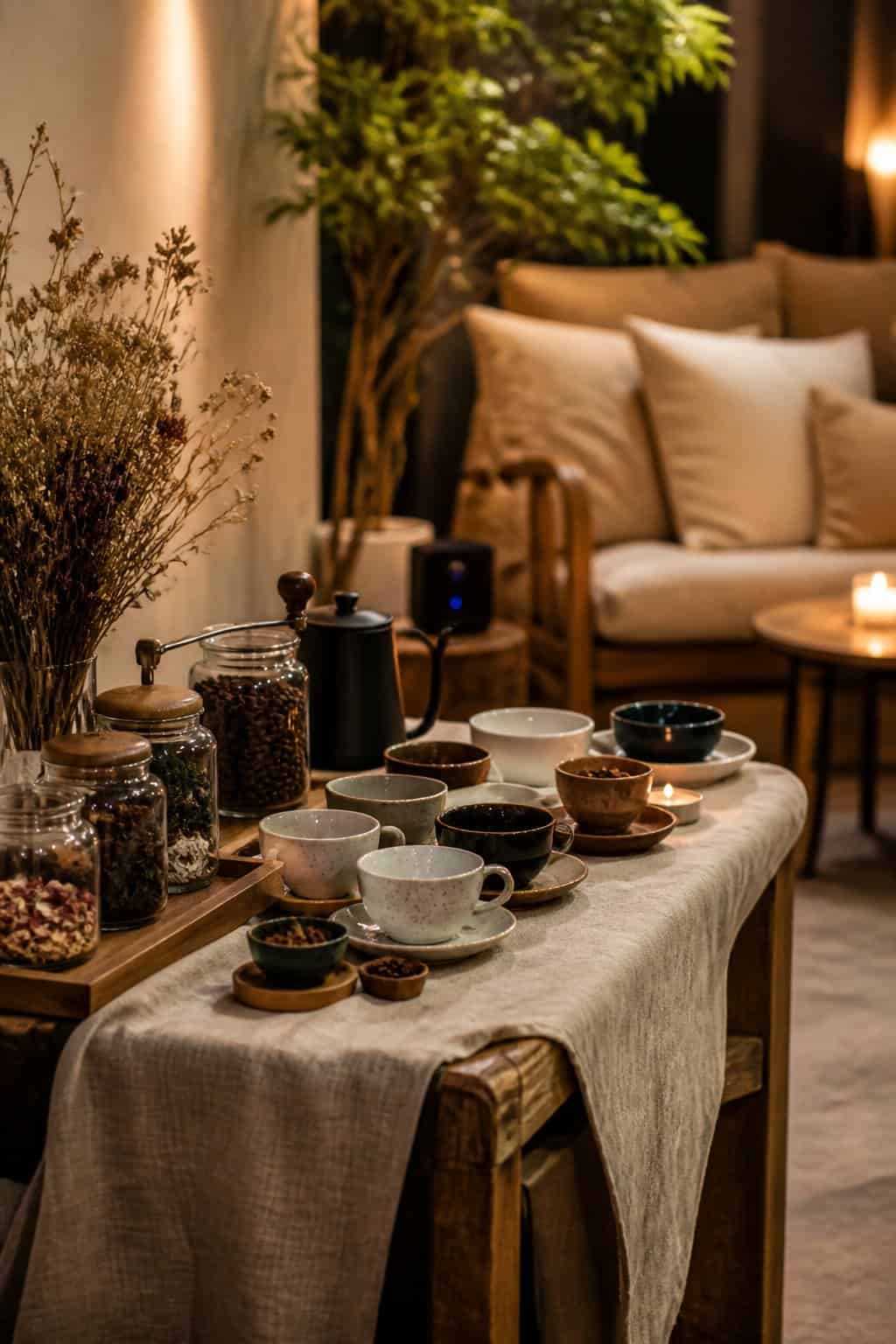
A small round table, mismatched chairs, a linen throw, and a low lamp set a quiet lived-in corner. I add a simple urn or electric kettle, stacked cups, and a tabletop speaker playing low instrumental tracks to soften the room without overwhelming it.
Guests step away from the crowd to slow down, sip something warm, and have the kind of conversation that doesn’t happen at a six-top. It gives older guests and introverts a calm option without breaking the flow of the reception.
Plan for a modest budget: $150 to $400 for linens, a portable kettle, and a battery speaker. Call a rental company for vintage chairs and a linen shop for bespoke cloths, or borrow from family to save money. Place the station near an outlet and tuck a small tray with sugar, spoons, and napkins to keep service tidy and easy to restock.
5) A Candlelit Conversation Parlor with Clustered Armchairs
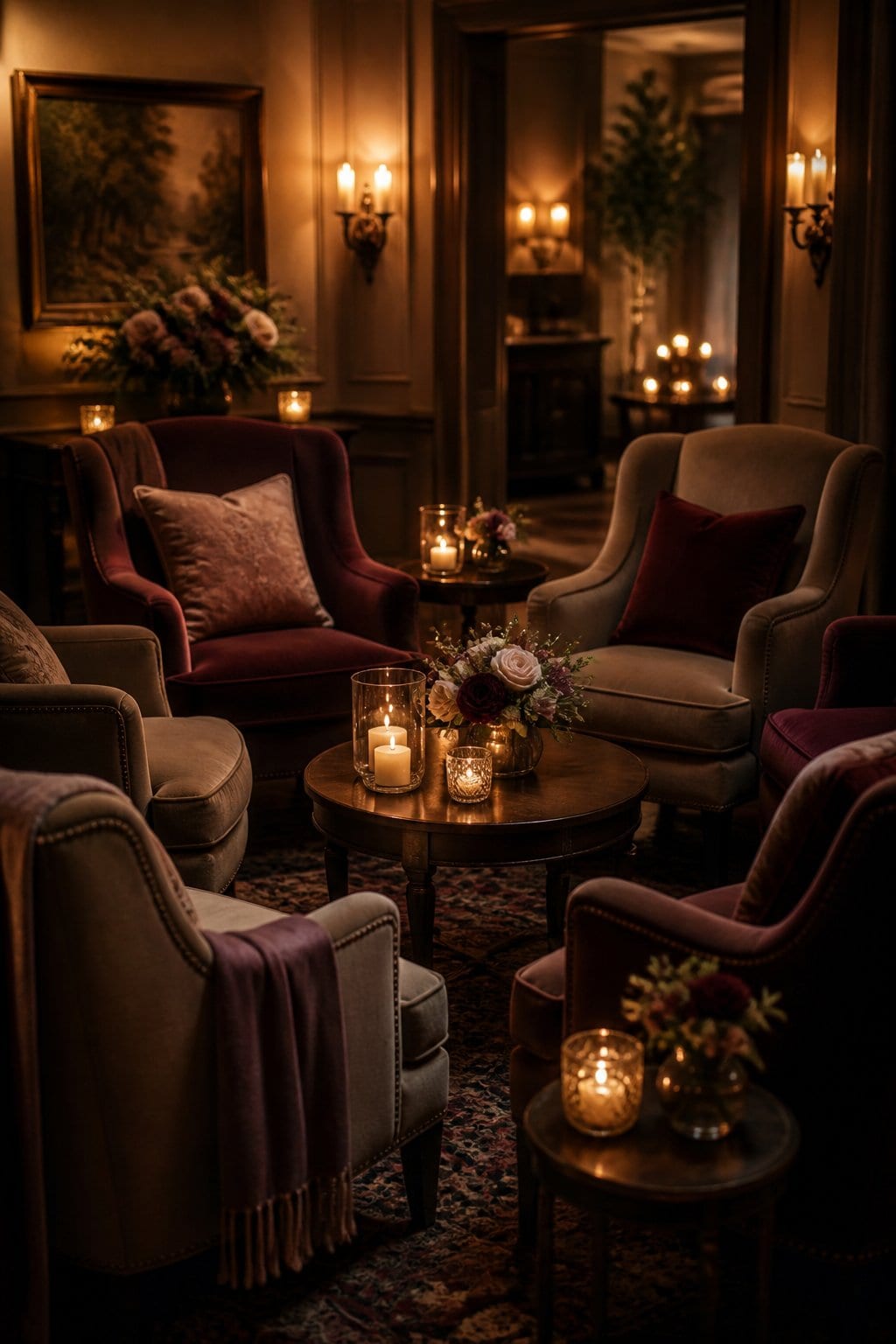
Four to six low armchairs in a loose circle, a couple of side tables, lights dimmed so candles sit at eye level. The feel is slow and intimate: soft textiles, warm wax glow, a small rug to anchor the cluster.
People who want to talk without shouting and parents who need a quiet corner both end up here. The circular arrangement is doing something specific — it encourages lingering conversation because everyone is already facing each other. There’s no obvious exit direction, so people stay longer.
Couples ask for this when they want pockets of calm that still feel part of the wedding flow. Budget mid-tier rental costs for chairs and candle arrangements: $300 to $800, depending on scale. Ask your florist for stable hurricane lamp installations rather than loose pillar candles. A weighted base keeps wax off fabrics and looks intentional.
6) A Kid-Friendly Quiet Room with Soft Toys and Calm Activities
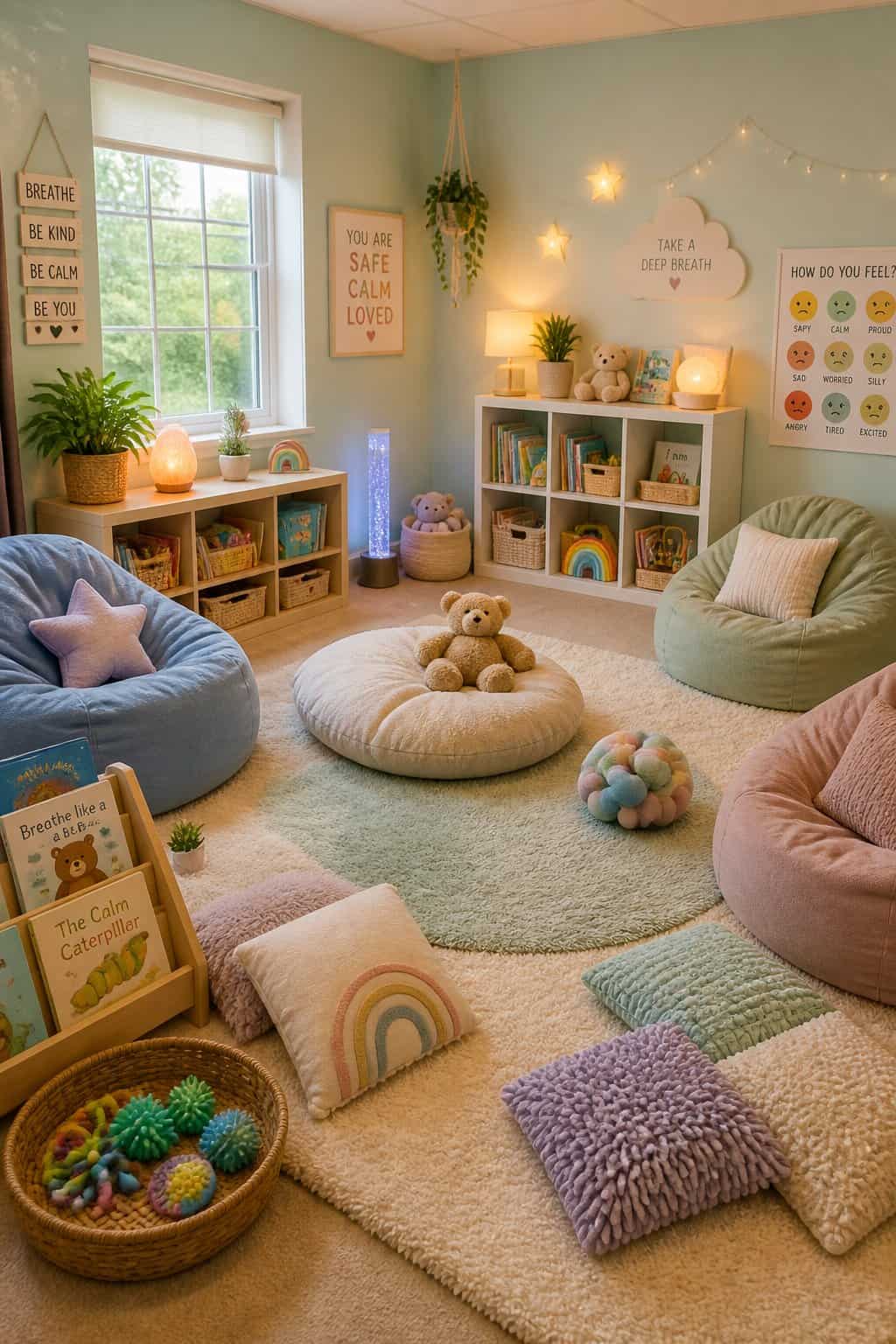
A low carpeted corner with bean bags, a small shelf of board books, soft plush toys, dimmable lamps, and a couple of floor cushions. The lighting leans warm and gentle. A simple fabric canopy or tent marks the space without blocking sightlines.
Little ones get a calm spot away from the dance floor but still within earshot of parents. Rent soft seating and rugs from your event furniture company for a mid-tier cost, generally $150 to $400. I always tell couples to add a clear sightline to the main room and a small sign with quiet-time expectations so supervising adults can actually relax instead of hovering.

Delta Children Jeep Hexagon Pop Up Play Yard
Check Price7) A Nursing and Pumping Suite with a Privacy Screen
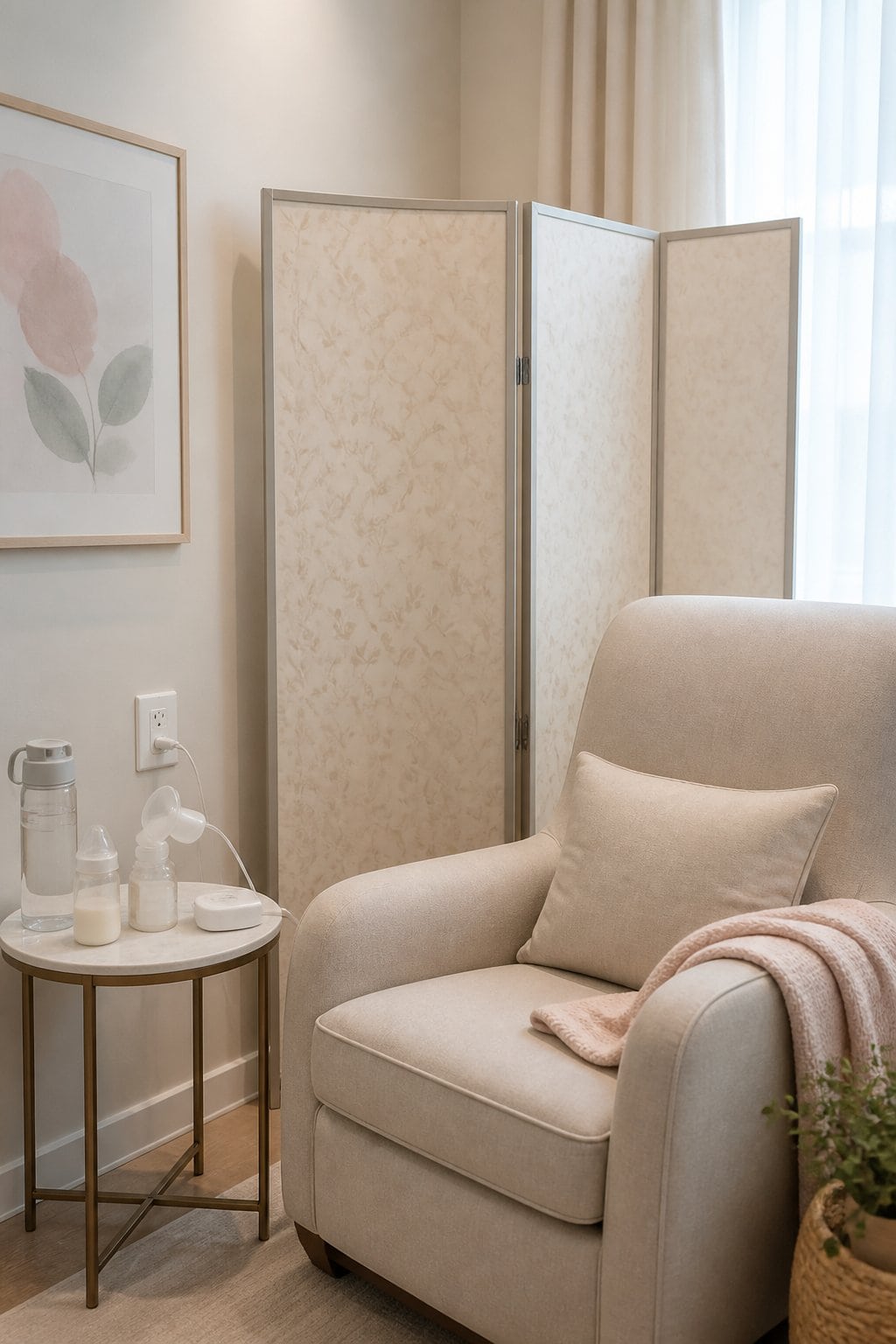
This one makes new parents feel genuinely thought of. A cushioned glider or swivel chair, a soft throw, a freestanding privacy screen, and a warm dimmable lamp. The goal is calm and functional, not clinical.
Nursing parents get a quiet, secure space to feed or pump without leaving the venue entirely. That matters more than couples often anticipate when they’re building the guest list.
This sits in the low-to-mid cost tier. Rent a chair and screen from a furniture rental company or buy a simple privacy screen and lamp for under $400. Call your event rental rep early and confirm delivery and pickup windows so the suite is ready before the first guest arrives.

SUNALLY 4-Panel Folding Room Divider with Wheels
Check Price8) A Prayer and Reflection Alcove
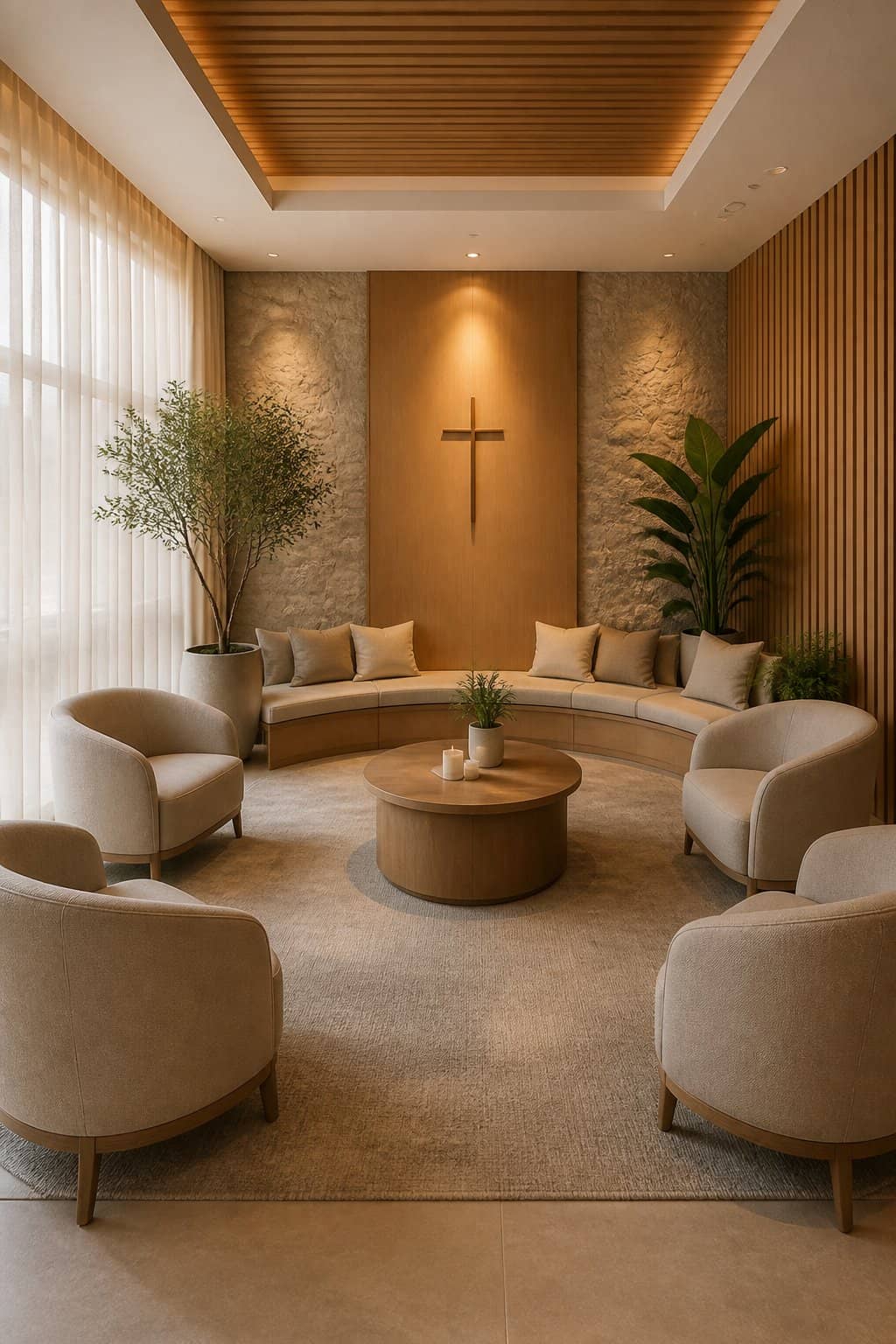
Soft bench seating or a pair of armchairs, low warm lighting, and a simple rug set a quiet tone. I add a small table for candles and a discreet sign that asks for silence and respect. Short wording works best here: guests read it in two seconds and understand the space immediately.
This gives guests a private place to pause without leaving the venue, which relatives who want to observe religious practice or simply need a moment of stillness will use more than couples expect. Plan $200 to $800 for rentals and soft lighting. Call a rental company for benches or chairs and an event florist for simple greenery.
“The best Quiet Rooms I’ve designed don’t announce themselves. They’re simply there, and the right guests find them.”
9) A Vow-Renewal or Photo-Op Staging Area
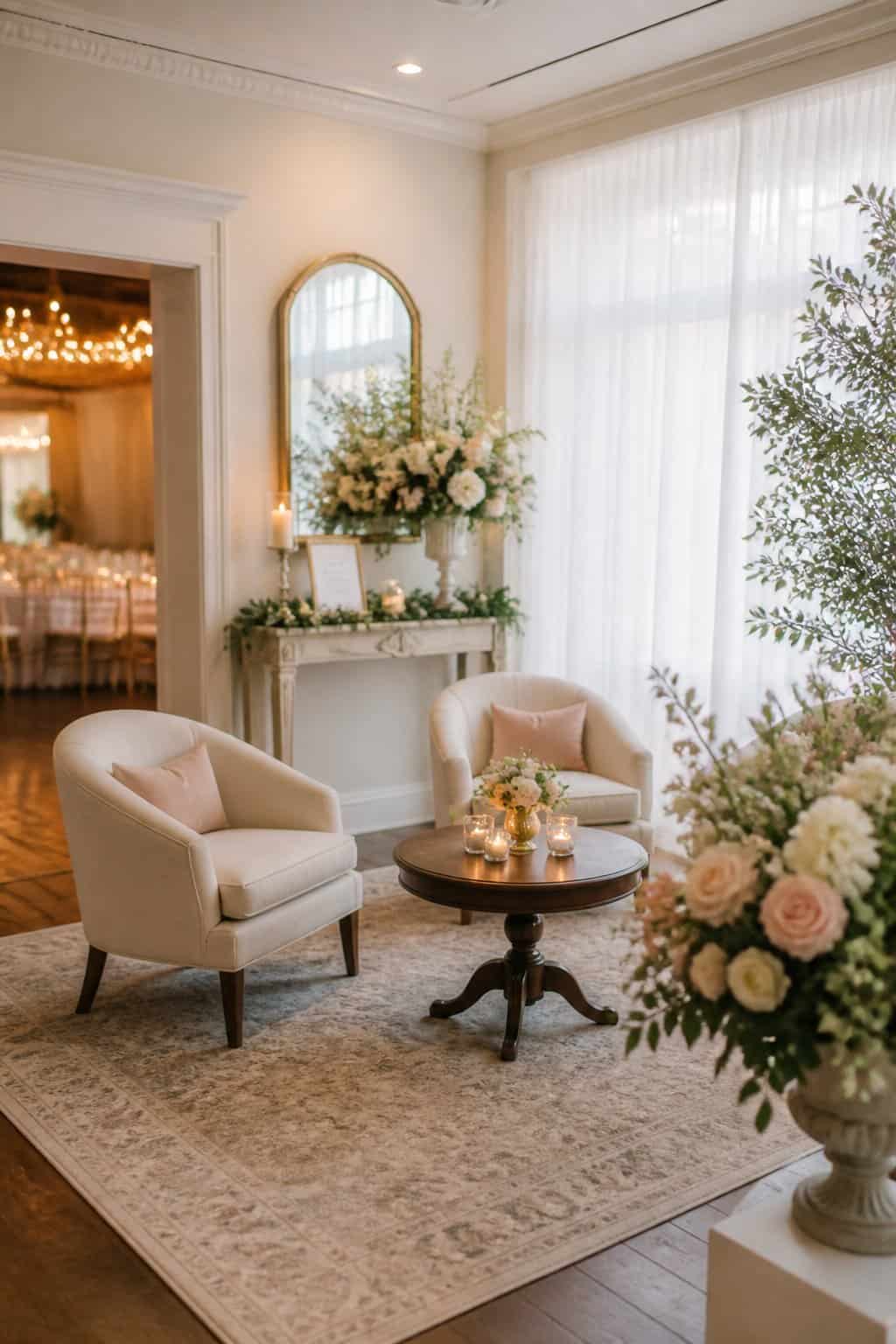
Soft sofas, a small arbor or vintage door frame, warm string lights, and a few low tables make this a calm staging area. I keep the lighting dimmer than the ballroom and add a standing mirror so couples can check their look before photos.
Couples ask for this when they want a private spot for vow renewals or candid portraits without crew and dancers in the background. Budget sits in the low-to-mid tier if you repurpose rental lounge furniture and lean on venue lighting: plan $300 to $900 depending on rentals. Ask the photographer for a “staging window” timed to avoid the DJ’s lighting cues.
10) A Memory Table Room for Family Stories and Guestbook Signing
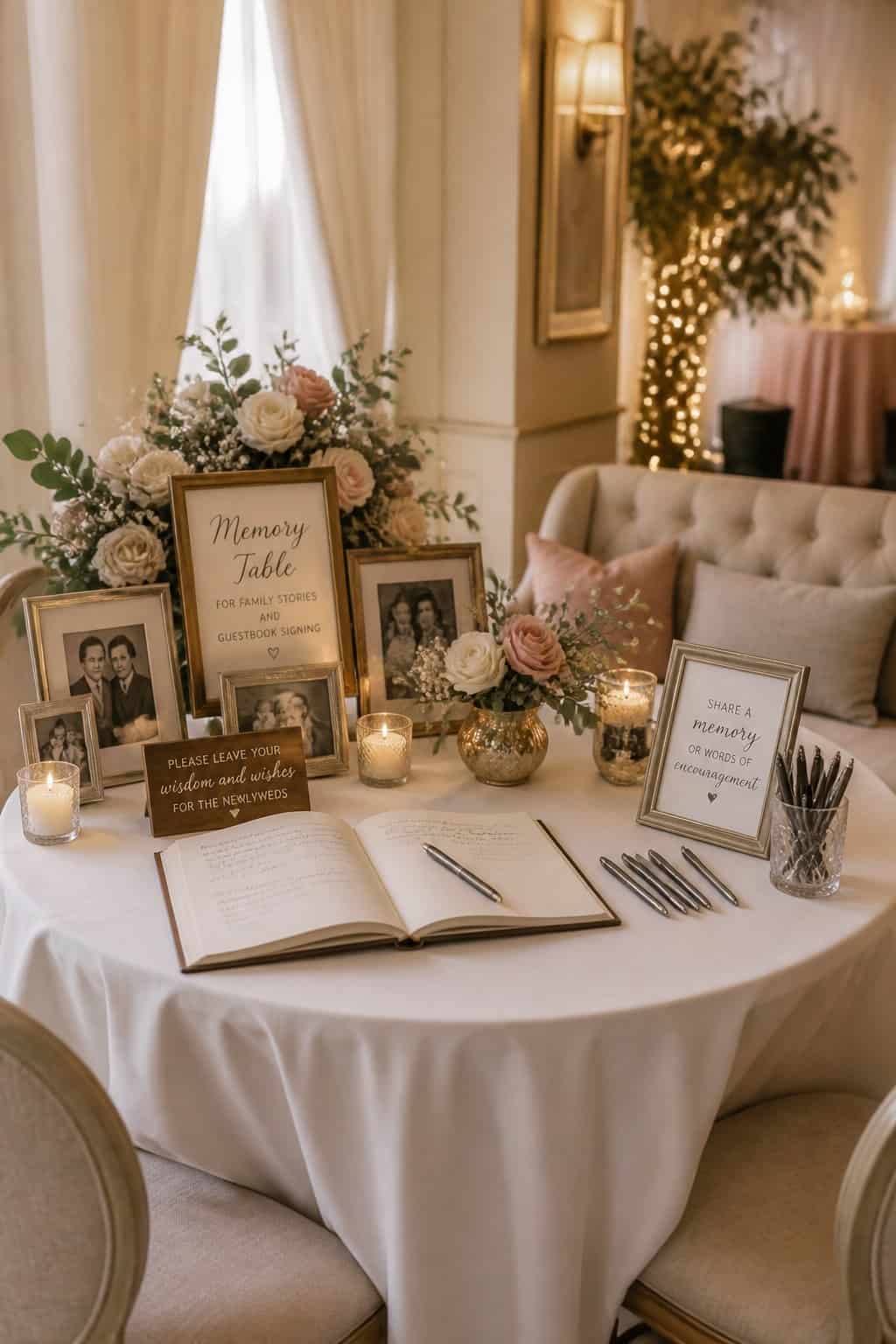
A small room with a long table of framed photos, soft lamps, and a few upholstered chairs arranged for quiet conversation. Low candles and a single floral runner keep the feel intimate without being fussy.
Guests can sit, tell stories, and sign a guestbook or memory journal at their own pace rather than rushing past a table in the main hall. Older relatives and close friends will linger here in a way that simply doesn’t happen when the guestbook is competing with the dessert station for attention.
Plan for a rental table, three to five chairs, and a couple of floor lamps. This generally fits a low-to-mid budget. Ask your event rental company for dimmable lamps and request a heavy guestbook with stiff pages so signatures don’t bleed or buckle during signing.
11) A Vendor Staging Room for Cake Cutting Prep
Free Wedding Planning Checklist
Stay organized from engagement to "I do" — get our comprehensive checklist covering every task, deadline, and detail.
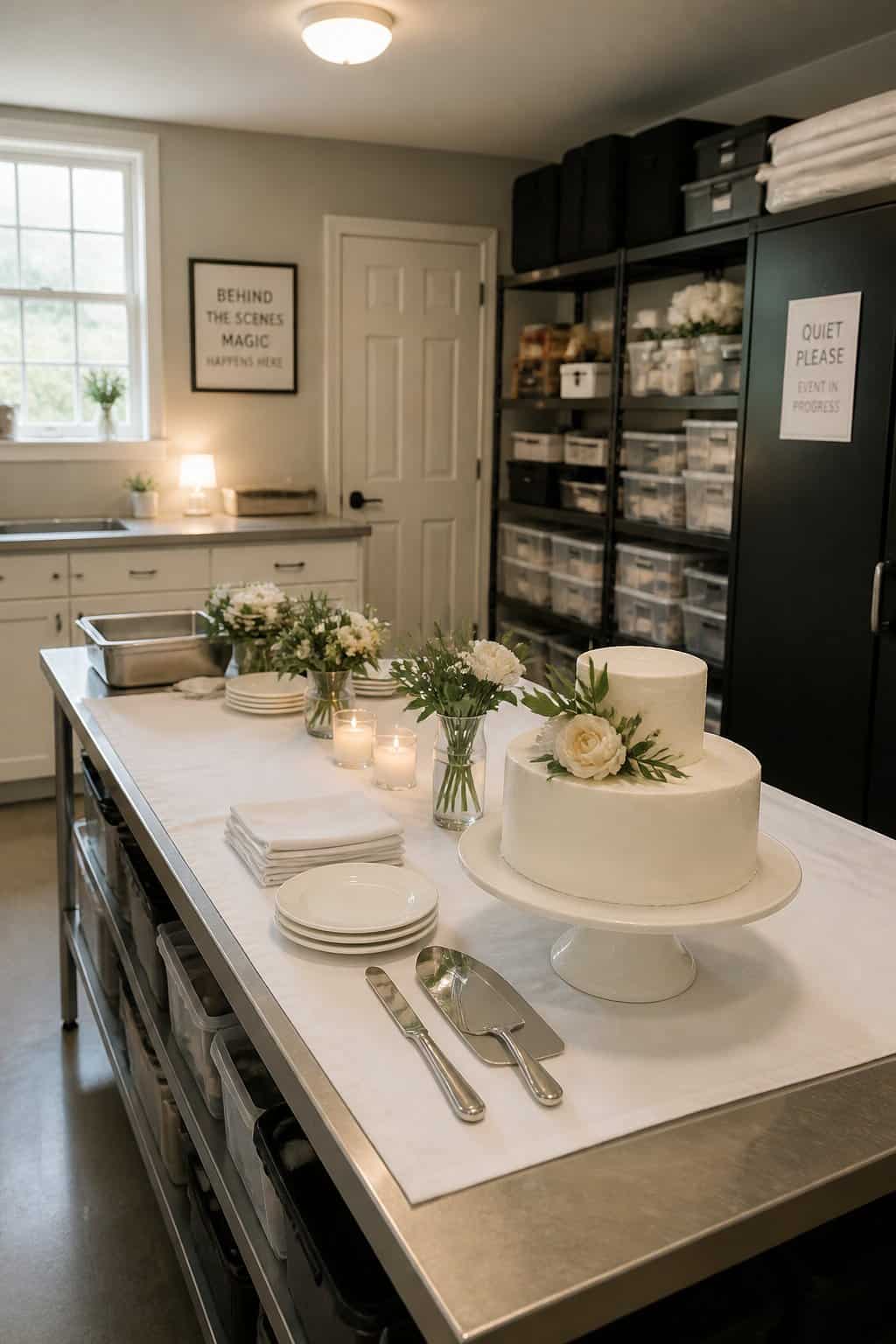
A small side room with a folding table, a rolling cart, dimmable sconce lighting, and a covered cake stand tucked against a wall. A soft throw on a chair keeps the vibe approachable while keeping cleanup boxes out of the main reception sightlines.
Vendors need a tidy nearby place to stage the cake, organize tools, and wait between cues. Guests see only the finished moment, not the prep clutter. That contrast is deliberate: it makes the cake cutting feel like it materialized from nowhere rather than from a cardboard box someone kicked under a table.
Budget-wise, this is low-to-mid tier: $100 to $400 for basic furniture and drape, or ask the venue about a complimentary prep closet. Call your cake baker or catering manager early, mark the door on the floor plan, label shelving, and bring a small task lamp to speed plating.
12) A First-Dance Rehearsal Pocket Room
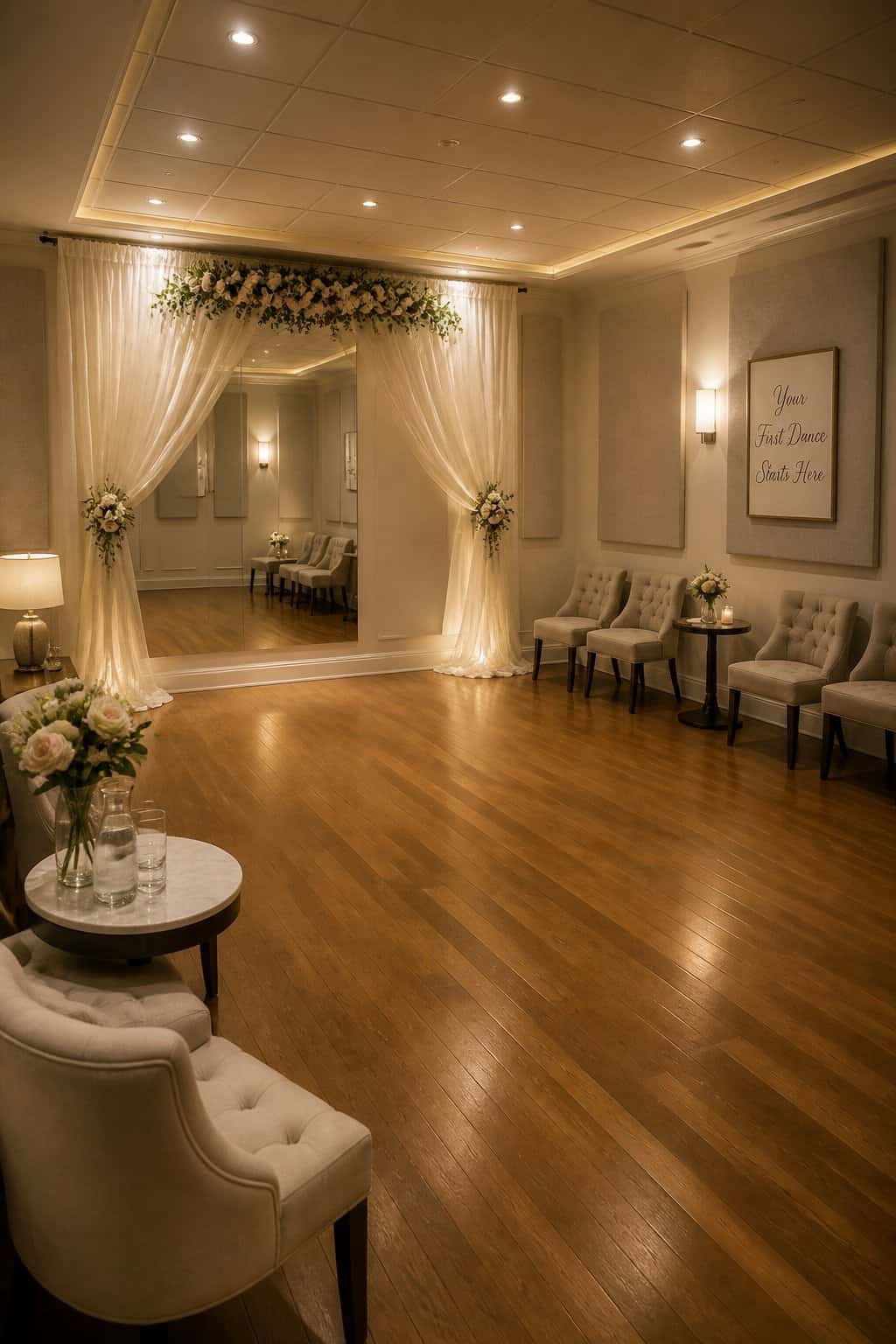
A small side room with a soft rug, a single bench, a dimmable lamp, and a clear stretch of floor. I keep lighting warm and portable speakers on a low shelf so couples can hear the track without blasting the main hall.
This space lets couples run steps and timing while staff and the DJ listen for bleed and volume. Vendors get a demo of mic levels and reverb. Guests can peek in without crowding the floor.
Plan on a low-to-mid cost tier: a venue coordinator or rental staff can convert an unused prep room for well under a few hundred dollars. Call your venue coordinator or a mobile AV vendor and ask for a quick sound check plus a marked floor grid to scale the spacing before guests arrive.
13) A Wind-Down Room with Floor Pillows and Aromatherapy
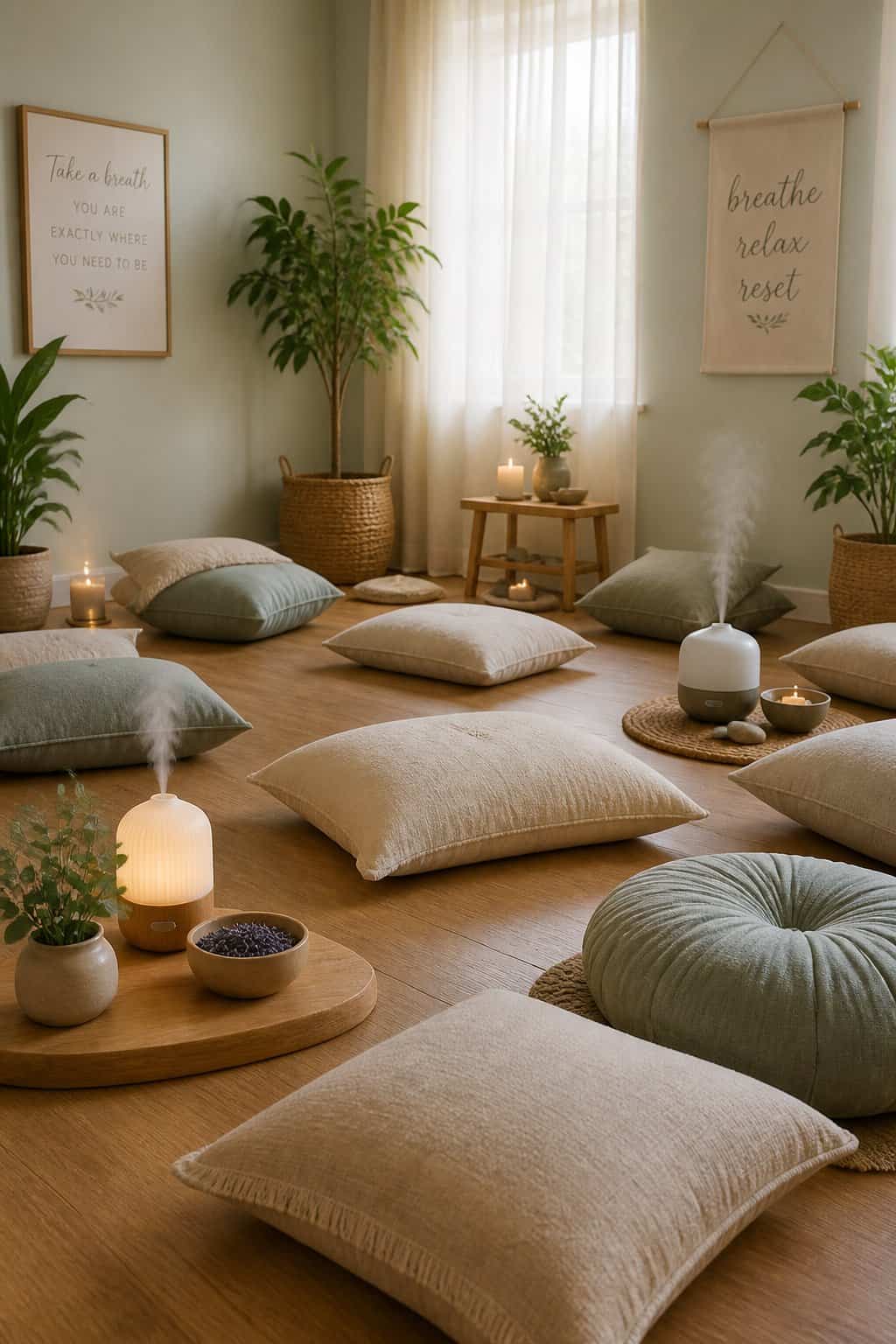
This is the room I’d want at every wedding I’ve ever worked. Soft rugs, low lamps, and a scatter of oversized floor pillows create a small, quiet nest off the main reception. A low table holds a diffuser, and a basket of light blankets lets guests sink down without feeling isolated or strange for needing a break.
People who need a pause want minimal stimulation and a gentle cue that it’s acceptable to rest. Couples ask for this when they know older relatives or anxious friends will attend and they don’t want the energy of the dance floor to be the only option on offer.
Keep costs modest: expect a low-to-mid budget if you rent pillows and lamps from an event rental company and source diffusers and oils from local home shops. Label the doorway with a simple sign and place the diffuser on a timer to rotate scents like lavender and eucalyptus. The room stays fresh without anyone having to monitor it.
14) A Coat and Bag Drop That Doubles as a Quiet Retreat
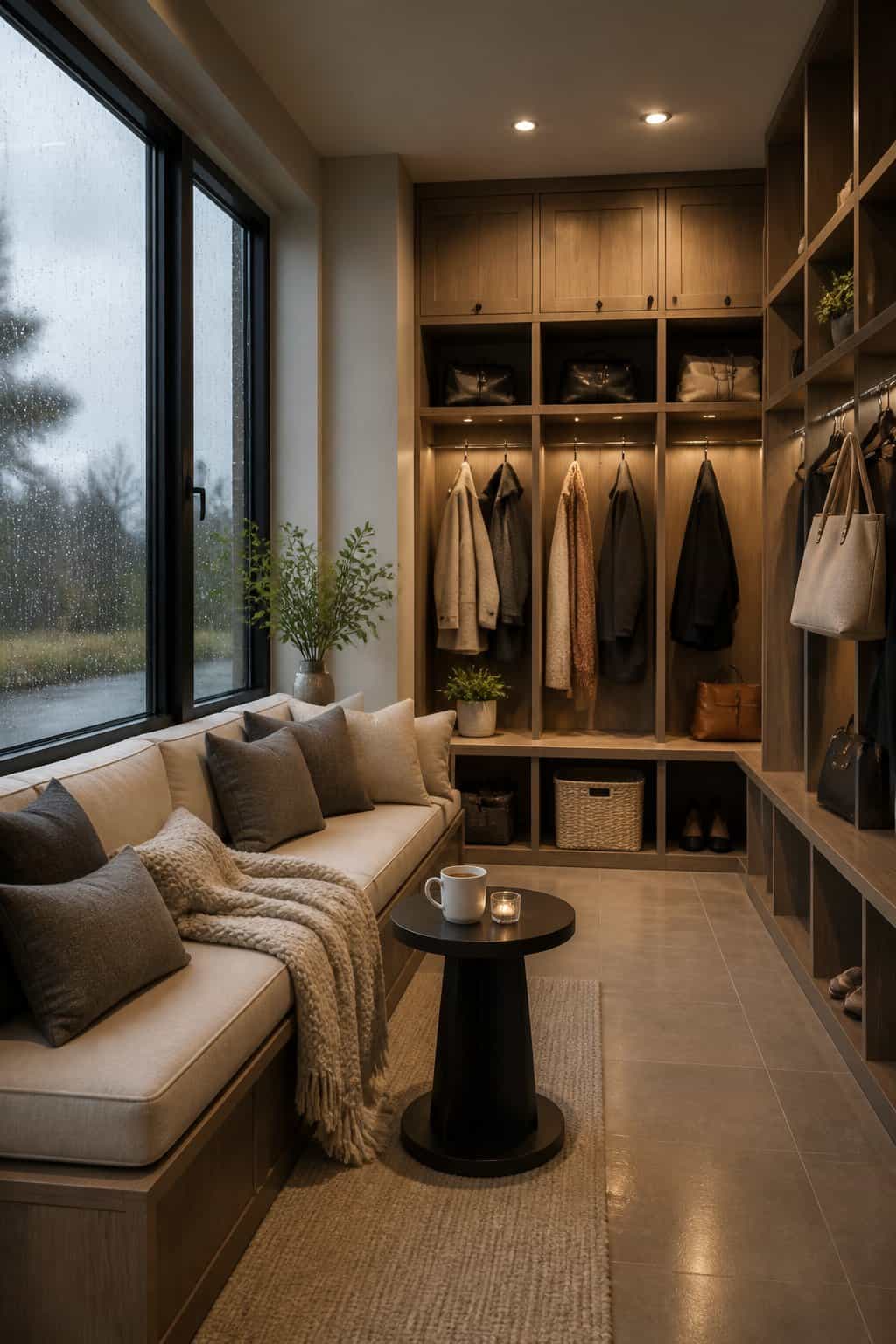
A wooden bench, a row of hooks, woven baskets for bags, and a soft lamp or two. Thick throws and a few floor cushions shift it from utility closet to a genuine pause space, which matters in Pacific Northwest weather when guests arrive damp and windblown.
Couples ask for this to keep the main reception tidy and to offer a dry, warm off-dance spot where people can regroup without heading outside. Plan this on a low-to-mid budget: rented benches and hooks from a furniture vendor cost less than any carpentry fix. Label baskets by table and add a plug-in oil warmer so the room smells clean and calm from the moment the first coat goes up.
15) A Quiet Cocktail Terrace Separated by Plants and Fabric Panels
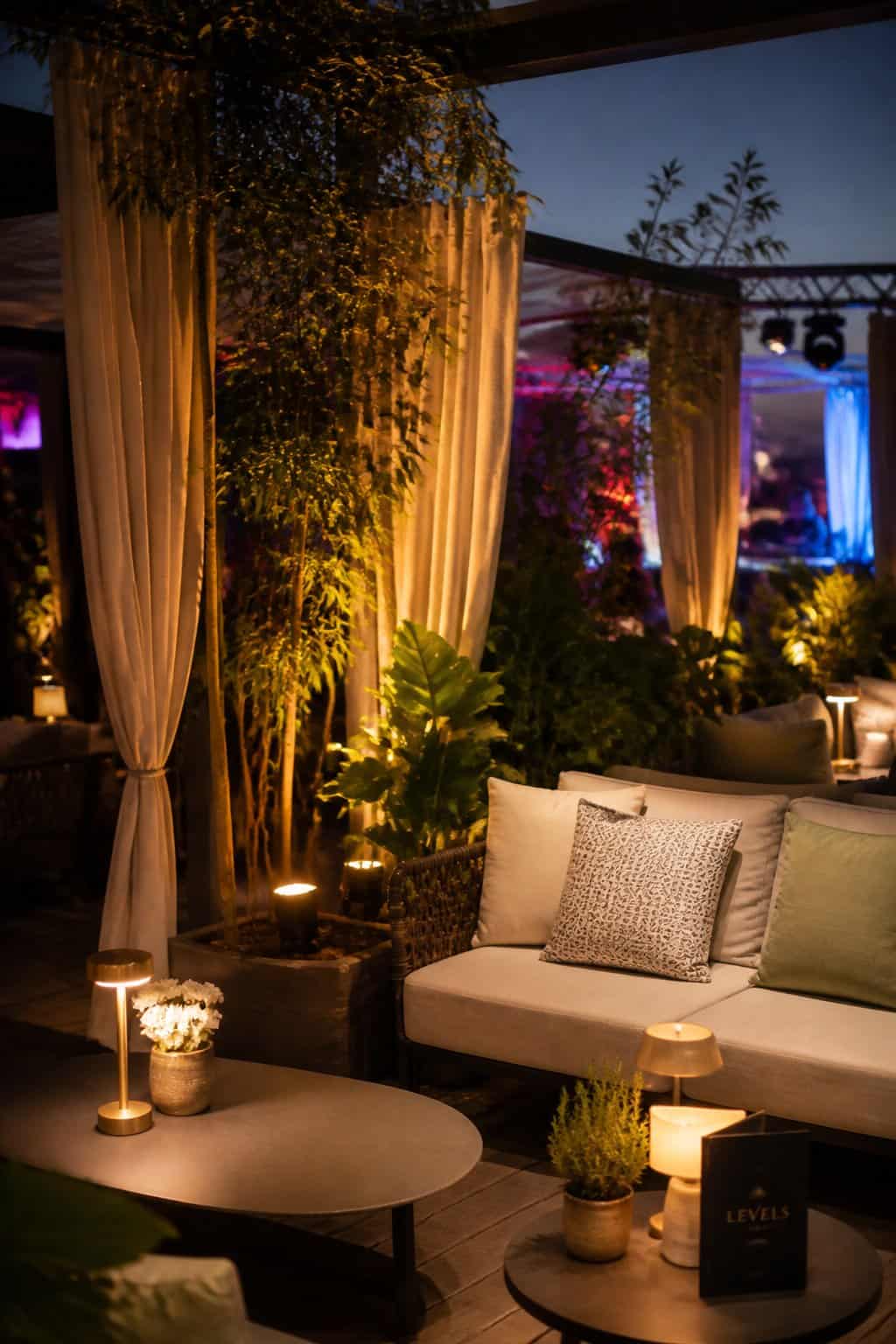
Low bistro tables, a couple of wicker loveseats with soft throws, and warm bistro lights tucked under a pergola. Tall potted ferns and linen panels hang between the terrace and the main ballroom to dim the bass without cutting the party connection entirely.
People can step out for a drink and a conversation without leaving the wedding energy. The ferns and panels do something simple but effective: they signal a visual and acoustic boundary without a door or a wall, which keeps the space from feeling like an afterthought.
Plan on a mid-range budget. Expect to spend more if you want custom fabric panels or large designer plants. Call a rental company for furniture and an event drapery vendor for tension-mounted panels, and use lightweight frames so staff can remove them quickly at breakdown.
16) A Late-Night Snack Station Room
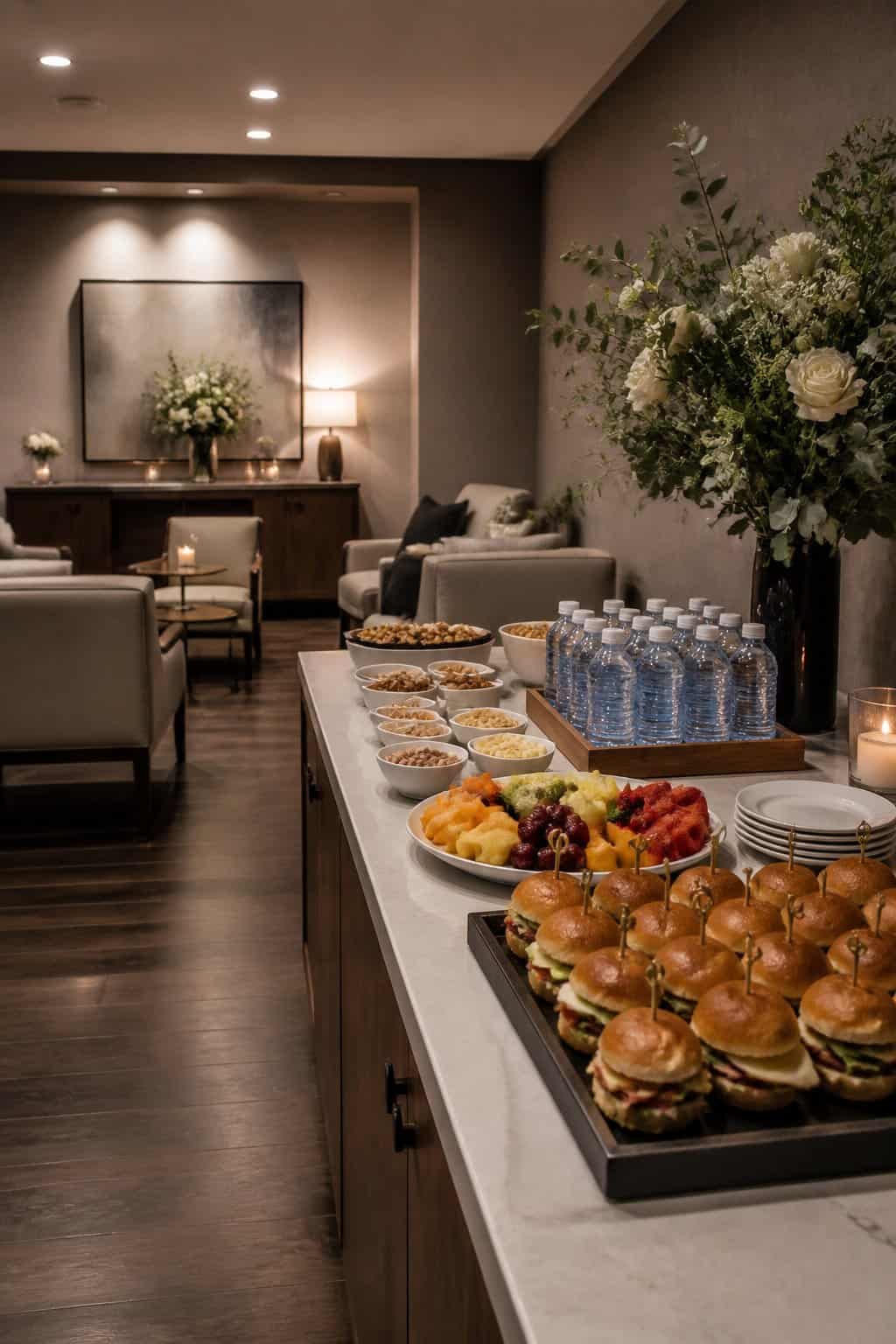
Low warm lighting, long tables with trays of finger foods, a mini coffee station, and a trash bin on every end. A couple of lounge chairs and a high-top for people who want to stand and chat complete the setup.
This room keeps lines off the dance floor and lets guests grab food without cutting into the party. It also keeps catering traffic predictable and reduces spills in the dancing zone, which any caterer or venue coordinator will quietly thank you for.
Plan for a mid-tier rental cost: a few folding tables, linen runners, and battery candles from your event rental company. Call your caterer and rentals rep early and request staggered replenishment so the station never looks picked-over.
17) A Florist and Emergency Kit Prep Room
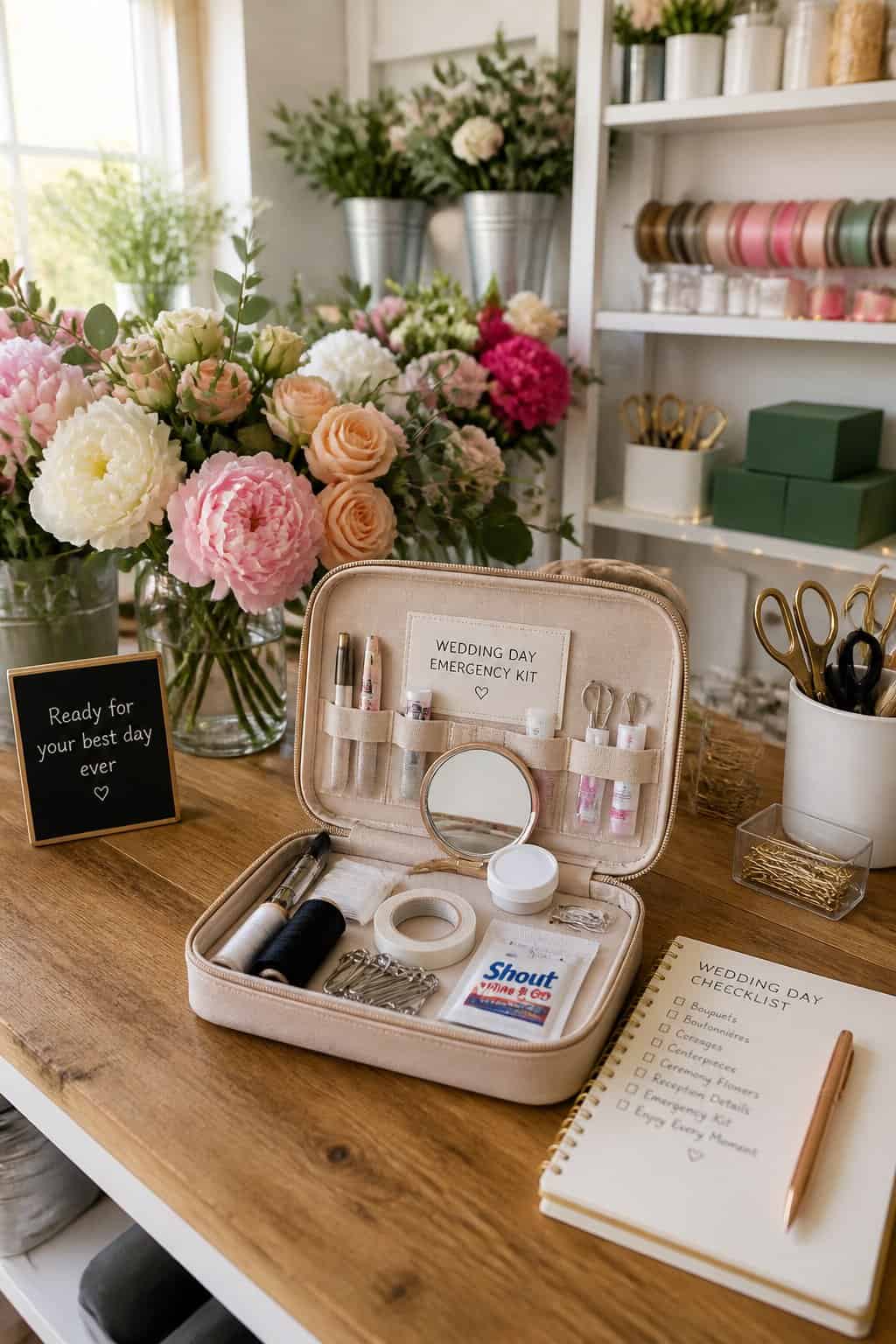
Soft seating, a small prep table, adjustable daylight lamps, and shelving for blooms. The vibe should be tidy and calm: linen swatches, vases, floral tape, and a clear counter for quick fixes between sets.
Florists can work without trampling the main suite, and the bridal party has a stocked emergency kit within reach. This speeds touch-ups, saves bridal photos from salvaged corsages, and keeps loose petals off the reception floor. Plan for a mid-tier rental cost for extra lighting and a rolling prep table. Reserve a single 6-foot table and one power strip: enough workspace without turning the room into a staging warehouse.
The Psychology of Quiet Spaces
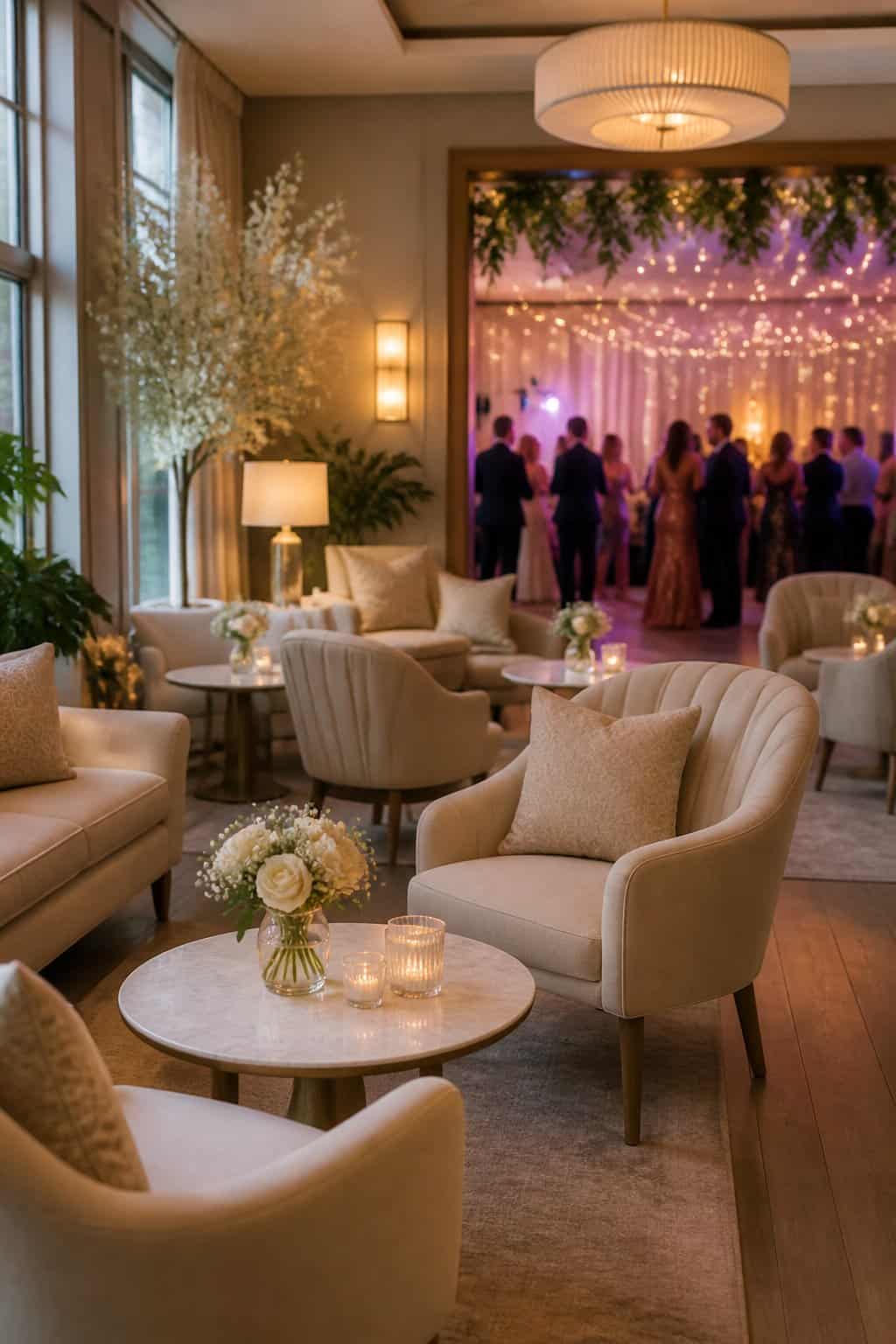
A cozy dimly lit room with a loveseat, a couple of armchairs, soft rugs, and a few potted plants feels intentional rather than empty. Warm LED bulbs, a table lamp, a stack of neutral throws, and a low playlist or white-noise machine do the work without fuss.
Sensory Relief in a Bustling Wedding
Guests step in, and the first thing they notice is lower volume and softer light. A lounge area with upholstered seating, textured pillows, and a wool throw cuts sharp noise and gives tired feet somewhere to land. Rentals for this setup generally run $150 to $400 extra, depending on the vendor and pieces.
What’s happening psychologically is straightforward: fewer bright lights, less bass, and sound-absorbing surfaces reduce sensory load fast. People can regroup, talk quietly, or check their phones without shouting. Place the room near, but not adjacent to, the DJ, and use thick curtains or portable acoustic panels for added hush.
Supporting Guests With Accessibility Needs
Make the room easy to enter: a 36-inch clear path, firm seating with arms, and a chair placed for quick exit. Include a sturdy chair and a high table for anyone who needs to stand or rest intermittently. A simple rental swap often covers this for under $100.
Label the room on the event map and brief ushers on how to guide guests quietly. A low-scent policy and a fan or white-noise option help guests with sensory sensitivities. Ask your venue coordinator about a discreet sign so guests can use the space privately without staff interruption.
Designing a Balanced Venue Layout
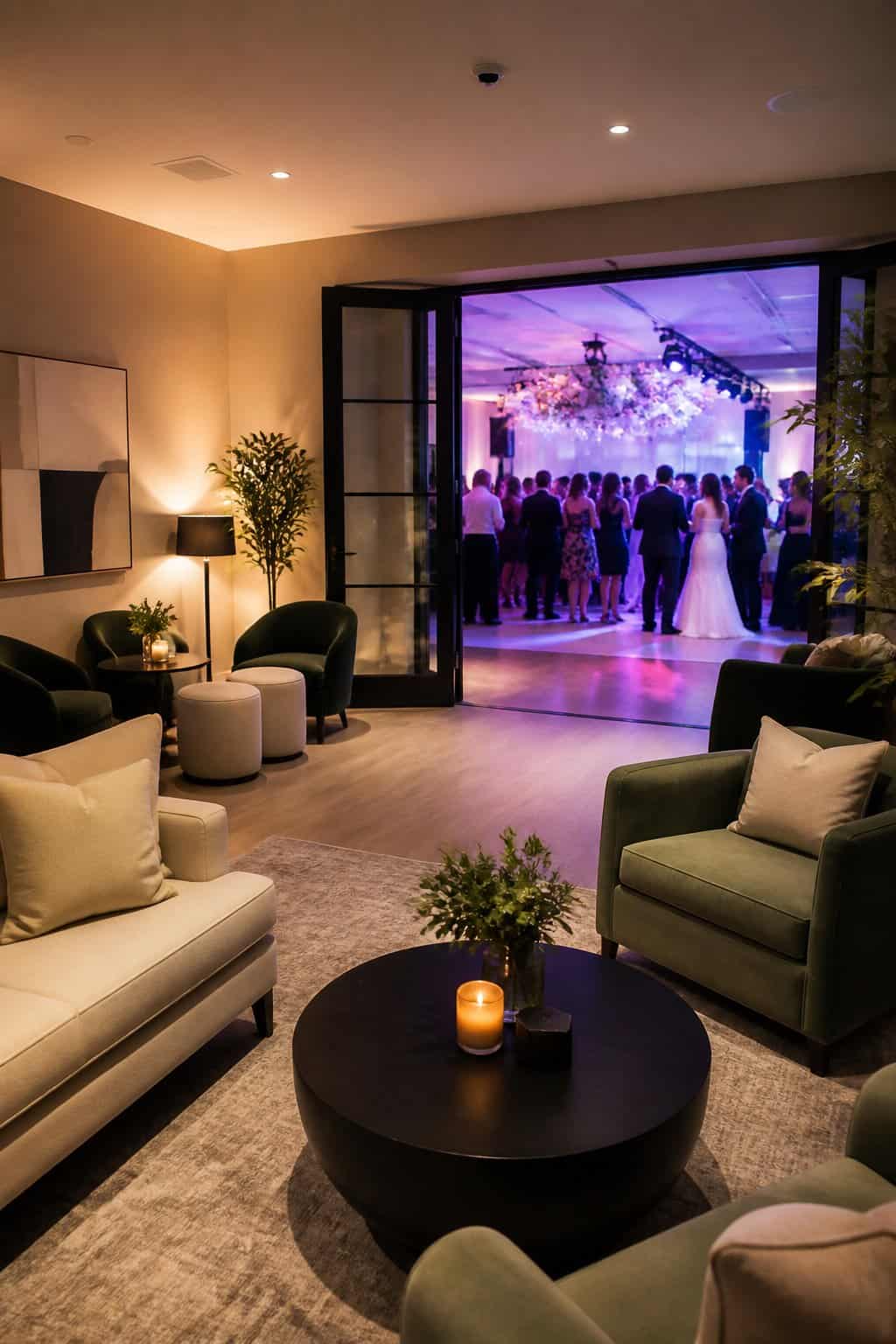
A well-placed quiet room setup uses low sofas, a few armchairs, side tables, soft rugs, and dimmable lamps in a corner or adjacent room. It should read like a living room off the party: calm light, muted colors, and a few plants or simple florals to soften sound.
Strategic Placement for Maximum Impact
Place the quiet room where sound naturally drops: an alcove, a side room with a door, or a curtained corner near the back of the venue. I prefer spots about 30 to 60 feet from the DJ or band and away from main traffic paths. That distance keeps bass manageable while still letting guests hear announcements.
Make the entrance obvious but understated. A velvet rope or a low sign on an easel guides people without making a fuss. For weddings with under 100 guests, a 120- to 200-square-foot space works well. Larger weddings benefit from two small pockets instead of one big room.
Expect low-to-mid rental costs: modular seating plus soft lighting generally runs $400 to $1,200, depending on pieces. Call a rental house for modular seating and your florist for a few durable greenery pieces. Ask rentals about blackout curtains or portable panels to manage sightlines and echo.
Essential Decor Elements for Calm Ambiance
Choose soft layered lighting: a floor lamp with a warm LED bulb, table lamps with dimmers, and a few battery candles. Harsh uplighting destroys the calm immediately. Warm 2,700K bulbs keep skin tones flattering and moods steady.
Furnish with a mix of seating heights. Low sofas invite lounging while occasional chairs support shorter visits. Add two or three side tables for drinks and phones, plus a basket of throws. Wool throws, linen pillows, and a low-pile rug pad do light soundproofing work on the floor and feel deliberate rather than decorative filler.
Keep colors muted: warm neutrals, sage, or dusty blue. Limit decor to three focal pieces: one large plant, one framed print, and a simple floral runner. Hire a stylist or rental company that offers soft furnishings, since they often include setup for a modest fee. Secure lamps and rugs with non-slip tape so the room stays safe through a full evening of use.
Three focal pieces is the rule I hold to in every quiet room I design: one large plant, one framed print or small piece of art, and a simple floral runner or low arrangement. Anything beyond that starts competing for attention, and the whole point of the room is that nothing competes.
The couples who get the most out of a Quiet Room are the ones who treat it as part of the floor plan from day one rather than a last-minute addition. When it’s designed in, it shows.