
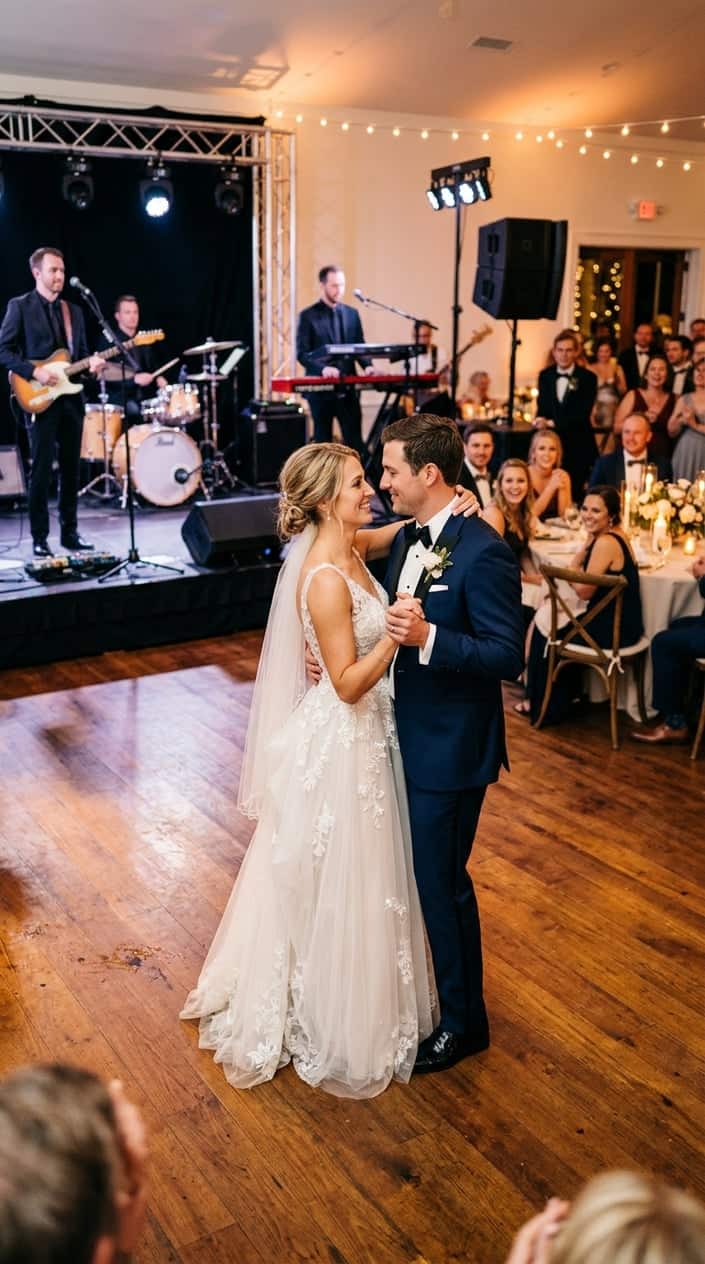
You stand on the dance floor as your first-dance song begins, and something feels off: the verses that sounded intimate on your headphones feel distant, and the chorus you practiced together lacks the warmth you imagined. I know that moment. The music you chose and the reception venue’s acoustic environment don’t always meet halfway, and that small mismatch can pull at your chest during a moment meant to feel perfect.
The gap between how you imagined the song and how it actually sounds comes down to the room, the gear, and how humans perform live. I’ll walk you through why your favorite track may lose its clarity, intimacy, or emotional lift at the reception, and give you simple, specific things to ask your DJ, band, or venue contact so the music finally feels like yours.
1. Room Acoustics: Why Reverberant Halls Wash Out Studio Clarity

Win a Free All-Inclusive Honeymoon
Imagine starting your marriage with a free getaway to the Caribbean. Enter this Sandals sweepstakes for your shot at 4 days of all-inclusive luxury—fine dining, turquoise water, and zero stress. Takes 2 minutes to enter.
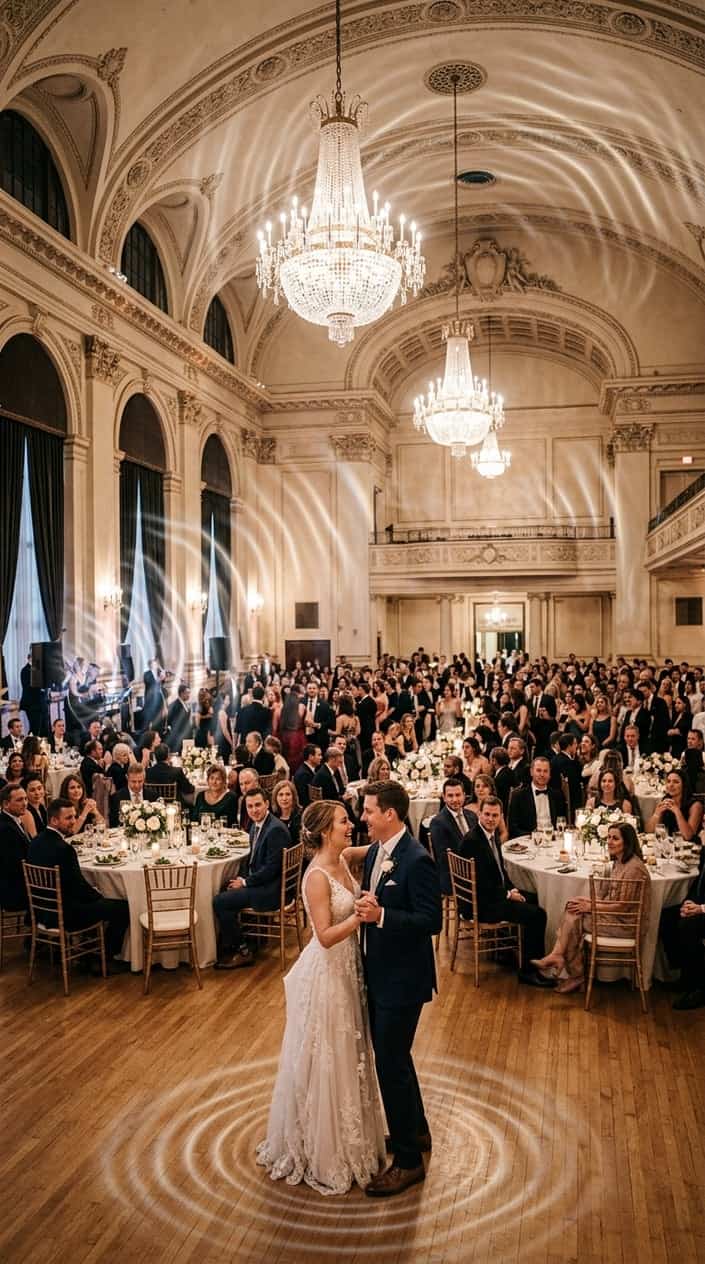
When the band started and the room filled, I felt the words blur together like they were wrapped in silk, beautiful but soft and hard to pick apart. Large halls and high ceilings send sound bouncing back and forth, so crisp studio details like breath, small cymbal clicks, and vocal consonants get smeared into a long, sustaining echo. That echo makes the song feel fuller but less defined. The tight rhythm and lyric clarity you loved in the recording become genuinely harder to hear.
Tell your DJ, band, or venue contact to add direct sound near the dance floor or to use quick-acting reverb settings so the vocals stay present. It’s a small technical ask with an outsized emotional payoff.
A standard ballroom with hard floors and bare walls can have a reverberation time of two to three seconds, meaning the last syllable of a lyric is still echoing when the next line begins. Recording studios are typically tuned to under half a second. That difference alone can make a beloved song nearly unrecognizable in a live space.
2. Live-Versus-Recorded Tempo: When the Song Starts to Breathe Differently
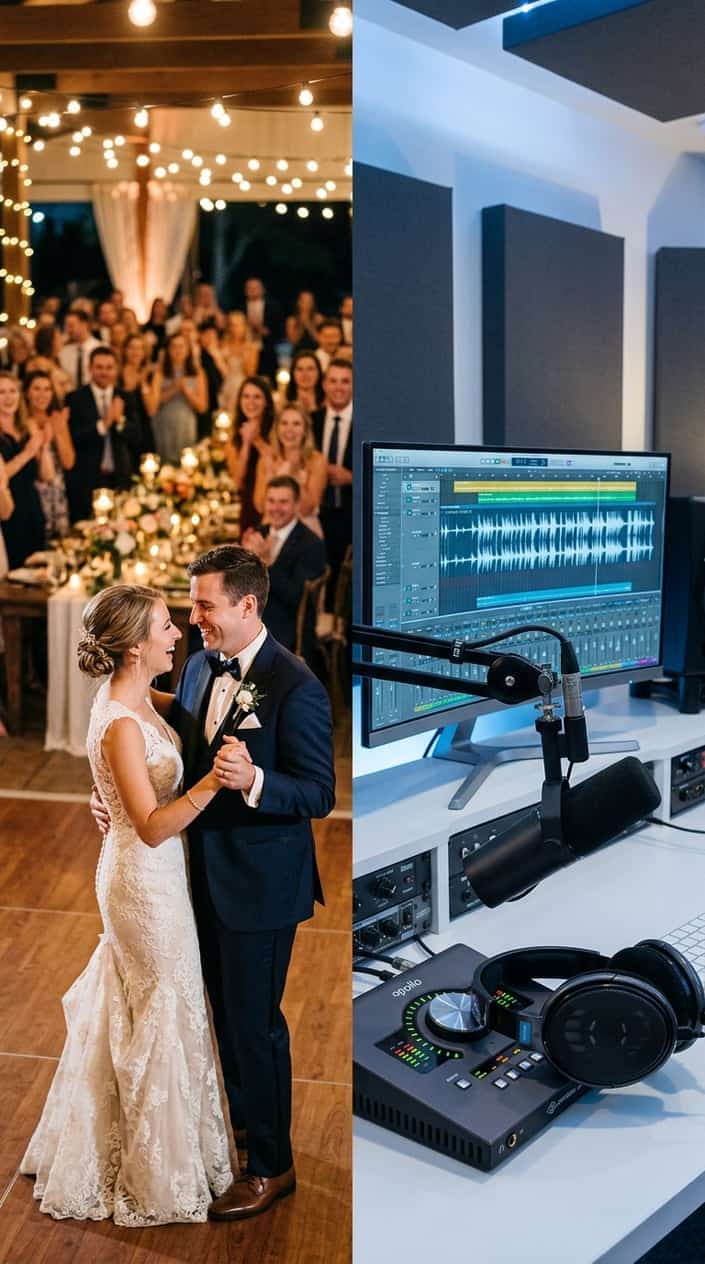
You feel the tempo breathe differently the moment the band starts. A tiny push forward, a slight slowdown, and the song drifts from the version you practiced at home. Live players naturally speed up or slow down with emotion and room energy. Recorded tracks lock to a steady click, so the live ebb and flow can make a familiar chorus feel rushed or dragging.
I explain this gently to couples: a live band follows the moment, while a recording follows the beat. Neither is wrong. But knowing which you want matters. Tell your DJ or band whether you prefer studio-precise timing or a warm, human pulse, and ask them to rehearse the exact tempo with you once in the space. That one specific request keeps your first dance feeling like yours.
3. Acoustic Arrangements: Stripped-Down Versus Full Production
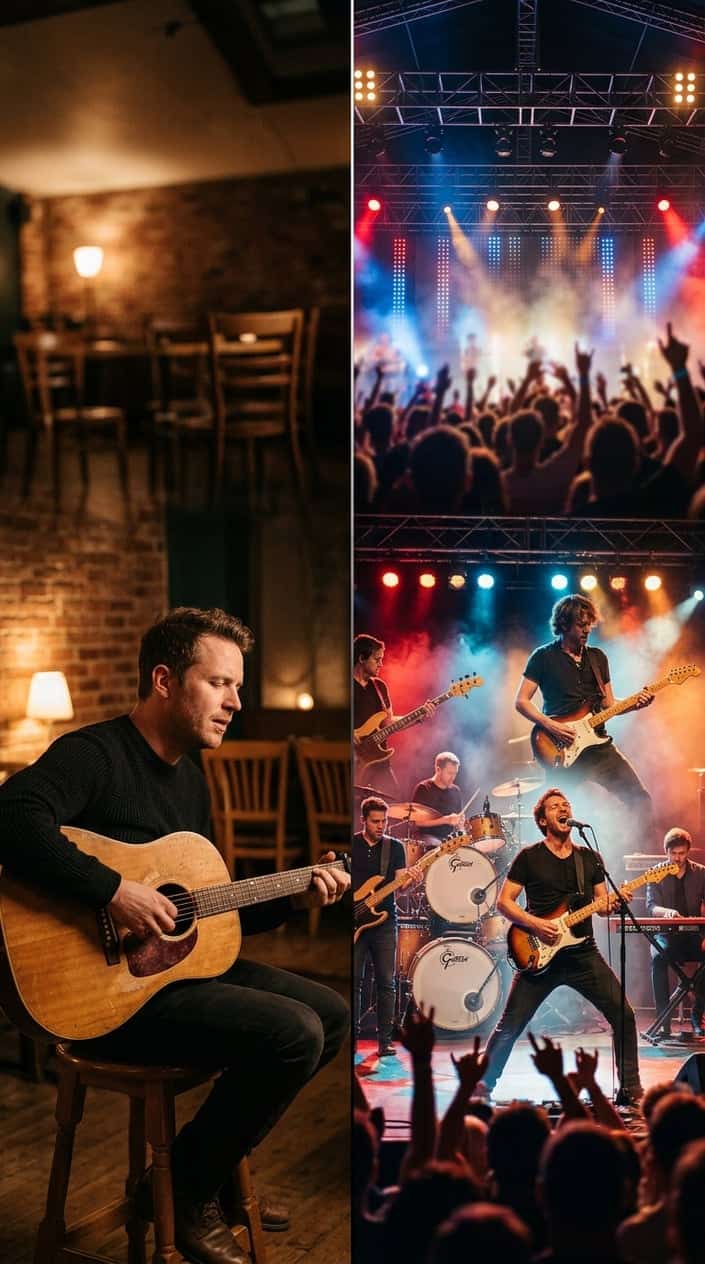
A single acoustic guitar can make your song feel small and naked in a way that catches you off guard. Live acoustic arrangements cut layers, harmonies, synths, reverb pads, and all the studio polish that fills space. Melody and lyrics sit in plain view, which exposes tiny timing changes and vocal breaths you never noticed on the finished recording.
Studio mixes use effects and extra instruments to smooth details and hold the emotional shape of a song. A guitar or piano simply can’t replicate all of that on its own. Tell your DJ or band which elements make the song feel like “yours,” whether that’s the drum groove, a synth pad, or a backing vocal line, and ask them to recreate or substitute those parts live. You can also request a short playback intro using the recorded mix before the acoustic set begins, just to ground the room in the version everyone knows.
4. Sound System EQ: Overly Bright or Muddy PA Settings
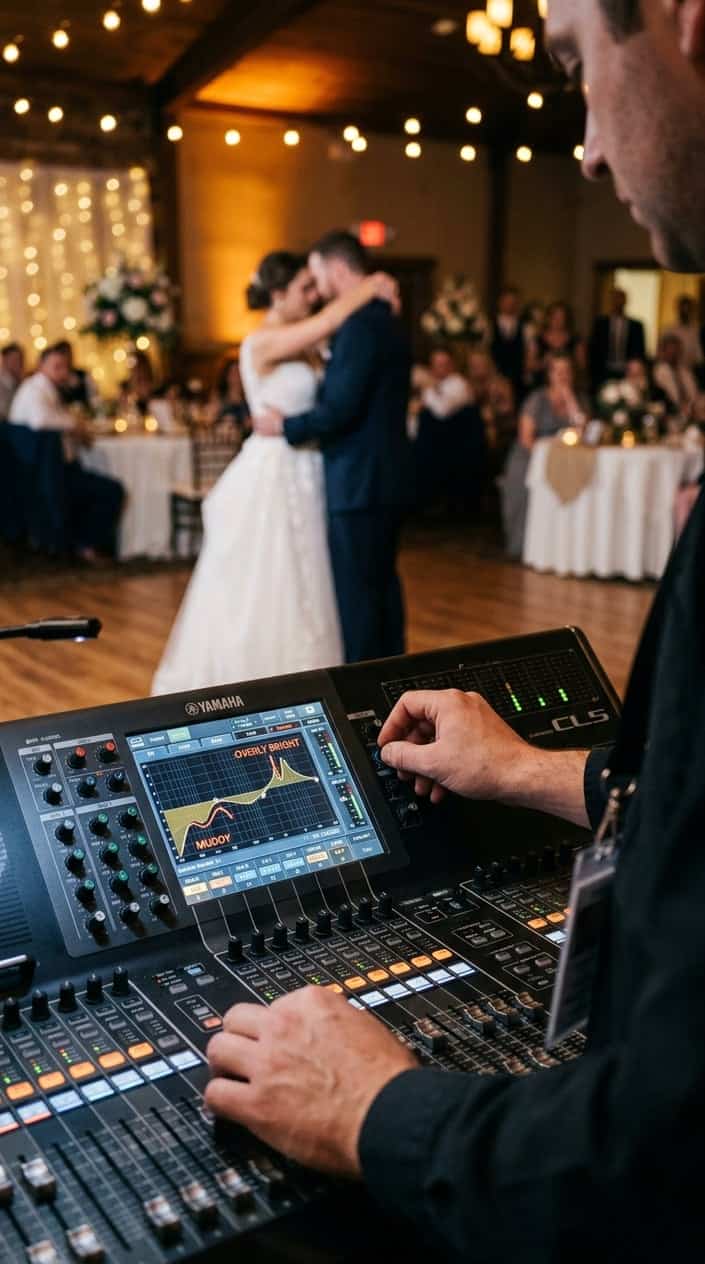
The first notes feel thin, or at the other extreme, swallowed by a dull haze. That happens when the venue’s EQ pushes highs too sharp or piles on low-mid frequencies until everything blurs together. Too much treble makes voices and violins sound glassy and fatiguing. Excess low-mid creates what engineers call “mud,” which hides vocals and melody beneath a thick, indistinct warmth.
Tell your DJ or venue contact that you want the song to sound warm and clear, not edgy or foggy. Ask them to pull a little high-end down if vocals start to sting, or reduce the boxy low-mids if instruments are clashing. A quick walk-through during soundcheck using the actual track fixes most of these problems before a single guest arrives.
“The song you chose is already perfect. The job of the sound system is simply to stay out of its way.”
5. Microphone Choice and Placement: What Changes Vocal Intimacy
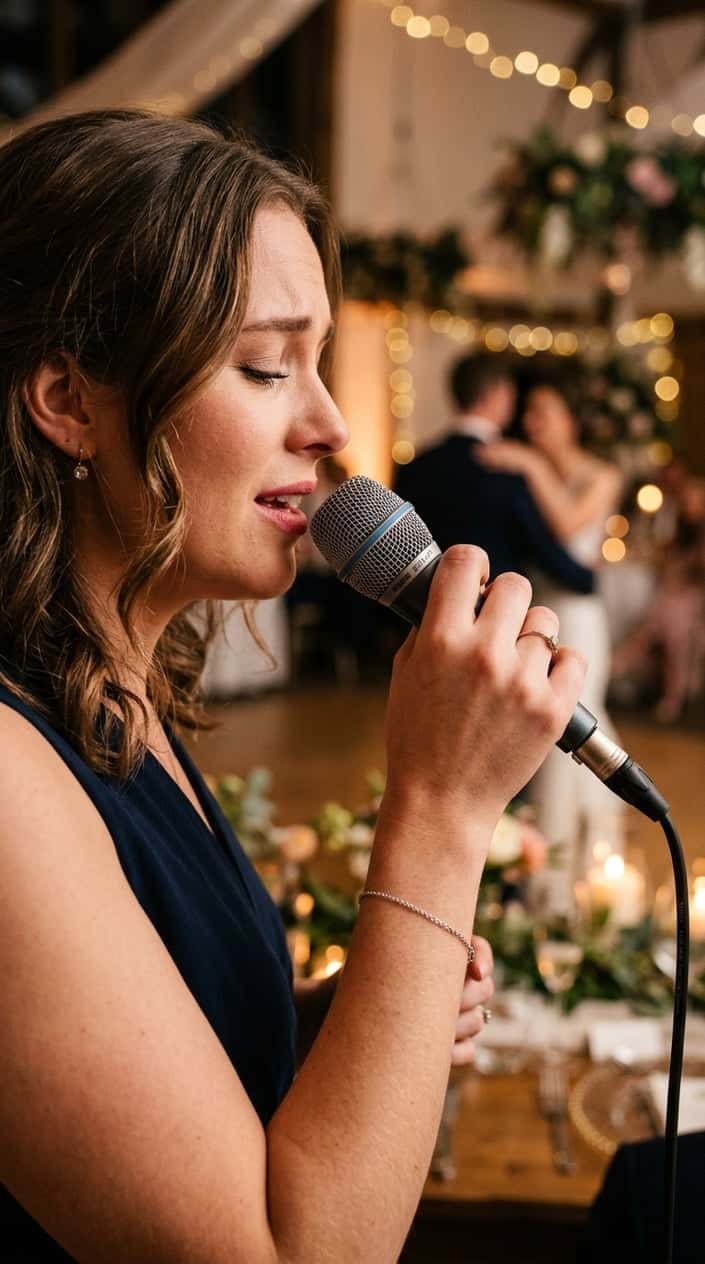
I remember expecting the same warm, close voice from rehearsal and instead hearing something thin and slightly distant at the reception. Live mics and stage setups pick up different parts of a singer’s sound. A close studio mic captures breath and small vowel colors. A stage mic or distant house mic favors projection and room tone, and those are genuinely different emotional textures.
Tell your band or DJ you want more vocal closeness. Ask if they can use a closer handheld mic or position the vocal mic within an arm’s length of the singer for the chorus. If the room forces more distance, request a mic with a warmer midrange response, or ask the sound tech to bring the vocal level up just slightly. Small changes like these can make the voice feel like it’s right beside you.
6. The Noise Floor: Chatter, Clinking Glass, and HVAC Doing Quiet Damage
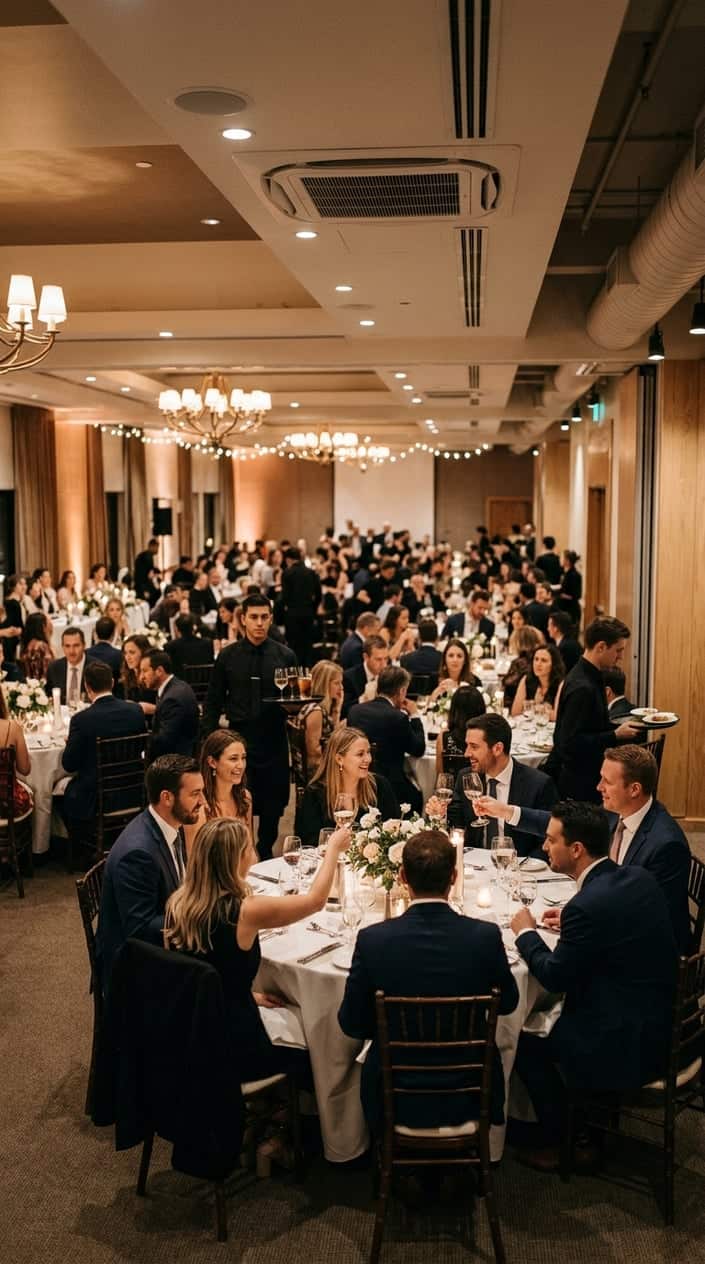
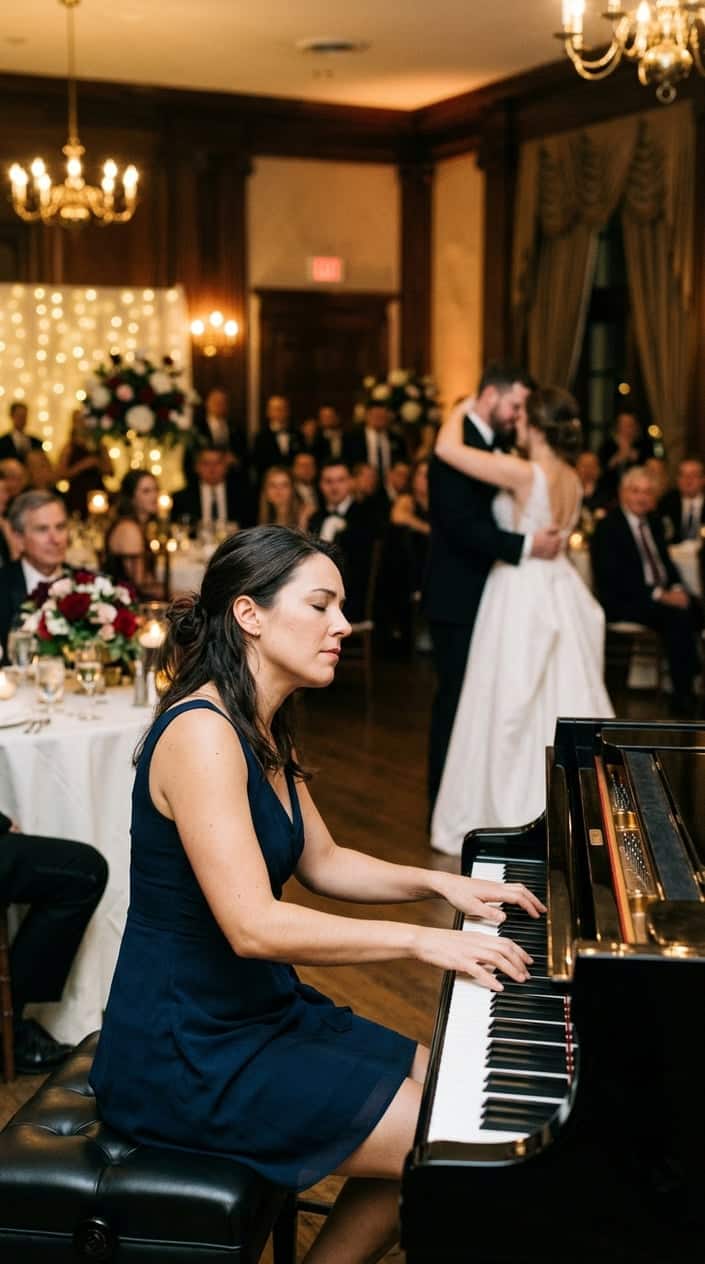
Standing on the dance floor, I’ve heard a low hum of conversation, laughter, and glasses that makes the piano feel like it’s playing from another room. That constant background, people talking, cutlery clinking, the HVAC cycling on, raises the room’s noise floor so soft notes get swallowed and vocals lose their closeness.
The human ear hears relative differences. When many small sounds sit at the same level as the quieter parts of your song, those parts simply disappear. HVAC systems can add a steady tone that masks midrange frequencies where voices live, and nearby conversations fill the space with irregular spikes that make the mix feel unsettled.
Tell your DJ or venue contact to measure the room’s ambient level before you start. Ask for softer table service during the first dance, a brief HVAC quiet window if the venue allows it, or a small EQ cut where the masking is worst. These requests cost nothing and return a lot of intimacy to the moment.
7. Compression and Loudness: Studio Masters Versus Live Playback
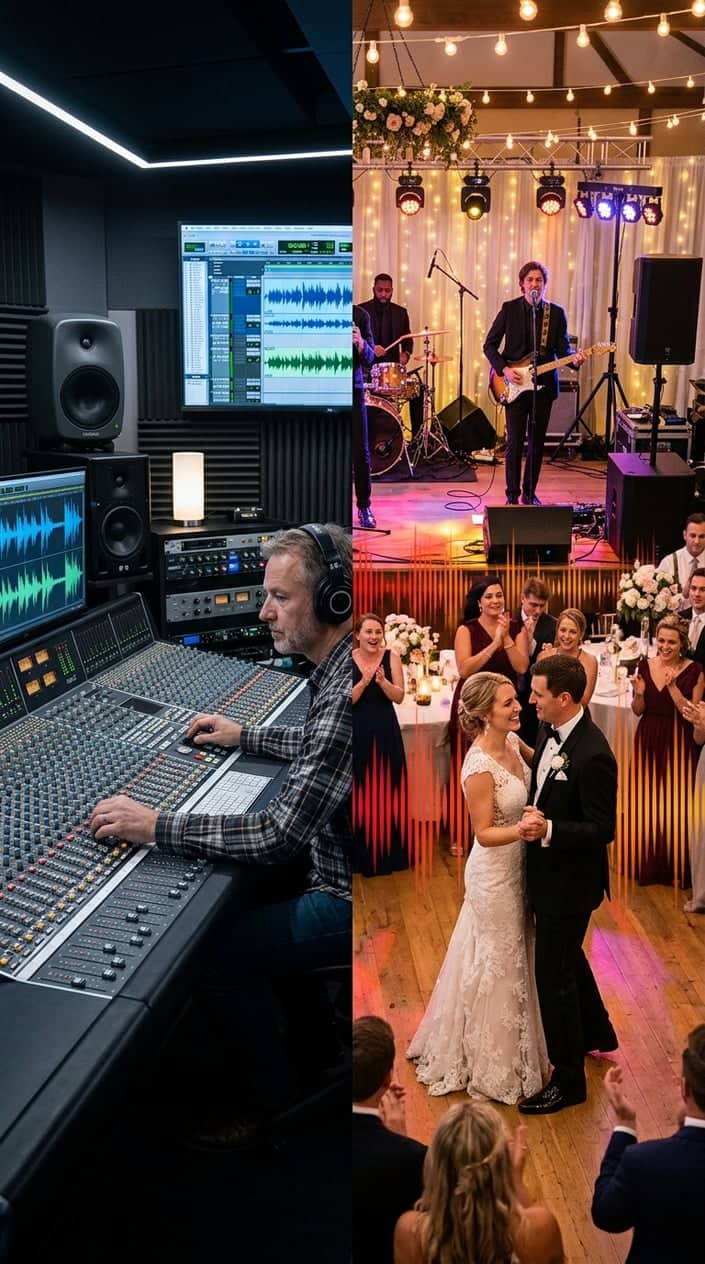
When the first chord hits, you might feel the song is flat, or strangely squashed, compared to the version you danced to at home. Studio masters are polished to sit loud and consistent on headphones or small speakers. Live playback systems and venue speakers can push or clamp that sound differently, making drums or vocals feel either too soft or suddenly sharp.
Compression in the studio smooths peaks so quiet parts stay audible, and the song feels even and full. On a PA, extra limiting or different compressor settings at the venue can further squeeze dynamics or let peaks spike, which can change the song’s emotional rise and fall. That slow build into the bridge, the part where you both lean in, can lose its shape entirely.
Tell your DJ or venue that you want the master played at a consistent volume without heavy additional limiting. A quick dynamics check during soundcheck, specifically listening for whether the intimate moments still feel intimate, will protect what matters most.
Modern pop and R&B tracks are often mastered at dynamic ranges of 6 dB or less, meaning the loudest and quietest moments are nearly the same volume. A well-mixed live PA, by contrast, can preserve 12 to 20 dB of dynamic range, which is why the same song can feel surprisingly different depending on how it’s being played back.
8. Mono Setups and the Collapse of Stereo Space
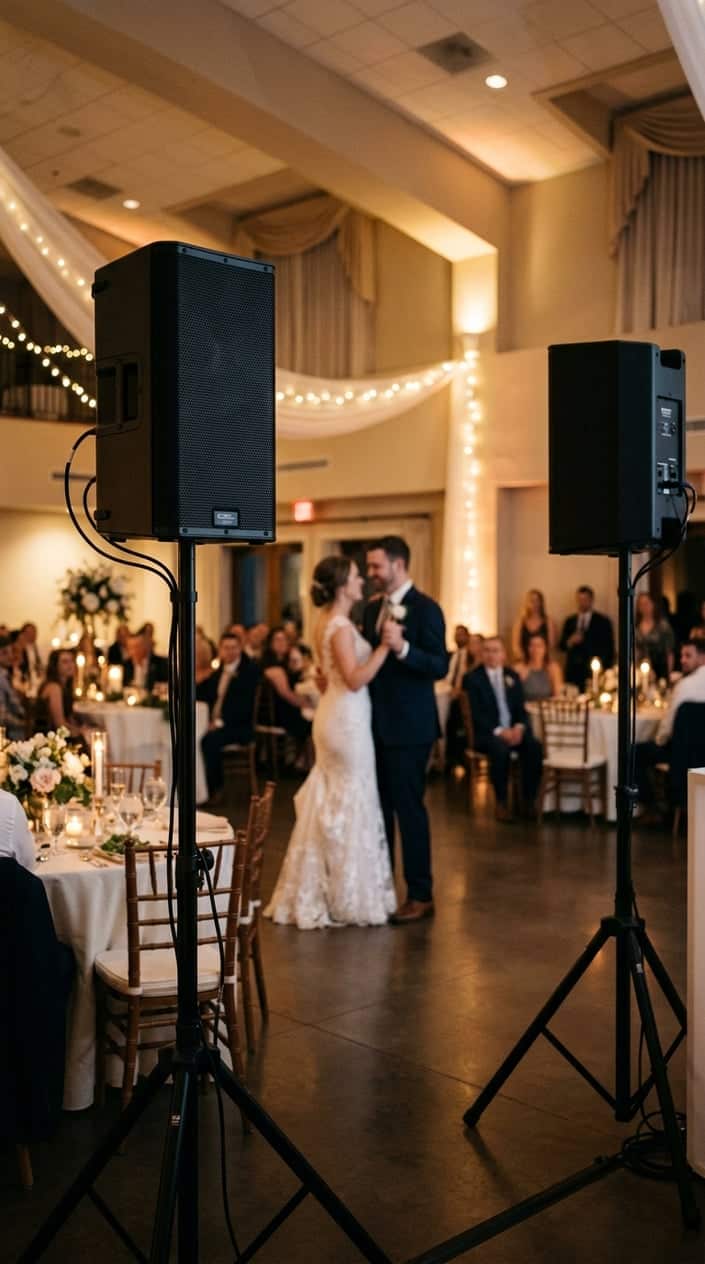
The first notes feel flat, tucked close to the speakers rather than spread wide around you. I notice the piano and vocals sitting on top of each other instead of occupying their own space.
A mono or tightly spaced two-speaker setup sends the same signal to both ears, so the stereo image in your recording collapses. Sounds that were panned left and right in the original mix now pile up in the center, and can even cancel each other slightly, which kills the sense of depth and dimension you heard at home.
Tell your DJ, band, or venue coordinator you want the song checked in mono before the reception begins, and ask them to position speakers to cover the dance floor as evenly as possible. A brief test with the actual track on the actual PA, before guests arrive, protects the song’s spatial warmth on the night itself.
9. DJ Edits and Shortened Cuts That Shift the Emotional Arc
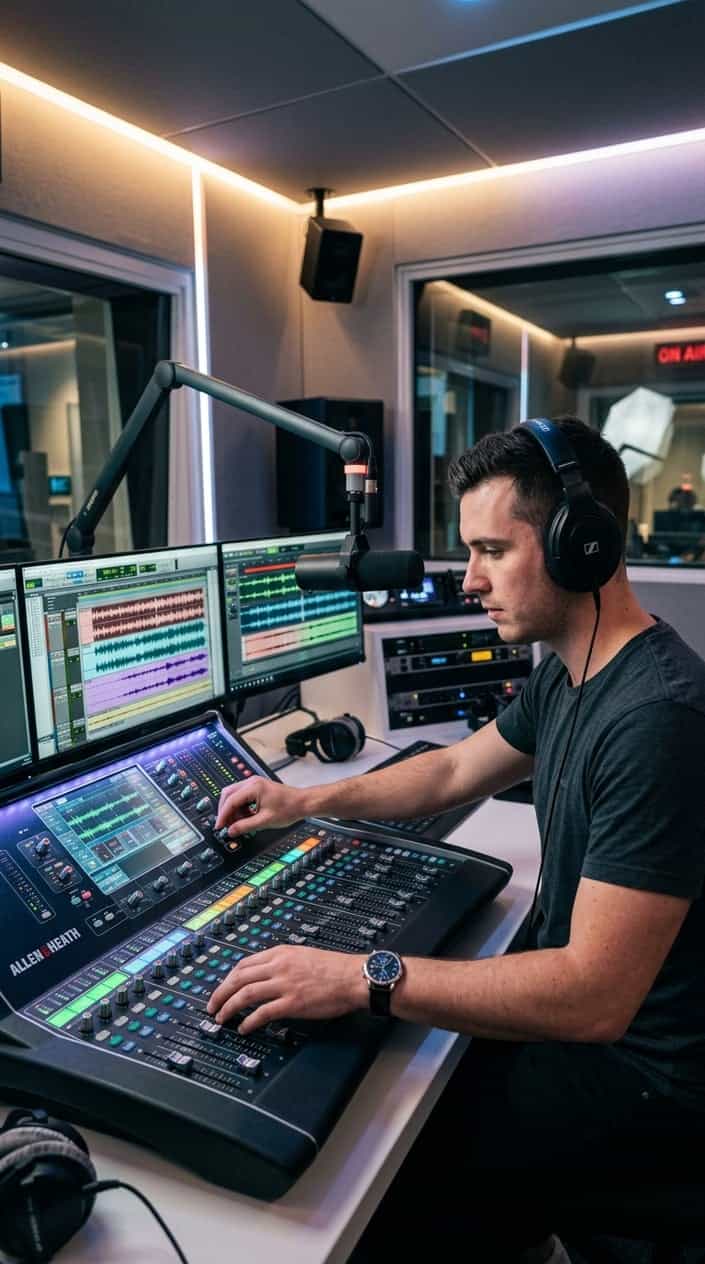
The first few bars feel rushed, like someone trimmed the quiet before the chorus and the room leans forward too soon. DJs and radio edits often cut intros, bridges, or instrumental breaths to fit time or keep a dance floor moving. Those removed moments are exactly the ones that let a song breathe and build feeling.
When the soft pauses vanish, the emotional arc tightens. The slow rise you heard at home can turn into an abrupt drop or a faster peak, which makes the lyrics land differently on you and on your guests. Tell your DJ you want the original intro and one full bridge intact, or bring a clearly labeled file of the exact album cut so the moment unfolds the way you practiced it.
10. Audience Proximity: Why Live Sound Feels Different Than Headphones
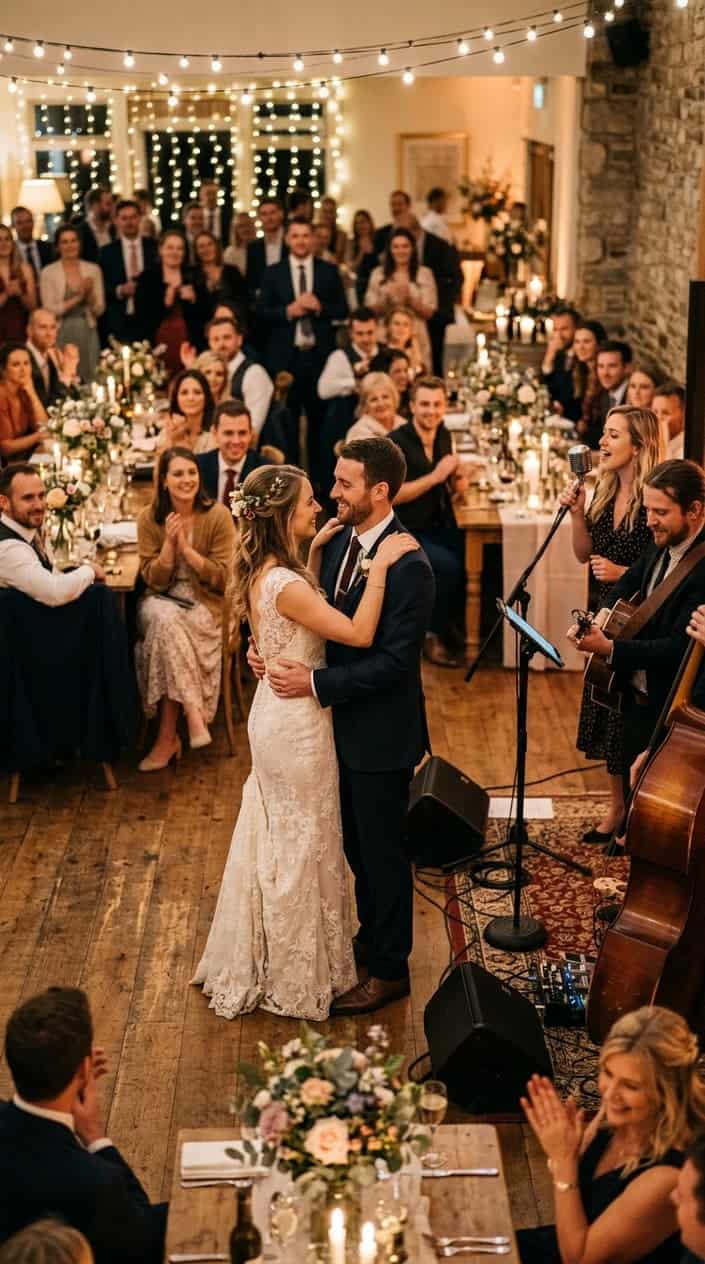
I remember stepping onto the dance floor and hearing the song sound thin and slightly distant, even though my headphones had made it feel full and close. Headphones deliver a sealed, bass-heavy mix directly to both ears. Live sound reaches you through open air and a room, which changes the balance and the sense of physical closeness entirely.
Onstage or in a crowd, you lose the bone-and-air warmth that headphones create, so vocals can feel quieter or more recessed than you expected. Tell your DJ or band you want a warmer, closer vocal in the PA mix and ask them to place a small monitor near the dance floor. A touch more vocal presence, or a modest low-frequency lift, can bring that recorded intimacy back into the room.

OneOdio Over Ear Wired Studio Headphones
Check Price11. Rubato, Phrasing, and Key Changes: The Art of Live Interpretation
Free Wedding Planning Checklist
Stay organized from engagement to "I do" — get our comprehensive checklist covering every task, deadline, and detail.
I felt the first bar bend under the singer’s breath, and the tempo loosened like a sigh. Live players stretch and compress time, what musicians call rubato, to chase emotion, so a phrase lingers where the recorded version moves on. They also shape lines with deliberate phrasing, letting vowels bloom or close for feeling. That makes familiar words land in an unfamiliar way.
Musicians may also shift the key up or down by a half-step to suit the singer’s voice. That change can alter the song’s color, how the room feels when the chorus arrives, and how your chest responds to it. Tell your band you want a version that follows the recording closely, or ask for one deliberate change, a slower intro or a gentle key lift, so everyone knows in advance what feeling to expect. Sharing the recorded key and tempo takes one minute and saves a lot of mid-dance surprise.
12. Cell Phones and Cameras: The Unofficial Audio Contaminants
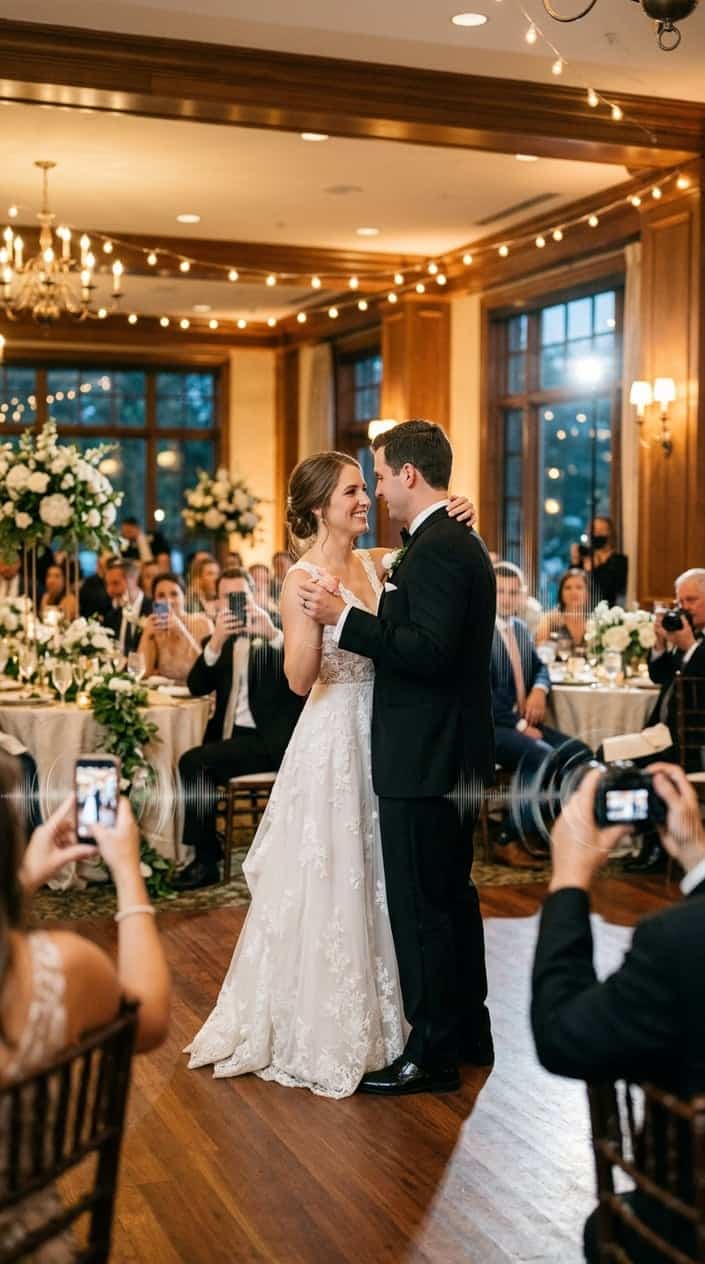
Guests whispering, camera clicks, the soft shuffle of a phone being raised, these become part of the dance soundtrack, thin and tinny through tiny built-in mics. Small phone and camera microphones pick up midrange noise and awkward peaks, which add a hollow, compressed layer over the music when recordings are played back later.
Those tiny mics have a limited frequency range and automatic gain that jumps when someone moves or speaks. They sit close to people, so they favor voices and handling noise over the song’s full low end and warmth. The result is a memory of your first dance that sounds muffled and chaotic rather than the way it actually felt.
Tell your coordinator to ask front-row guests to lower recording devices for the duration of the first dance, and make sure the audiovisual team has a direct line-out feed for any official recording. That simple house rule protects both the moment and the archive of it.
13. Tempo Drift: Live Performance Versus Click-Tracked Studio Timing
The first slow dance feels subtly rushed, like the band is edging forward a breath at a time without quite meaning to. Live players often speed up when nerves or excitement build, so the tempo slides faster than the studio recording you learned to waltz to.
In the studio, songs sit on a strict click track that keeps every beat exact. Live shows rely on human feel, which bends time as players lean into fills or respond to the energy in the room. Neither is a flaw. But if you’ve spent weeks practicing at a specific tempo, even a few beats per minute of drift can make the steps feel wrong.
Tell your band you want the live tempo to match the recording as closely as possible, and ask for a brief run-through at the reception soundcheck using the exact tempo you practiced. That one rehearsal pass is usually all it takes.
14. Room Size Versus Speaker Power: Uneven Frequency Response
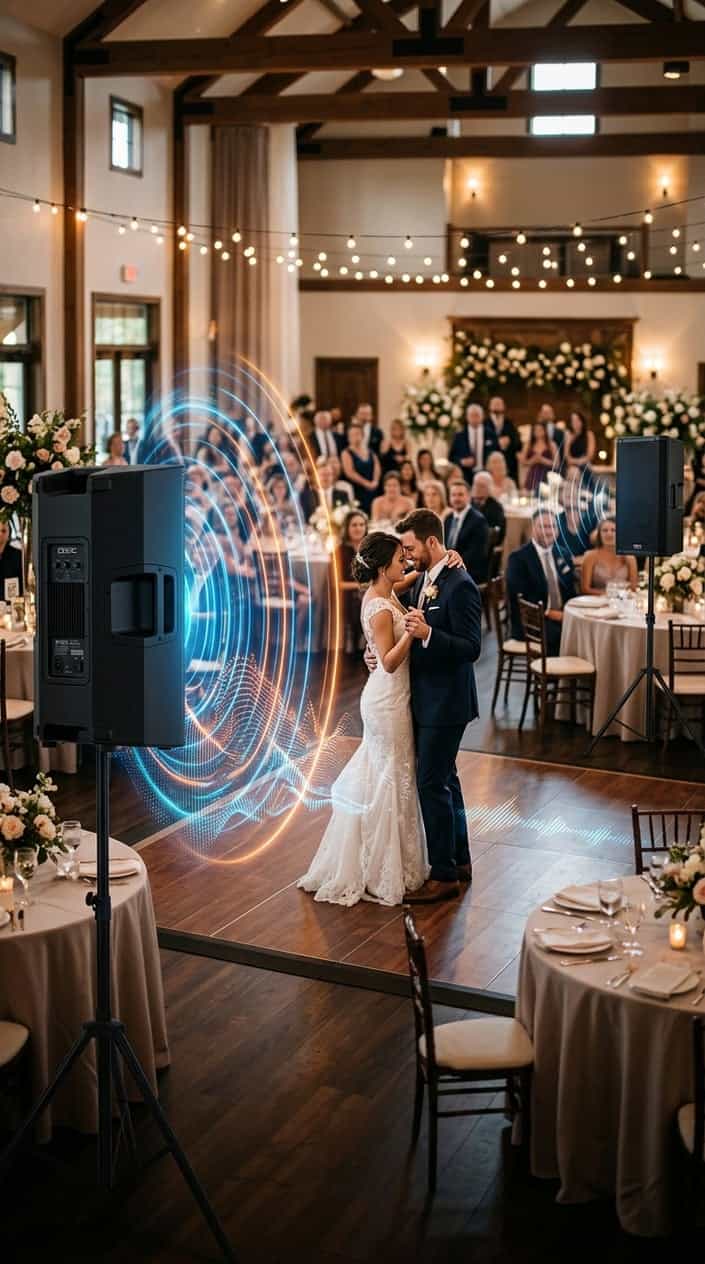
I remember stepping into the reception and feeling the bass bruise my chest while the vocals seemed to drift away. Big rooms let low notes build and boom. Small rooms can make bass swallow everything or create strange, localized thumps in certain spots on the floor.
Speakers push certain frequencies more loudly, and the room either amplifies or cancels those waves depending on its dimensions and surfaces. Hard floors and bare walls reflect highs sharply. Long distances let lows pile up at the far end. That changes the tonal balance you heard during any rehearsal or venue visit.
Tell your DJ or band the room dimensions and ask them to test sound from the exact spot where you’ll be dancing, before guests arrive. A quick level check, softer bass, a clearer vocal mic, or moving a speaker a few feet can bring back what you remember from practice.
15. Singer Adrenaline: How Performance Energy Changes Tone and Pitch

Your voice, or the band’s lead vocalist, may sound brighter, thinner, or more urgent than on the recording. That rush of adrenaline that comes with a room full of people watching tightens muscles and nudges the voice higher or harder. Vowels can sharpen. Low notes may lose their warmth. It happens to even the most experienced performers.
Adrenaline also pushes volume. A singer might push more air and edge into a note to carry across the room, which alters the timbre and makes the song feel more charged than the studio version you love. Tell your band that you want controlled energy. Ask for slightly softer backing levels and a quick soundcheck run at the tempo and key of your recording. A simple note, “we want the recorded warmth, not stage grit,” gives musicians something concrete to aim for.
16. Backing Tracks Versus Live Band Balance: Where Subtle Harmonies Go
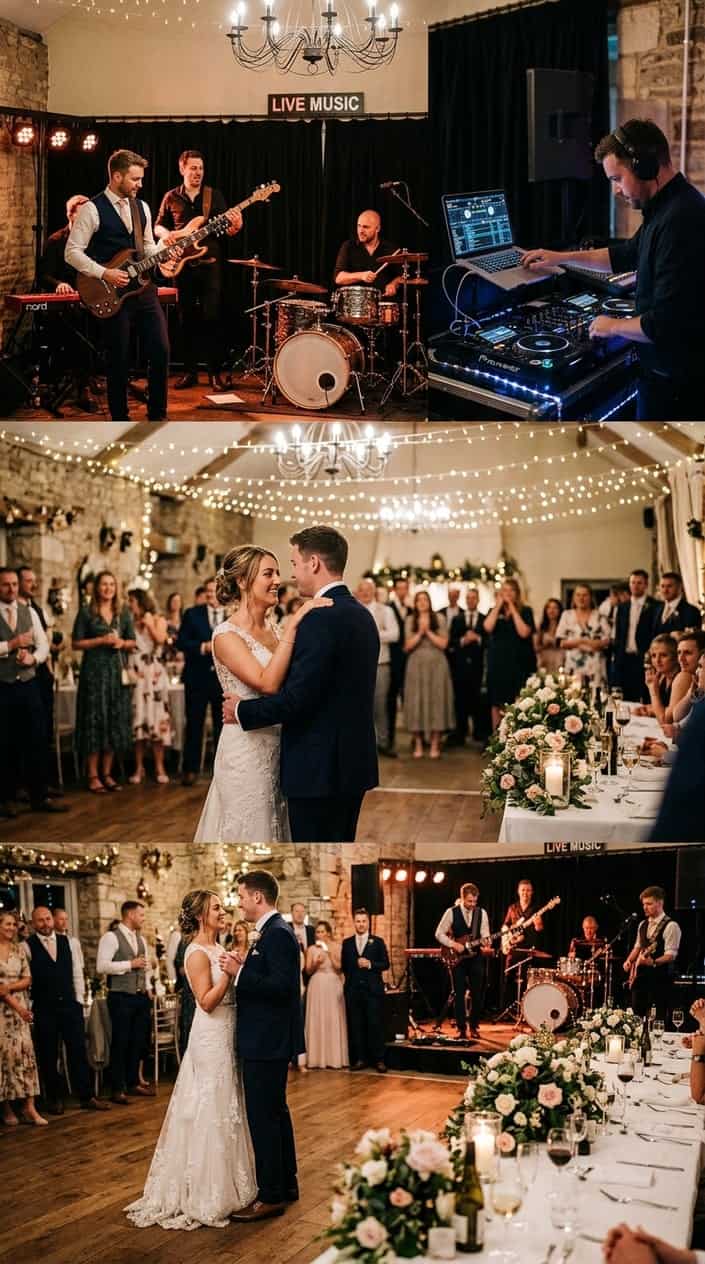
The room goes quiet around the high notes, like a breath being held and released too softly. The band’s drums and keys crowd the same frequencies that carried the delicate backing harmonies on the recorded track. When those parts are low in the live mix or missing from the backing track entirely, the song feels thinner, and some of its vocal colors just disappear.
Recorded tracks often layer quiet harmonies and ambient pads that sit behind the lead vocal, giving the song its particular warmth and sense of space. Live rigs have to choose what to amplify, and if the soundcheck prioritizes rhythm and bass, those subtle layers get buried. Ask your band or DJ to run a quick pass on harmonies during soundcheck and to bring a dedicated backing track channel or a separate monitor mix for quiet vocal layers. One small balance adjustment can return the full warmth of the song to the dance floor.
17. Key Transposition: When the Arranger Moves the Song for Vocal Comfort
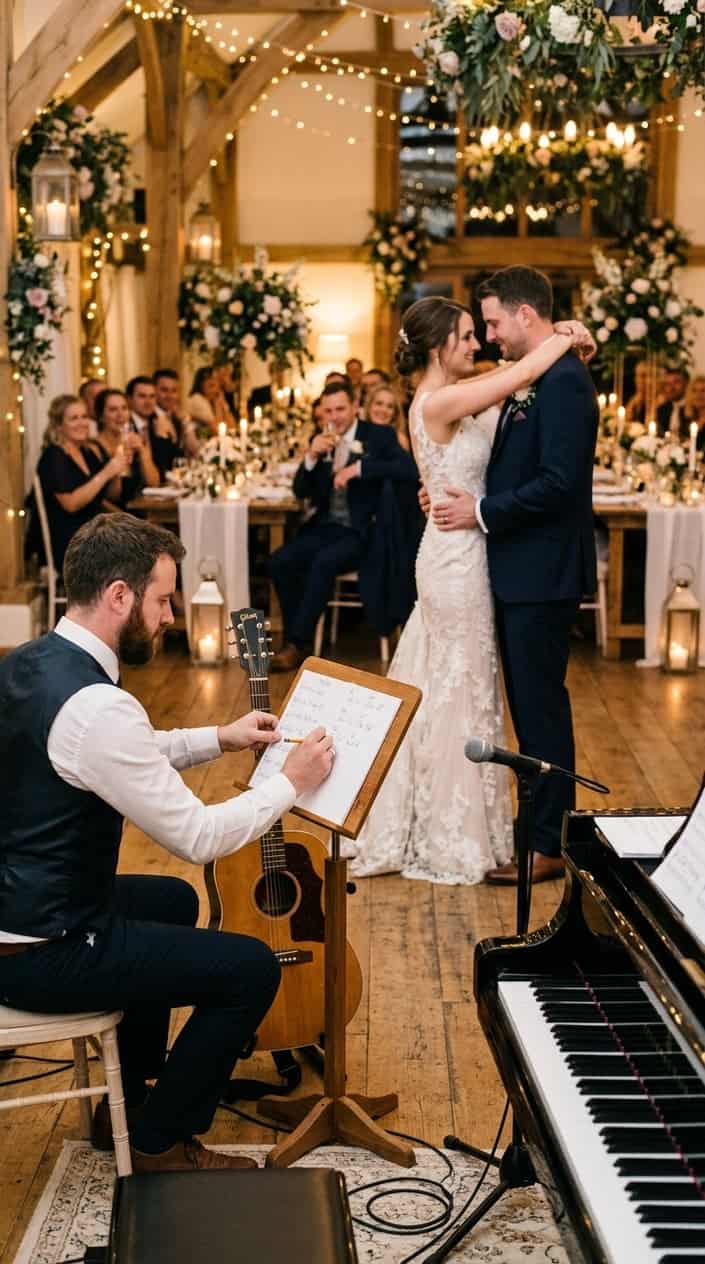
I notice the singer sounds settled during the ceremony but slightly strained at the reception. Often, the arranger has moved the song up or down a step to fit the singer’s comfortable range, and that small shift changes how the melody sits in the voice and how bright or warm the instruments feel around it.
When you change the key, the same notes land on different vocal ranges and trigger different resonances in the instruments. A piano can ring differently. A brass section may feel more open. A vocal line can sound thinner or fuller depending entirely on where it now sits in the singer’s range.
Tell your DJ, band, or arranger the exact version and key you love. Ask them to match the key used during your ceremony, or record a short voice memo of the original so they can transpose with the right tone and comfort as a reference point.
How Venue Space Shapes Sound in Ways Nobody Shows You on a Tour
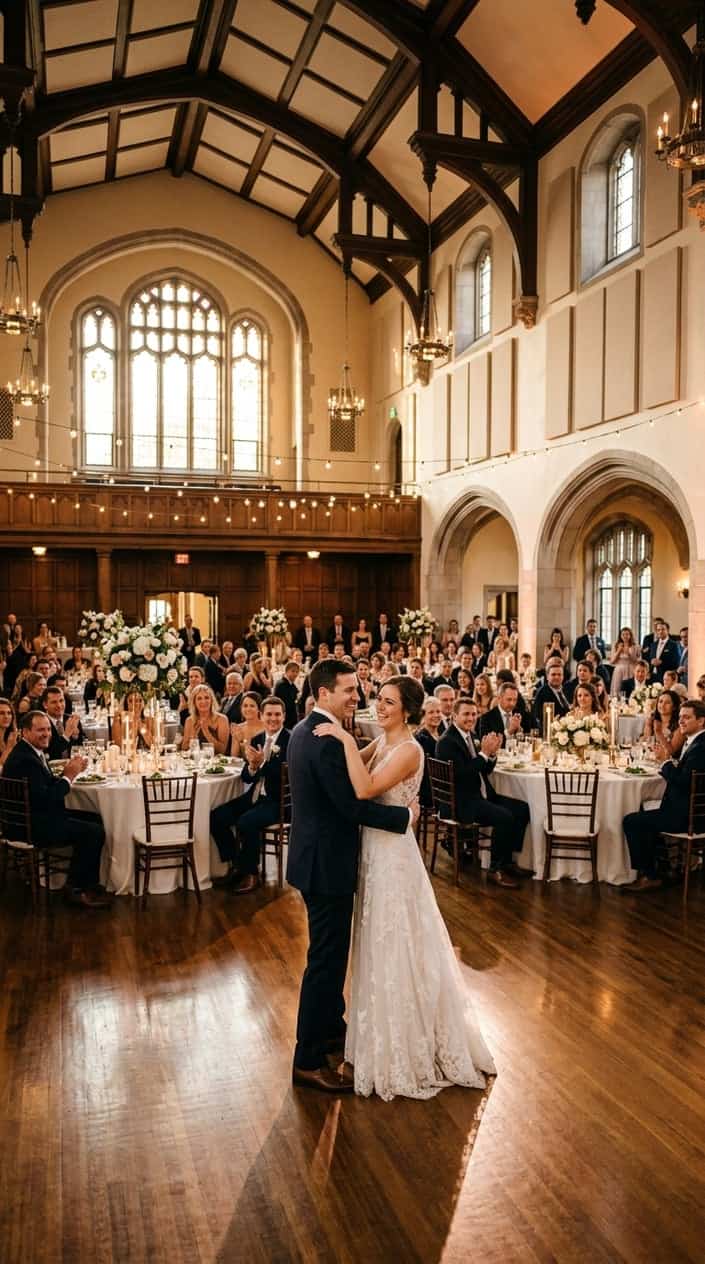
You might notice the song feels thin, loud in certain spots, or wrapped in a soft echo that wasn’t there at the venue tour. The room’s shape, surface materials, and whether it opens to the sky change what you hear more than any single piece of equipment does.
Architecture and Echoes
You step onto the floor, and the singer’s high notes bounce back like a soft shadow, blurring the words.
Hard walls, high ceilings, and large windows reflect sound. Those reflections arrive after the direct music and smear syllables together, so the lyrics sound less clear. Curved walls or balconies focus sound toward the center, turning a gentle verse into a sudden swell. Carpets, drapes, and padded chairs absorb those reflections and make the same song feel warmer and closer, which is worth noting when you’re choosing between the venue’s two ceremony spaces.
Ask your DJ or band for a brief mic check from the dance spot and request fewer reverb effects or a mic with tighter pickup if the room is highly reflective.
Outdoor Versus Indoor Acoustics
Outside, you feel the bass more than the breath of the singer. Indoors, the voice feels full, but the drum attack can vanish.
Outside, sound disperses into open air, so high frequencies carry while low frequencies lose punch unless they’re boosted. Indoor rooms trap sound, and reverberation can add warmth or make the rhythm muddy depending on the room’s proportions. Wind, foliage, and even nearby buildings change how the first note travels in an outdoor setting. For outdoor dances, ask for a fuller low end and a vocal check at the exact spot where you’ll stand. For indoor spaces, request less added reverb and a mic test from where you’ll actually be dancing, not from across the room.
Bridging Your Dream Song and the Reality of the Room
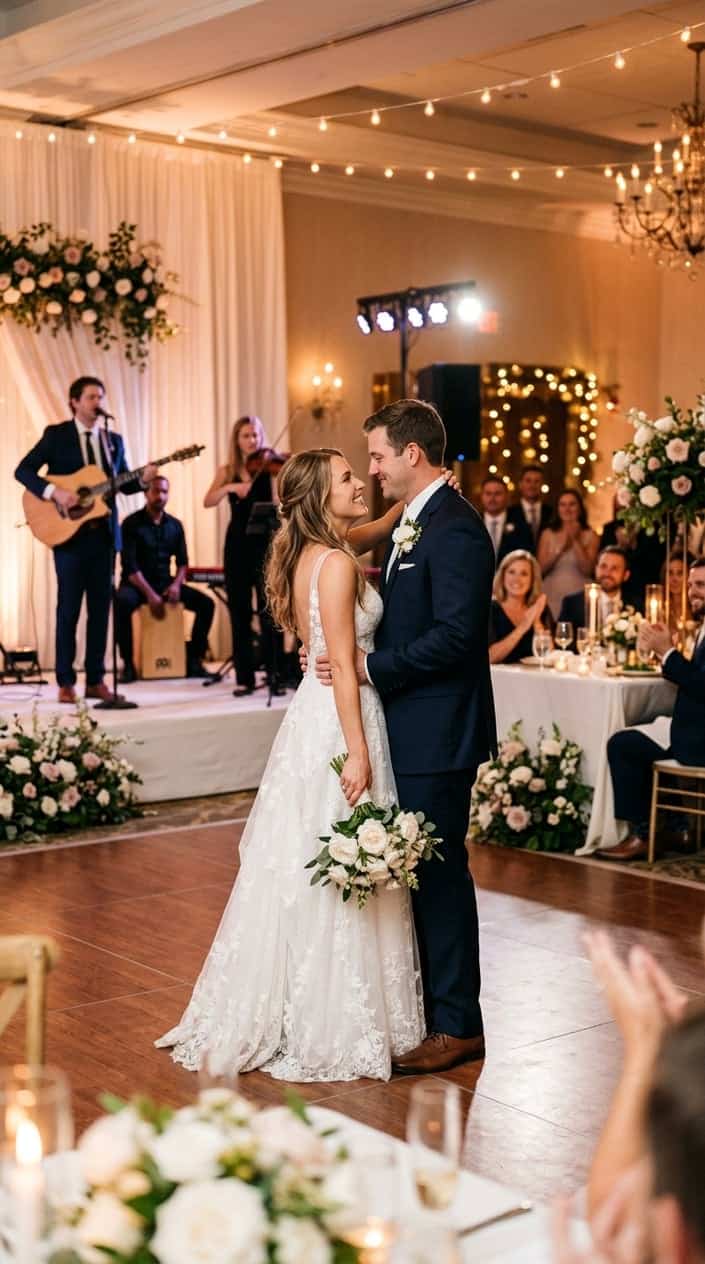
You feel the first notes and expect the same hush as the version you played a hundred times at home, but the room sounds brighter, and the words sit differently. Small changes in loudness, tempo, or arrangement can make a song feel like a new version of itself. None of these gaps is unfixable. They just require specific language and a little advanced conversation with your team.
Communicating With Your DJ or Band
Tell your DJ or band exactly which bar or lyric felt wrong during the rehearsal track. Be specific: “the vocals sit behind the instruments in the verse” or “the intro drags about ten seconds longer than I want.” Ask for a brief sound check with the first-dance track at the same volume the band will play during the reception itself.
Use timestamps when you can: “Start the slow bridge at 1:12, keep it the same tempo as the demo,” or “Bring the vocal up two notches for the chorus.” Ask for a short run-through of the first 30 seconds. That kind of specific feedback is the difference between a song that sounds like a memory and a song that feels like the moment.
Planning a Clean Audio Transition
Ask for a two-step fade plan when the DJ moves from the cocktail playlist to your first-dance song. A 15 to 30 second buildup that lowers background tracks and raises the first-dance mix makes the change feel intentional rather than abrupt.
Provide your DJ the exact file you want, plus a copy of any live arrangement the band will use. Label files clearly with the start point and desired length: “Start at 0:12, full song 3:45.” Ask for a one-minute pre-song cue in the booth so the DJ can match tempo and volume before the moment arrives. Small labels and a short cue prevent the split-second of unfamiliarity that can make a beloved song feel suddenly strange.
Your song already holds everything you need it to. The room just has to learn how to hold it too.