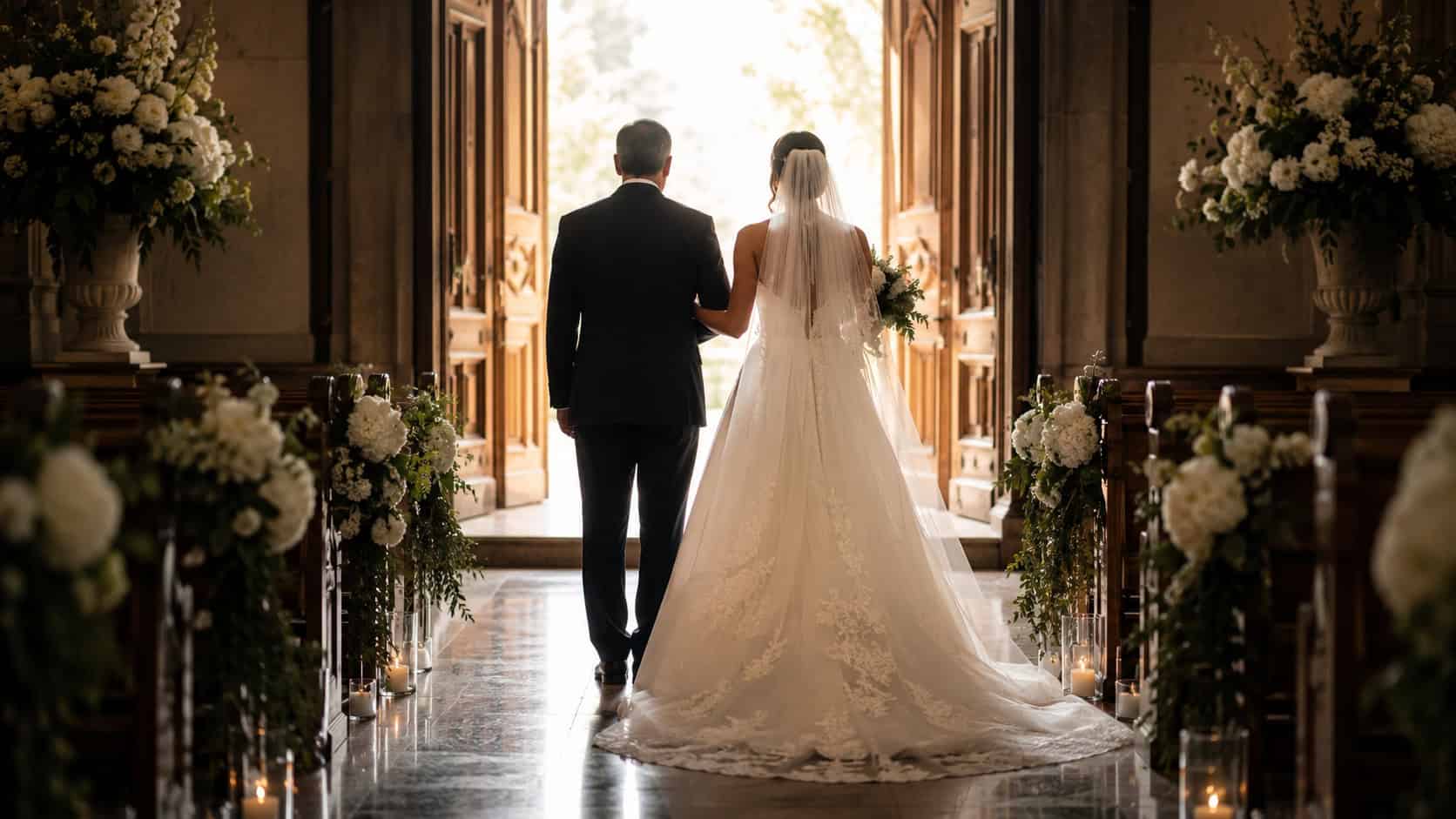
The second the processional music starts marks the true beginning of your wedding. It's basically the moment that all that planning and rehearsing led up to. What most couples find, however, is how short the actual walk feels.

Sandals Will Throw Your Wedding for Free
Stay 7 nights in a Club or Butler suite and Sandals covers the wedding: a personal planner, the ceremony, a private cocktail reception, a two-tier cake, your bouquet and boutonniere, plus $200 toward photos and $200 toward video. No venue hunt, no vendor juggling.
It's like all that lead-up of emotion becomes a "blink-and-you've missed it" type of thing on the day. Here's why. And more importantly, how to make sure the fleeting moment truly lands.
The Science of the Shift
Most people assume that highly emotional moments will trigger highly accurate and vivid memories. But when you're in such a heightened state, like when you're about to walk down the aisle, your body activates an adrenaline rush; you're more alert, and your heart rate quickens. You're basically in fight-or-flight, which can create a "time distortion" effect on your experience.
The effect isn't unique to weddings, but it can apply to most events that cause sensory overload, such as car accidents or performing on stage for the first time.
The Rehearsal Reality Check
And that's exactly why your rehearsal doesn't feel anywhere near as short. The seats are empty, you're not actually getting married, and your emotions are nowhere near the height you experience on the big day. On your wedding day, the room will be filled with the people who matter most to you. The excitement will be almost tangible, and you might feel a little overwhelmed.
When in such a heightened emotional state, we crave comfort and a safe space. For brides, that translates to the partner waiting at the end of the aisle. That's why, subconsciously, you'll try to "rush" towards reaching them.
Free Wedding Planning Checklist
Stay organized from engagement to "I do" — get our comprehensive checklist covering every task, deadline, and detail.
Grounding Techniques for the Walk
The good news is that you can avoid the moment slipping away from you too fast if you practice a few grounding techniques. Be mindful that the adrenaline rushing through your body is also triggering the fight-or-flight response.
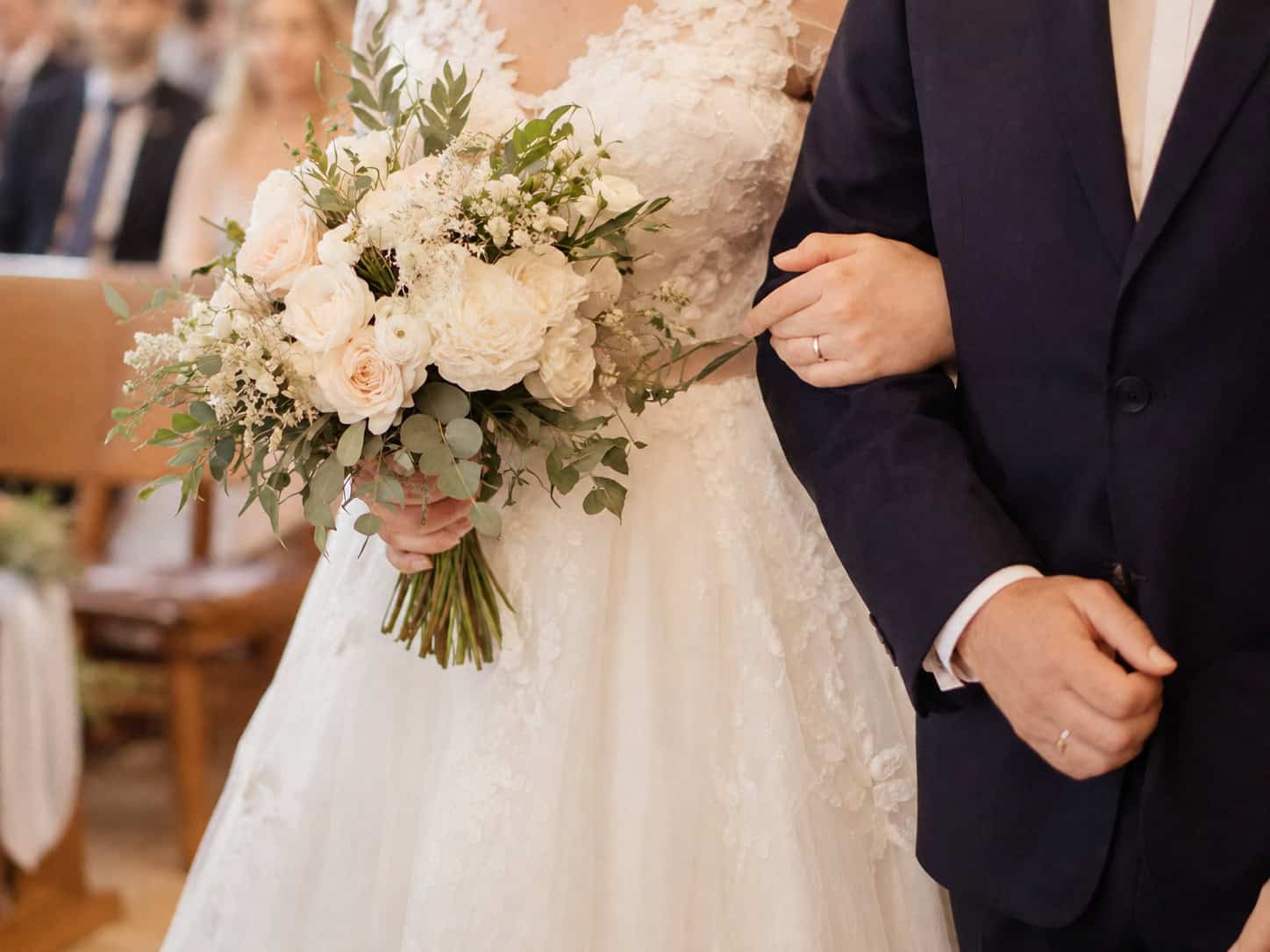
You can break the loop by focusing, instead, on sensory grounding anchors, like your feet or squeezing your hand just a bit tighter around that perfect peony bouquet you're holding. Take a few slow, calm, deep breaths with each step. But most importantly, practice the grounding exercises beforehand; otherwise, they're less likely to work on the actual day.
The Aisle Grounding Checklist
Use the four sensory anchors in your practice during rehearsal so they can become second nature for the big day:
- ✓ Feel your feet: Before you take your first step, pay attention to the weight of your feet pressing into the floor. This kind of awareness calms your nervous system almost instantly.
- ✓ Squeeze a hand: While walking with a parent or guardian, you can set up a physical signal with them. Ask them to squeeze your arm or hand every few steps.
- ✓ Pick three faces: Don’t just look at the wall. Before you look at your partner, make a plan to make eye contact with three different people in different rows.
- ✓ Pause at the top: Upon entering the space, come to a complete stop for two seconds. Take one deep breath, survey the room, then continue walking.
Letting the Music Guide You
Your processional song can also serve as a highly effective pacing device within the ceremony. I always advise selecting a song with a clear and consistent tempo. When you are practicing, pay attention to the bass line, the acoustic guitar strumming, or the cello's rhythm.
Take the underlying rhythm and use it as your metronome. Step to the rhythm, pause for half a step if you've found yourself moving ahead of it. Even the slightest break will feel like an eternity to you, but trust me, your guests will find it very intentional.
Embracing the Fleeting Moments
Objectively, the time you spend walking down the aisle is extremely short. Depending on where you choose to have your ceremony, you'll probably spend about 30-90 seconds doing "the walk." The time dilation effect will make it feel a lot shorter, but that can be counteracted with a few well-practiced grounding techniques.
At the end of the day, what matters is fully immersing yourself in the moment. It's what you've been working towards during all that time you've spent planning. And you deserve to enjoy it!