A veil looks best when its comb, hairstyle and weight are planned together. These bridal hairstyles show clear attachment points above buns, below twists and inside half-up sections, with options for straight hair, curls, coils and locs. Bring the actual veil to your trial so the stylist can test the comb rather than guessing from a photo.

Sandals Will Throw Your Wedding for Free
Stay 7 nights in a Club or Butler suite and Sandals covers the wedding: a personal planner, the ceremony, a private cocktail reception, a two-tier cake, your bouquet and boutonniere, plus $200 toward photos and $200 toward video. No venue hunt, no vendor juggling.
Images are AI-generated illustrations of the ideas described.
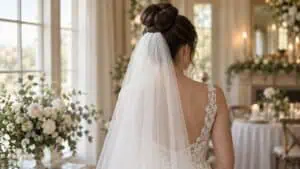
1. Low Chignon with Veil Above
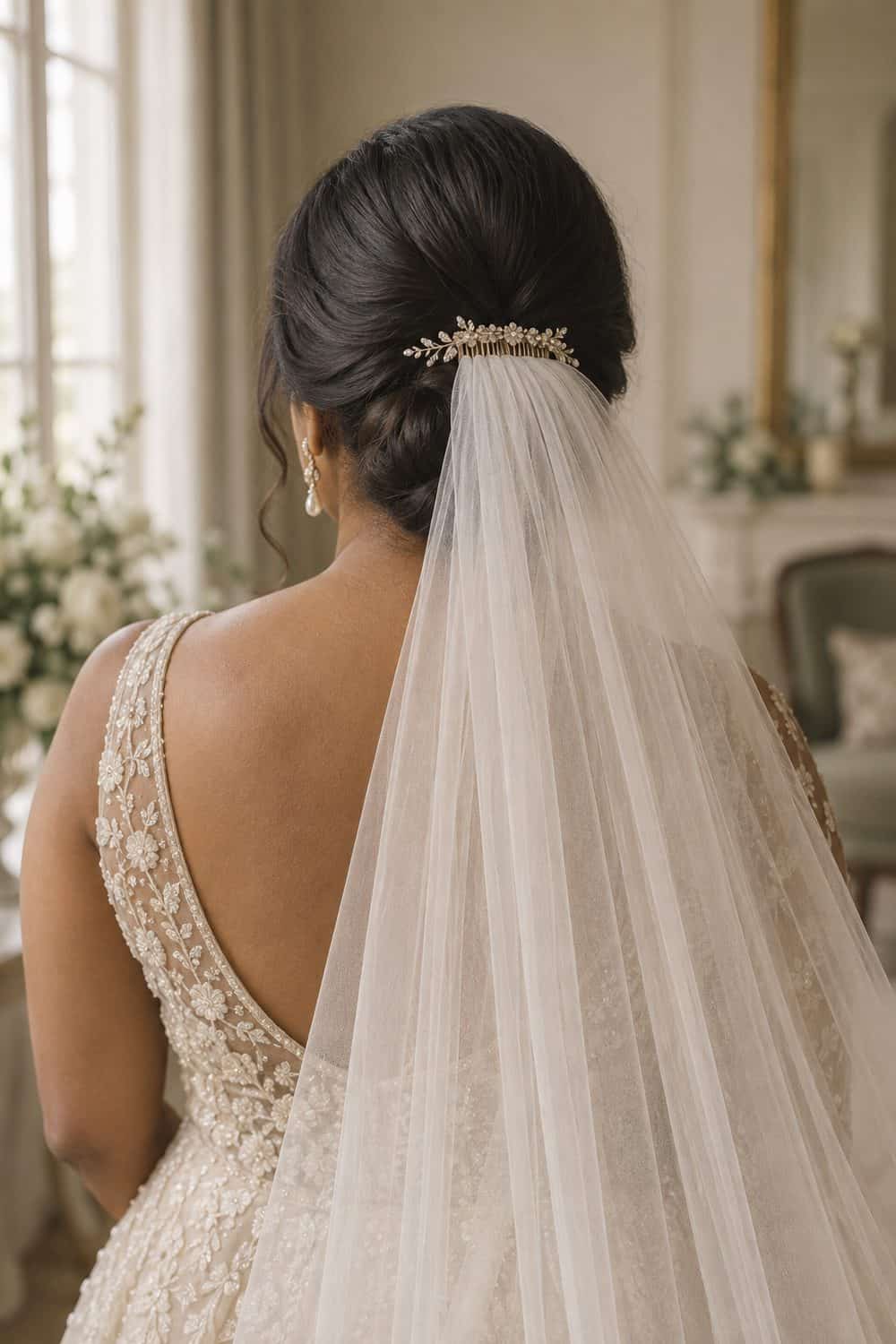
Placing the veil above a low chignon gives the comb a firm ridge and lets the tulle fall over the bun. Check that the first layer clears the bun instead of bunching on it.
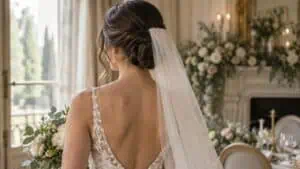
2. French Twist with Veil Below
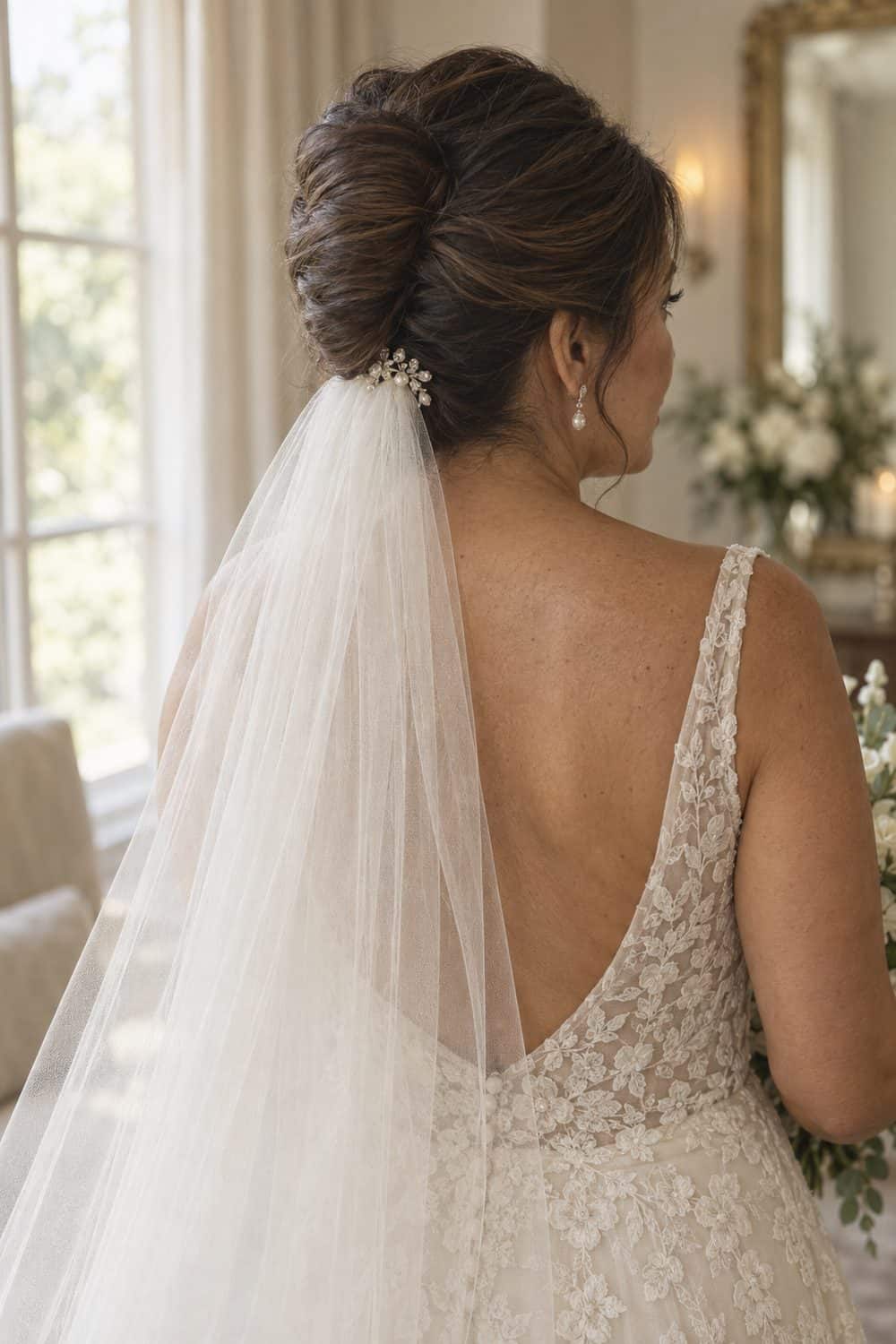
A comb below a French twist leaves the full vertical roll visible. Use a hidden anchor at the lower seam so the comb doesn't pull the twist open.
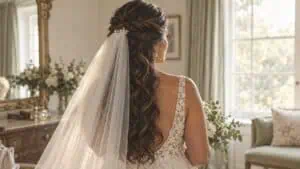
3. Half-Up Waves with Veil at the Join
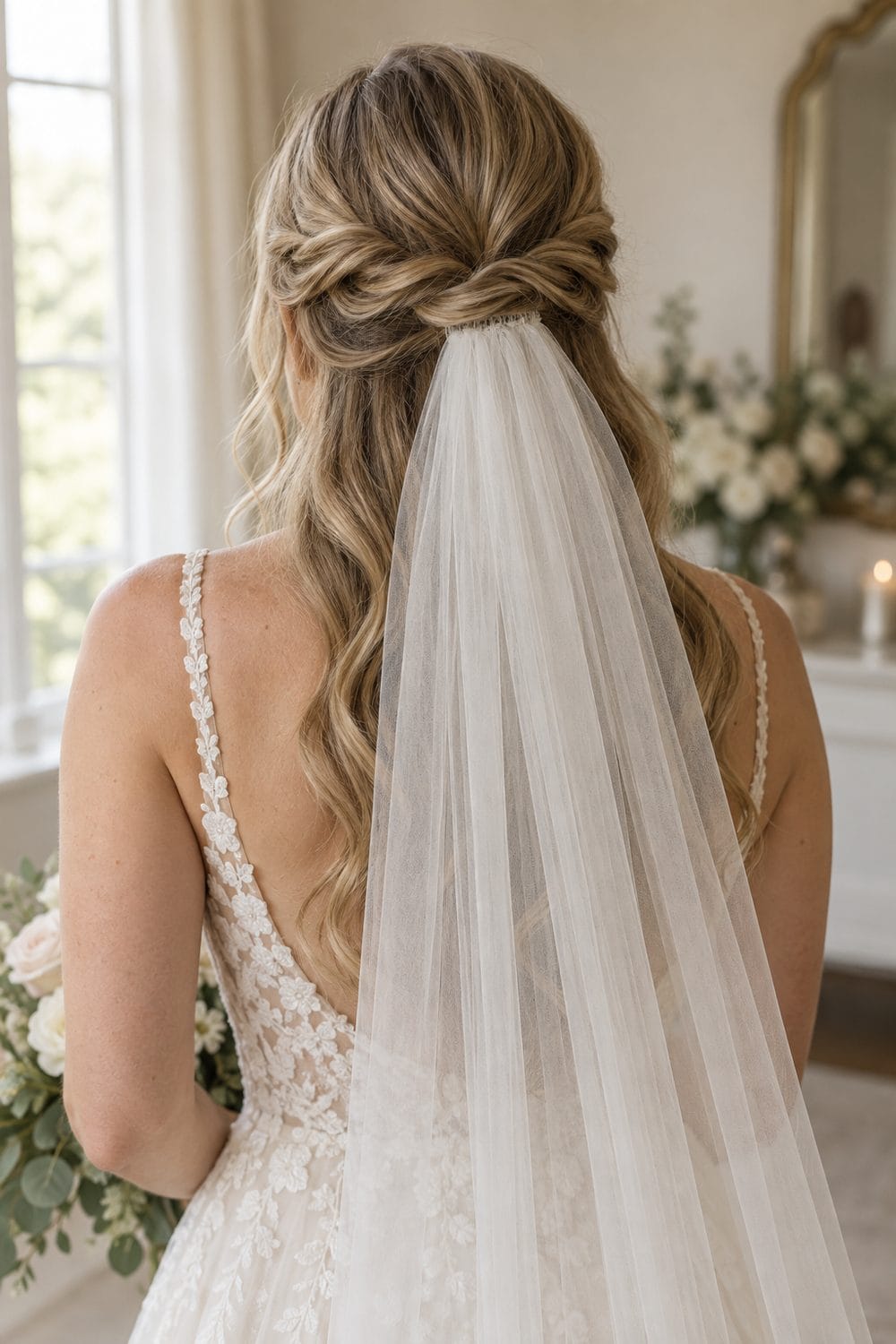
The half-up join gives a veil comb a natural place to grip. Keep the fastening compact so the veil doesn't push the twists apart.
4. High Bun with Veil Underneath
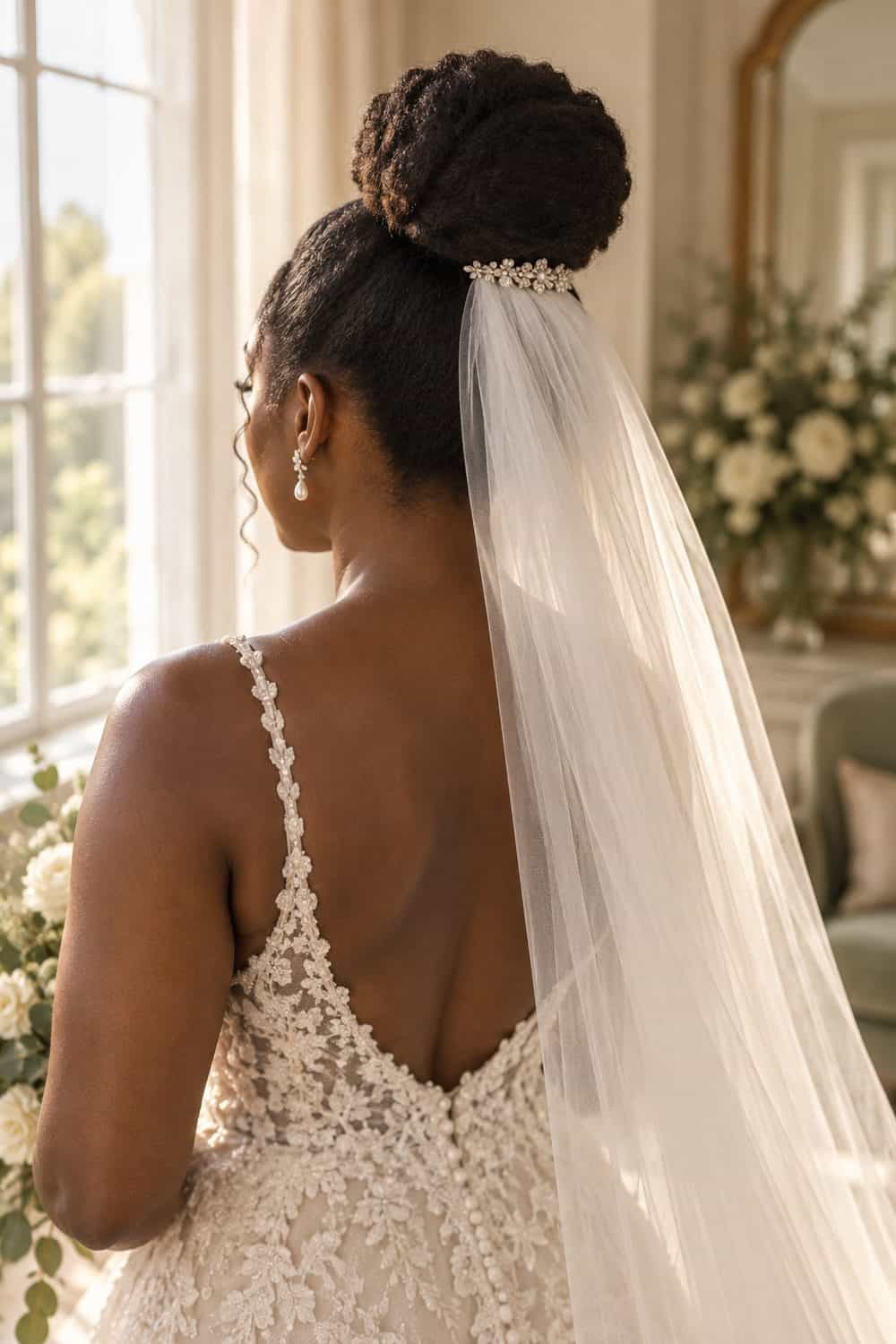
A veil under a high bun keeps the bun's outline clear and starts the tulle higher on the back. Make sure the comb follows the curve of the head rather than pointing outward.
5. Braided Crown with Veil at the Nape
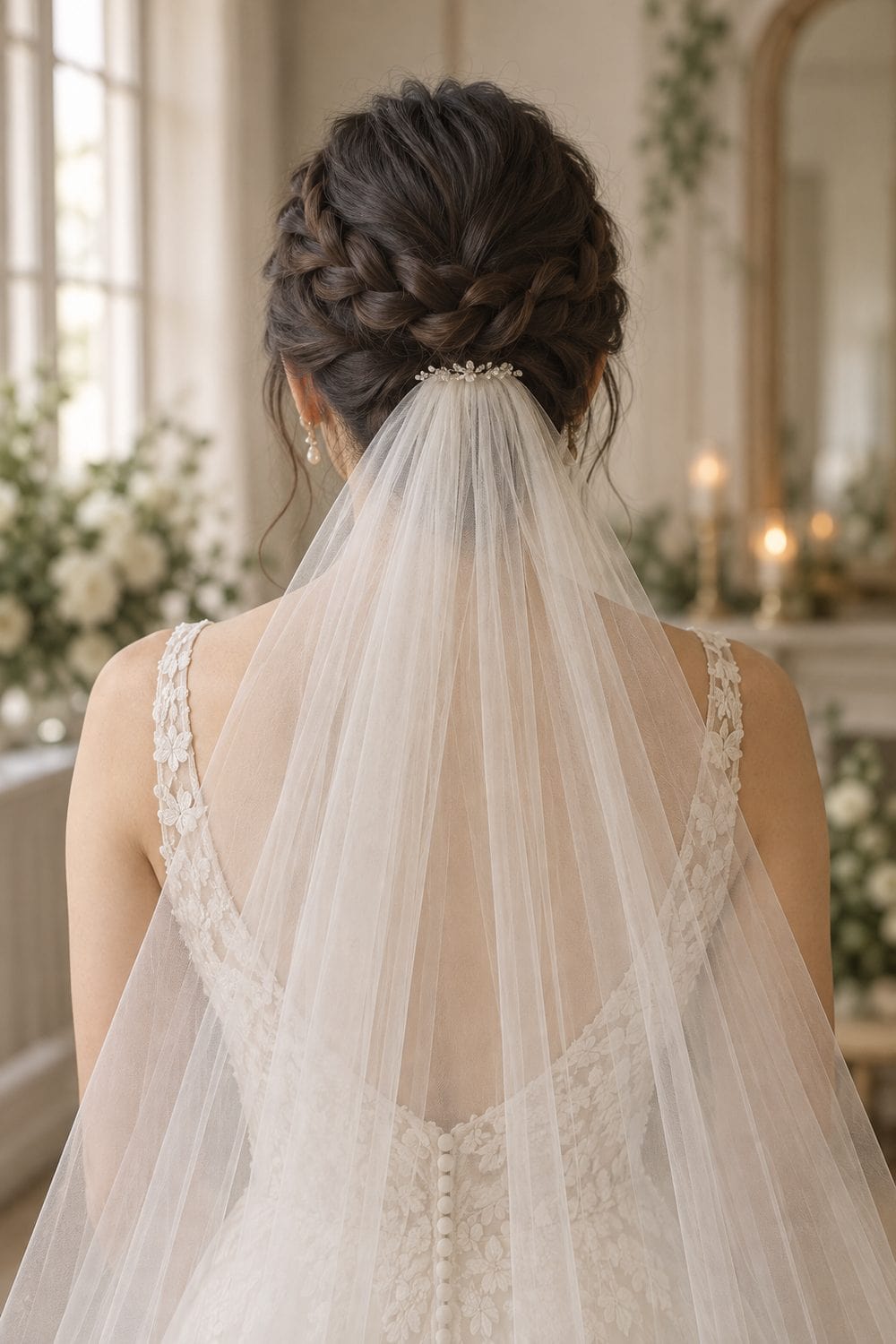
A nape attachment keeps a braided crown uncovered. Add a small horizontal braid under the crown if the lower section needs more grip.
6. Curly Ponytail with Veil Above
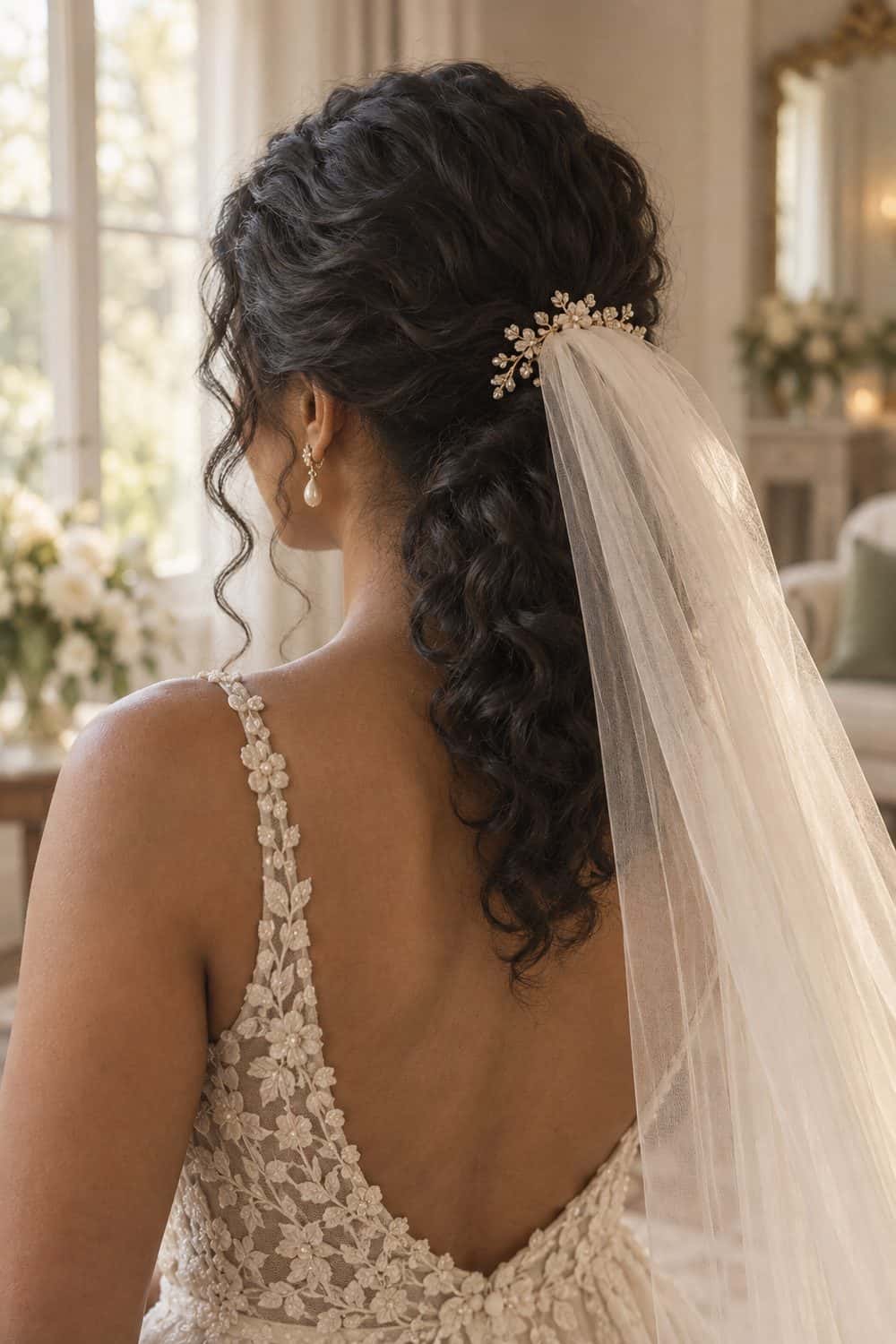
A comb above a curly ponytail leaves the curl length visible below. Secure the ponytail first and avoid catching loose curls in the comb teeth.
7. Loc Bun with Veil Underneath
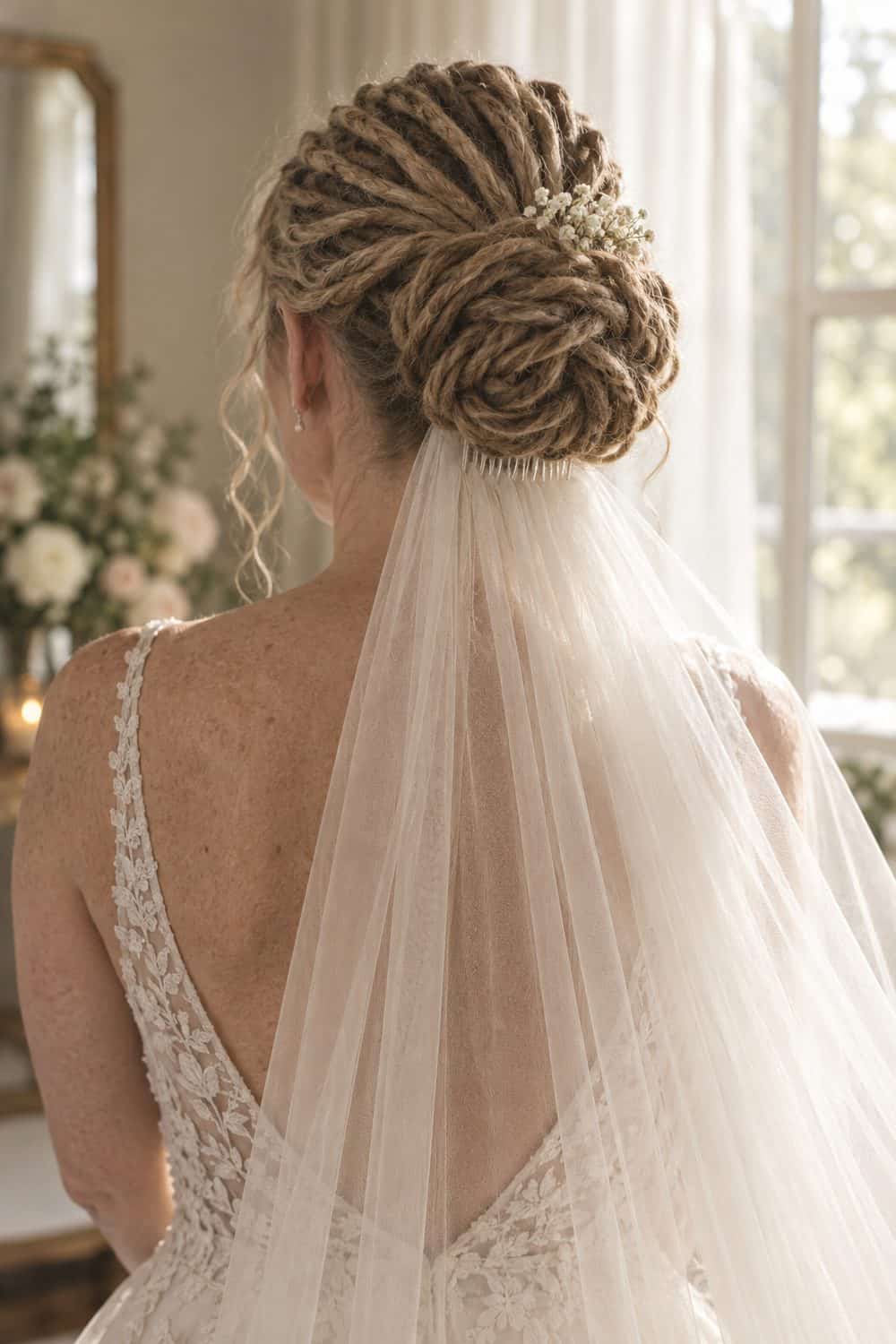
A low loc bun provides a wide structure for a veil placed underneath. Distribute the veil anchors so its weight doesn't sit on one loc.
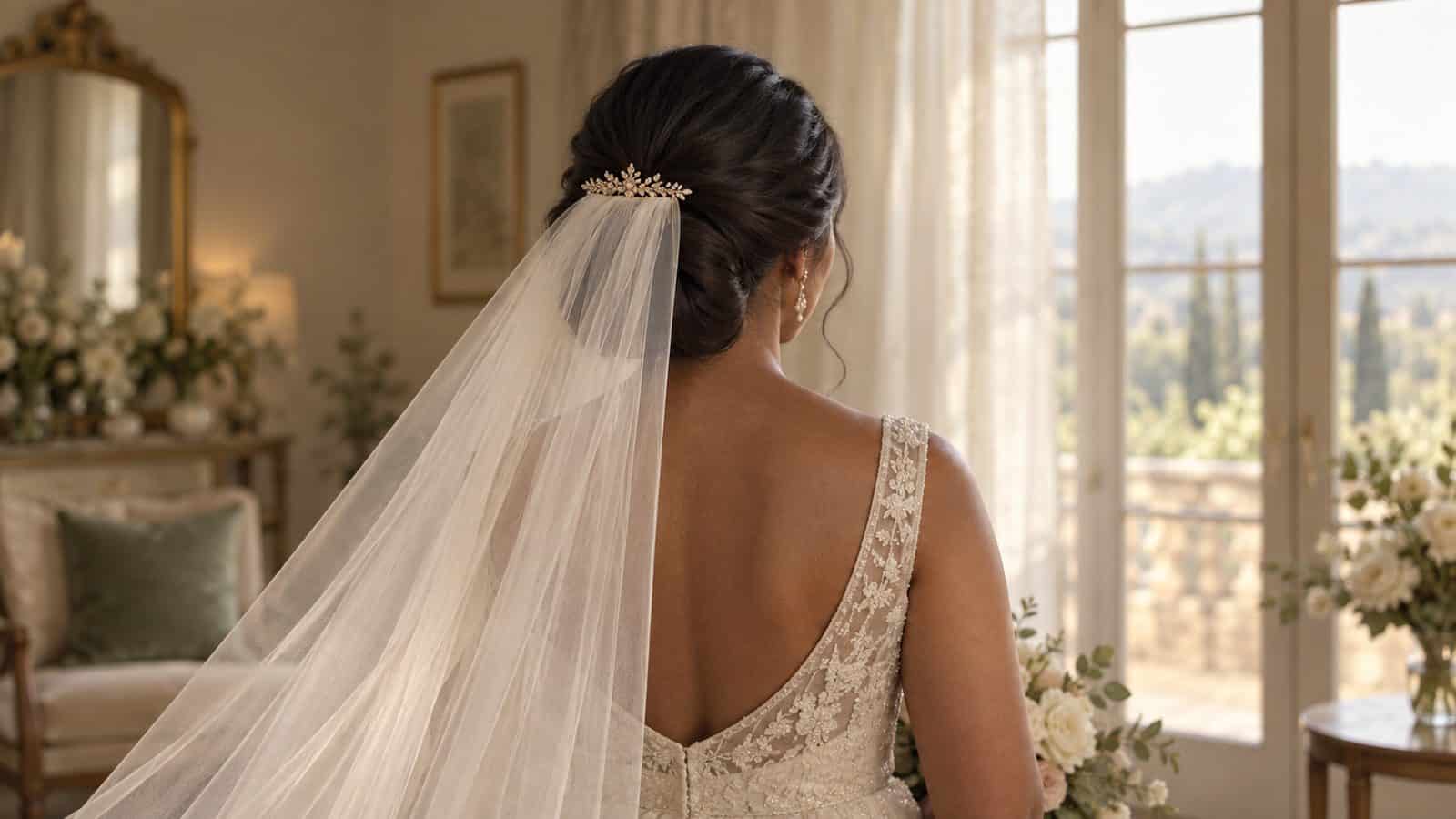
8. Side Chignon with Veil Centered
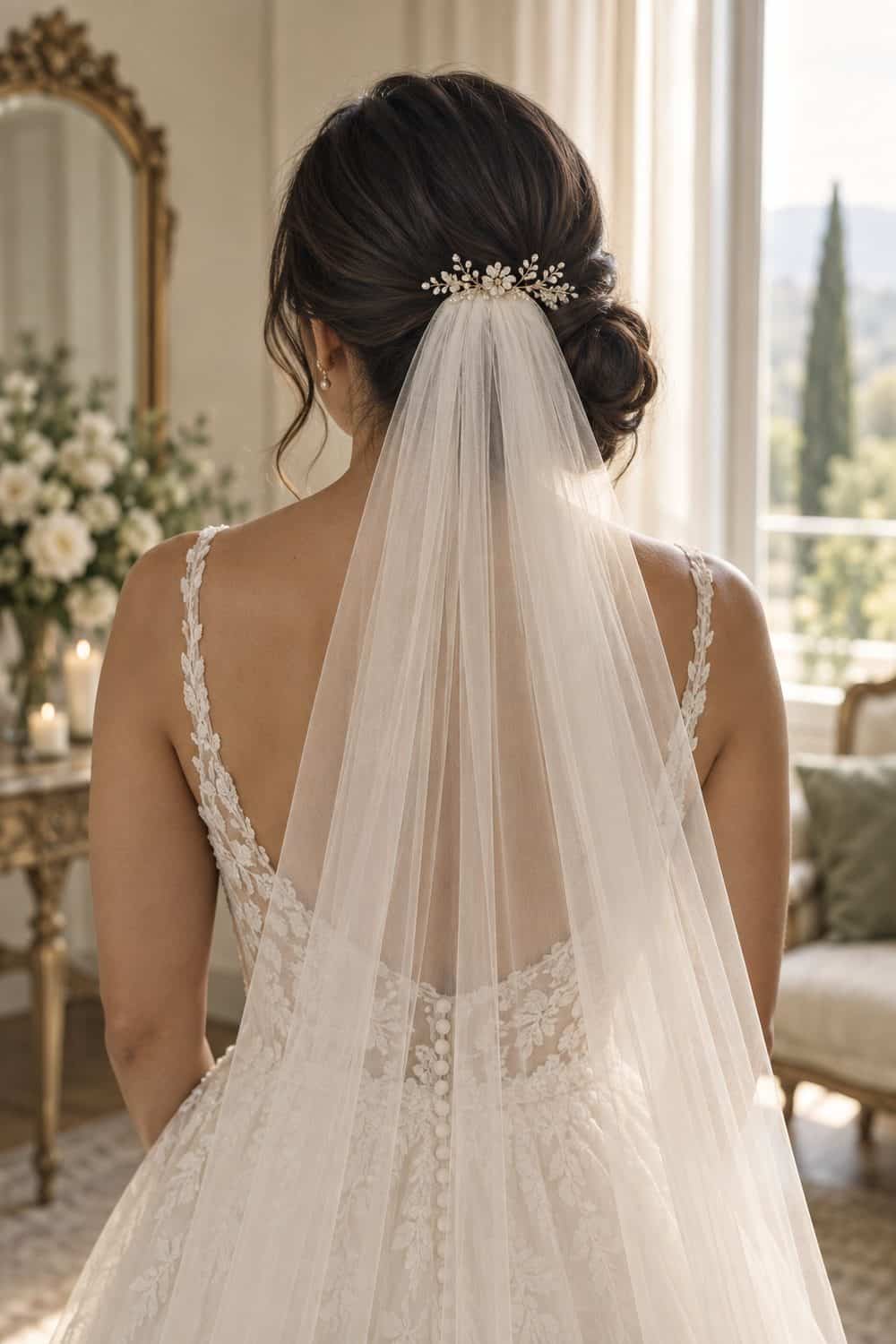
Centering the veil above an offset bun keeps the overall back view balanced. Mark the head center before inserting the comb because the bun can distort the visual line.
9. Textured Pixie with Birdcage Veil
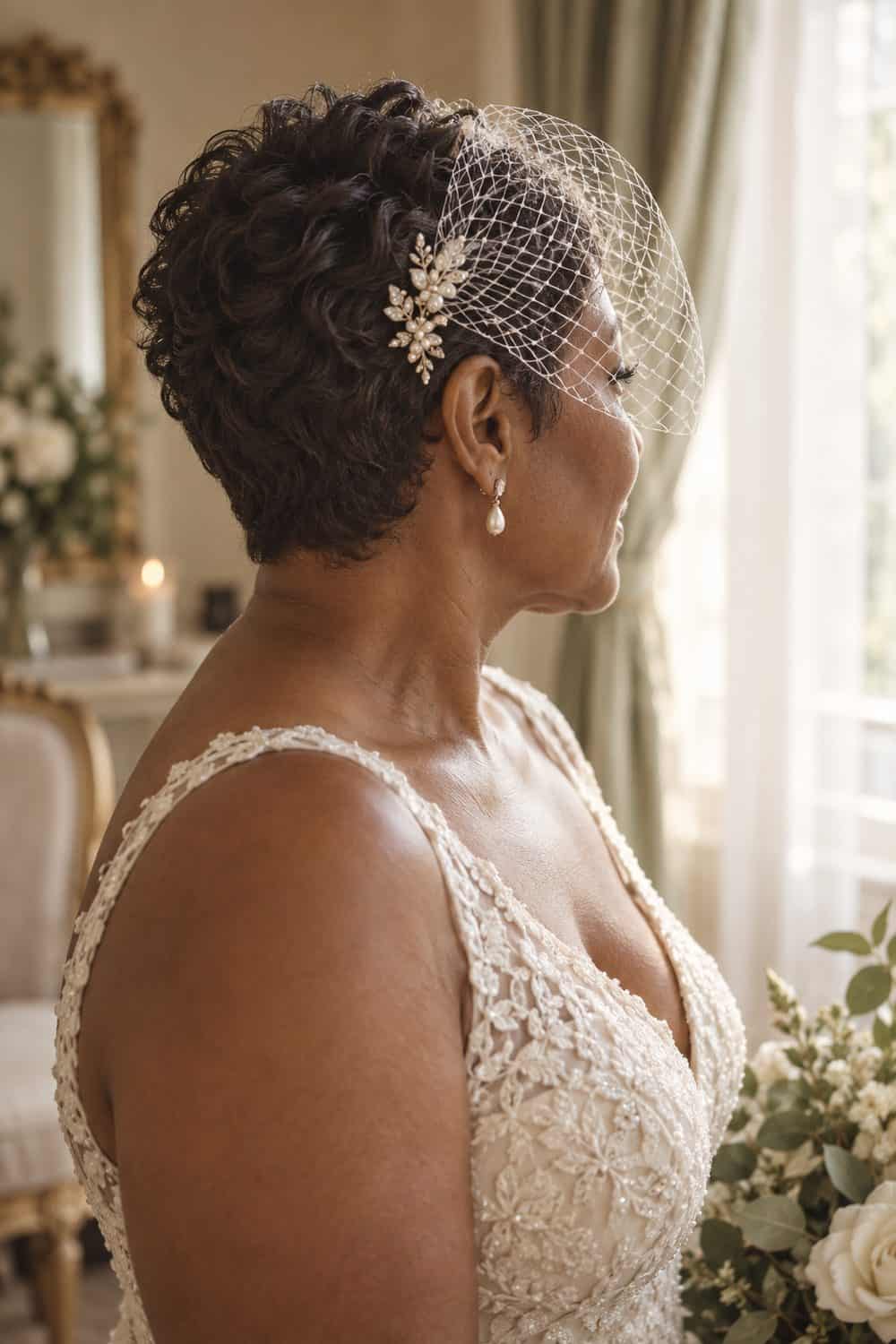
A small side comb can secure a birdcage veil without asking short hair to hold a heavy train. Test the comb teeth and add crossed pins beneath them if the cut is very fine.
10. Twisted Updo with Veil Above
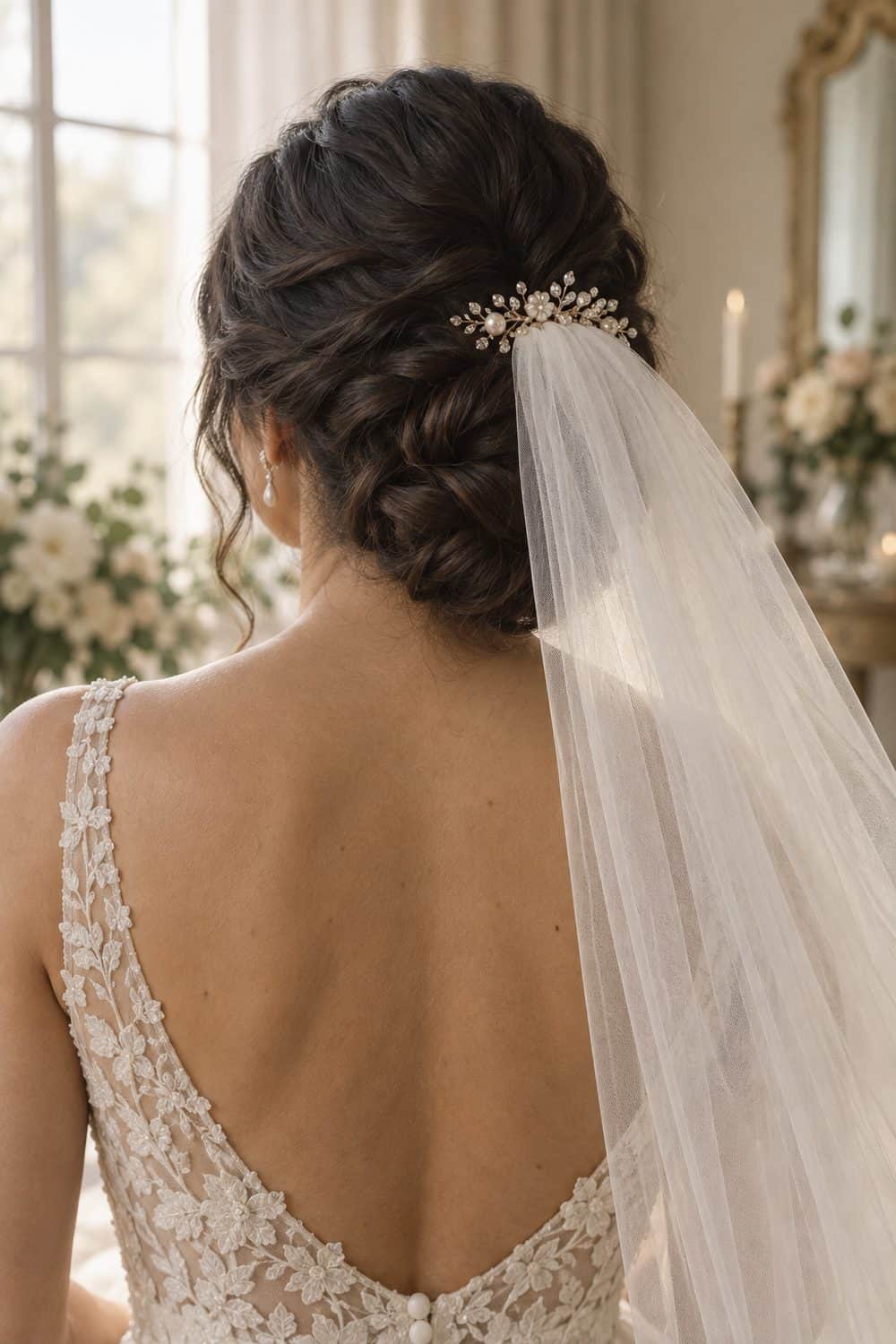
An upper comb keeps the interlocking twist pattern visible below it. Leave a narrow firm section for the comb instead of inserting it into loose surface twists.
11. High Curly Updo with Veil
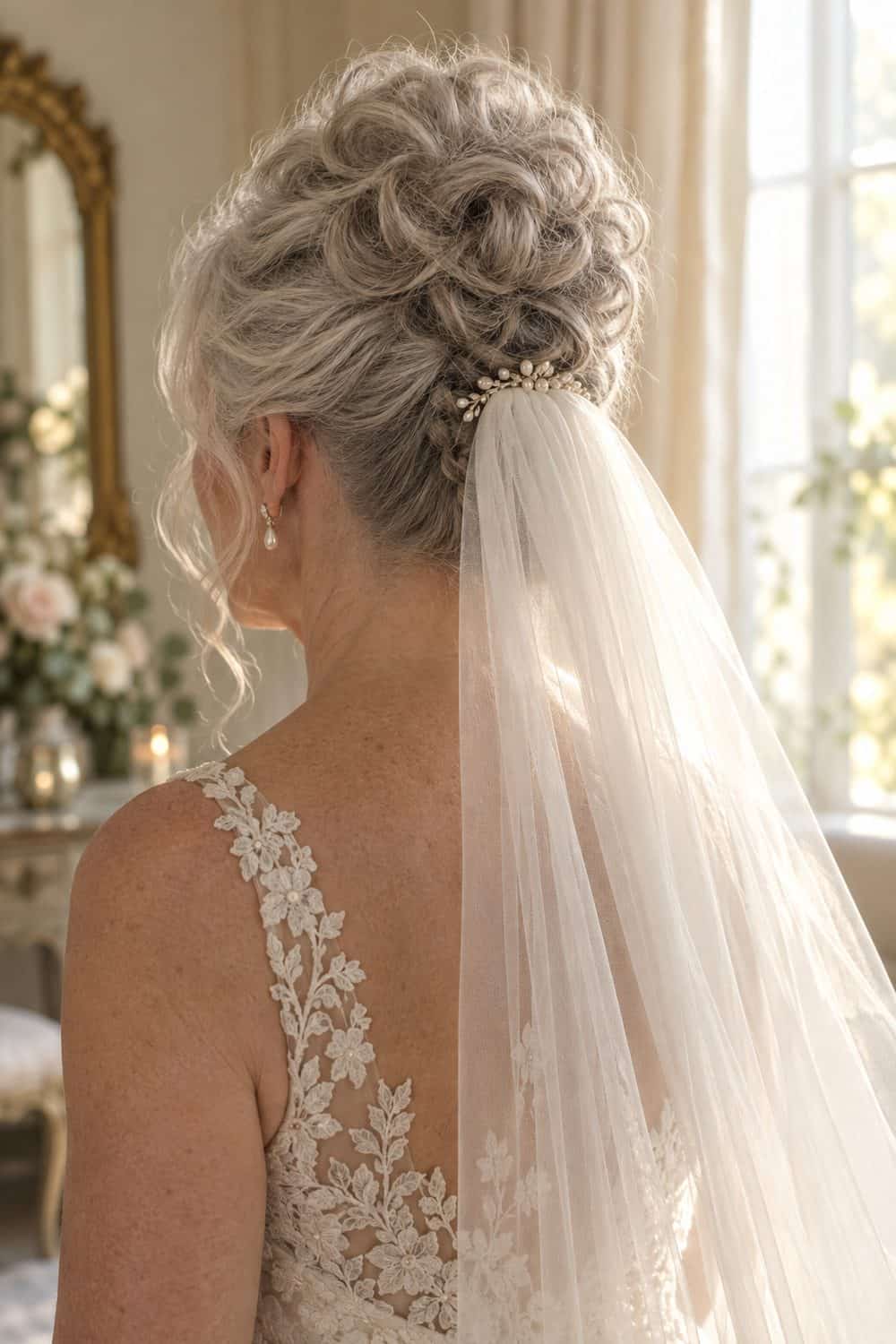
Gathering the curls high leaves a full shape above a veil attached at the back. Ask your stylist to make a firm anchor beneath the curls so the comb does not pull on their loose ends.
12. Long Braid with Veil Above
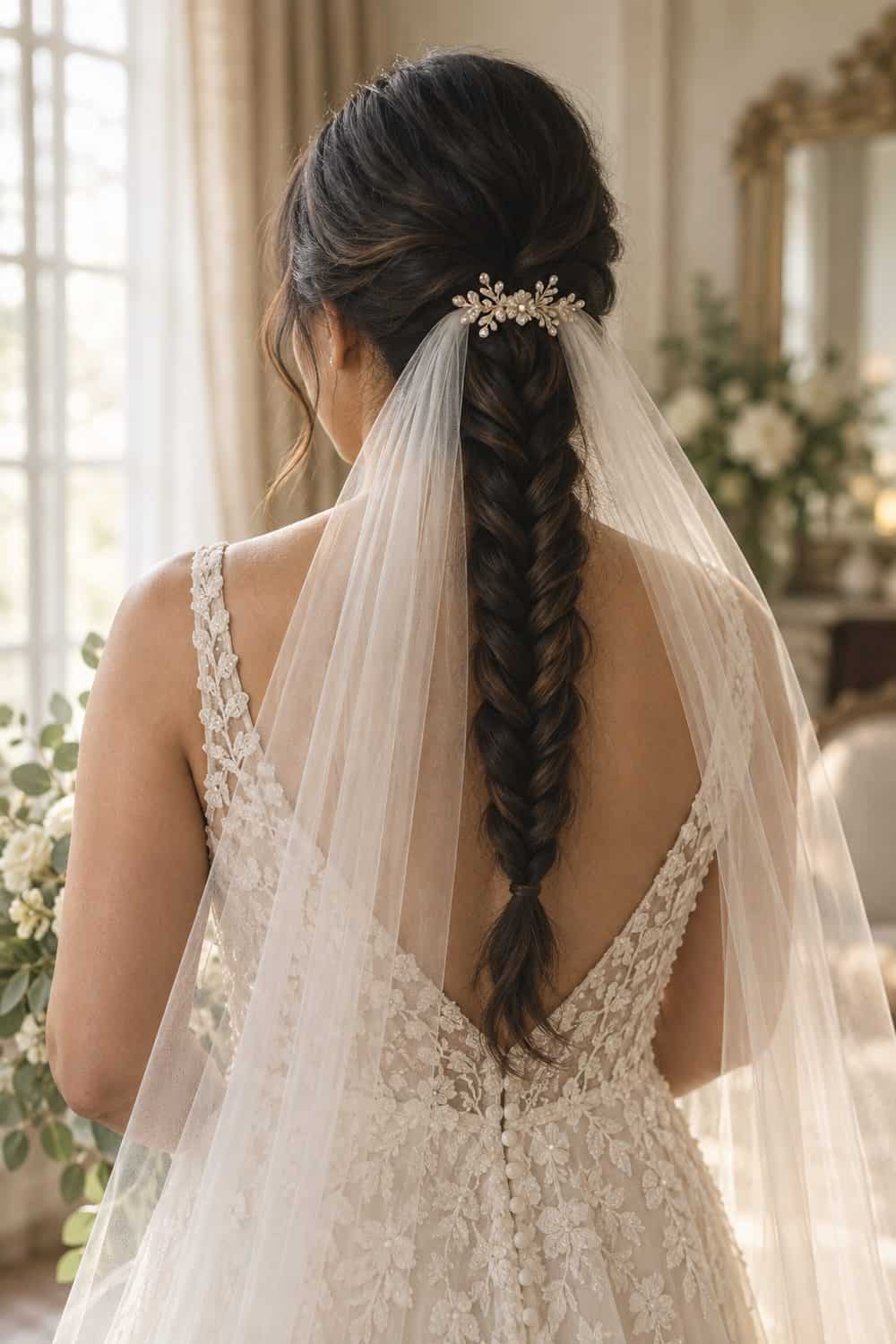
A veil above a long braid frames the braid rather than flattening it. Keep the first veil layer narrow enough that the braid remains visible.
Free Wedding Planning Checklist
Stay organized from engagement to "I do" — get our comprehensive checklist covering every task, deadline, and detail.
13. Sleek Low Knot with Veil Below
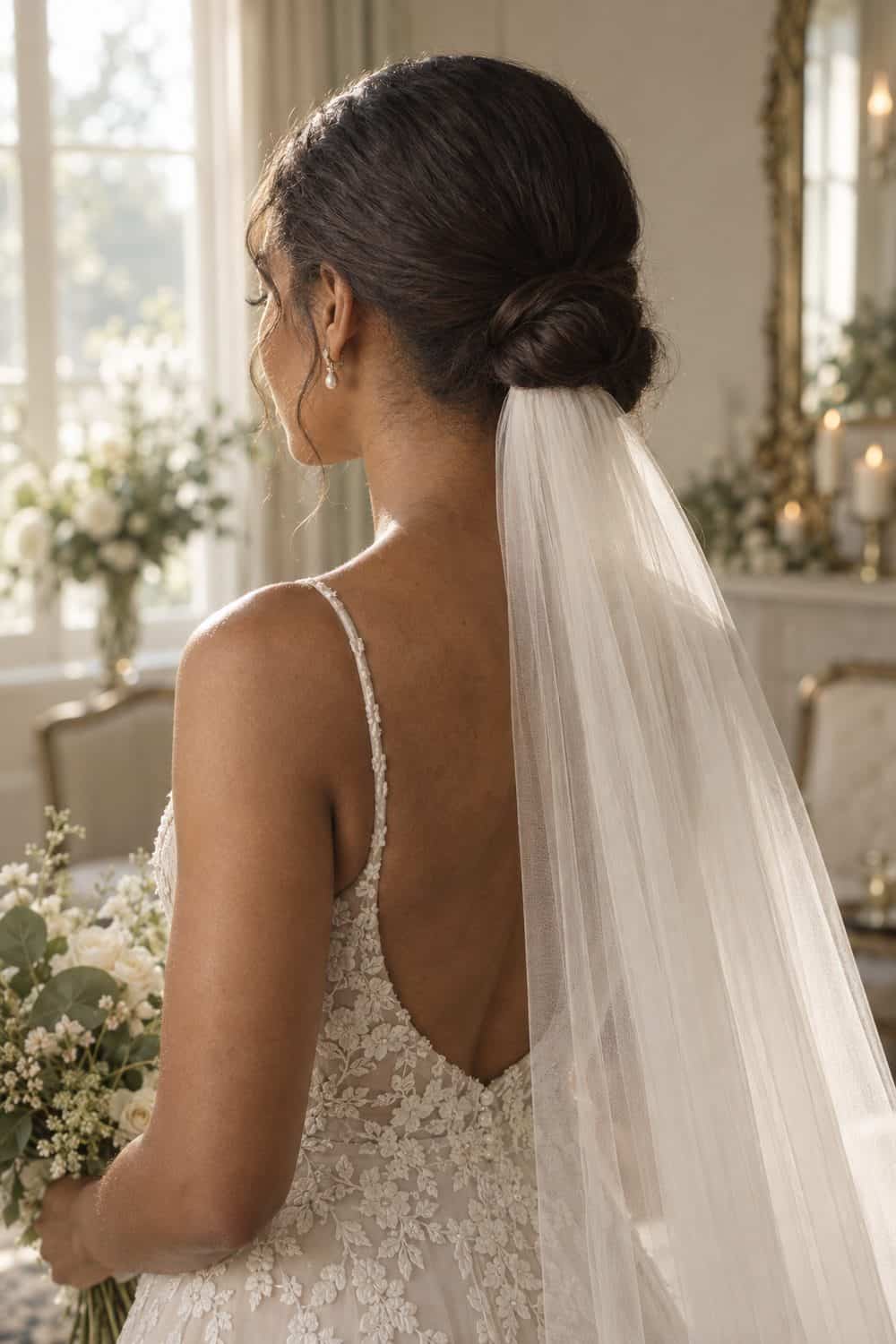
A veil below a compact knot creates a clean uninterrupted crown. Use a firm hidden braid at the nape if the hair is very smooth.
14. Curly Half-Up Style with Veil
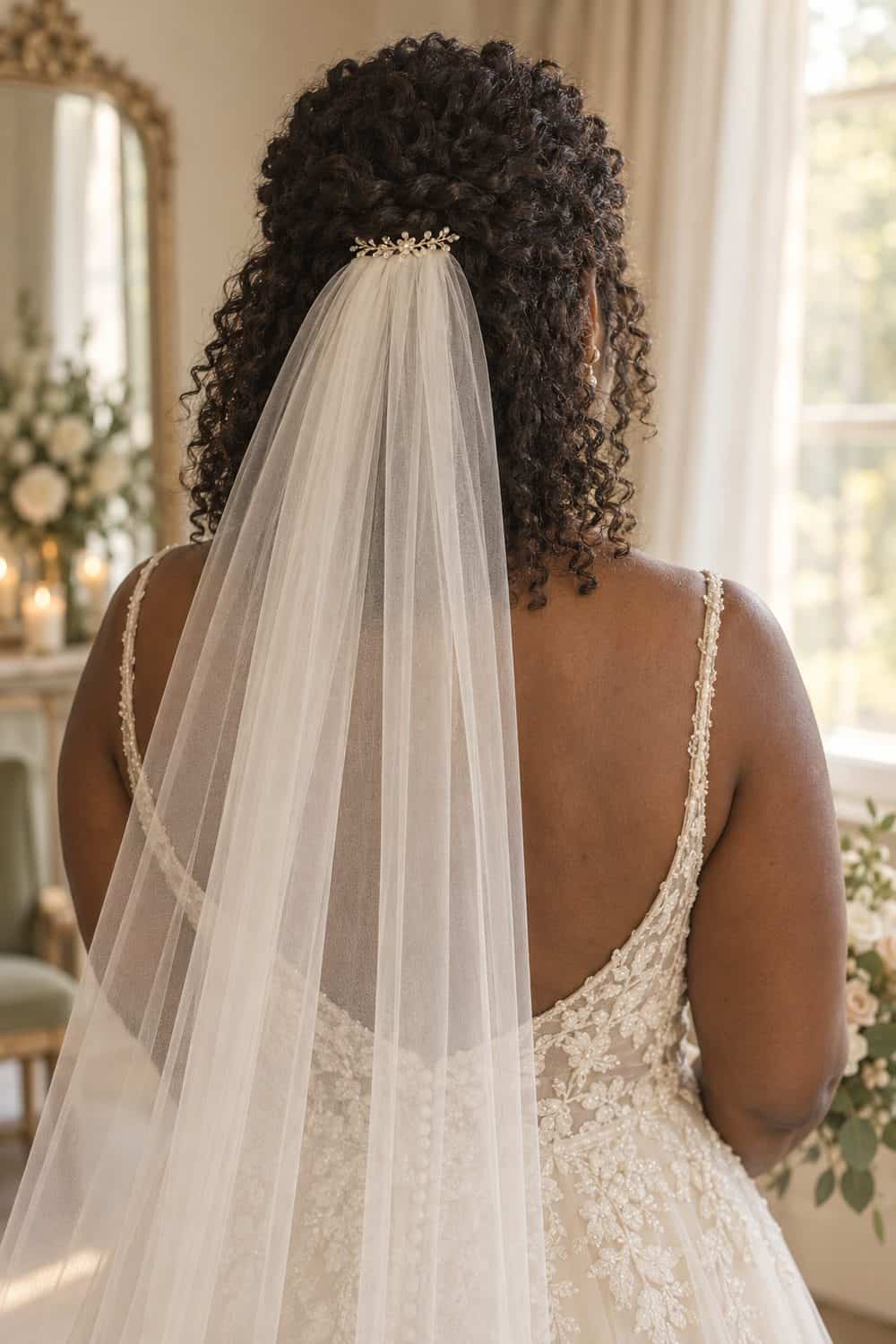
The pinned upper curls create an anchor while the lower texture stays loose. Keep the comb below the fastening so it doesn't crush the upper curls.
15. Soft Waves with Crown Veil
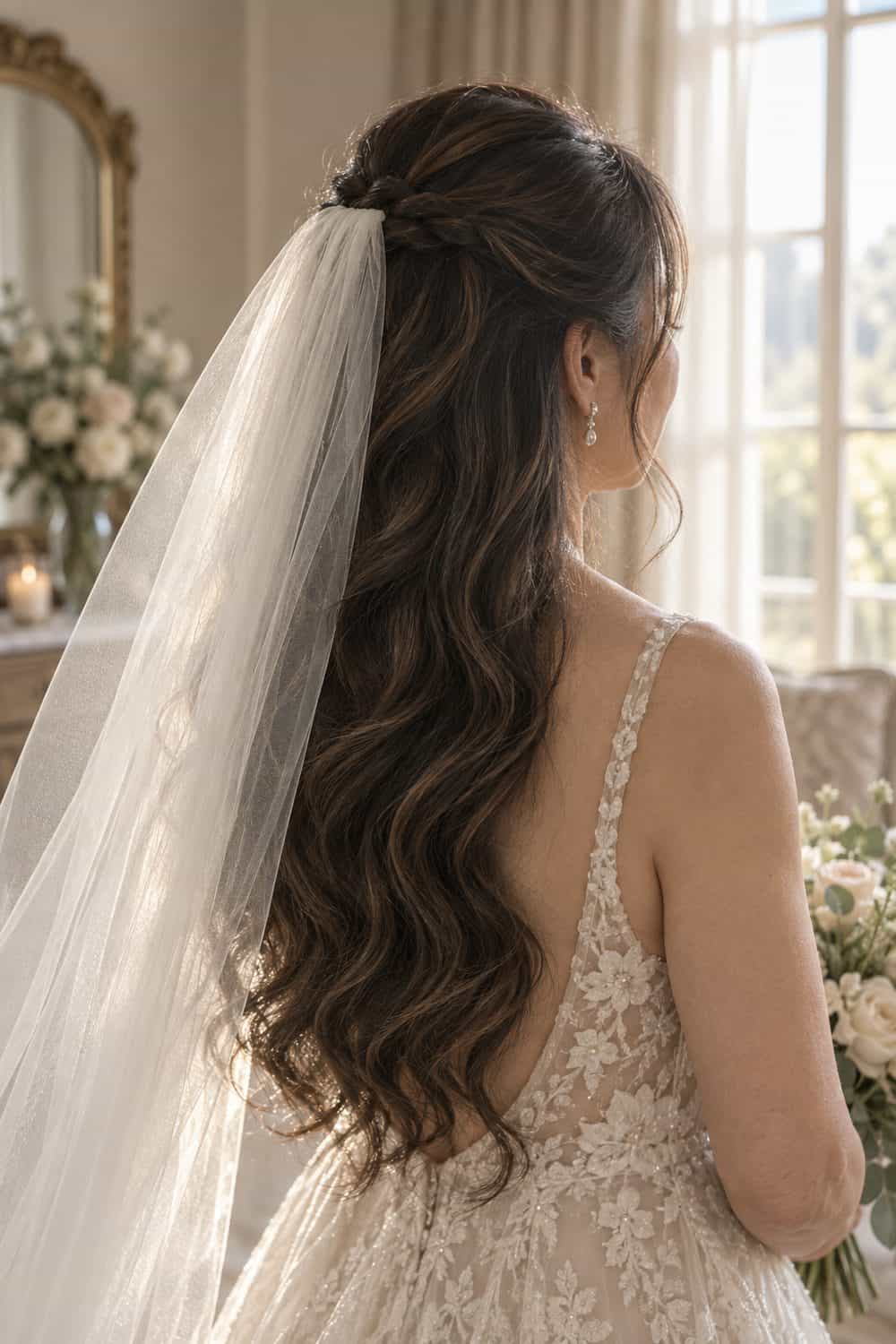
A crown veil works with loose waves when it has a hidden anchor rather than surface pins. Test the height from the side so the veil doesn't form an unintended bump.
16. Bubble Ponytail with Veil Above
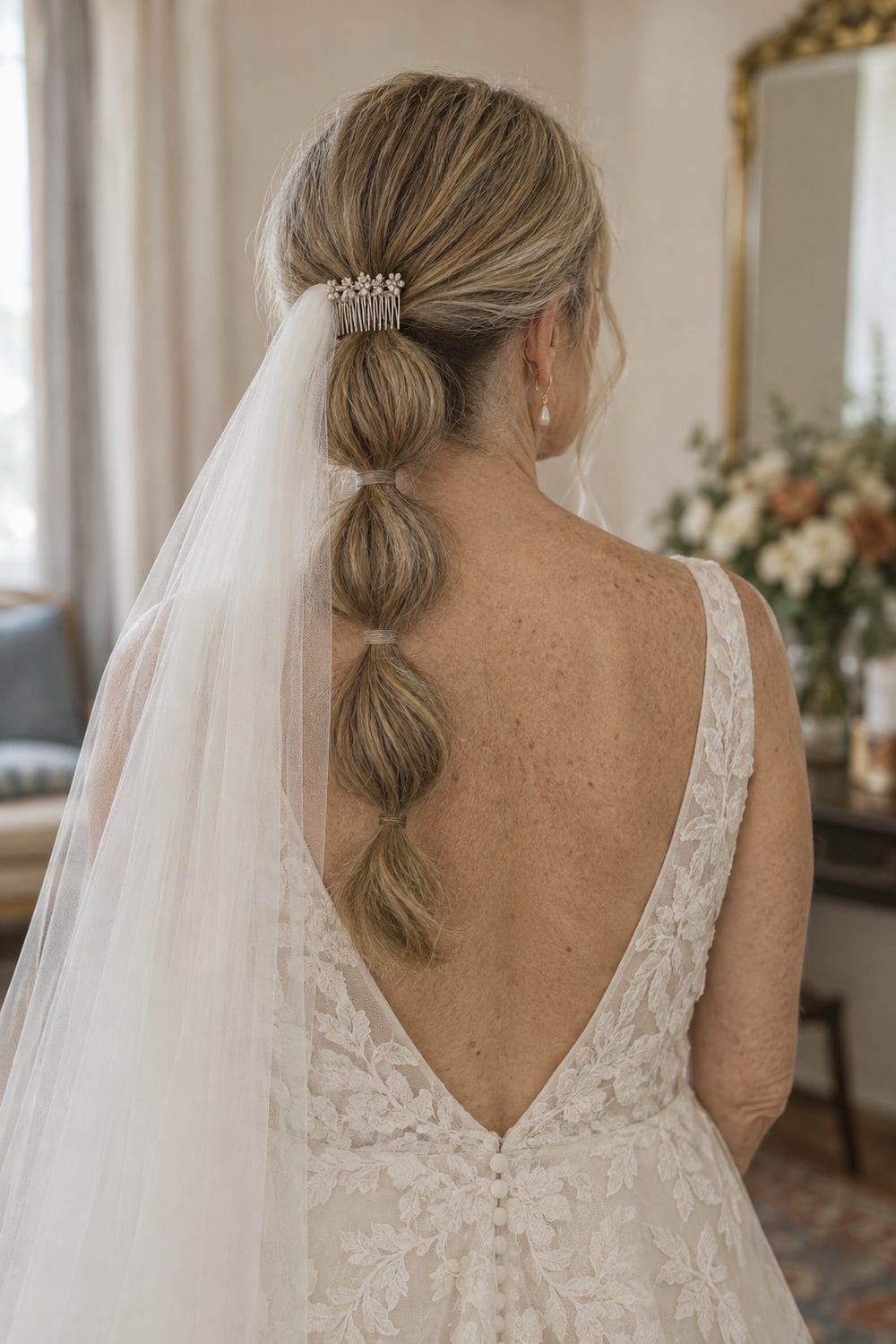
A veil above a bubble ponytail keeps the attachment separate from the segmented length. Anchor the comb into crossed pins above the elastic so the first bubble stays round.
17. Short Curly Bob with Low Veil
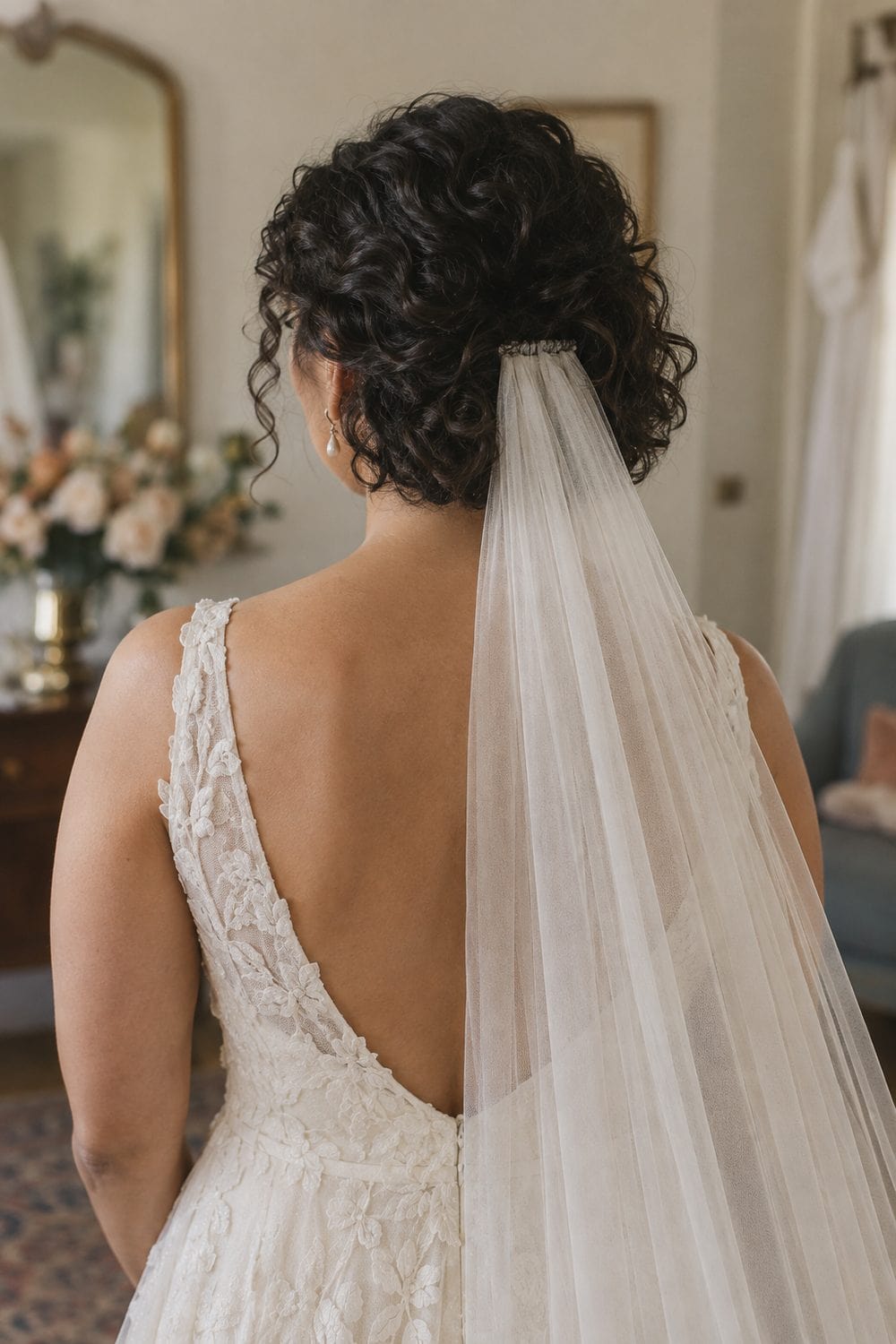
A low attachment lets a short curly bob keep its rounded crown shape. Choose light tulle and build a tiny hidden braid where the comb teeth need support.
18. Figure-Eight Bun with Veil Underneath
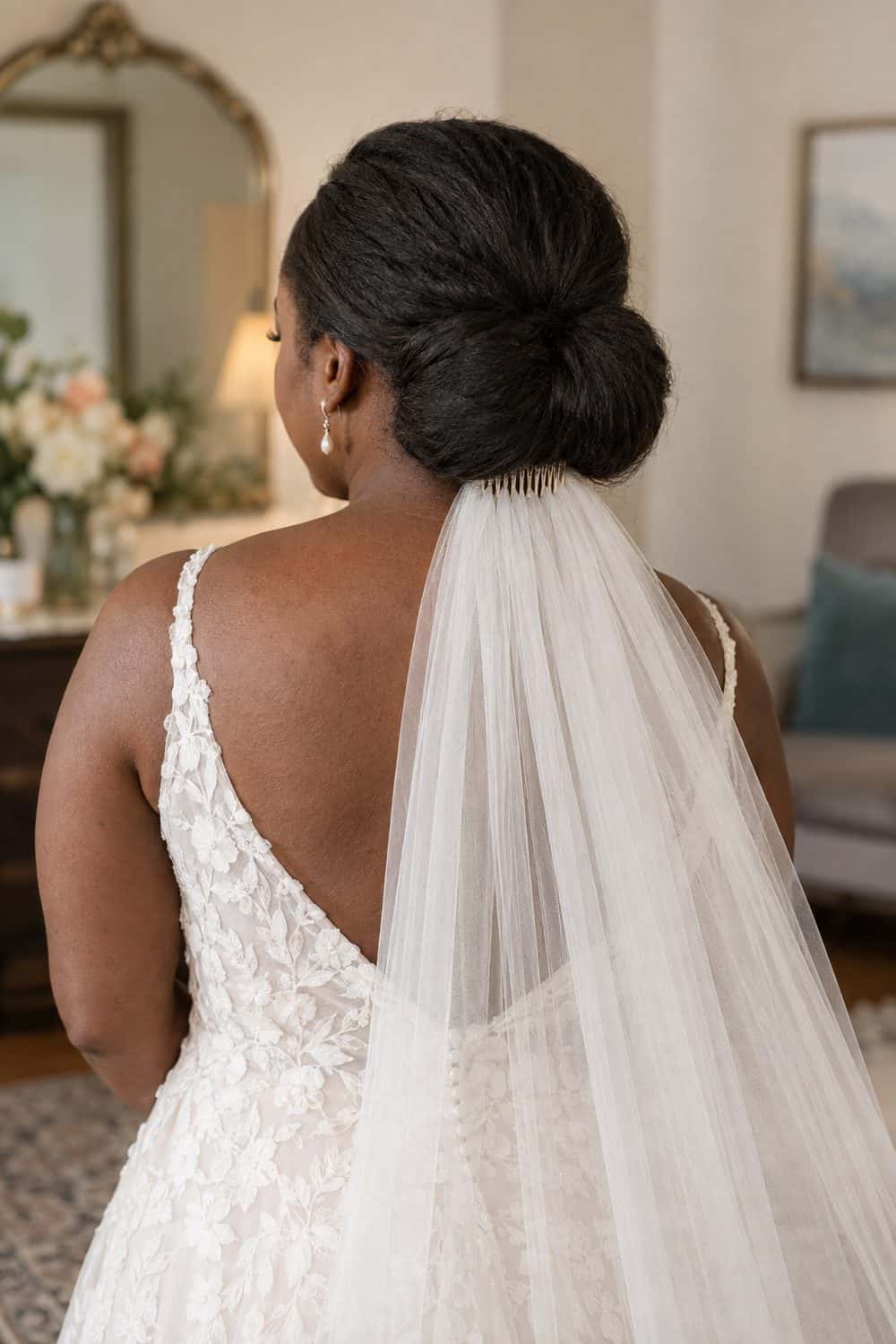
A figure-eight bun creates a wide, stable ridge for a veil worn underneath. Place the comb below the central crossing so the bun remains fully visible.
19. Side Braid with Crown Veil
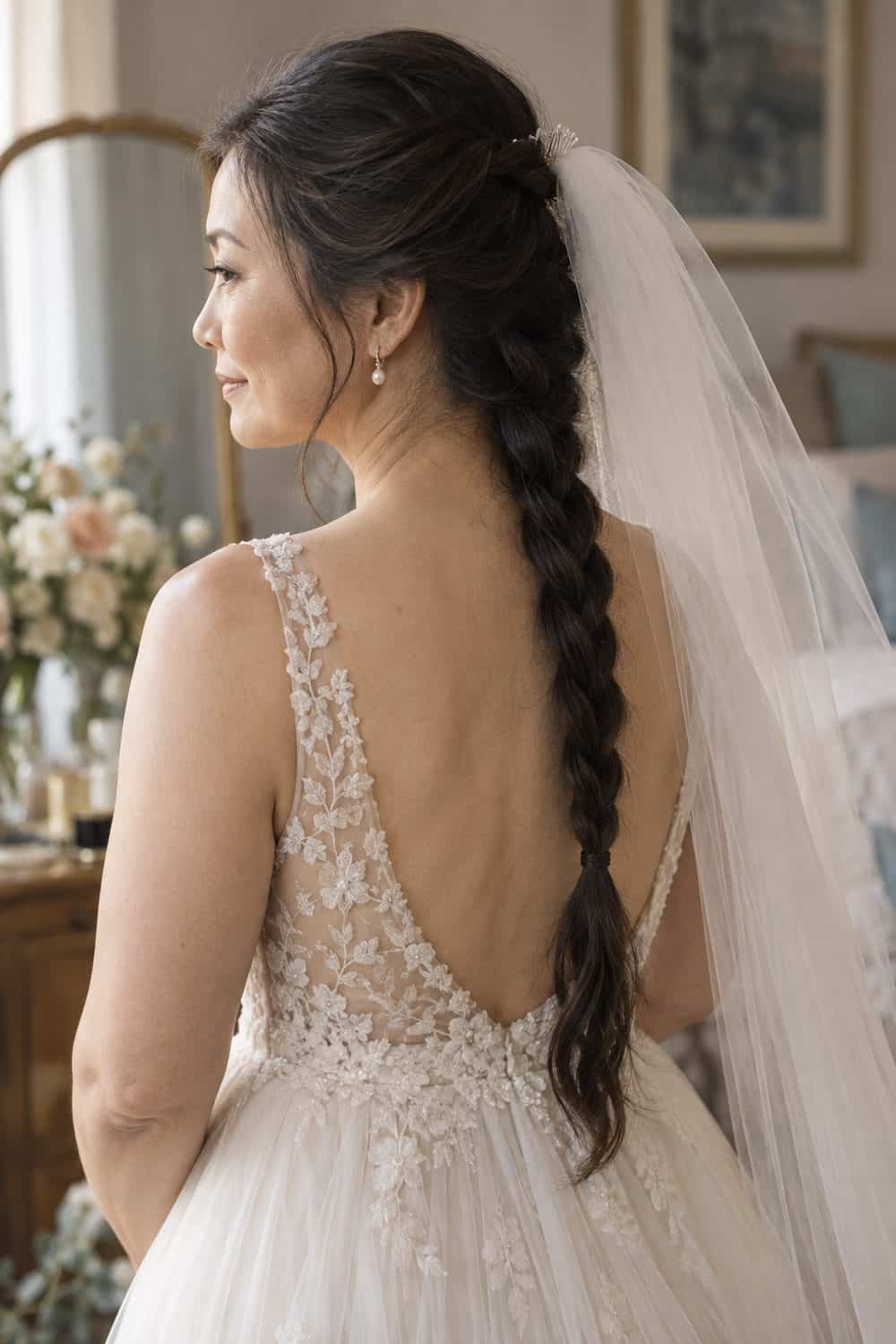
A crown attachment adds height above a long side braid without covering its pattern. Keep the support braid narrow and test the tulle from both sides before final pinning.
20. Rolled Bob with Birdcage Veil
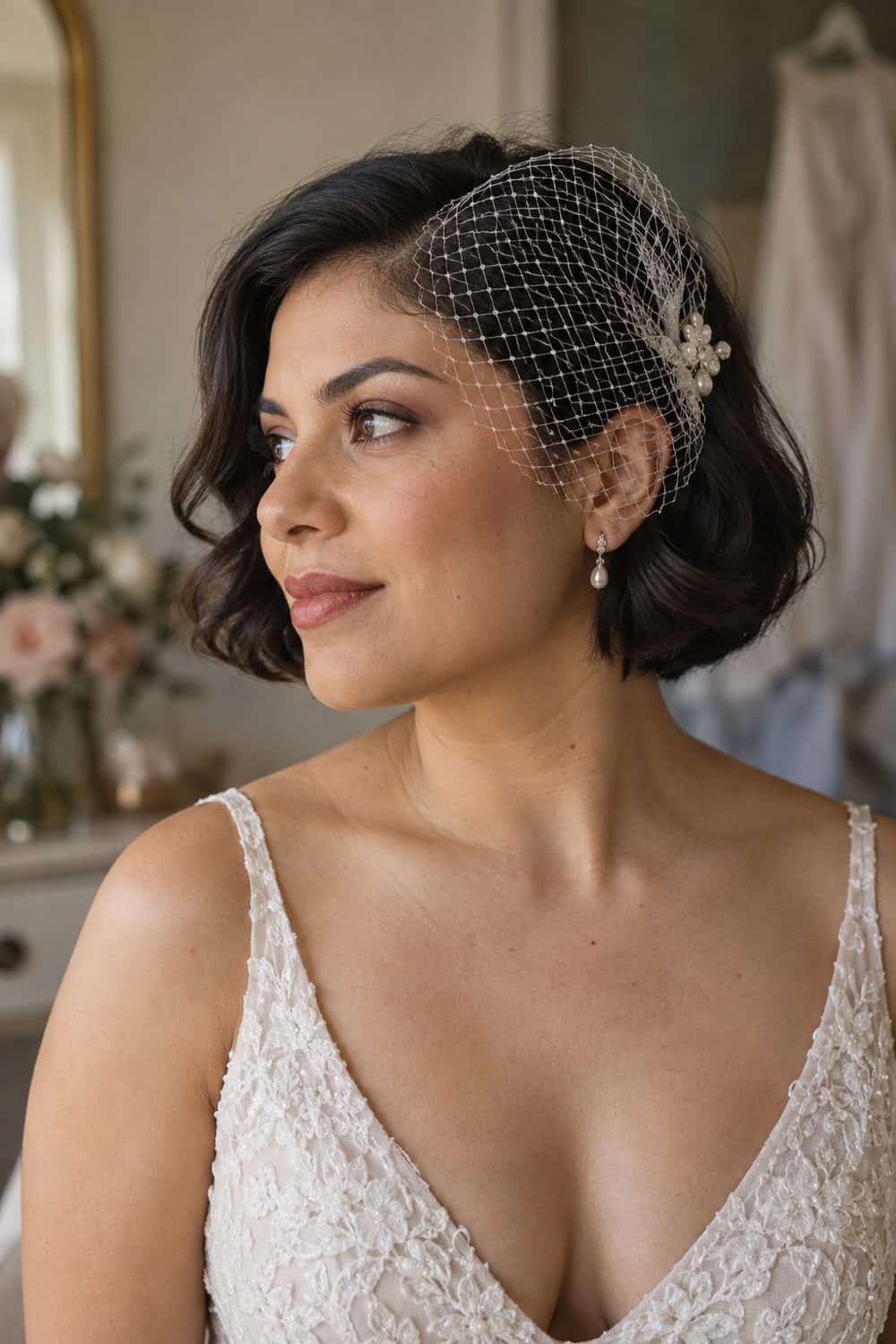
A softly rolled bob balances the crisp angle of a birdcage veil. Set the comb behind the side part so the net clears the eye instead of collapsing toward it.
21. Double-Twist Ponytail with Veil
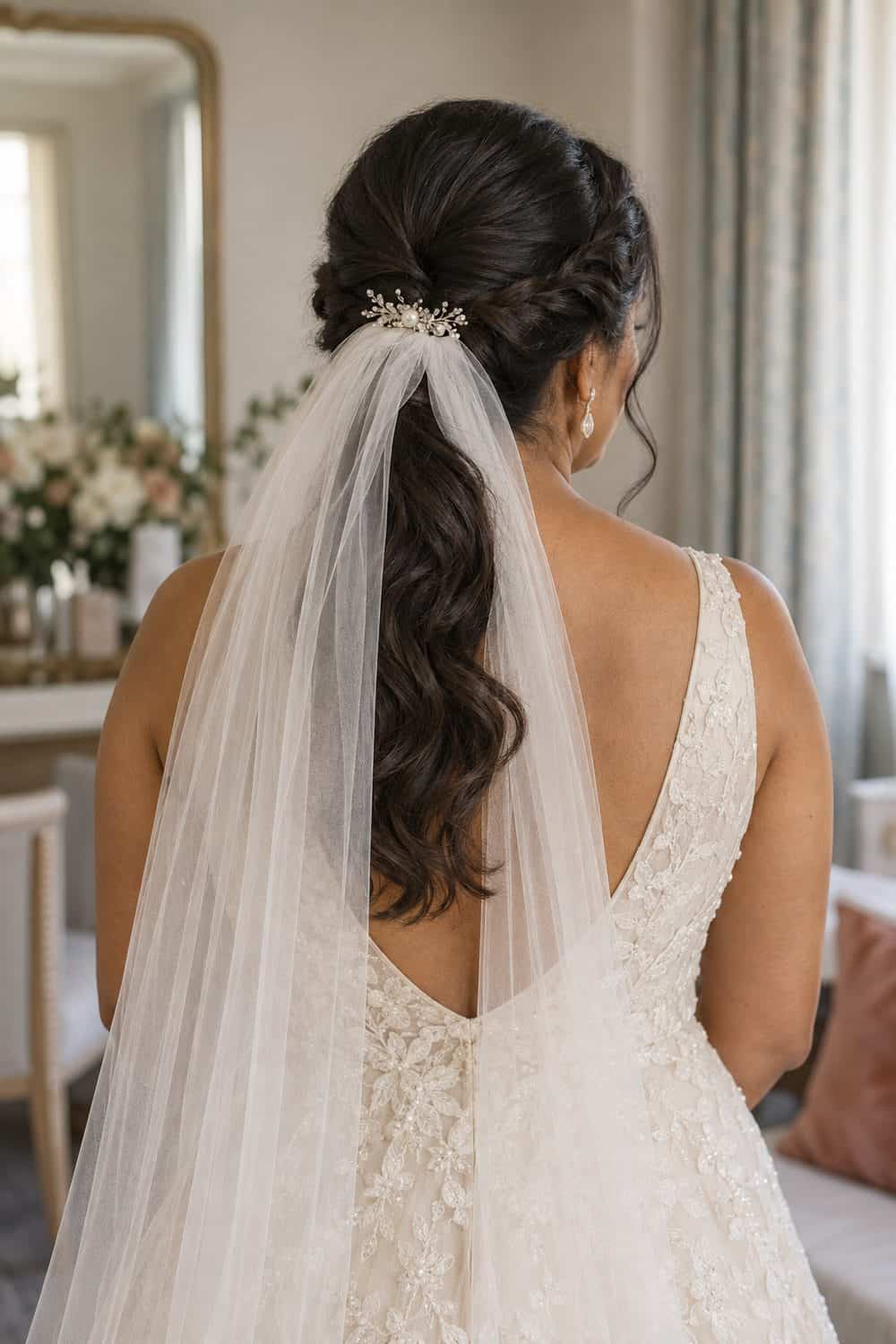
Two side twists make a natural ledge for a veil over a low ponytail. Cross pins beneath the join before adding the comb so its teeth do not rely on the elastic.
22. Braided High Bun with Veil Below
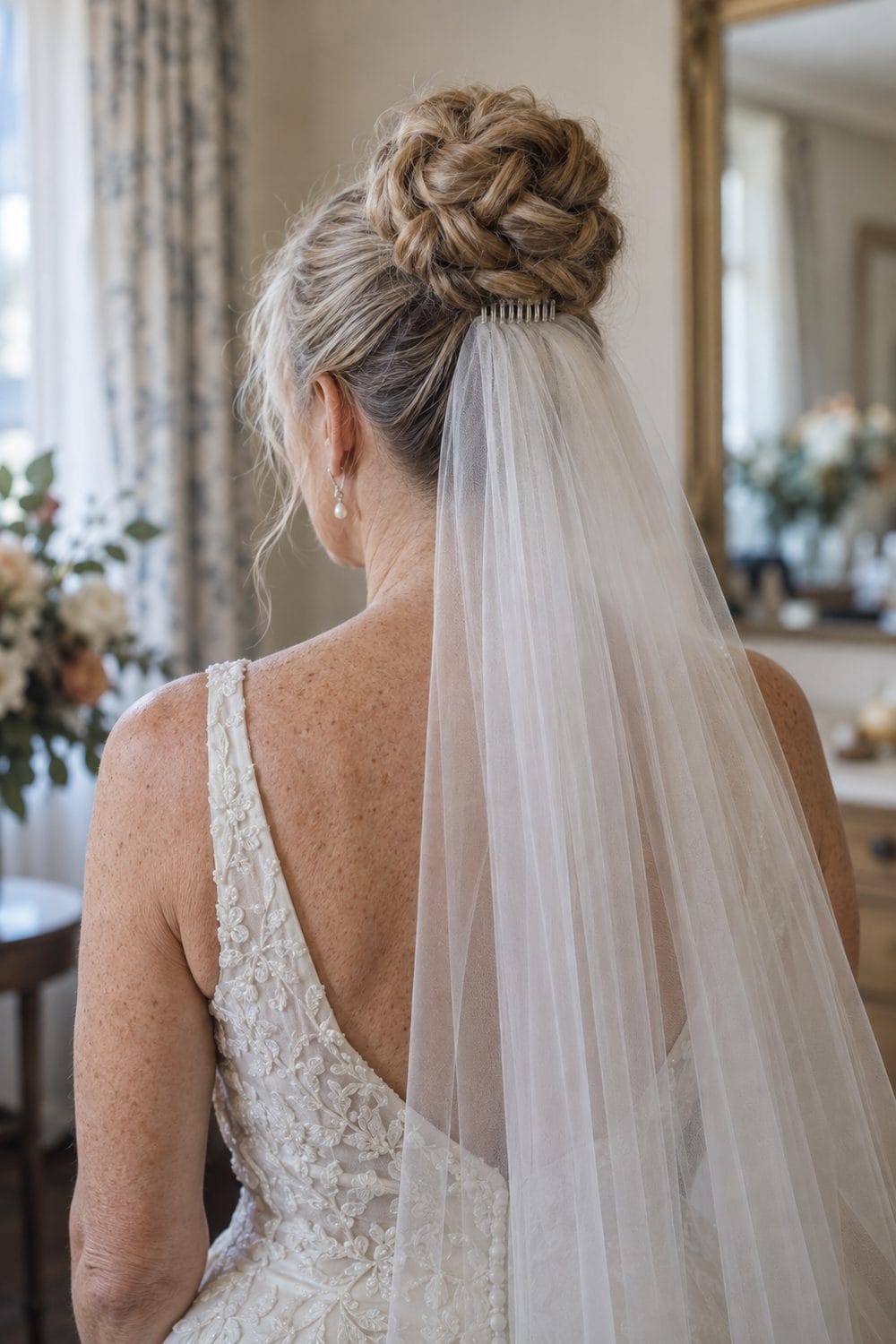
A veil below a braided high bun shows the braid while keeping the tulle away from the crown. Angle the comb upward into the bun base so movement pulls it tighter rather than out.
23. Silver French Bob with Blusher Veil
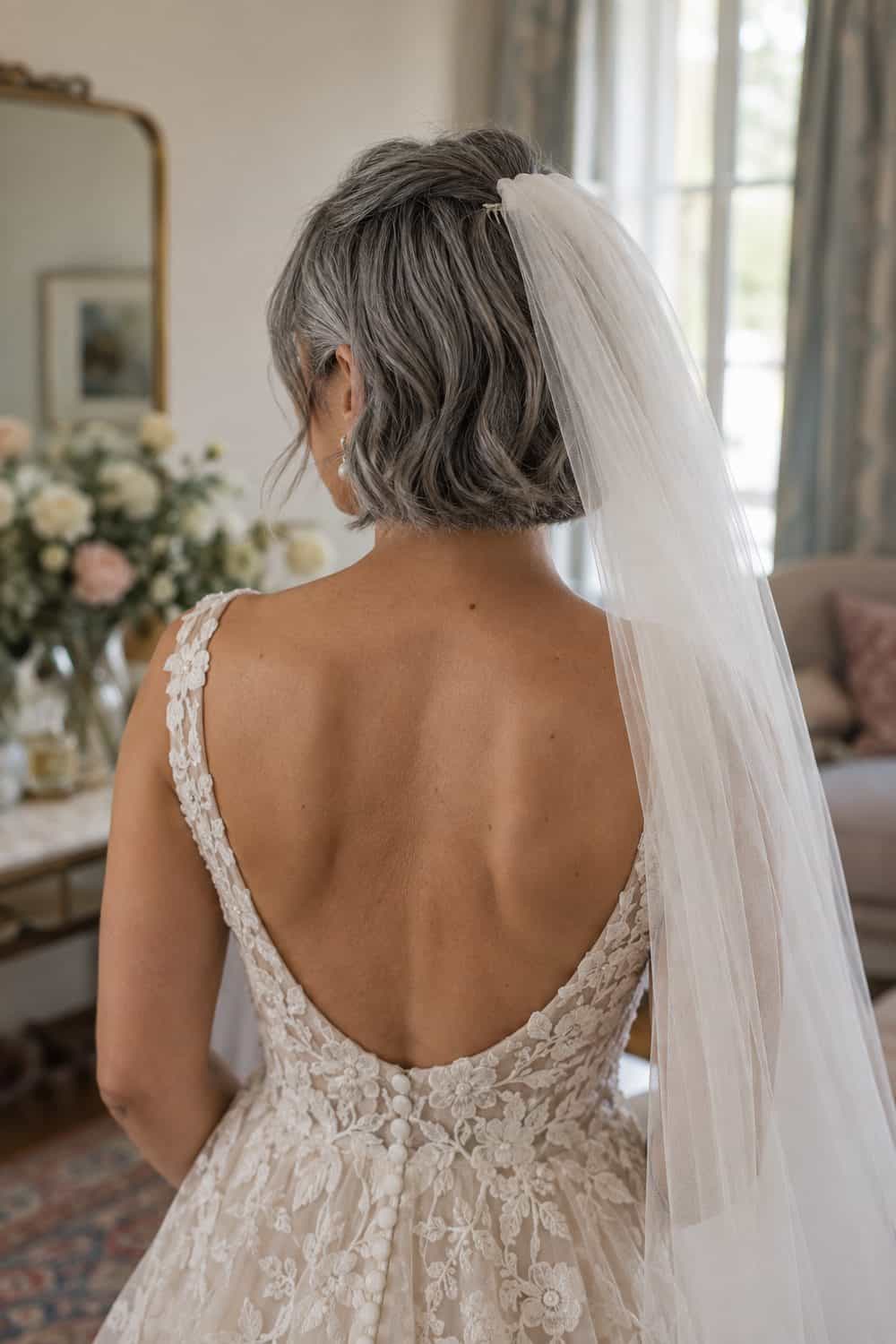
A simple French bob gives a short blusher veil a clean frame. Keep the crown anchor flat and confirm the blusher edge falls below the chin.
24. Flat-Twist Updo with Veil at Nape
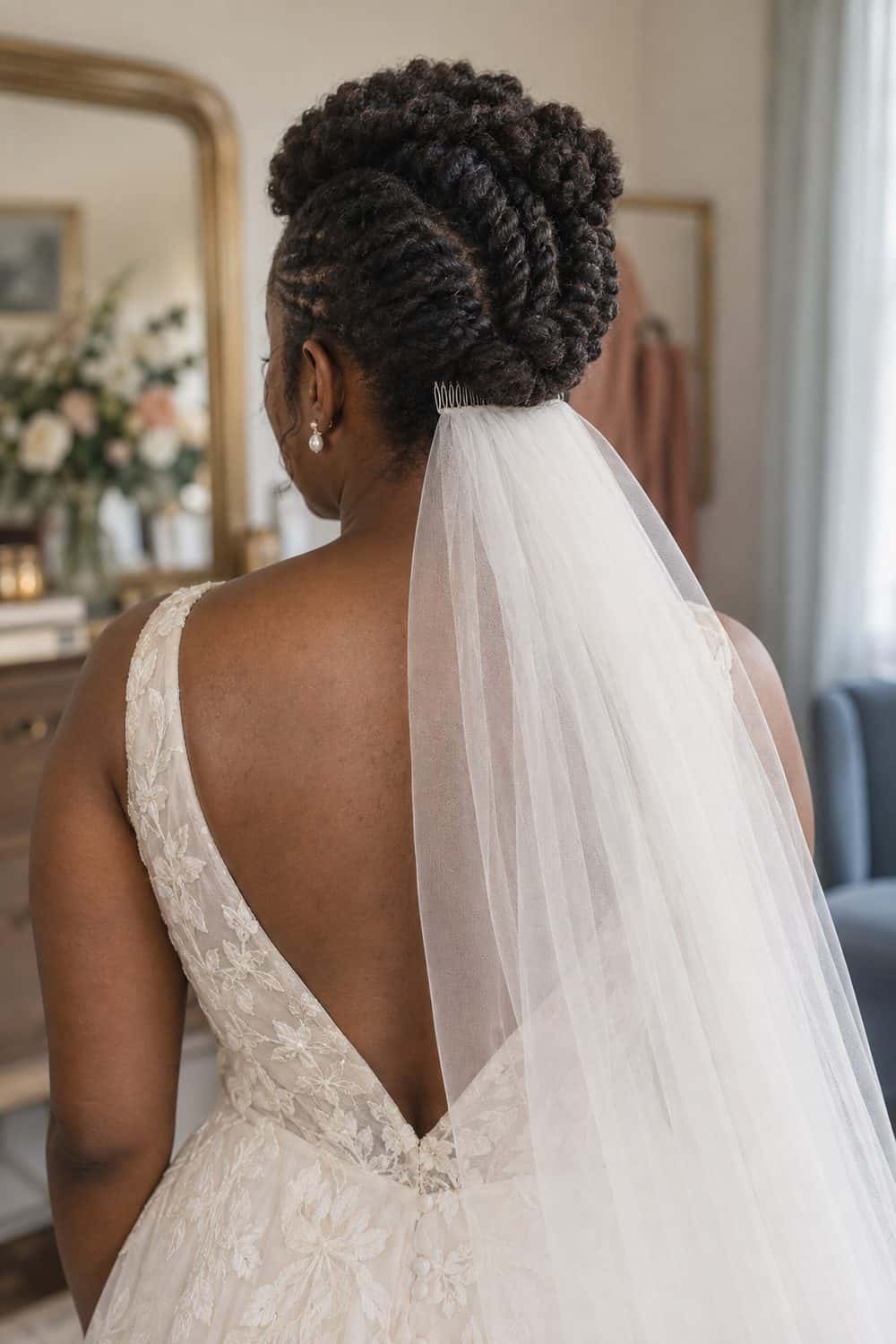
A nape veil leaves the structure of an upward flat-twist updo unobstructed. Secure the comb into a horizontal support twist and keep tension away from the hairline.
25. Low Knot with Mantilla Veil
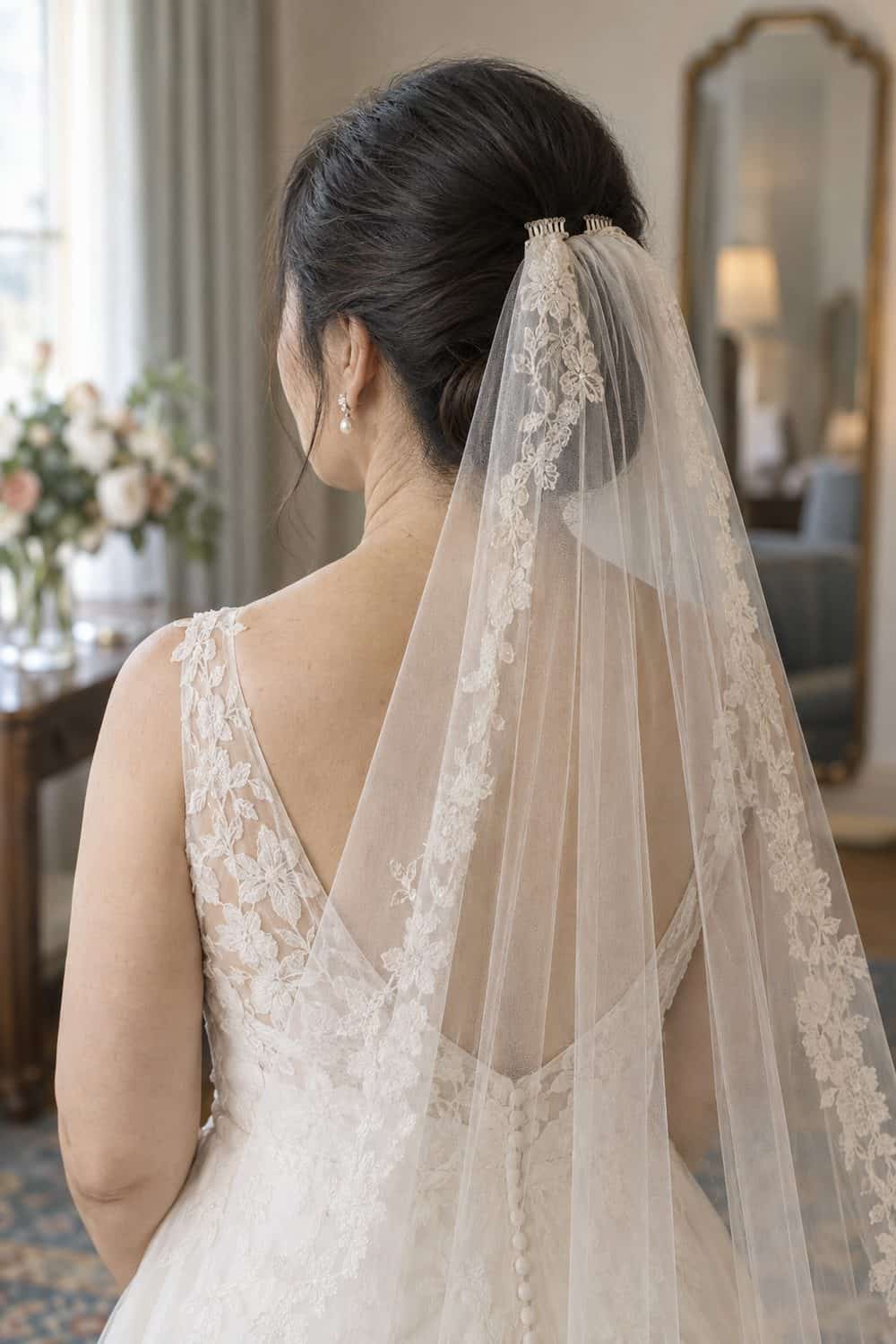
A low knot provides a quiet base for a lace-edged mantilla placed at the crown. Use two small anchors so the lace border stays level instead of drifting to one side.
26. Loose Coils with a Halo Veil
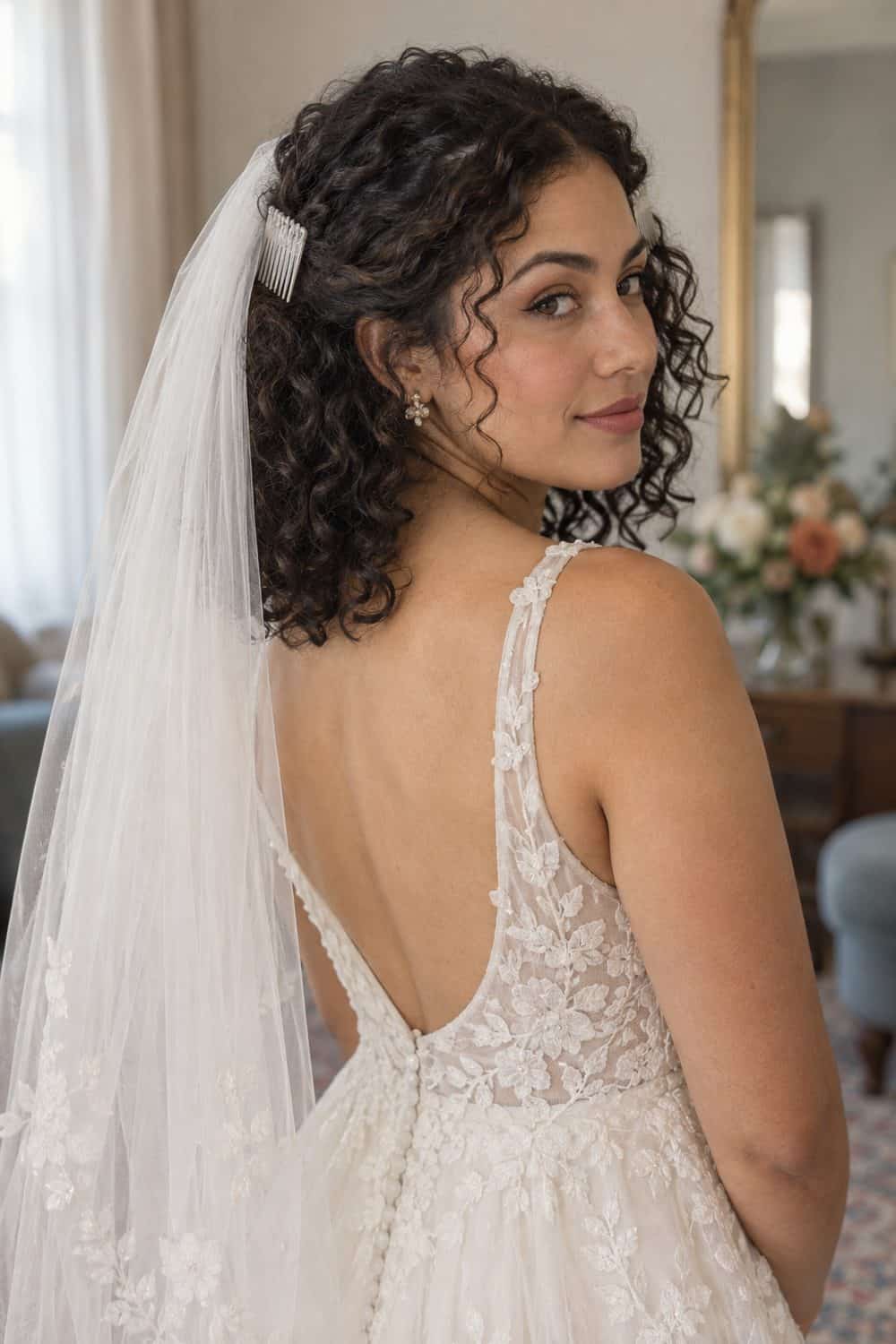
Two side anchors can support a halo veil while natural coils remain loose through the back. Test both combs at equal height and keep them beneath the outer layer of coils.
Choose the hairstyle first, then decide where the veil can sit without hiding its shape or pulling at the scalp. I'd test the comb while walking and turning, and add a small hidden anchor braid if smooth hair lets it slide.