
"Overwhelming" is probably the lightest word I'd use to describe the beautiful mess that is wedding planning. No sooner he proposes that you'll already find yourself buried in spreadsheets, pins, vendor options and so forth. Hiring a planner may seem like the smart way to ease some pressure off. But even that can get slightly complicated. Several couples are shocked by the price difference between hiring a full planner (which can set you back up to 15k, depending on your location) and using a day-of coordinator for a fraction of the price.

Sandals Will Throw Your Wedding for Free
Stay 7 nights in a Club or Butler suite and Sandals covers the wedding: a personal planner, the ceremony, a private cocktail reception, a two-tier cake, your bouquet and boutonniere, plus $200 toward photos and $200 toward video. No venue hunt, no vendor juggling.
Surely, having someone coordinate on the day amounts to the majority of the work, right? Well… not quite. The answer is slightly more complicated. And before you make a decision on the level of service that fits your needs and budget, it's a good idea to understand what each planning role actually involves.
Defining the Roles: Full Planning versus Day-Of Coordination
Before we talk about the price difference and the work involved at each planning level, we need to understand what each role actually means.
Full planning, as the name might suggest, stands for a fully comprehensive wedding planning service. Your planner will help with every aspect of bringing your dream wedding to life, including budgeting, finding and hiring the right venue, sourcing vendors, negotiating the contracts, and aesthetic design. It basically means you get a project manager for the whole engagement.
Despite the name, a day-of coordinator could more accurately be described as the "Month-Of," or even better, your event manager. A coordinator usually joins the planning process about 4 to 6 weeks prior to the event.
While the planner leads the decision-making process, coordinators manage the decisions already made.
The 80 Percent Reality: What Your Coordinator Actually Does
Simply put, the coordinator is the single point of contact on the day. They're the person who will be handling most of the logistics. That's where the 80% comes from. The job involves setting the timeline, managing vendor communication, and being available on the day to make sure everything runs smoothly. It takes a huge amount of pressure off the couple.
The job is very physical and stressful. If the wrong colored linens arrive, it's the coordinator's job to fix it before you even know there was a problem.
Free Wedding Planning Checklist
Stay organized from engagement to "I do" — get our comprehensive checklist covering every task, deadline, and detail.
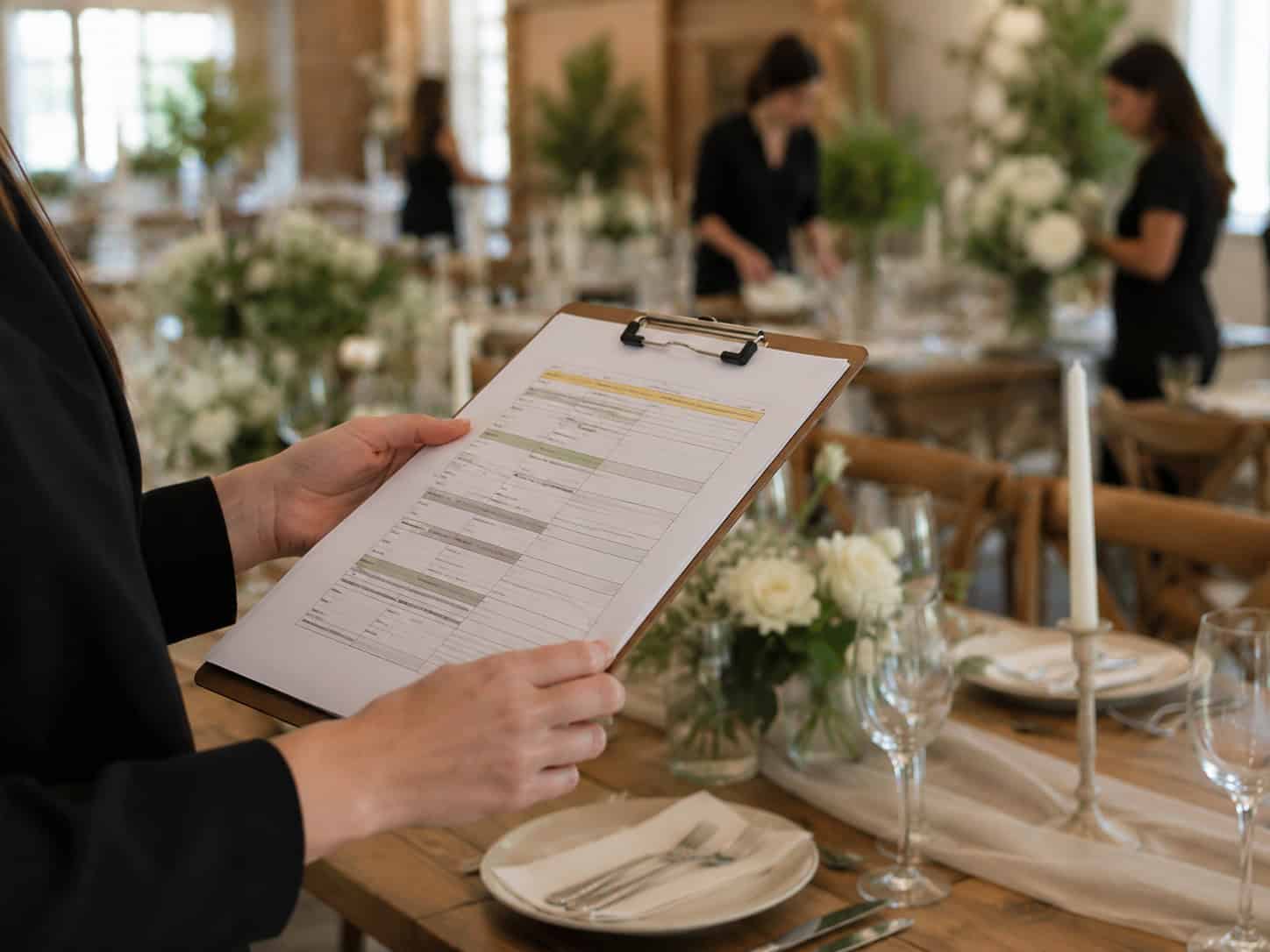
Your coordinator is responsible for the physical reality of your wedding day. While you are getting your hair done or taking photos, your coordinator is managing a massive production.
Why Full Planning Costs a Premium
There are several reasons why a full planner costs significantly more than a day-of coordinator. To start with, a coordinator will usually spend an average of 30-40 hours working on your wedding, while planners typically put in anything between 150 and 250 hours putting the event together.
But the real difference in pricing comes from the planner's contacts and expertise. They're the ones who know which catering companies are reliable and which ones hide surcharges in their contracts. Having a competent planner in your corner also means they're able to negotiate better contracts with top vendors.
A lot of couples don't realize how much work actually goes into planning such a massive event. That's where a planner can help ease the pressure. They'll go to tastings, track payment deadlines, and manage a good chunk of your logistics, so you don't have to.
Task Comparison: Full Planner versus Day-Of Coordinator
To help you compare the different duties involved in each role, I've made this table with some of the most common wedding tasks:
| Wedding Task | Full Planner | Day-Of Coordinator |
|---|---|---|
| Creating and managing the overall budget | Yes | No |
| Sourcing and recommending vendors | Yes | No |
| Reviewing and negotiating vendor contracts | Yes | No |
| Designing the event aesthetic and floor plan | Yes | No (Executes existing plan) |
| Creating the minute-by-minute day-of timeline | Yes | Yes |
| Communicating with vendors 4 to 6 weeks out | Yes | Yes |
| Directing the wedding rehearsal | Yes | Yes |
| Managing setup, breakdown, and timeline on the day | Yes | Yes |
Which Option is Right for You?
Ultimately, the decision should come down to your budget, how much free time you have to dedicate to your wedding, and, of course, how organized you are. If you enjoy researching and negotiating with vendors, a coordinator who comes in closer to the day and helps you execute a carefully curated plan is probably the right option.
If you don't have the free time or the inclination to spend all your free time for the better part of a year meticulously planning, a full planner is an option to consider. I would highly recommend hiring a full planner if your wedding is at a private venue or if you're having a destination wedding, as these types of events tend to come with a whole range of logistical layers like permits, generators, lighting, etc.
Final Thoughts on Your Investment
Your wedding is the most important and can also be the most stressful event of your life. The type of professional you need to help you pull it all together depends on your circumstances. But either way, you'll be better off having someone in your corner to allow you to actually enjoy your day instead of worrying about logistics.