Bridal showers often mark the first time people like the bride’s shy coworker, the extroverted cousin, and the free-spirited college roommate find themselves in the same room. Coordinating hundreds of weddings taught me that the right game can set the tone, keep the conversation flowing, and help avoid the awkwardness typical of mixed-group events. On the flip side, the wrong game can tank it fast.

Sandals Will Throw Your Wedding for Free
Stay 7 nights in a Club or Butler suite and Sandals covers the wedding: a personal planner, the ceremony, a private cocktail reception, a two-tier cake, your bouquet and boutonniere, plus $200 toward photos and $200 toward video. No venue hunt, no vendor juggling.
You need a set of games that keep the energy up and the party inclusive. I’ll walk you through the setup for each game I’m proposing and why it holds up in multi-generational settings.
After coordinating over 200 weddings, I’ve watched enough bridal shower games to know that the ones guests actually enjoy tend to run under 10 minutes, require no physical performance, and have a clear, simple goal. Keep those three criteria in mind as you choose.
1) Bridal Shower Bingo
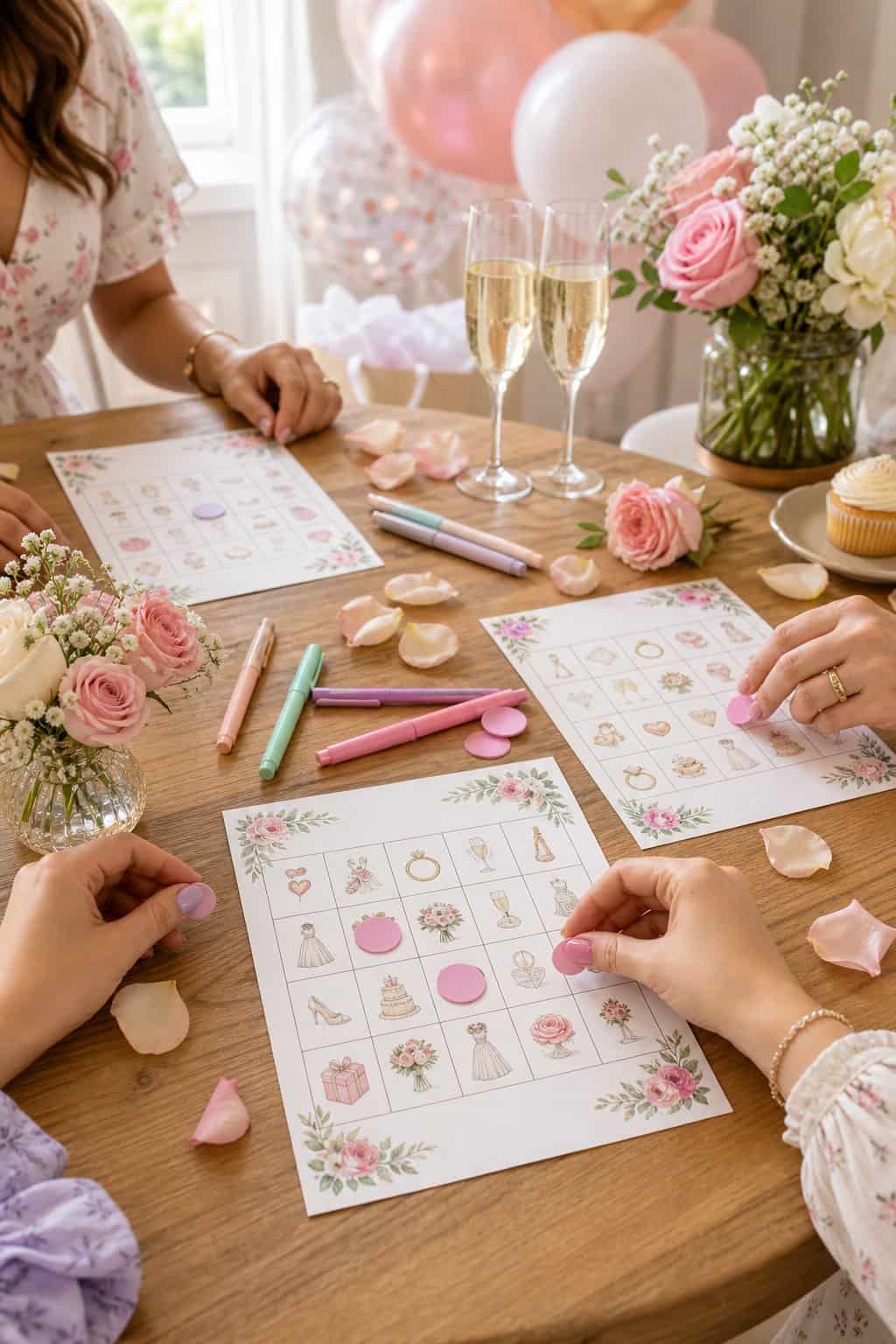
Bingo is the go-to game because it’s low-pressure, it suits all ages, and it works perfectly around gift opening. I like to call it the “workhorse” of the bridal shower because it needs zero explanation and no one will feel singled out.
One format involves handing out printable bingo cards with squares featuring possible gifts, such as a vase or a kitchen gadget. You can also try a host-led bingo game where each square features phrases, moments, or bridal clichés. Make sure no two cards are the same, so print unique versions.
Layering bingo with gift opening does double duty: it keeps the audience engaged during a part of the bridal shower that can usually drag on. A standalone round works better after food when energy dips.
The real selling point of bingo is its mixed-age appeal. There’s no standing, no trivia, no random pop culture references to confuse poor grandma. In other words, it keeps your older guests and your college roommate on equal footing.
2) He Said / She Said
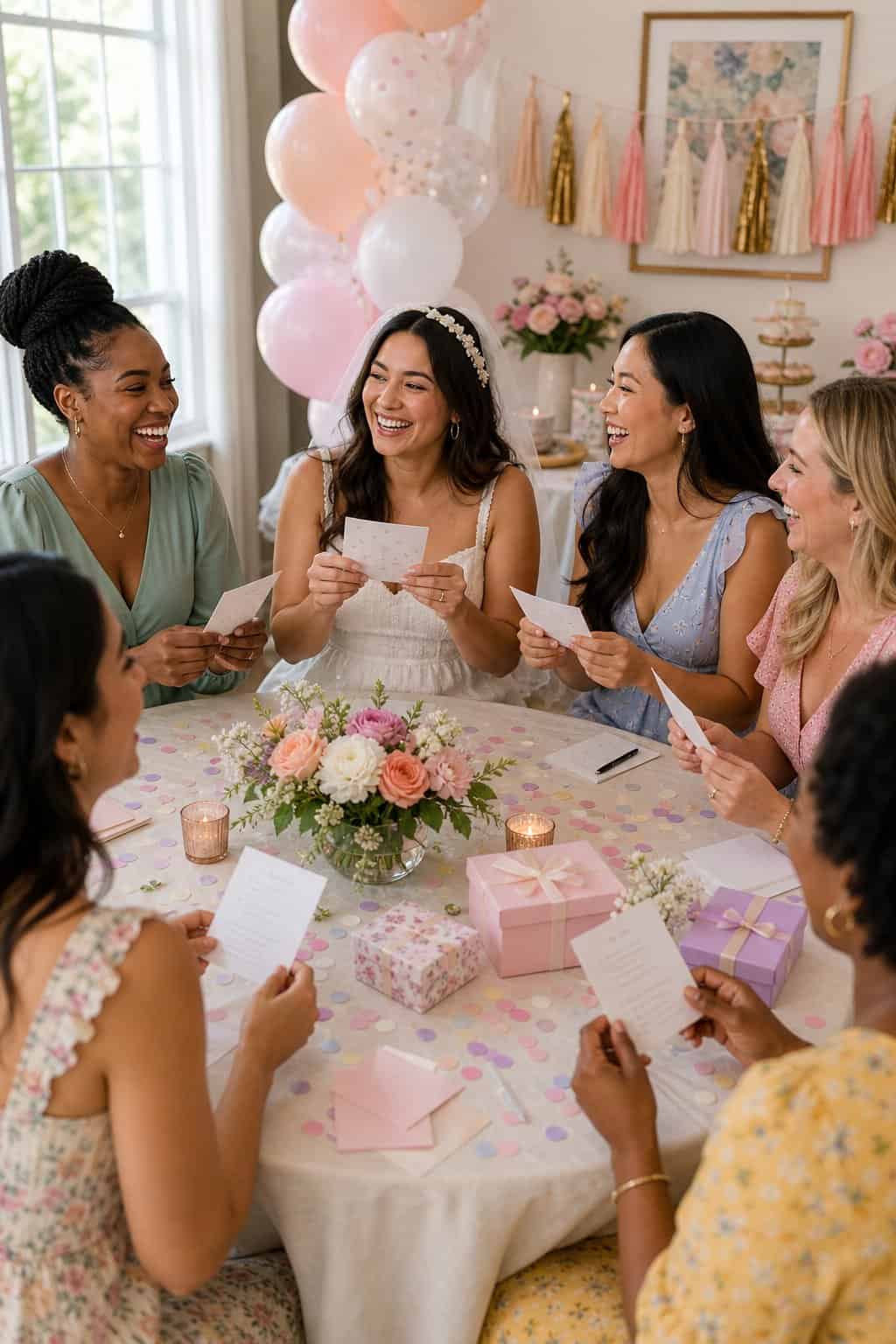
For this one, you can either use printed cards or paddles to guess which partner would say or do each thing. You can run the game for about 10-15 questions. Avoid asking things that are too vague or too niche. The best and most inclusive prompts are specific and universally relatable, think “who takes longer to get ready” type questions. Because the prompts are couple-specific and not pop-culture-dependent, older guests are not disadvantaged.
Set up a 10-second timer for each question to prevent overthinking and keep the collective energy up. If you want this particular game to look great in photos, go with color paddles or even clothespins, as plain paper can get lost in the shot. This classic couples game works amazingly at showers, but you can also add it to the agenda for rehearsal dinners and the bachelor/bachelorette parties.
3) Advice and Wishes Jar
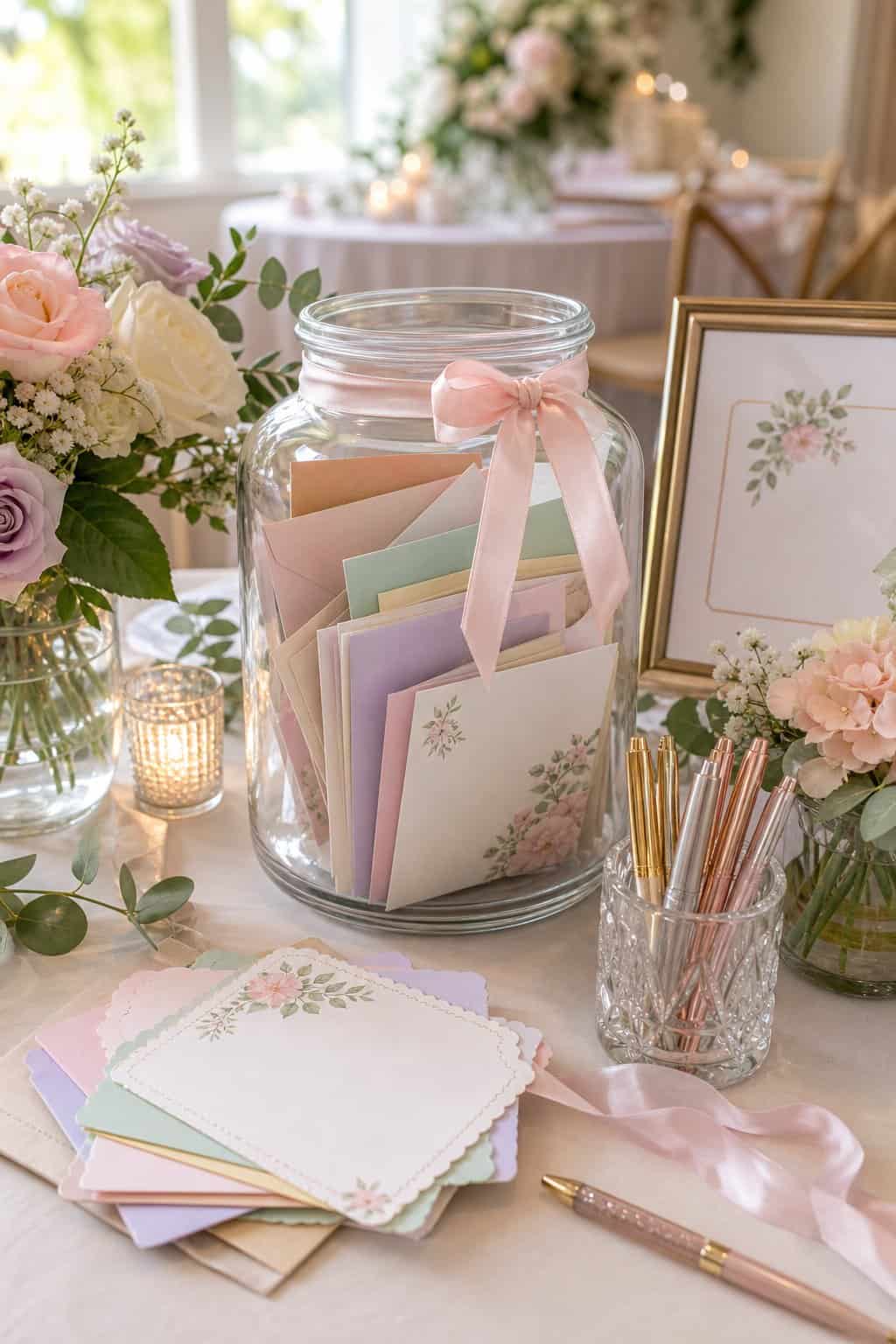
This one is more of a structured, low-pressure activity. All you need is a nice jar, some colored paper, and a request that your guests write short notes on each card and drop them in. Whether it’s advice, wishes for your future nuptials, or predictions, this activity reduces the pressure on guests who might be introverted, shy, or non-native English speakers. Your older guests benefit the most from this since there’s no time pressure and no spotlight. Everyone is free to write their notes on their own time during the event.
If you have teenagers among your guests, they tend to respond better to a specific prompt rather than an open-ended “write something nice on the card.” Make sure you have enough cards for everyone at the party, because under-preparing can kill momentum. Place the jar near the gift table, since most guests will pause there anyway to leave their gifts, so they might as well grab a pen.
You want to read these mid-party to keep the energy up. Once you’re sure that most people have already written theirs, take the jar out and read the notes so all your guests can share in the moment.
“The activities that ask guests to contribute something personal, rather than compete, tend to create the moments the bride actually remembers.”

Sintuff 114-Piece Bridal Shower Advice Jar
Check Price4) Recipe Swap
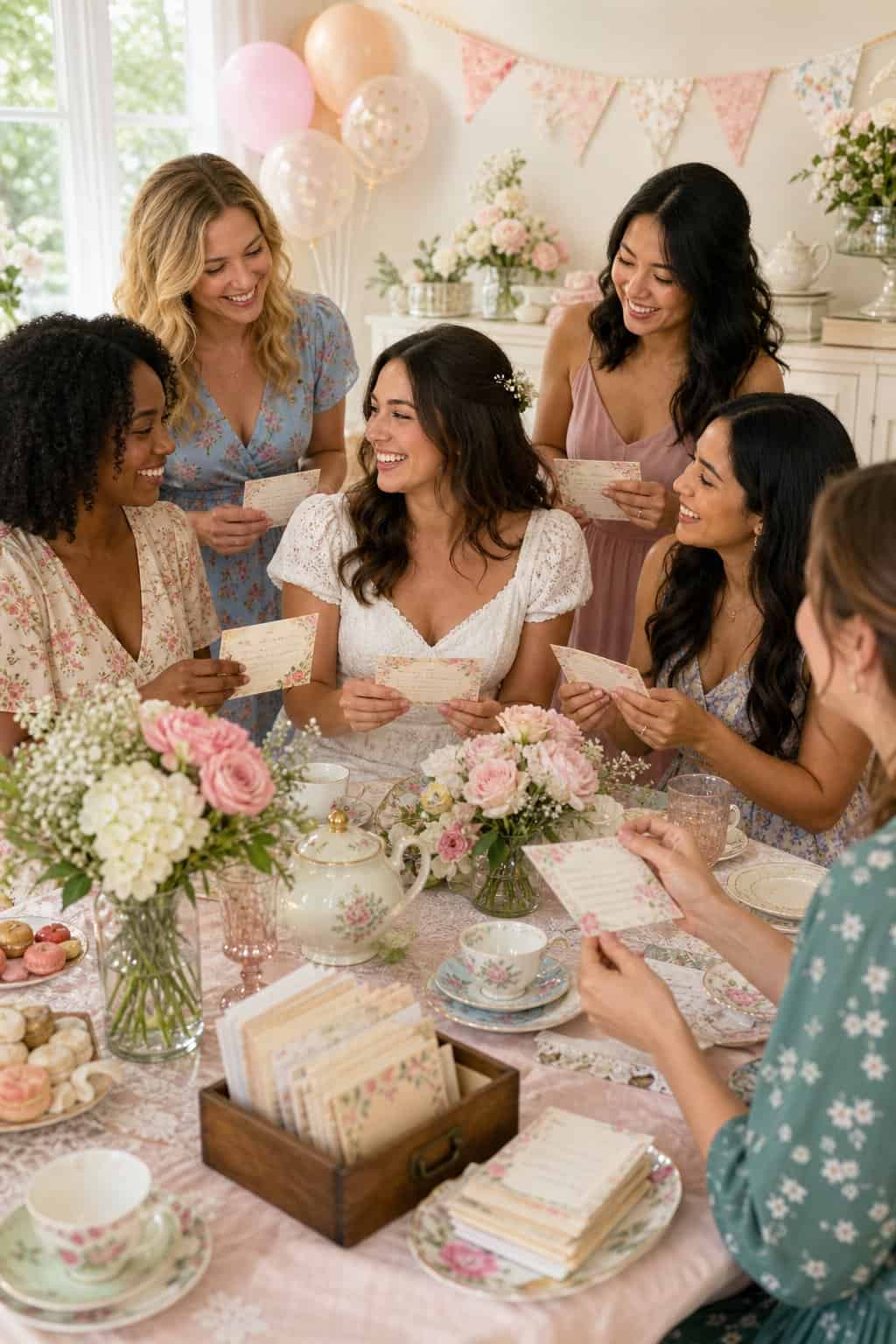
The recipe swap is a variation on the advice-and-wishes jar, but with a twist. Instead of advice, ask your guests to bring a handwritten recipe card with a personal note and drop it in either a decorated box or directly on the table. It’s a simple and effective way to encourage cross-generational connection. The personal note is what makes this different from a simple recipe swap, as it adds story and sentiment to the day. Older guests particularly love this, as your grandma can write down the secret family cookie recipe (if she wants to), and a lot of younger guests will actually use it.
It can also double as a keepsake gift for the bride. Just make sure you label it so it’s obvious the bride has to take it home with her. Provide pens and plenty of blank cards, as not everyone will come prepared with a recipe. Announce the swap before dessert so guests will have time to write, and do make sure you add a small sign noting card size and whether to flag any common allergens.

Dahey Wooden Recipe Box with Cards
Check Price5) Guess the First Dance Song
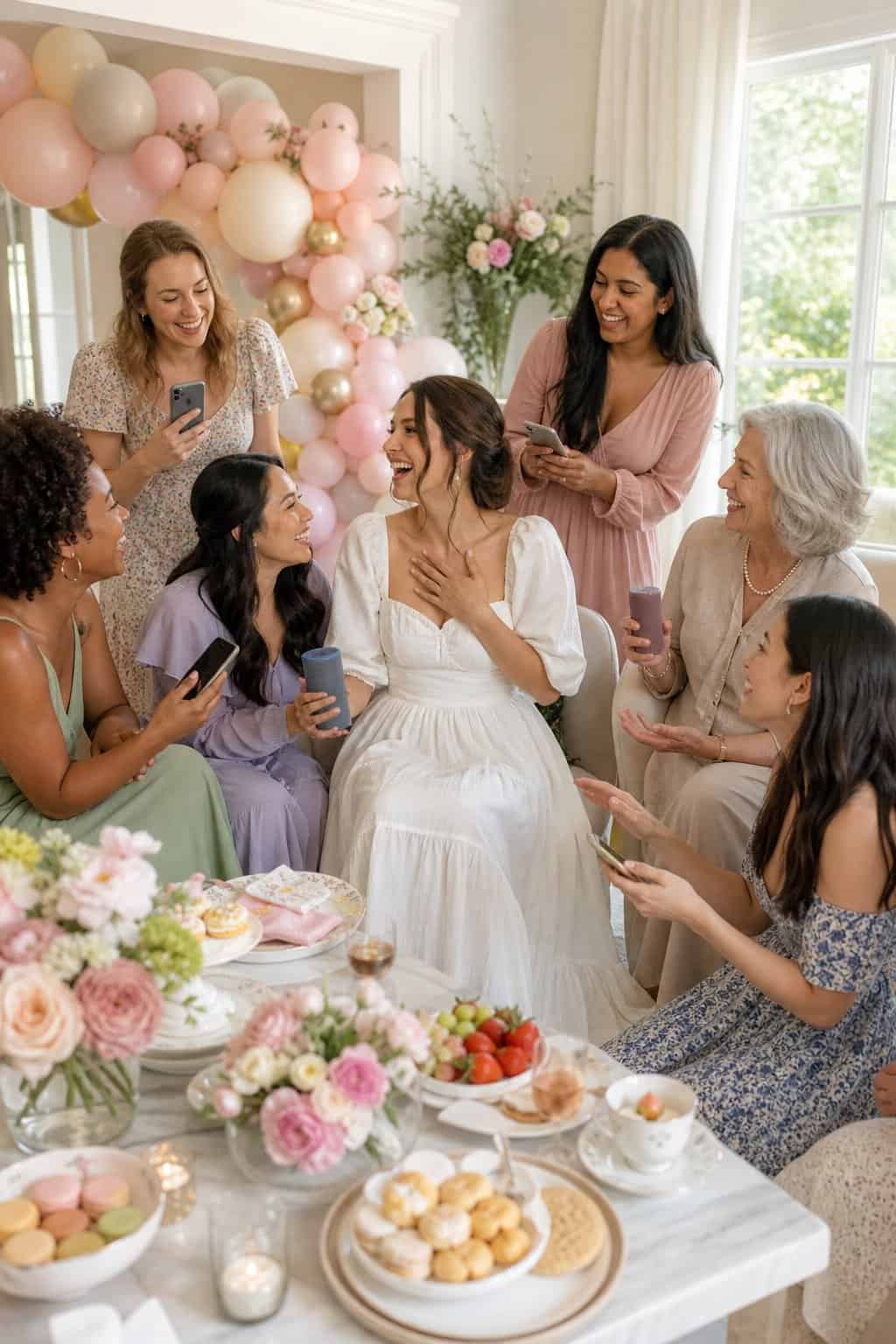
This game is one of my favorites because it’s a great way of keeping a joyful atmosphere at the party. Ask guests to record themselves humming or singing for five to ten seconds, a potential first dance pick. Play the clips one by one, as the other guests must guess the title and artist. Laughing starts almost immediately.
Do make sure you collect the clips in advance, as waiting on people to record mid-party will kill momentum. Also, some people might feel shy and hide in different rooms to record, which can break up the party atmosphere. Try not to have more than six to eight clips; any more, and the activity will feel like it’s dragging on. Pro tip: Collect all the clips and load them into a laptop playlist for seamless playback, so you won’t need to fumble with phones.
Free Wedding Planning Checklist
Stay organized from engagement to "I do" — get our comprehensive checklist covering every task, deadline, and detail.
This one is great for mixed-age crowds because everyone has a love song, so the decades don’t really matter. Also, asking for short snippets lowers the performance bar, as humming is enough, so people won’t have to worry about their lack of singing talent.
6) Memory Match with Photos of the Bride
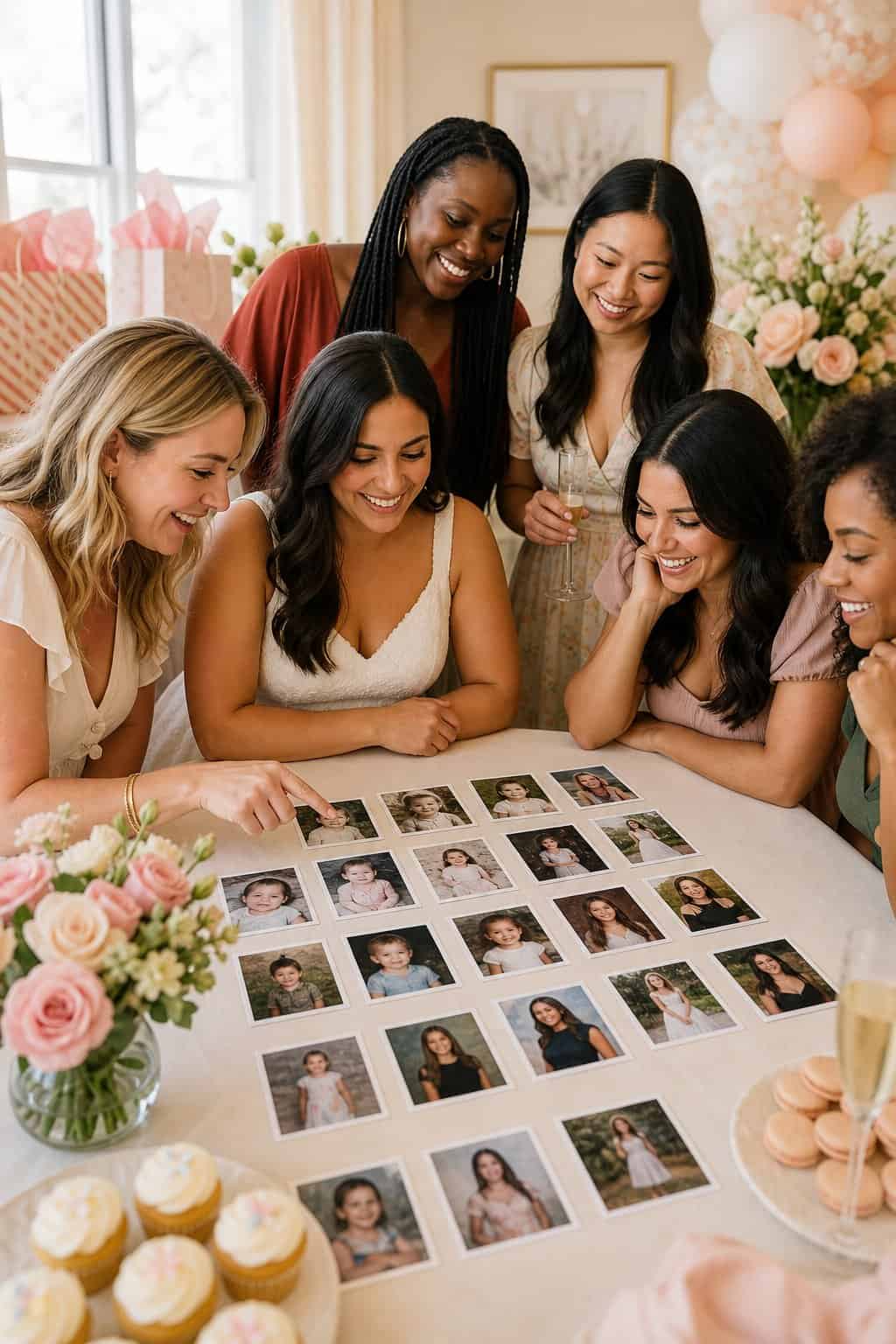
A memory match game might take a bit longer to prepare, but it’s worth the effort. At the party, lay out 20 to 24 photo-pair cards face down, then have guests flip through to find a match showing the bride at different ages. Run this as a relaxed, “round-robin-type” activity to include plenty of conversation about the bride’s history. Things like “wait, is that her at camp?” beat the game itself because it creates a natural conversation topic.
Print these on the same-size cards, number the backs, and make sure you have a master reset sheet. This is a great game because it’s a classic that most people have played at some point in their lives. Having about 10 to 12 pairs is the sweet spot between too quick and too tedious for a group setting.
Face recognition is a very personal activity. Older guests are more likely to recognize childhood photos, whereas younger guests will most likely treat it as a guessing game. But overall, everyone will feel included. If you plan to run multiple rounds, consider offering a small prize tied to the bride, like a photo book credit or a gift card to a local coffee spot she loves.
7) Who Knows the Bride Best?
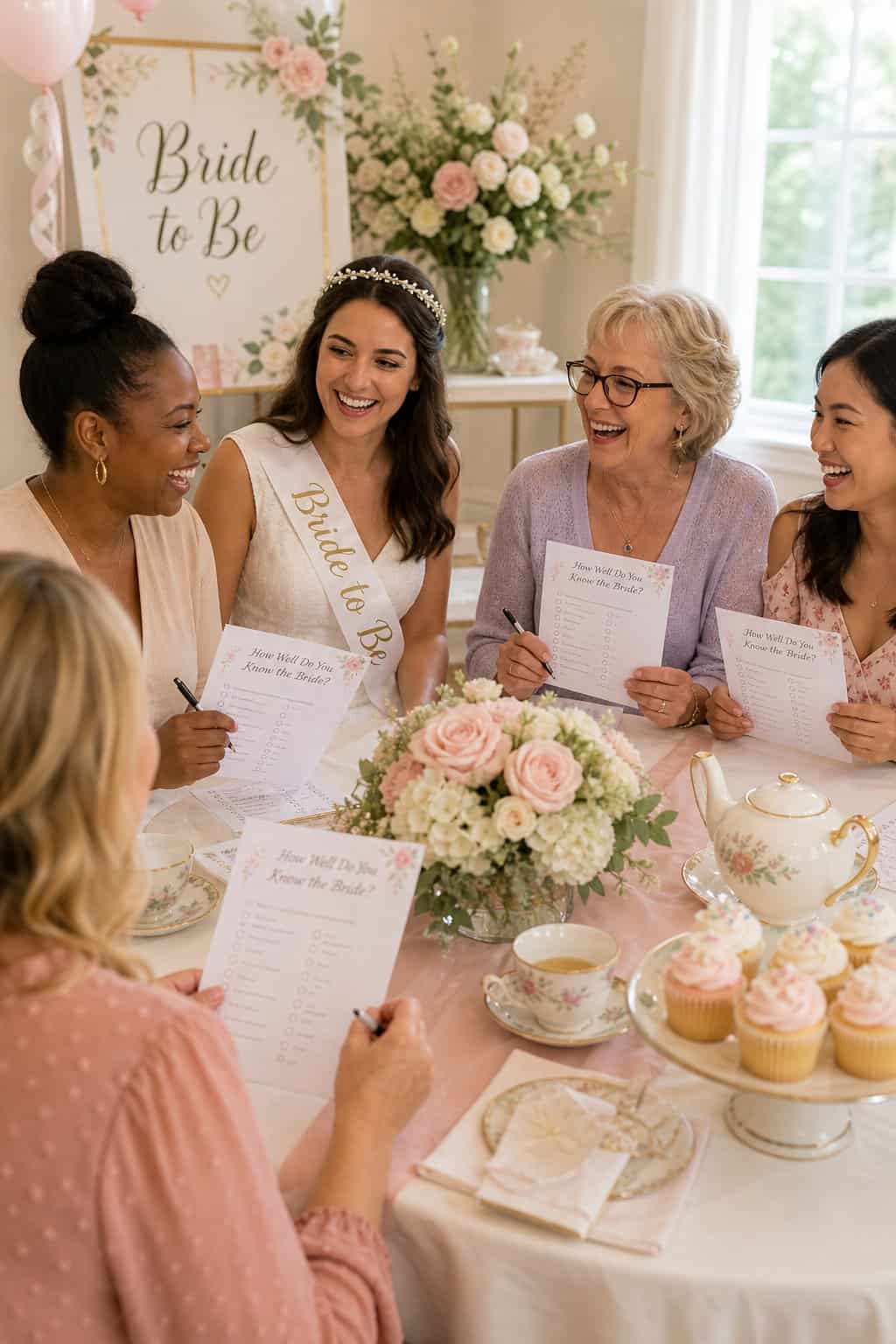
A multiple-choice “Who Knows the Bride Best?” quiz is an easy-to-score game that levels the playing field for guests of all ages. The multiple-choice format removes any recall pressure from your guests. Guessing is valid, which lowers the potential for embarrassment across all ages.
Go with three options per question. That’s enough choice to feel fun without slowing things down. Assign point values to each question for fast tabulation, so whoever’s scoring can work independently while the party continues.
For logistics, I always make sure there are printed answer sheets, clipboards, and pens at each seat, so there’s no scrambling or delays during the actual party. Plan for about an 8 to 10-minute window for guests to answer. That’s long enough so people don’t feel hurried, but short enough to keep the energy up. When you’re ready to score, do it quietly near the drinks table and announce the results as soon as you have them, so the game resolves into the event, not over it.
Multiple-choice formats reduce the cognitive load of open-ended recall, which means guests spend less time anxious about the right answer and more time engaged with the group. That shift in atmosphere is subtle but real.
Creating a Comfortable Atmosphere
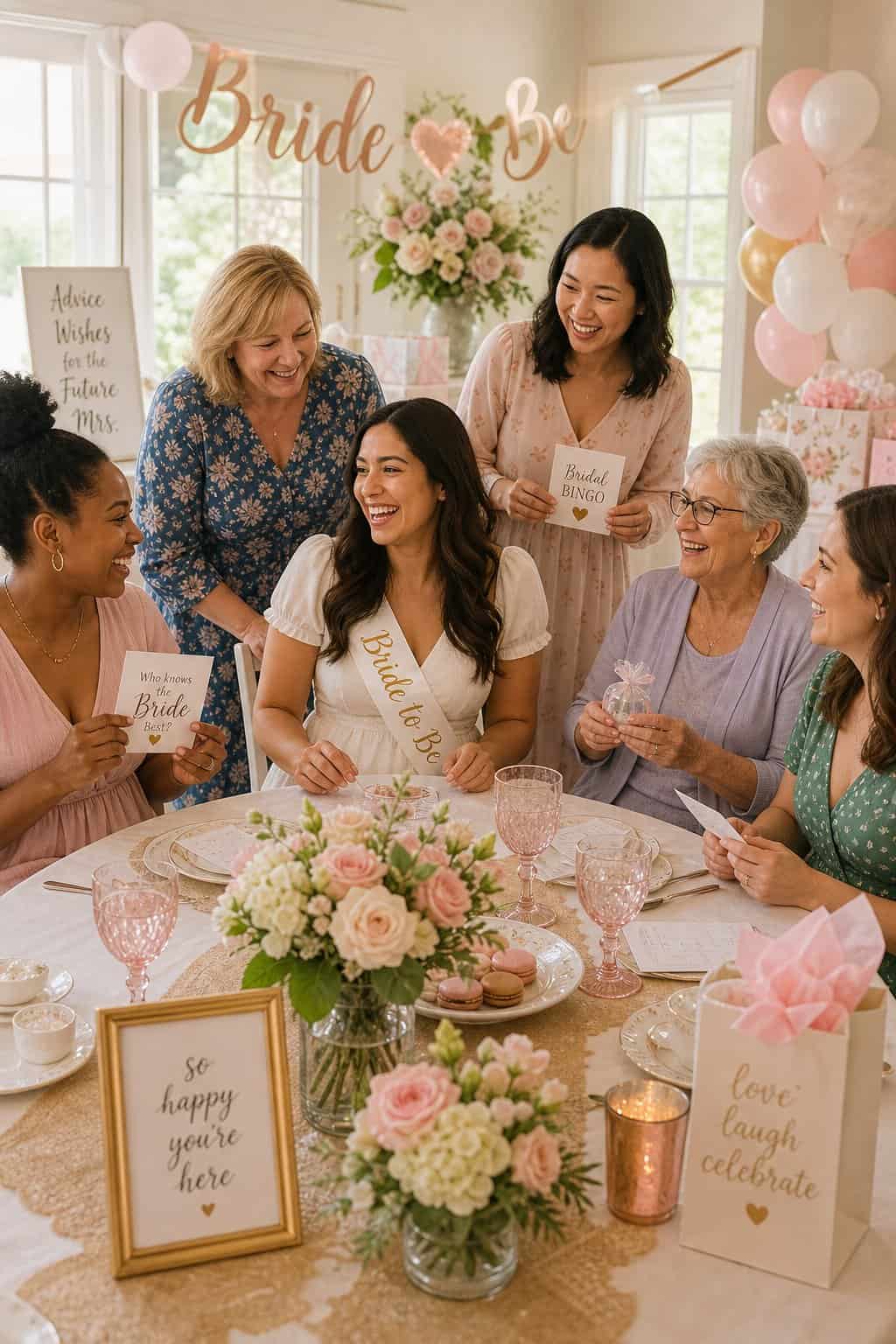
The space between games matters as much as the games themselves. I usually spend the first 10 to 15 minutes watching the arrivals, seeing who gravitates toward whom, and acknowledging the room’s overall vibe. For instance, if a group of friends or co-workers is already loud and laughing, I start with a more upbeat game earlier in the schedule to match the energy. But when I notice the room is settling into quiet conversation, I’ll keep early activities low-energy.
Music volume is a common mistake. If the background music is louder than the general conversation, it can raise people’s stress levels.
If the shower has mixed-age groups, older guests tend to fatigue more quickly from noise and movement, so it might help to separate high- and low-energy zones. Also, take into account seating clusters versus rows. Clusters invite crosstalk and ease, while rows create an audience dynamic, which is the opposite of what you want for social games.
Pacing is also a priority because the air between activities breeds restlessness. Having a clear schedule and a “what’s next” helps keep the momentum going throughout the day.
Reading the Room
Balancing Tradition and Fresh Ideas
A Few Words on Inclusive Game Planning
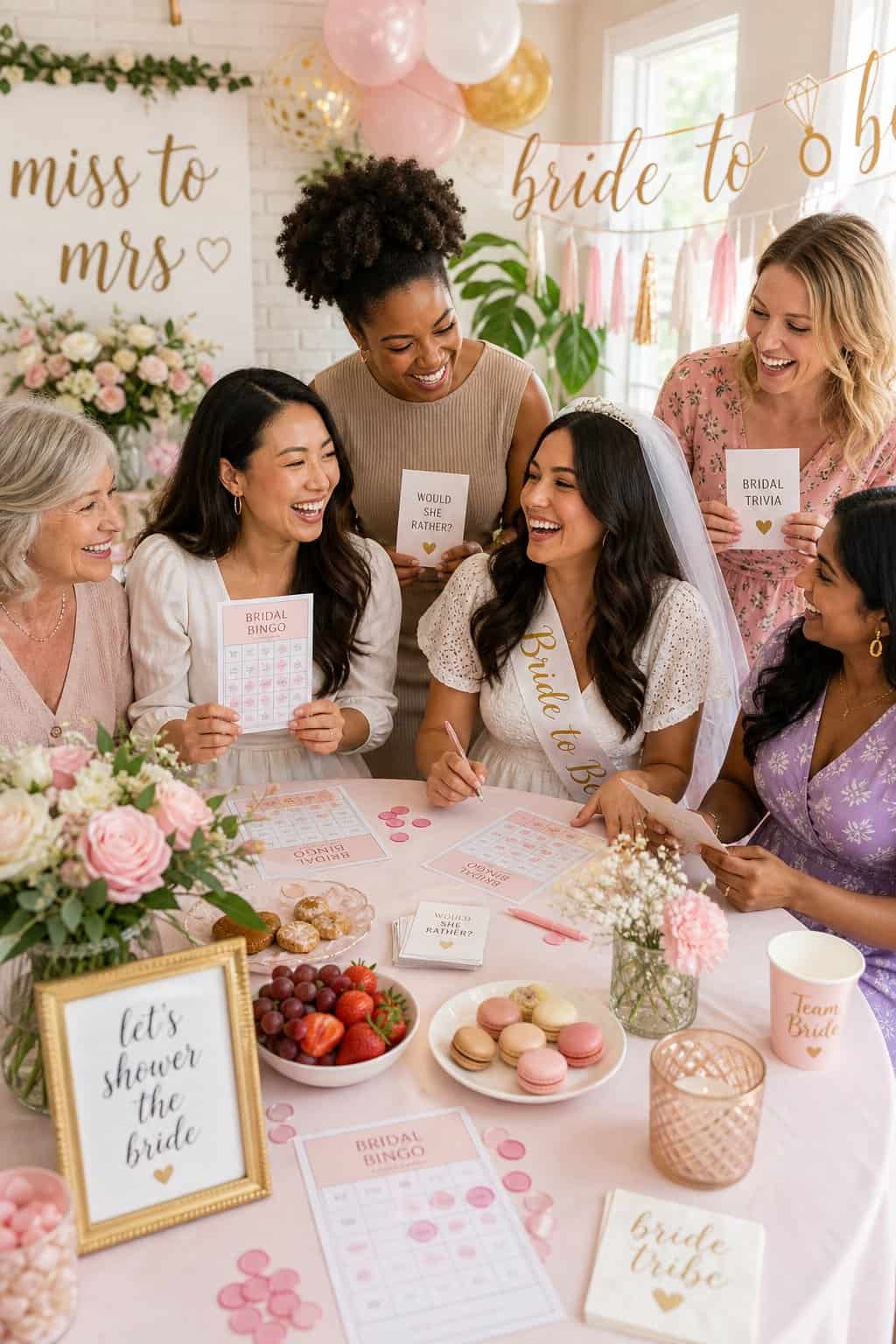
To make activities genuinely accessible across ages and abilities, I like to make a range of adjustments to my game design according to the specific group I’m expecting for each event. You want to build inclusion from the start, not as an afterthought.
Reading questions out loud addresses vision and hearing limitations simultaneously. Splitting the group into teams removes pressure on individuals, especially useful if your guest list includes shy or introverted people. Mixed teams are also a great way to break age clustering. Your grandparent and your college roommate have to work together, and that’s usually where the best moments come from.
Printing materials in large print, around 18pt font, is an easy and cheap fix that’s often overlooked. Try to avoid open-ended pauses as well, since they can disadvantage anxious, neurodivergent, or ESL guests.
It’s easy to assume that fun for everyone just means simple rules. But real inclusion comes from each game being organized. Spend some time thinking about your guest list, who’s coming, and what their specific needs are, and then adapt your planning accordingly.